 English
 中文
中文







What Product Types Are Suitable for Ceramic Injection Molding?
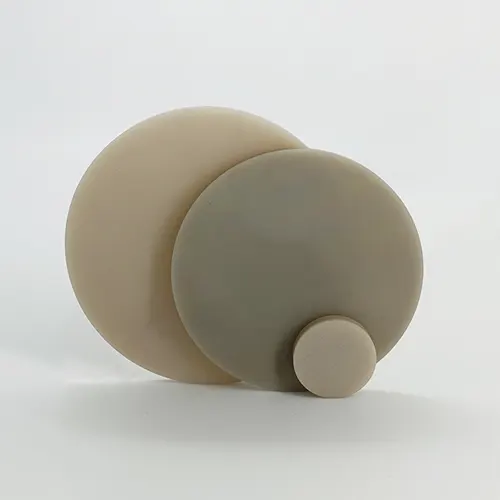
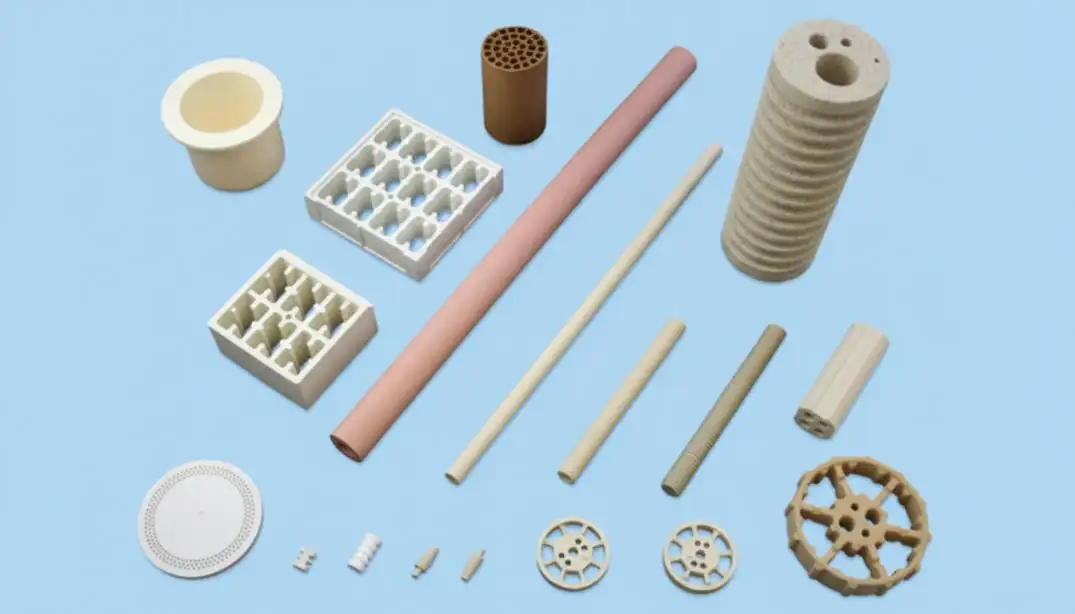
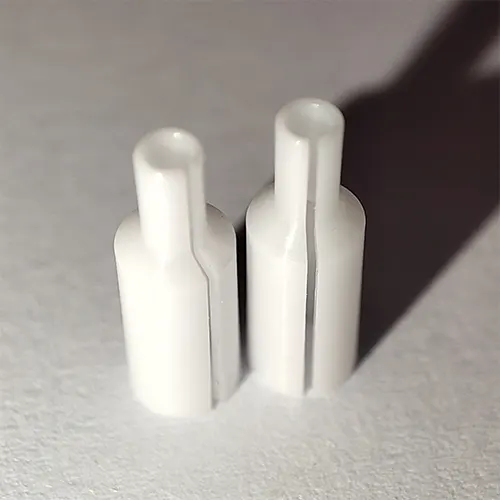
Ceramic injection molding is a forming process well suited for small, complex, and high-volume precision ceramic components. Compared with conventional dry pressing, isostatic pressing, and extensive post-machining, injection molding is often more efficient when the part includes fine details, complex geometry, and strict batch-to-batch consistency requirements.
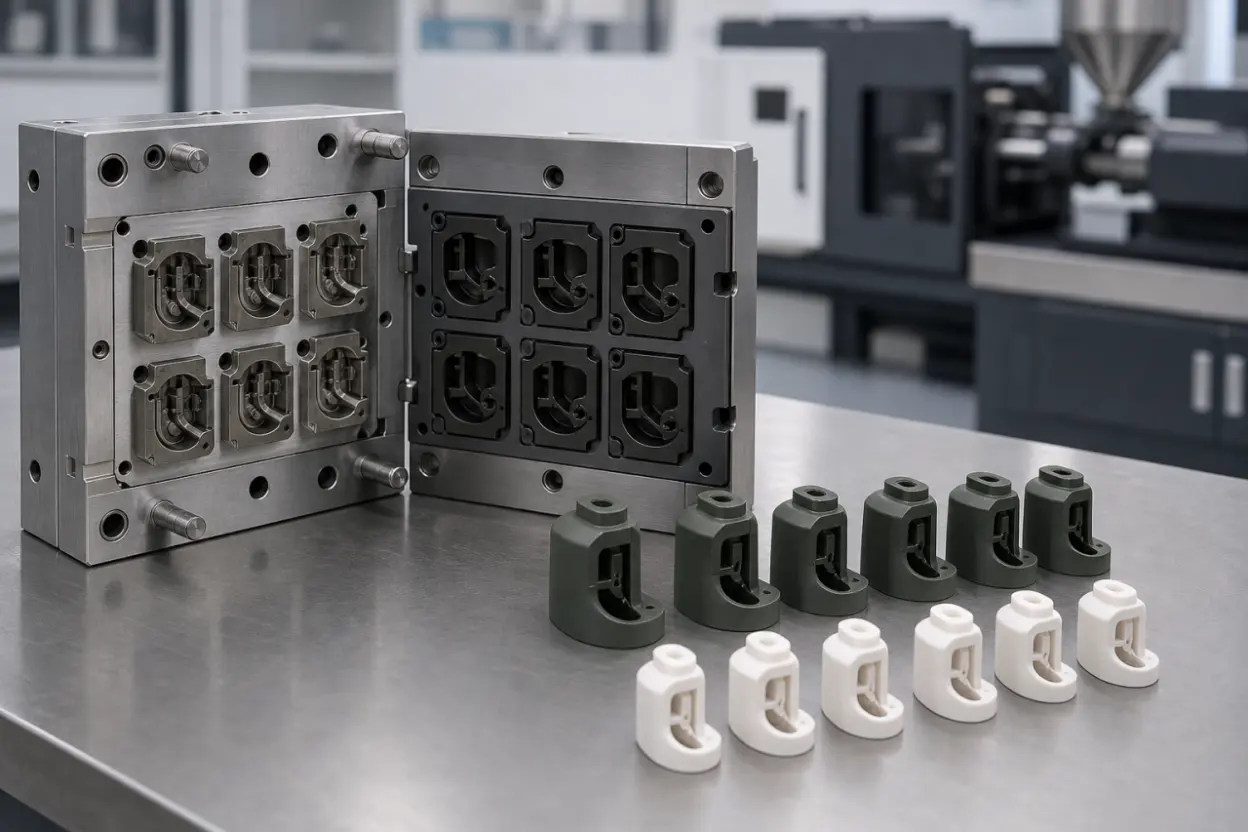
For advanced ceramic materials such as zirconia and alumina, the key advantage of injection molding is not large flat plates or thick blocks. Its real value lies in forming micro holes, blind holes, steps, gear-like features, slots, curved surfaces, thin walls, reinforcing ribs, and small cavity structures as close to the final geometry as possible.
1. Product Structures Suitable for Ceramic Injection Molding
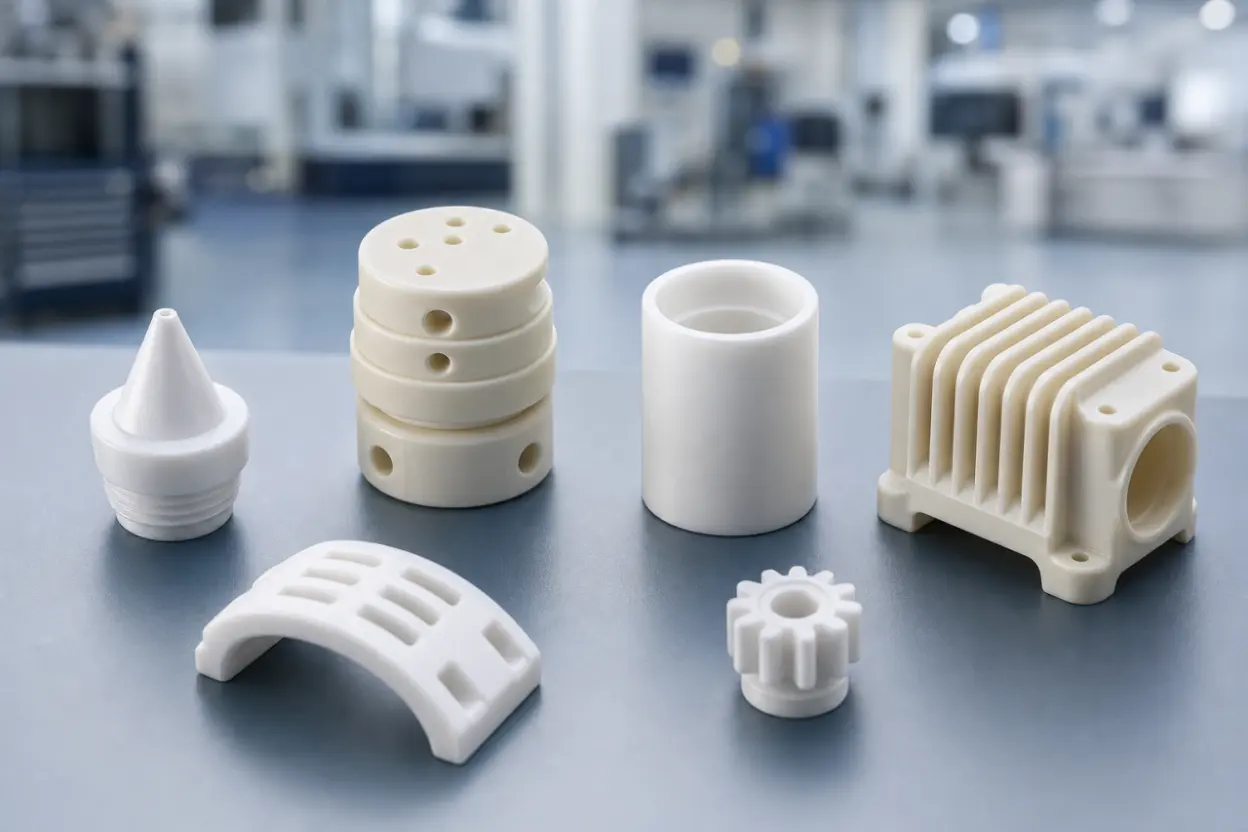
From a design perspective, ceramic injection molding is especially suitable for the following product types:
- Small precision components, including micro holes, through holes, blind holes, stepped holes, and deep-hole structures.
- Complex irregular components, including gear-like features, slots, concave and convex surfaces, curved surfaces, angled structures, and multi-directional details.
- Thin-wall and small-cavity parts, such as miniature housings, sleeves, and compact internal cavity structures.
- Ribbed or reinforced structures, including internal support ribs, positioning ribs, and guide ribs.
- High-volume parts that can benefit from multi-cavity molds for improved productivity and consistency.
If these geometries are produced mainly by post-machining after sintering, the process may face limited tool access, low machining efficiency, chipping risk, and high cost. Injection molding allows the main geometry to be built into the mold design, making it more suitable for repeatable mass production.
2. Product Types That Are Less Suitable
Not every ceramic component is suitable for injection molding. Large-size parts, thick-wall components, large flat plates, or simple low-volume shapes may not be ideal candidates for this process.
When the wall thickness is too large or the overall size is excessive, gases and organic binders are difficult to remove during debinding. This increases the risk of cracking, blistering, and deformation, and also extends the production cycle. Therefore, wall thickness distribution and part size should be evaluated early in the design stage.
3. Key Design Limits and Process Considerations
| Item | Reference Information | Design Impact |
| Minimum inner hole | Micro-hole structures can be produced down to approximately 0.10 mm. | Suitable for micro holes, flow channels, and assembly holes, but feasibility depends on hole depth, position, and mold durability. |
| Blind holes | Blind hole depth can be controlled. | The deeper the blind hole, the more difficult venting, demolding, and deformation control become. |
| Hole position accuracy | Hole position accuracy can reach approximately ±0.02 mm. | Suitable for precision assembly parts, but datums, inspection methods, and batch stability should be confirmed. |
| Thin walls | Wall thickness below 0.35 mm significantly increases difficulty. | Mold inserts and sleeve pins become difficult to manufacture and have shorter service life, increasing cost. |
| Thick walls | Single-wall thickness above 15 mm or oversized parts increase risk. | Debinding becomes slow, internal gases are difficult to release, and cracking or blistering may occur. |
| General tolerance | Injection molded ceramic parts are often evaluated at around ±1% tolerance. | Tighter tolerance may require secondary machining or a different process route. |
| Weld lines | Weld lines generally exist in injection molded parts. | The location can be optimized through gate design, but weld lines usually cannot be completely eliminated. |
4. Why Complex Ceramic Parts Benefit from Injection Molding
Advanced ceramics offer high hardness, wear resistance, corrosion resistance, and electrical insulation, but they are difficult to machine after sintering. For complex geometries, extensive post-machining can increase cost and create risks such as edge chipping, microcracks, or dimensional inconsistency.
The core value of ceramic injection molding is near-net shaping. The main geometry is formed at the green-body stage through the mold, while only critical fitting surfaces, datum features, or high-precision areas may require secondary machining after sintering. For volume production, this route can help improve cost control, lead time, and consistency.
5. Material Selection: Zirconia vs. Alumina
| Material | Main Characteristics | Suitable Applications | Notes |
| Zirconia ZrO₂ | High toughness, high strength, wear resistance, alkali resistance, and suitability for complex precision structures. | Fiber optic sleeves, ferrules, precision bushings, wear-resistant components, and appearance structural parts. | Higher cost and density than alumina; high-temperature applications require confirmation of service temperature. |
| Alumina Al₂O₃ | High hardness, good electrical insulation, high-temperature resistance, and relatively lower cost. | Insulators, wear parts, structural parts, ceramic substrates, and general industrial ceramic components. | Lower toughness than zirconia; impact loading and complex thin-wall designs should be evaluated carefully. |
If the application requires higher toughness, strength, crack resistance, and complex geometry, zirconia is often preferred. If hardness, insulation, high-temperature resistance, and cost control are the key factors, alumina is usually more suitable. Final material selection should consider service temperature, load, media, friction, corrosion, dimensional accuracy, and budget.
6. Advantages Compared with Plastic, Metal, and Glass
| Compared Material | Ceramic Advantages | Limitations to Consider |
| Plastic | Higher hardness, better wear resistance, high-temperature resistance, corrosion resistance, insulation, and aging resistance. | Ceramics are more brittle, more costly, and cannot flex like plastic. |
| Common metals | Electrically insulating, corrosion resistant, rust-free, low friction, and resistant to oxidation at elevated temperatures. | Ceramics have no metal-like ductility and may crack under heavy impact. |
| Glass | Higher strength, better wear and scratch resistance, and stronger load-bearing capability. | Machining difficulty and cost are usually higher than ordinary glass. |
7. Typical Industries and Applications
Ceramic injection molding can be used in many industries that require precision geometry, wear resistance, corrosion resistance, or electrical insulation. Typical applications include:
- Fiber optics: ceramic sleeves, ferrules, and precision positioning components.
- Medical and dental: small wear-resistant, corrosion-resistant, and cleanable structural parts.
- Wearables and consumer electronics: compact complex appearance parts, wear-resistant components, and insulating structures.
- Plumbing and sanitary systems: valve parts, seals, and wear- or corrosion-resistant components.
- Precision machinery and textile equipment: guides, bushings, friction pairs, and wear-resistant inserts.
8. Information Recommended Before Quotation
To evaluate whether ceramic injection molding is suitable and to estimate tooling, cost, and lead time more accurately, customers are encouraged to provide:
- 2D drawings, 3D models, or clear structural sketches.
- Material requirements, such as zirconia, alumina, or other ceramic materials.
- Critical dimensions, tolerances, hole sizes, wall thickness, assembly datums, and surface requirements.
- Whether weld lines are acceptable, and which surfaces are cosmetic, functional, or non-critical.
- Operating conditions, including temperature, media, load, friction, corrosion, insulation, or biocompatibility requirements.
- Prototype quantity, mass production quantity, annual demand, and target lead time.
Frequently Asked Questions
Q: What is the minimum hole size for ceramic injection molding?
A: Based on current process experience, micro-hole structures can be produced down to approximately 0.10 mm. Actual feasibility depends on hole depth, hole shape, position, wall thickness, and mold design.
Q: Can complex irregular or ribbed ceramic structures be molded in one piece?
A: Yes. Ceramic injection molding is suitable for curved surfaces, ribs, slots, steps, gear-like features, and small cavity structures. The main geometry can be created in the mold, reducing the need for assembly or extensive post-machining.
Q: Will injection molded ceramic parts have weld lines?
A: In most cases, yes. Weld lines are related to gate location, flow path, and part geometry. Their position can be optimized through mold design, but they usually cannot be completely removed.
Q: Is ceramic injection molding suitable for thick-wall or large-size components?
A: Usually not recommended. Thick-wall or oversized ceramic parts are more difficult to debind and sinter, and they have higher risks of cracking, blistering, and deformation. Other forming routes may be more suitable.
Q: How should zirconia and alumina be selected for injection molded ceramic parts?
A: Zirconia is often preferred for toughness, strength, crack resistance, and complex geometry. Alumina is more suitable when hardness, insulation, high-temperature resistance, and cost control are the main priorities.
Material Evaluation and Custom Manufacturing Support
If your component includes micro holes, blind holes, thin walls, ribs, slots, curved surfaces, or small cavity structures, and you are considering zirconia or alumina ceramics for mass production, our team can evaluate ceramic injection molding feasibility based on drawings, material requirements, quantity, and operating conditions. We can also support material selection, structural optimization, and manufacturing route recommendations.
Share on Social:


In This Article
- 1 1. Product Structures Suitable for Ceramic Injection Molding
- 2 2. Product Types That Are Less Suitable
- 3 3. Key Design Limits and Process Considerations
- 4 4. Why Complex Ceramic Parts Benefit from Injection Molding
- 5 5. Material Selection: Zirconia vs. Alumina
- 6 6. Advantages Compared with Plastic, Metal, and Glass
- 7 7. Typical Industries and Applications
- 8 8. Information Recommended Before Quotation
- 9 Frequently Asked Questions
- 10 Material Evaluation and Custom Manufacturing Support
