 English
 中文
中文







Advanced Ceramic Machining : Materials Selection Guide & Tips

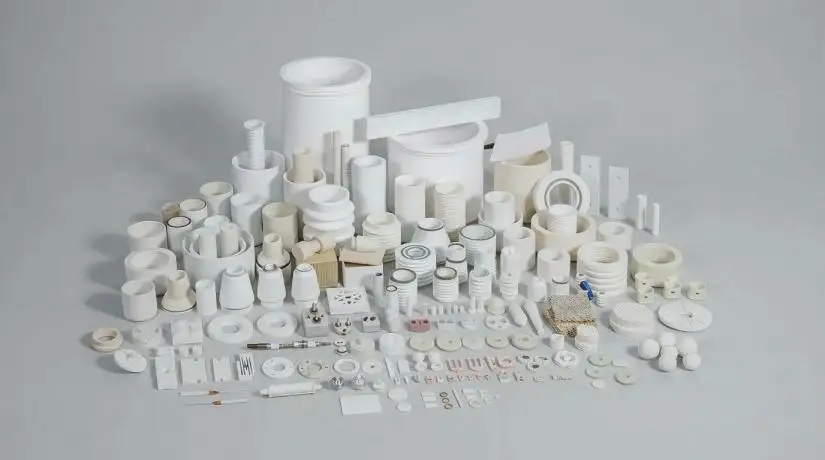
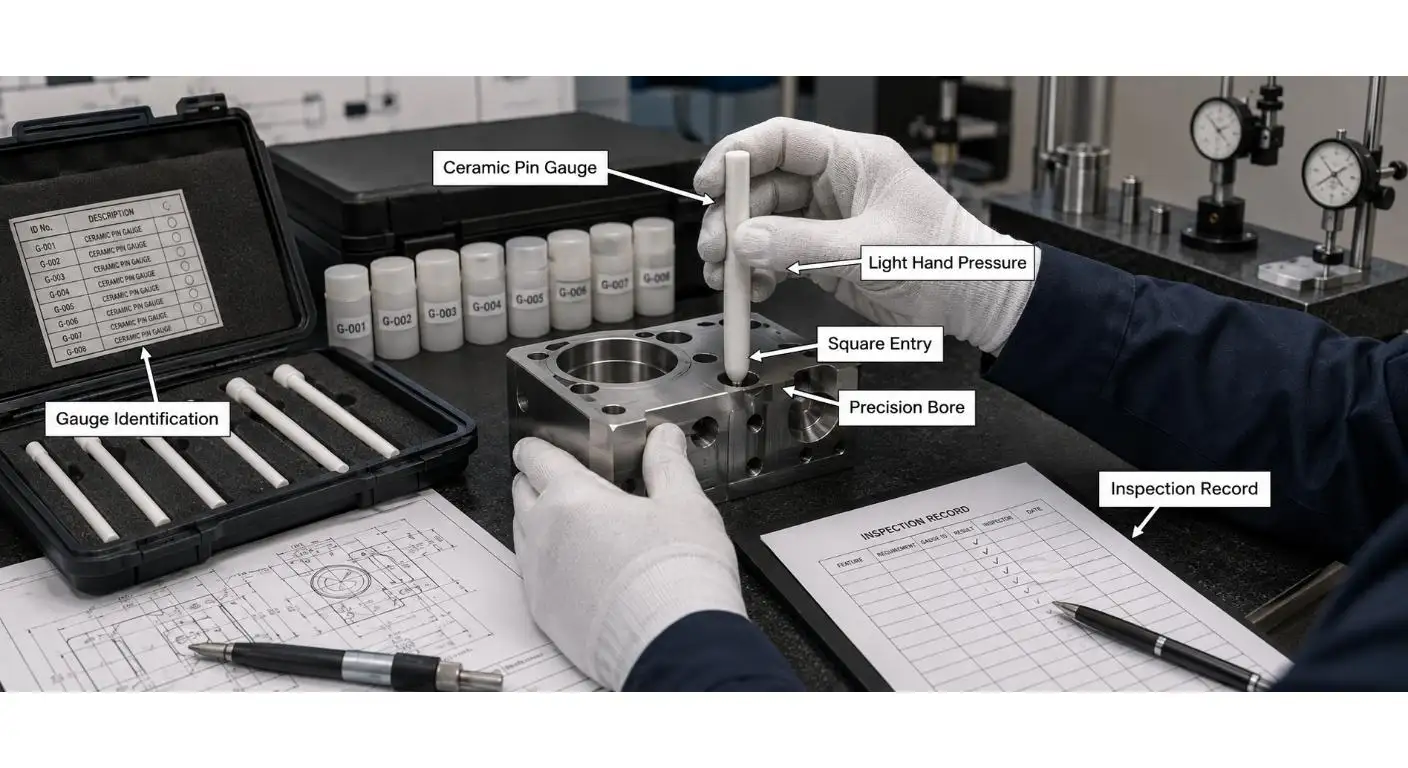
Advanced Ceramic Machining converts ultra-hard, high-purity ceramics into precise, reliable components for harsh environments and mission-critical systems.

Understanding Ceramic Machining And Why It Matters
Ceramic machining is not a simple extension of metalworking. Ceramics are brittle, anisotropic, and sensitive to thermal and mechanical shock. Their advantages are equally distinct: low density, high hardness, superb wear behavior, chemical inertness, outstanding temperature stability, and electrical insulation. When Advanced Ceramic Machining is engineered correctly, these traits turn into longer service life, tighter performance windows, and consistent operation where metals and polymers fail.
At UPCERA, we view the process as a controlled chain from powder to precision:
•Powder engineering and forming: uniform green density by pressing, tape casting, or injection molding.
•Green or pre-sinter machining: features are introduced while strength is low and tool wear is minimized.
•Sintering and HIP: densification to near-theoretical density closes porosity and stabilizes microstructure.
•Hard machining: diamond grinding, lapping, and polishing set final tolerance and surface integrity.
•Inspection and finishing: full metrology, subsurface damage control, cleanliness, and packaging.
Industry pain points are well known but solvable. Dimensional drift from sintering shrinkage challenges scale-up. Local density gradients cause ovality and bore taper. Aggressive grinding can seed microcracks that propagate in service. In ultra-hard phases, removal rates are slow and tool wear is high. Thin walls and miniaturized geometries magnify thermal shock and fixturing errors. Batch inconsistency appears when powder chemistry or firing windows vary.
We mitigate these risks through material-aware DFM, predictive shrinkage mapping tied to real sintering curves, fixture strategies that stabilize thin sections, and closed-loop inspection that tracks concentricity, cylindricity, and roughness. Lessons learned from high-volume optical sleeves and ferrules guide our approach to micron-level coaxiality and bore tolerance at scale – a core requirement for low insertion loss in fiber optics.
Materials Selection Guide & Tips for Advanced Ceramic Machining
Choosing the right ceramic is the highest-leverage decision in any Advanced Ceramic Machining program. The material defines not only performance in the field but also manufacturability, yield, and cost.
Zirconia Family (Y–TZP, Colored Grades, ZTA, ATZ)
Zirconia delivers high fracture toughness, strong wear resistance, and electrical insulation. It also supports complex geometries with thin webs and fine bores. Colored variants add functional design value without sacrificing strength.
• Blue zirconia: rare-earth doping (e.g., Co, Ce) produces a deep, uniform blue. It combines premium aesthetics with high wear resistance, ideal for visible consumer devices and decorative yet functional parts.

•Black zirconia: transition-metal or carbide doping yields dense, stable black. It resists discoloration better than most black ceramics and enables “invisible high performance” in consumer and medical designs.

•ZTA (Zirconia-Toughened Alumina): alumina hardness plus zirconia toughness. Compared with pure alumina, it improves thermal shock and wear. Compared with pure zirconia, it lowers cost and improves high-temperature stability.

•ATZ (Alumina-Toughened Zirconia): zirconia matrix with alumina toughening. Tougher than ZTA and more impact-resistant, with better high-temperature behavior than pure zirconia. Suited to harsh, impact-prone conditions.

Tip: zirconia’s transformation toughening blocks crack growth, but surface phase changes can raise roughness and reduce strength. Use fine-grit finishing, controlled coolant, and gentle deburring to protect surface integrity.
Alumina And 99.99% Ultra–High–Purity Alumina
Alumina is the workhorse insulator: hard, chemically inert, and cost-effective. For demanding optics and electronics, 99.99% alumina pushes performance further. Ultra-high-temperature sintering achieves very dense, near zero-porosity structures. It withstands molten metals, plasma, and corrosives. It also offers ultra-low dielectric loss and can reach sub-nanometer surface polish.

- Tip: choose high-purity alumina when dielectric stability, vacuum cleanliness, and optical-grade finishes are mandatory. Standard alumina remains the best choice for durable, cost-sensitive isolators, bushings, and fixtures.
Sapphire And Ruby
Sapphire, a single-crystal alpha-alumina, combines Mohs 9 hardness with stability from UV to IR and from cryogenic to high temperatures. It is chemically inert and resistant to radiation, making it a premier “engineering crystal” for optical windows, sensor protection, and semiconductor viewports. Ruby is chromium-doped alumina. It retains Mohs 9 hardness and high temperature resistance, with excellent wear and corrosion behavior and distinct red-transmittance. It excels in precision bearings, nozzle orifices, gauging tips, and laser components that benefit from optical detection.


- Tip: single crystals are anisotropic. Crystallographic alignment, disciplined coolant management, and calibrated feeds guard against edge chipping and optical artifacts during Advanced Ceramic Machining of single crystals.
Aluminum Nitride (AlN)
Aluminum Nitride (AlN) couples high thermal conductivity (around 70 – 200 W/m·K) with electrical insulation and a thermal expansion closely matched to silicon. It resists plasma erosion and strong acids or alkalis and remains stable at high temperatures. For high-power density electronics, RF modules, and heat-spreading substrates, AlN is often the default choice.

- Tip: Oxygen raises phonon scattering in AlN, reducing conductivity. Control powder oxygen content and firing chemistry; confirm thermal targets via lot-by-lot diffusivity testing.
Silicon Nitride (Si3N4)
Si3N4 combines ultrahigh strength with lightweight design and exceptional thermal-shock resistance, maintaining stability toward 1900°C in non-oxidizing atmospheres. These traits suit aerospace hot sections, precision ceramic bearings, semiconductor etch hardware, and biomedical components.

- Tip: the covalent lattice makes Si3N4 difficult to grind. Use sharp, well-cooled diamond tools, incremental step-downs, and spark-out passes to limit subsurface damage.
Silicon Carbide (SiC)
SiC combines Mohs 9.2 – 9.3 hardness with very high temperature capability and good thermal conductivity. It features low thermal expansion and strong chemical inertness and remains stable under high-frequency fields and intense radiation. This makes SiC suitable for extreme wear components, plasma-facing parts, and abrasive optical environments.

- Tip: SiC’s hardness raises heat at the cut zone. Fine abrasives, rigid fixturing, and precise coolant delivery are critical to prevent microcracks and thermal shock.
Practical selection guidance for Advanced Ceramic Machining:
•Define the failure mode first: wear, fracture, corrosion, thermal shock, or RF loss.
•Balance toughness and hardness: use zirconia or ATZ for impact; use ZTA or alumina for high-temperature wear stability.
•For heat plus electrical insulation, start with AlN; for heat plus abrasion, consider SiC.
•For optics and sealing, use sapphire; for miniature wear points with visual detection, use ruby.
•For structural performance with aesthetics, choose blue or black zirconia.
UPCERA Capability, Products, and the Path from Prototype to Scale
Founded in 2003, UPCERA was the first in China to independently develop zirconia ceramic sleeves for optical communication. Advanced Ceramic Machining is embedded in our DNA – we validated precision before we expanded capacity. Today, our SC/LC sleeves and ferrules support the backbone of 5G, optical modules, computing power centers, and data-center ecosystems.
•Ceramic sleeves: SC/LC and custom sleeves with exceptional concentricity, enabling low insertion loss in fiber interconnects for 5G and fiber-laser systems.
•Ceramic ferrules: SC-type, LC-type, and large-bore custom ferrules tailored to specialty fibers and laser delivery use cases.
•Sapphire and ruby components: high-transmission, wear-resistant single crystals for optics, sensing, and precision instrumentation environments.
•Ceramic rods: high-precision rods in zirconia, alumina, silicon carbide, and other grades for machinery, medical, and semiconductor fixtures.
How we reduce program risk and total cost:
•Application-specific material mapping based on real machining behavior, not only datasheets.
•DFM that embeds shrinkage compensation, grinding allowances, and fixture strategy from day one.
•Lean, statistically controlled lines refined in high-volume sleeve and ferrule manufacturing.
•Closed-loop QC that detects subsurface damage and secures batch-to-batch repeatability.
Call to Action
Begin your next Advanced Ceramic Machining project with a clear plan. Share your drawings, target environment, and key failure modes with UPCERA. Our team will recommend an optimal ceramic, define a stable process window, and outline a cost-effective path from prototype to volume. Contact us to schedule a materials selection workshop and DFM review – and turn complex ceramic requirements into dependable, manufacturable components.


