 English
 中文
中文







Custom Alumina Ceramics: Precision • Rigidity • Reliable Automation
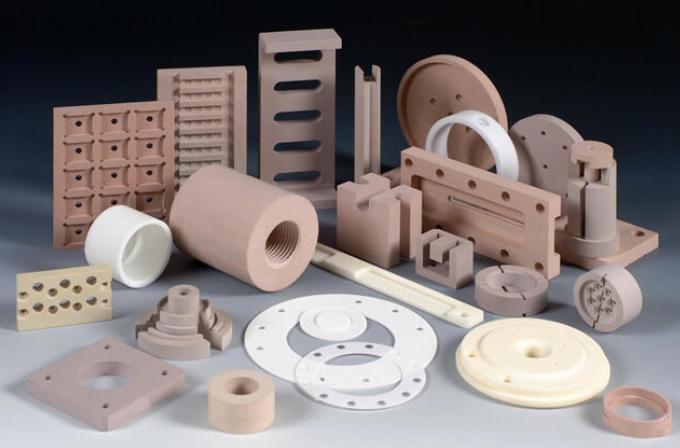

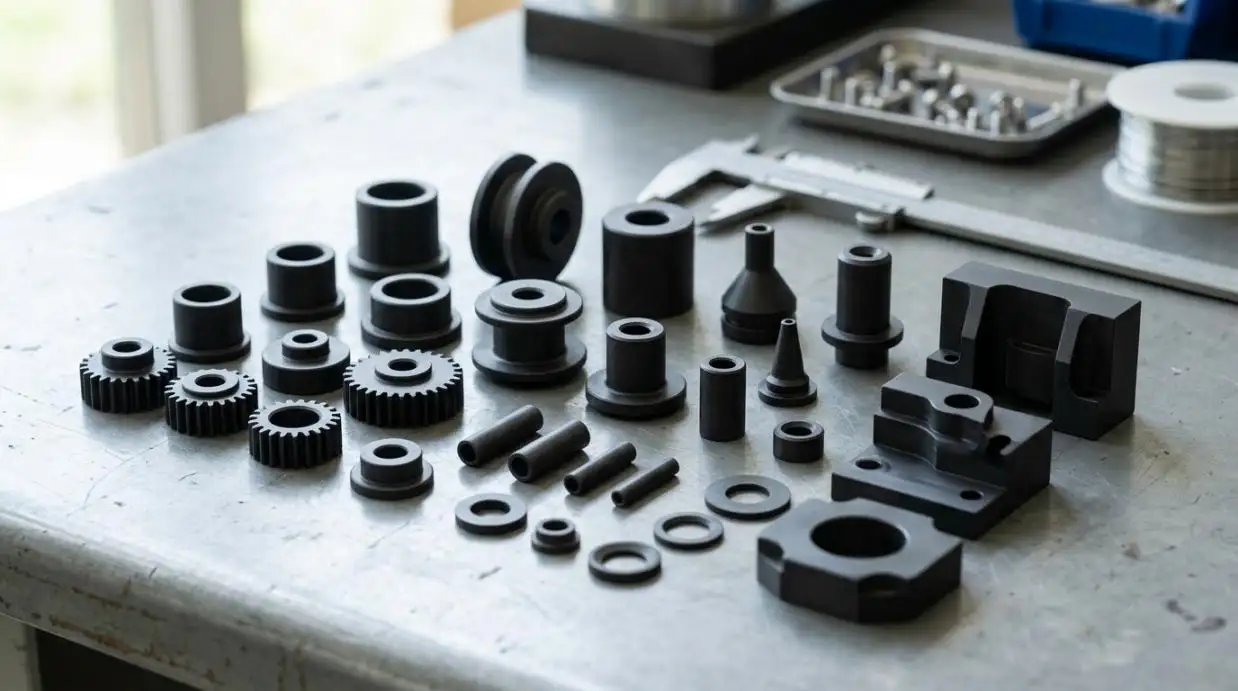
Custom Alumina Ceramics from UPCERA raise precision, enhance rigidity, and improve automation reliability in contemporary production systems. When parts must hold their shape under heat, resist abrasion at sliding interfaces, and keep electrical systems isolated, few materials deliver a better balance than high-purity alumina. Custom Alumina Ceramics turn that material advantage into practical performance by matching microstructure, geometry, and surface quality to the exact demands of your equipment.
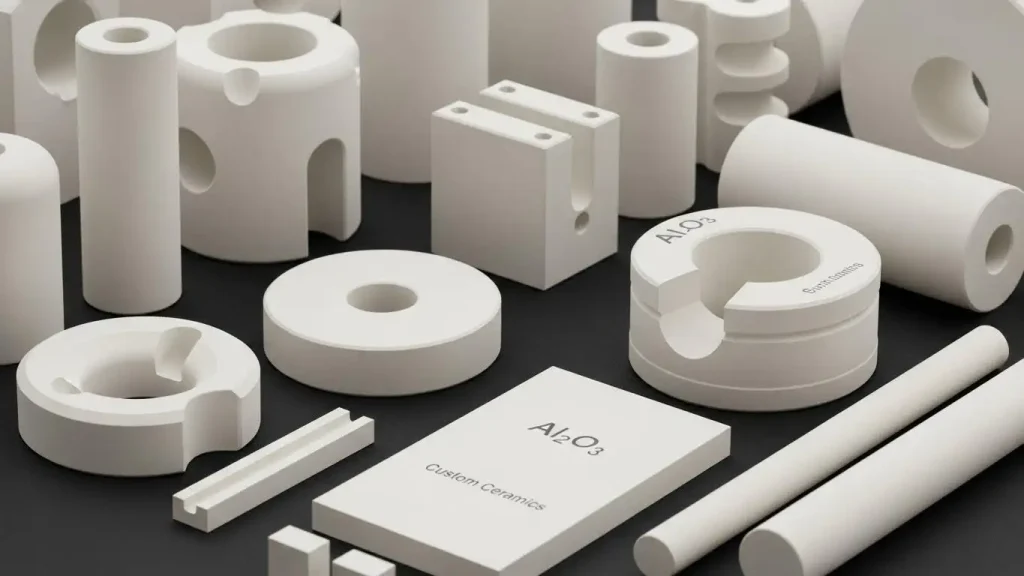
What Custom Alumina Ceramics Mean for Modern Engineering
UPCERA advances Custom Alumina Ceramics from high-purity alumina, refining the microstructure to high density and fine, uniform grains. This combination yields hard, dimensionally stable components that withstand thermal cycling and mechanical load. In automated assemblies and measurement systems, they keep calibration tight, reduce drift, and minimize maintenance.
UPCERA’s approach is system-level and closed-loop, not a single step in isolation. We manage the entire chain from powder selection to finished part: powder purity and particle size distribution, forming method (such as isostatic pressing or injection molding), green machining, sintering profiles, and diamond finishing. That discipline produces repeatable tolerances, clean surfaces, and parts that integrate smoothly into tight mechanical and electro-mechanical envelopes. The outcome is simple: Custom Alumina Ceramics that hold their geometry and deliver consistent performance across long duty cycles.
- Material Fundamentals of Custom Alumina Ceramics
Alumina’s advantage is rooted in its properties:
•High hardness and excellent wear resistance for long life in abrasive or high-contact environments.
•Thermal stability with a relatively low coefficient of expansion, supporting alignment at elevated temperatures.
•Broad chemical inertness shields Custom Alumina Ceramics from acids, bases, and solvents, eliminating pitting, swelling, and surface wear.
•Paired with high dielectric strength and superior electrical insulation, they excel in systems where motion, sensing, and actuation coexist.
This performance shows up in reliable wafer arms, stiff guide rails, insulating standoffs, valve seats that maintain sealing surfaces, and precision bushings that resist ovalization and galling.
- It all depends on microstructure management: consistent grain size and strong densification lower porosity and residual stress, limiting subcritical crack growth under vibration or repeated contact. With stabilized microstructures, reliability rises and automated assemblies run quietly and smoothly.
- Compared with Traditional Options
Engineers often default to metal or polymer when designing moving or structural interfaces. Each has merits and limits:
•Metals: High toughness and ease of machining, but vulnerable to abrasion, oxidation, and thermal expansion that can shift critical alignments or increase backlash.
•Polymers: Lightweight and cost-effective to mold, yet prone to creep, softening, and chemical attack in high-temperature zones or aggressive media.
•Off-the-shelf ceramics: Useful for general use, but frequently constrained by standard geometries, surface finish, or tolerance bands that don’t fit complex assemblies or low-particle environments.
Custom Alumina Ceramics bridge the gap. Tailored geometries, application-matched surfaces, and controlled microstructure deliver the precision and durability that catalog parts can’t, while outperforming metals and polymers in abrasive, thermal, or corrosive settings.
- UPCERA‘s Advantages in Precision and Manufacturing
UPCERA aligns design intent with manufacturing capability to make Custom Alumina Ceramics dependable at scale. We select powders to achieve dense, stable bodies; tune forming to preserve uniformity in complex shapes; set sintering cycles for dimensional stability; and use diamond grinding and polishing to achieve surface roughness that supports predictable friction and minimal particle generation. Metrology ties it all together – CMMs, optical systems, and tailored inspection plans verify every critical dimension and surface.
Key outcomes you can expect:
•Fine tolerances and consistent fit deliver predictable motion and calibration repeatability.
•Durable sliding and rolling interfaces resist wear, supporting longer service life.
•Mechanical rigidity that maintains kinematics under load and vibration.
•Chemical and corrosion resistance in acidic, alkaline, and solvent exposure.
•Thermal stability to limit drift during high-temperature operation.
•Excellent electrical insulation for safe isolation near sensors and actuators.
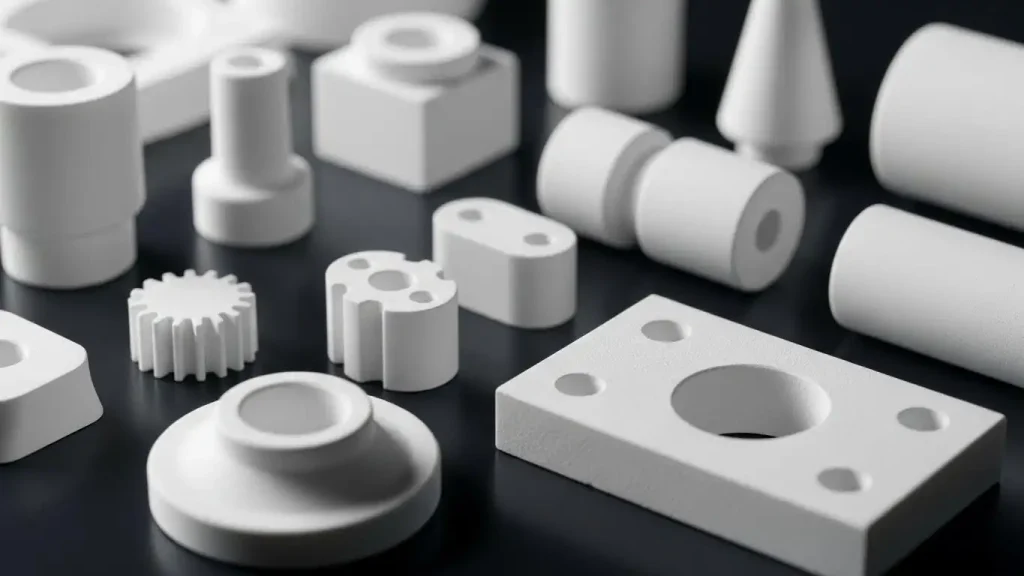
Precision, Rigidity, and Reliable Automation with Custom Alumina Ceramics
Repeatability is the backbone of automation. Custom Alumina Ceramics deliver the stiffness and cleanliness needed to prevent warp, drift, and particle shed, stabilizing motion and safeguarding wear interfaces while keeping calibration steady under heat and vibration. In high-duty cycles, hardness resists abrasion; in thermal zones, low expansion preserves alignment; in corrosive media, inert chemistry stops pitting and swelling. Each factor lifts system availability and reduces unplanned downtime.
Rigidity is central to metrology, handling, and precision positioning. Stiff nests, rails, and bushings keep kinematics true under load, while stable insulating parts prevent leakage currents and cross-talk in compact electro-mechanical assemblies. Polished, low-shedding alumina supports strict contamination targets for semiconductor and medical production. Clean, low-adhesion surfaces combined with high-stiffness designs and precision tolerances enable repeatable performance across shifts and retooling, even under ambient swings.
What improves with Custom Alumina Ceramics at UPCERA:
•Wear: Abrasive wear resistance stops groove formation and preserves critical dimensional integrity.
•Thermal drift: Dimensional stability limits thermal-induced drift and recalibration.
•Chemical attack: Inert alumina resists acids/alkalis, sustaining seals and assembly fits.
•Electrical isolation: Strong dielectric properties prevent shorts and signal noise.
•Tolerance stack-up: Tight feature control reduces accumulated error, raising yield.
- Design and Process Insights that Improve Reliability
Getting the most from Custom Alumina Ceramics involves a few practical choices:
•Specify surface finish based on the interface: a tuned roughness balances friction and wear, and reduces particle generation.
•Manage edges and transitions: small radii and well-placed chamfers reduce stress concentrations at mount points and corners.
•Control ceramic-to-metal interfaces: use compliant fixtures or defined preload to avoid local chipping and micro-fracture.
•Sharp internal corners and abrupt section changes elevate risk; in Custom Alumina Ceramics, choose generous radii and gradual blends.
•Request uniform density and tight microstructural control to slow subcritical crack growth in motion-intensive systems. UPCERA supports these design-for-reliability practices.
•For cleanroom applications, specify polishing protocols and post-process cleaning to lower trace residues and support ISO-class environments.
Applications and How to Work with UPCERA
Custom Alumina Ceramics are chosen anywhere durable precision is critical:
•Semiconductor fabrication: wafer handling arms, alignment fixtures, and insulating spacers that enable clean, stable motion and low contamination.
•Medical and dental devices: wear-resistant guides and biocompatible housings for reliable procedures and sterilization cycles.
•Automotive and aerospace: heat-exposed bushings, rigid nests, and corrosion-resistant seats that endure vibration and fluids while holding geometry.
•Industrial automation: ceramic rollers, guide rails, and precision bushings for continuous duty and consistent throughput.
•Electronics and power: insulating substrates, high-voltage spacers, and RF-safe supports for stable electrical performance.
•Chemical processing: valve components, seals, and housings that resist aggressive media and maintain sealing behavior.
UPCERA tailors each component to its function. For precision guides and bushings, we optimize straightness and roundness to minimize runout and achieve smooth travel. We build valve seats with the right hardness and seal finish to combat chemical attack and erosion. Custom Alumina Ceramics insulating standoffs from UPCERA deliver dielectric margin, rigidity, and fine dimensional control. We engineer tolerances to cut assembly touch time and enable interchangeable builds, then qualify parts under thermal stress, vibration, contact wear, and cleanroom protocols.
How to engage with UPCERA
Work with UPCERA to raise accuracy, stiffness, and automation reliability. Provide prints, fits, and operating parameters; our team delivers Custom Alumina Ceramics with achievable tolerances and balanced surfaces. We’ll review geometry and interfaces, supply evaluation samples, and issue fast quotations to stabilize motion systems and extend service life.


