 English
 中文
中文







Al₂O₃ Ceramics for Wear Resistance: Seals, Grinding Media, and Chute Liners
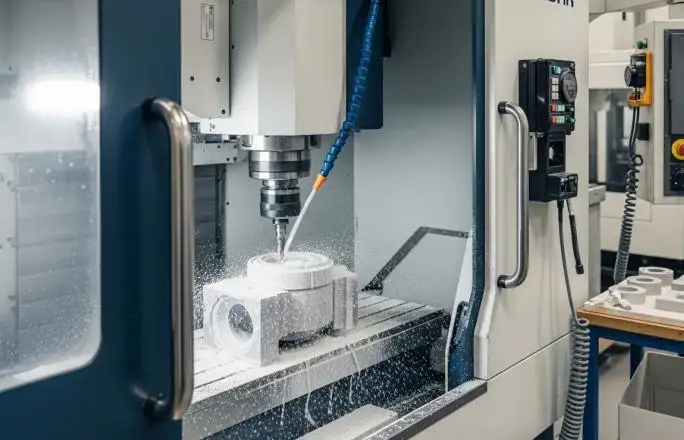
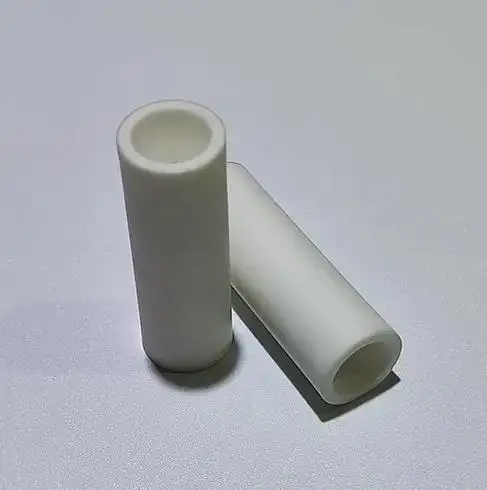
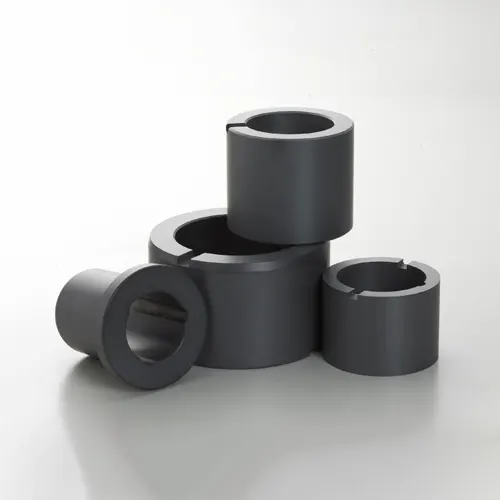
Al₂O₃ ceramics, or aluminum oxide ceramics, show impressive performance for their cost because they hold up very well to wear. This makes them useful almost anywhere, from mining conveyors to high-speed pumps.
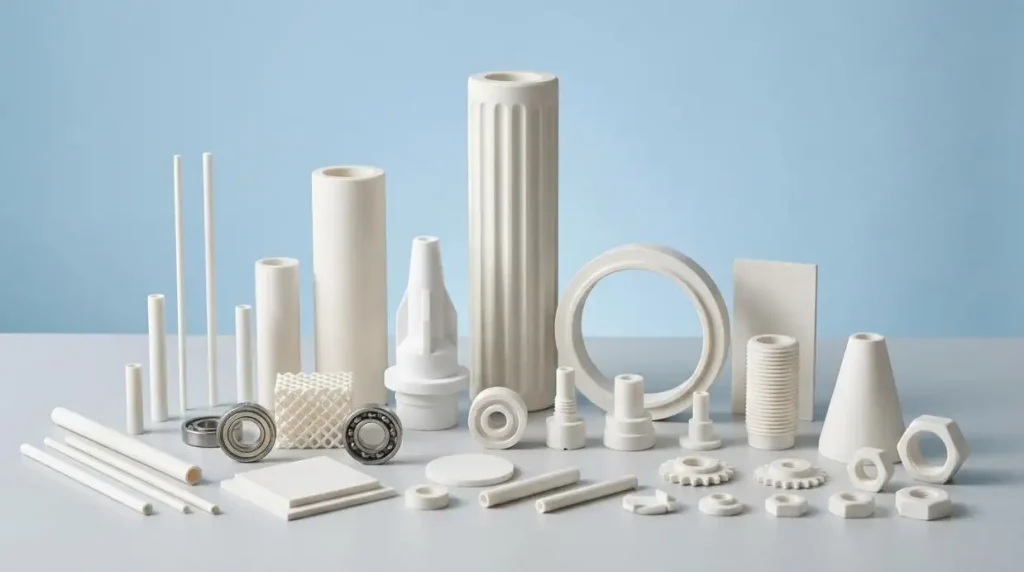
What causes Al₂O₃ ceramics to resist wear so well? High-purity Al₂O₃ exhibits high hardness, typically around 1500–2000 HV depending on grade, making it much harder than most steels. When polished to a smooth surface and used under appropriate conditions, it can achieve low friction, significantly reducing wear compared to conventional metal-to-metal contact.
Al₂O₃ ceramics also produce lower overall equipment operating costs and equipment that lasts longer because of their extreme hardness. Al₂O₃ ceramics will be reviewed in the three distinct major industry functions of seals, grinding media, and chutes liners.
1. Al₂O₃ Ceramic Seal Rings: Leakage Protection
Mechanical seals are the first line of defense for pumps, valves and compressors. Typical metal seals eventually suffer wear and corrosion from the fast rotation and aggressive fluids; an ideal substitute for these seals are Al₂O₃ ceramics, which have Rockwell hardness HRA 78 to 83.
Al₂O₃ Ceramic Seal Rings are typically made of 95% to 99.9% alumina. The greater the alumina content, the greater the wear resistance and stability. For highly critical applications, manufacturers will use advanced composites, such as Zirconia Toughened Alumina (ZTA). ZTA Seal Rings are also a good substitute for Al₂O₃, because of Alumina's extreme hardness, alongside Zirconia's extreme mechanical properties.
•Leakage risk can be significantly reduced in high-pressure sealing systems when properly designed and manufactured.
•Alumina seal rings' chemically inert nature provides the ability to come in contact with acids, alkalis, and solvents without the risk of corrosion.
•Wear and thermal shock resistance provide long-term stability in complex slurry conditions.
2. Al2O3 Ceramic Grinding Media: Pure and Efficient Processing
Grinding media produced from Al2O3 ceramics are required in industries where contamination is intolerable. In the manufacture of ceramic tiles, advanced ceramics and in paints, coatings, inks, pigments, dyes, specialty chemicals, and pharmaceuticals, the purity of the product is of the utmost importance.
Alumina grinding balls are widely used as wear-resistant grinding media. Depending on the application, they are typically made from 90%–99.5% Al₂O₃ and supplied in diameters ranging from 0.5 mm to 120 mm. These grinding balls are produced through controlled powder proportioning, forming, and high-temperature sintering, often above 1700°C, to achieve high density, hardness, and wear resistance.
Their main properties are as follows:
•A very low wear rate leads to extremely low contamination of ground materials.
•A high density and hardness (9 on the Mohs hardness scale) results in superior grinding efficiency when compared to steel grinding media.
•Full corrosion resistance leads to unerring function whether in wet or dry milling.
•Even with a higher cost, infrequent replacement and low media consumption ultimately provide large cost savings.
3. Al2O3 Ceramic Chute Liners: Armor Against Abrasive Impact
In mining and mineral processing, the hoppers, chutes and cyclones suffer from the constant flow of impact of high speed and abrasive materials. Left unprotected, equipment can wear out in a matter of months. Here, the Al2O3 ceramic liners are able to provide the solution.
The highly abrasive wear resistant alumina composites utilized in chutes are able to reach a Rockwell hardness of HRA 85-88 (9 on Mohs hardness), leading to a remarkable performance:
•Compared with conventional manganese steel components, ceramic wear parts can significantly extend service life in abrasive operating environments.
•Remarkable impact resistance is possible through toughening of the design and through the use of rubber backing layers.
•Direct adhesive bonding with high-strength ceramic glue, stud welding, and prefabricated ceramic linings that combine ceramic plates and steel or rubber backing are methods for quick and easy on-site replacements.
•Resistance to heat and corrosion would allow them to last longer in power generation, steel and cement industries.
4. Advanced Al2O3 Based Composite Solutions
Although standard Al2O3 ceramics have excellent wear resistance, the industrial environment may have some trade-offs that are necessary to achieve optimal functionality. Two of these trade-offs may include hardness and toughness. The development of zirconia toughened alumina (ZTA) has provided an excellent solution to this trade-off. ZTA has:
•A fracture toughness in the range of 7–9 MPa·m¹⁄², which is a significant improvement over the 4–5 MPa·m¹⁄² fracture toughness exhibited by conventional 99.5% alumina.
•Compared with conventional alumina liners, ZTA liners can provide improved resistance to edge chipping in high-stress wear applications.
•ZTA is optimal for sliding abrasion and highly impacting services from chute liners to complex mechanical seals used in slurry pumps.
5. Selection Guide: Matching Purity with Application
Al2O3 ceramics are only as good as their purity. Higher Al2O3 content makes the ceramic better in regards to wear resistance and enhanced chemical stability. Thus, a proper selection of the necessary purity level for the desired purpose makes the application more effective and costs less:
•92–94% Al₂O₃: Mechanical supports and wear resistant tiles for general purpose protection.
•95–96% Al₂O₃: Electrical insulators, alumina tubes and pump seals with controlled surface finish and resistance to wear.
•99%+ Al₂O₃: These are used in thermocouple tubes and precision dosing units as they are highly resistant to chemical attack.
Conclusion
It's no surprise that Al2O3 ceramics are the backbone of many industries. These inexpensive heart of the industry materials are sure to create cost benefits at all levels of the supply chain. Examples of Al2O3's utility include but are not limited to: precise seals that prevent fluid leaks, grinding media that ensure product purity, and armored chute liners that withstand extreme abrasion.
With the ongoing growth of the industry for composites such as ZTA, it is safe to say that we have every reason to believe that the next advancements in engineering design of abrasion resistant materials will also be exciting.
Frequently Asked Questions (FAQ)
Q1: How does Al2O3 ceramic compare to steel in hardness?
Al2O3 ceramic is not only harder than steel, but is also much harder in general. Al2O3 ceramic can be ranked 9 on the Mohs hardness scale while hardened steel is ranked 6–7 on the same scale. This is the reason why Al2O3 ceramic can be used in applications where wear resistance is a priority.
Q2: Can Al2O3 ceramic parts be used in wet environments?
Yes, Al₂O₃ ceramic components do not rust and offer good corrosion resistance in many wet and chemical environments due to their high chemical stability. Al2O3 ceramic can be used in wet griding systems, slurries and even in applications that are submersed.
Q3: Are Al2O3 ceramics brittle? Do they break easily?
Like most of the other ceramics, Al2O3 has a low tensile strength and can easily be cracked by a sudden impact. But for sliding abrasion, erosion and for compression loads, it can work very well. ZTA (Zirconia Toughened Alumina) is a much tougher in high impact conditions.
Q4: How do I choose the right Al2O3 purity for my application?
In short, 92–94% purity is for general use tiles, 95–96% for seals and tubes, and for highly corrosive environments or ultra-pure environments, 99% is recommended. It should be noted that as purity increases, prices increase, but also wear and chemicals resistance increases.
Q5: Compared to metal parts, is Al2O3 ceramics pricing considered favorable?Yes, the starting costs for Al2O3 ceramic may higher than that of common steel, but Al2O3 ceramic can offer significantly longer service life in abrasive environments Because of this, the long-term costs over the life of the equipment are usually lower and more cost-effective.


