 English
 中文
中文







Matching Fiber Ferrule Designs To Fiber Laser And Sensing Applications
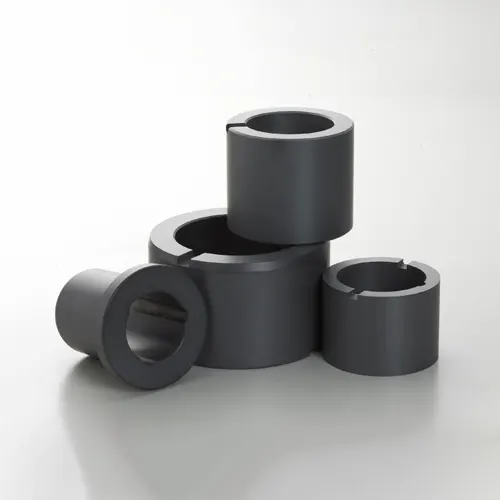
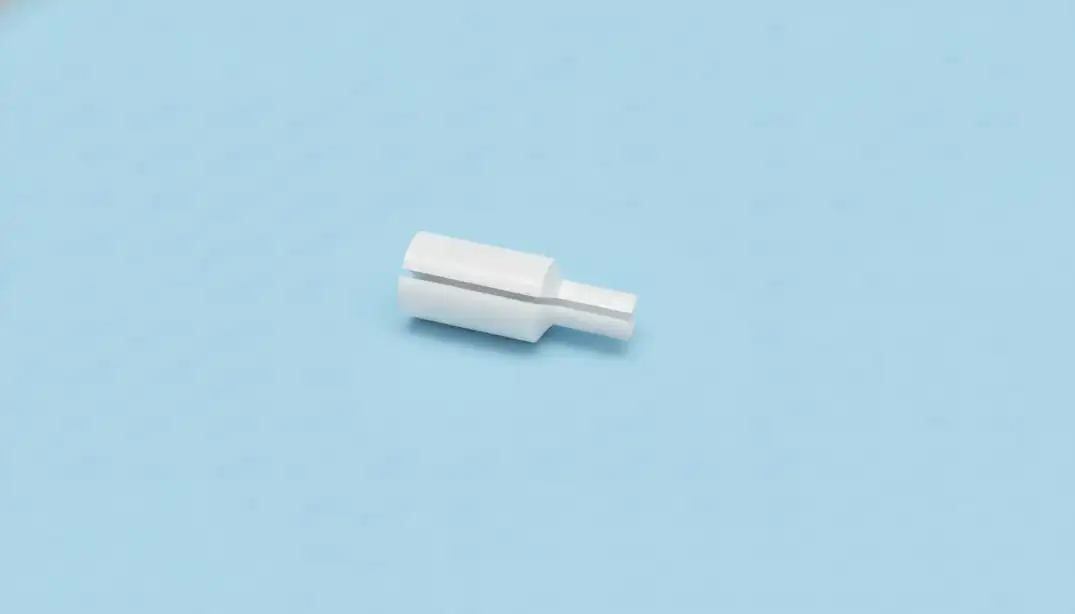
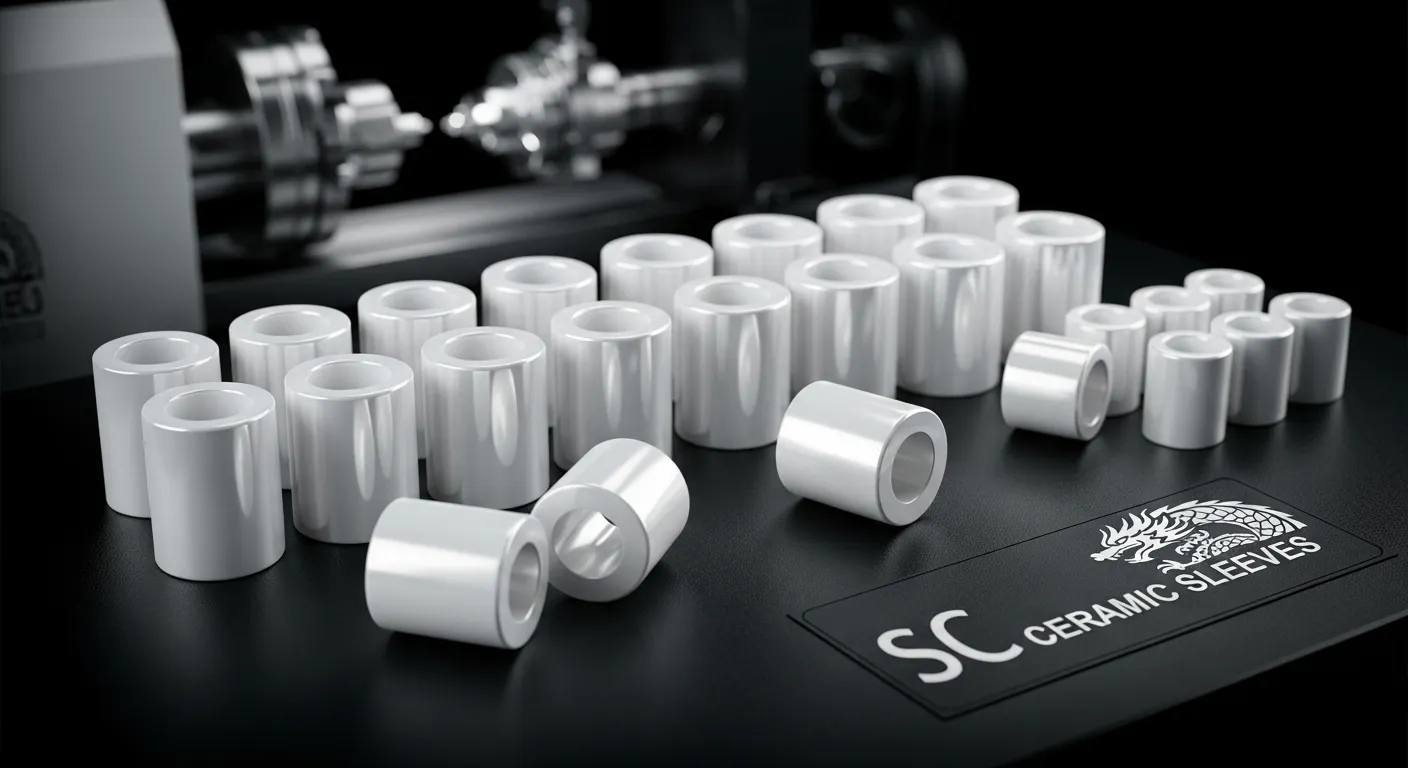
Picking the right Fiber Ferrule is a case-by-case situation. In fiber laser systems and advanced optical sensing networks, the Fiber Ferrule directly influences power handling, alignment stability, and signal fidelity. UPCERA understands that different applications demand different geometries, materials, and tolerances. This guide walks you through how to match specific Fiber Ferrule designs to real-world laser and sensing challenges—while keeping performance and reliability at the forefront.
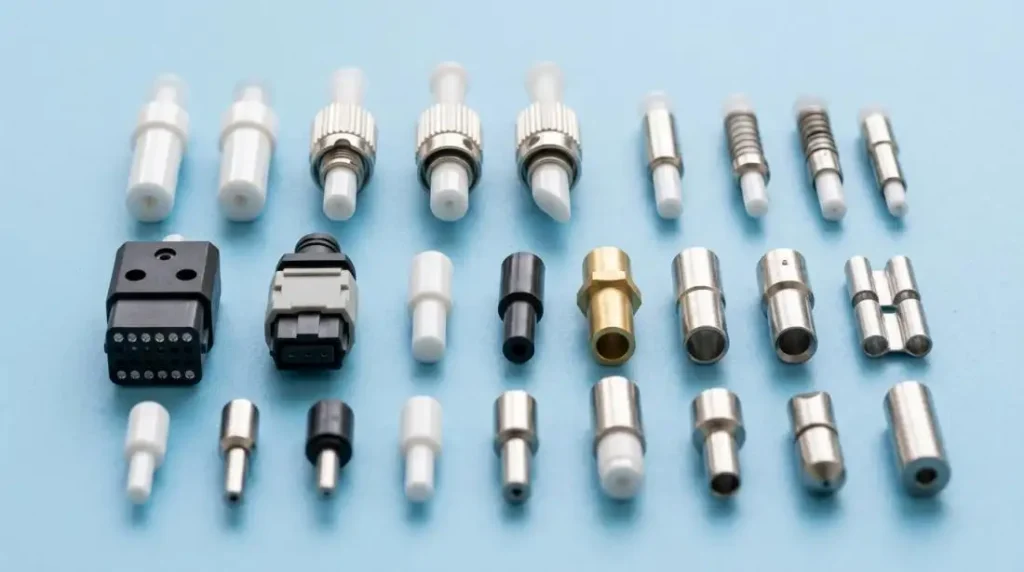
Why Fiber Laser and Sensing Applications Need Specialized Ferrules
Standard telecom ferrules work well for data transmission, but fiber lasers and sensing systems operate under unique conditions: higher optical power, wider temperature ranges, and often non-standard fiber geometries. A Fiber Ferrule used in a 1kW laser delivery system must resist thermal expansion and maintain concentricity under continuous vibration. Similarly, a Fiber Ferrule for distributed temperature sensing requires perfect inner diameter control to avoid micro-bending losses.
UPCERA has developed a suite of high-precision ceramic ferrules to meet customers' needs, including SC-type, LC-type, large-bore, double-hole, and custom ferrules, leveraging over 20 years of experience in ceramic manufacturing.
Key Performance Demands of Fiber Laser Systems
In comparison to traditional systems, fiber laser components may face thermal stress, power-related damage, or performance degradation under high optical power. Fiber Ferrule in a laser connector must deal with the following:
•High optical power density: Continuous wave lasers above 100 W can overheat and compromise the structural integrity of a low-quality Fiber Ferrule.
•Core alignment: Displacement in the Ferrule affects the laser source and results in back-reflections.
•Repeated mating cycles: Industrial laser applications demand Ferrules that withstand and endure countless connections without mechanical failure.
UPCERA's Fiber Ferrule Solutions
Fiber Ferrules face extreme challenges. UPCERA Fiber Ferrules are made of zirconia, which provide:
�� Thermal resistance: The thermal expansion of zirconia is comparable to that of silica Fiber, so there is less stress at high power.
�� Concentricity. UPCERA can support concentricity control up to ≤2μm depending on design and inspection requirements, centering the material at the Ferrule's center position.
�� Friction Resistance. UPCERA Fiber Ferrules are designed to reduce wear and chipping risk under repeated mating conditions.
Custom Fiber Ferrule Designs for Specific Configurations of Lasers
Some fiber lasers do not use the standard 125μm cladding fiber. High-power industrial lasers opt for Fiber cores with diameters in the range of 200μm to 1,000μm, thus requiring a Fiber Ferrule with a wider inner diameter. For high-power applications, we provide custom large-bore designs with ID tolerance can be evaluated based on bore size, geometry, and application requirements.
When choosing a custom Fiber Ferrule:
•Large Core Fiber Delivery Systems: A standard ferrule compresses the fiber, causing mode distortion. UPCERA's custom inner diameter solves this problem.
•Double-Hole Fiber Ferrule Designs: These designs enable precise side-by-side positioning of two fibers within pump-signal combiners.
•Metal-Shank Hybrid Ferrules: These ceramic ferrules also have a metal-protecting shank and add strength and protection to the ferrule for extreme environments.
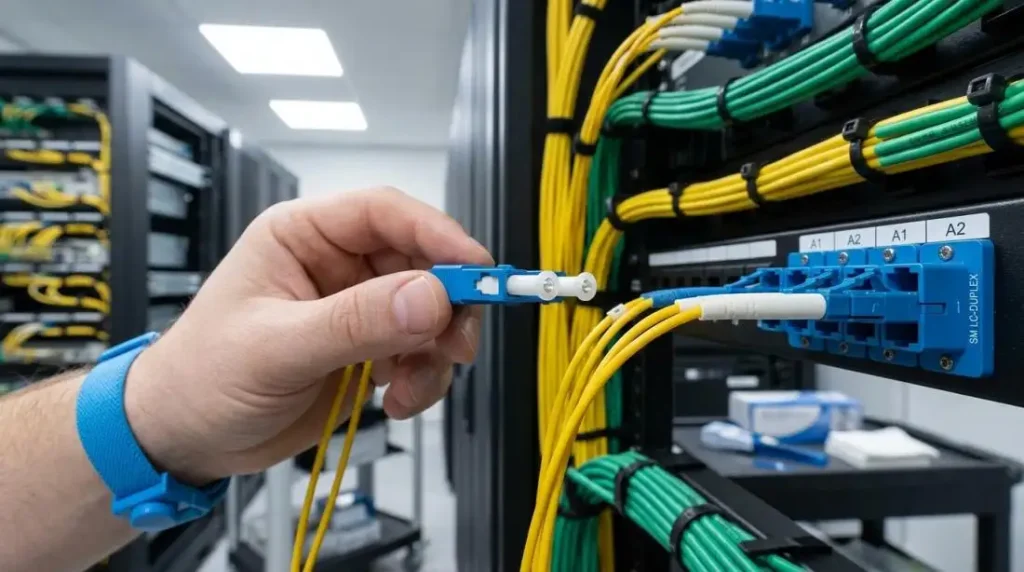
Matching Fiber Ferrule Geometry to Optical Sensing Applications
Fiber Optical Sensing Applications, such as Distributed Temperature Sensing, Strain Sensing, and Fiber Optic Gyroscopes, put Fiber Ferrules under different requirements. Systems like these require Ferrules that offer low back reflection, stable thermal cycling, and accommodate single-mode and polarization-maintaining fibers.
For those applications, Fiber Ferrules draw on the following qualities:
•Very low insertion loss: A loss of only 0.1dB will be a significant reduction in the signal to noise ratio for long distance sensing applications. Fiber Ferrules from UPCERA will have low insertion loss can be supported when ferrule geometry, polishing, and assembly conditions are properly controlled.
•APC polishing and connector assembly can support high return loss performance when properly designed and assembled
•Inner wall surfaces with a 0.03 μm surface roughness are achieved.
Recommended Fiber Ferrule Types for Sensing:
•LC-type Fiber Ferrule: Suitable for use in high density sensing arrays with small available volume.
•SC-type Fiber Ferrule: Preferred for the robust push-pull coupling of field deployable sensing units.
•Double-Hole Fiber Ferrule: Conducts dual-path sensing for temperature and strain measurements.
UPCERA's Quality Control Standards
UPCERA adheres to strict Quality Control standards to guarantee a 100% concentricity inspection at the laser and sensing production line. This gives our clients the following assurances:
•Comprehensive Traceability of Entire Batches: Each batch of Fiber Ferrule is traced to the designated raw material and production standards.
•Fully Confident Designs: Outer diameters ranging from 1 mm to 25 mm with a dimensional tolerance of ±0.002 mm. Standard lengths typically range from 5 mm to 300 mm, with end features machined to within ±0.005 mm depending on application requirements..
•Engineer Without Hesitation: UPCERA engineering enables clients to send non-standard Fiber Ferrule design documents or CAD drawings, and then delivers assembled solutions.
Integration of Photonic Systems
Looking to engage new technologies during and after 2026, UPCERA continues to expand its ferrule portfolio to support diverse optical communication and sensing applications, including custom ferrules, large-bore ferrules, double-hole ferrules, and sensing-grade ferrules. UPCERA intends to include features such as the installation of passive markers, unactivated fiber stubs, and 'extra-thick' windows fabricated from ceramic and sapphire, to improve laser shielding.
By matching the right Fiber Ferrule design to each application, engineers can reduce assembly time, lower total cost of ownership, and achieve field reliability that passive components alone cannot guarantee.
Conclusion: Match With Confidence
Whether you are building a 2kW fiber laser cutting head or a long-haul distributed acoustic sensing (DAS) system, the Fiber Ferrule you choose shapes your final performance. UPCERA's combination of zirconia precision, custom geometry capabilities, and 100% concentricity inspection ensures that your Fiber Ferrule is not a weak link—but an enabler of higher power, cleaner signals, and longer system life.
Explore UPCERA's full range of Fiber Ferrule designs, including SC-type, LC-type, double-hole, large-bore, and metal-shank options. Contact their engineering team with your application drawing and receive a recommended Fiber Ferrule specification matched to your fiber laser or sensing system.
Frequently Asked Questions (FAQ)
Q: Can the standard telecom Fiber Ferrule be used in a fiber laser?
A: It depends on the power level. For lasers equal to or greater than 50W, UPCERA suggests a custom large bore or zirconia Fiber Ferrule with more stringent concentricity and better thermal stability for a safe and reliable long-term solution.
Q: What concentricity tolerance does UPCERA guarantee for a sensing-grade Fiber Ferrule?
A: Due to 100% automated inspection, UPCERA can support concentricity control up to ≤0.002mm based on design and inspection requirements on Fiber Ferrule, and it fits well with high demanding sensing and metrology applications.
Q: Does UPCERA have a double-hole Fiber Ferrule for dual-fiber sensing?
A: Yes. UPCERA has a double-hole Fiber Ferrule design which allows two fibers to be placed side by side, letting one package perform both temperature and strain sensing.
Q: What is the lead time for a Fiber Ferrule custom made with a non-standard inner diameter?
A: A custom Fiber Ferrule drawing takes 2 – 4 weeks to be made, and mass production follows in shorter time intervals due to dedicated ceramic machining lines of UPCERA.
Q: Are UPCERA Fiber Ferrules compliant with standard LC or SC connector housings?
A: Yes. All UPCERA Fiber Ferrule designs are compliant with the global standards of the industry (LC, SC, SMA, etc.) and thus, fit into your current connector assemblies without any changes.


