 English
 中文
中文





How Zirconia Sleeve Design Improves Fiber Alignment?
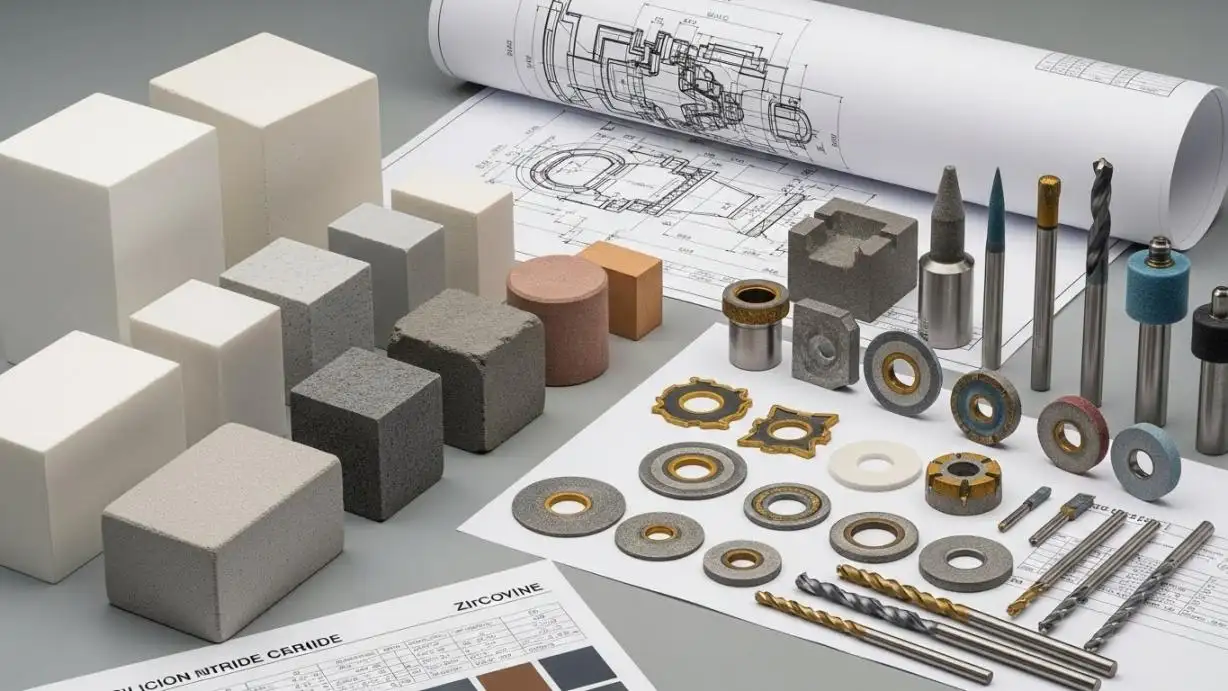
Zirconia Sleeve design plays a direct role in fiber alignment because the sleeve is the part that guides two ferrules into a controlled, repeatable position during connection. In fiber optic systems, even very small alignment errors can increase insertion loss and reduce connection stability. This matters even more in single-mode applications, where the fiber core is commonly around 9.0 μm and alignment tolerance is therefore very tight. Industry guidance also shows that lateral offset has a clear relationship with insertion loss, which is why connector precision remains a core topic in optical interconnect design.
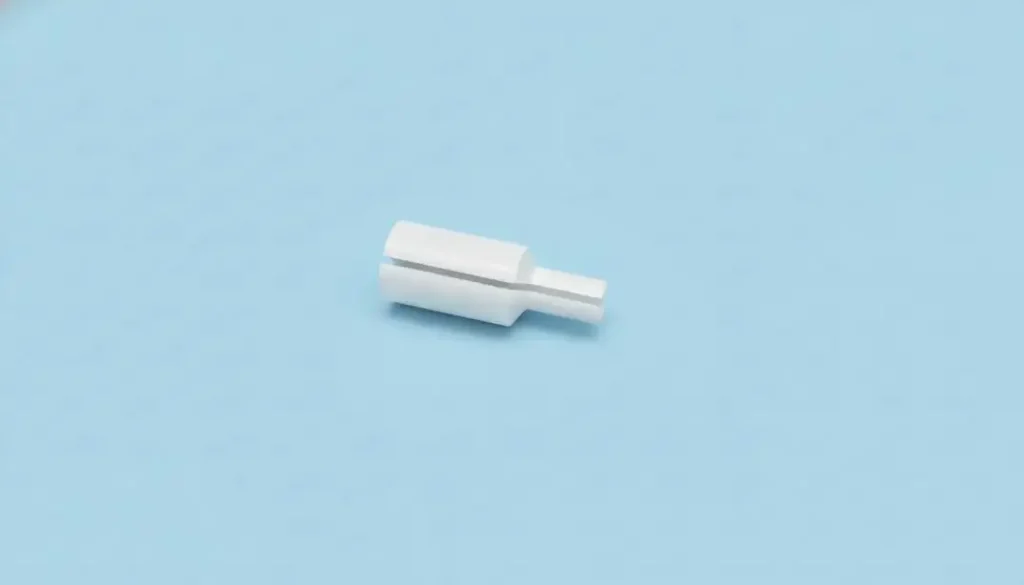
At UPCERA, we view zirconia adapter sleeves not as simple accessory parts, but as precision ceramic components that help customers build more stable optical connections, longer service life, and more dependable assembly performance.
Why Fiber Alignment Depends On Sleeve Design
Fiber connectors are expected to join two ferrules with minimal deviation. That sounds simple, but the optical path is highly sensitive. In practical terms, the sleeve must hold the ferrules in a stable position, guide insertion smoothly, and keep wear low over repeated mating cycles.
When alignment control improves, users often gain several practical benefits:
• Lower risk of insertion loss caused by lateral offset
• More consistent connector performance during repeated use
• Better support for stable signal transmission
• Reduced concern about wear-related dimensional drift over time
This is one reason ceramic alignment parts are widely used in fiber optic adapters. Thorlabs points out that ceramic alignment sleeves are used when mating some fiber connector styles, demonstrating that sleeve selection has a meaningful effect on alignment performance in actual optical applications.
What Makes a Zirconia Sleeve Effective
A well-made Zirconia Sleeve is not defined by material name alone. Its value comes from the combination of raw material quality, sintering control, grinding accuracy, and surface finish.
The zirconia adapter sleeve from UPCERA is fabricated from partially stabilized zirconia (Y-TZP), then refined through high-temperature sintering and precision grinding. This material route is important because zirconia is known in technical ceramics for its strong mechanical performance, high hardness, good wear behavior, and low thermal conductivity. Technical ceramics references also describe yttria-stabilized zirconia as a material that benefits from transformation toughening, which helps improve fracture toughness compared with more brittle ceramic structures.
For customers, that translates into practical value:
• High-Precision Alignment helps support accurate ferrule positioning and reliable insertion
• Outstanding Wear Resistance makes the part more suitable for long-term or high-frequency use
• Low Thermal Expansion supports dimensional stability during thermal change
• Smooth Surface Finish helps lower friction during insertion and removal
• Chemical Inertness makes the sleeve suitable for cleaner or more demanding environments
In UPCERA's design, the surface finish can reach Ra0.01 μm. That level of smoothness is useful because it helps reduce friction between mating parts and supports more stable long-term handling.
How Zirconia Sleeve Design Improve Fiber Alignment in Practice
The key design question is not only whether the sleeve can hold two ferrules, but how precisely and how consistently it can do so.
In fiber optics, optical loss often rises when the cores are not properly aligned. SENKO's technical note explains the relationship between lateral offset and insertion loss, which reinforces a basic engineering truth: small positional errors can create measurable optical penalties. SENKO also notes that tighter ferrule and fiber tolerances are needed to meet modern low-loss requirements.
That is where zirconia sleeve design becomes valuable.
A precision sleeve supports fiber alignment through several mechanisms:
• Controlled inner geometry to guide ferrules into a repeatable center position
• Stable material behavior that helps resist dimensional change
• Low wear so repeated mating does not quickly reduce accuracy
• Smooth contact surfaces that support cleaner insertion movement
This becomes even more important in single-mode connectors, where very fine core geometry leaves less room for positional error. Thorlabs lists typical return loss of 60 dB for properly polished FC/APC single-mode connectors with ceramic ferrules, which highlights how connector geometry and ceramic precision both affect final optical performance.
Where Customers Benefit Beyond Fiber Optics
Although fiber optic adapters are a leading use case, the value of a Zirconia Sleeve extends beyond telecom components. A precision ceramic sleeve can also support stable connection and positioning in other advanced assemblies.
UPCERA's zirconia adapter sleeve can be applied in:
• Fiber optic connection and adapter components
• Precision mechanical joints and positioning sleeves
• Vacuum and sensor isolation tubes
• Electrical insulation and support parts
• Medical and automation assembly systems
This broader use pattern also matches the general strengths of technical ceramics. CeramTec describes advanced ceramics as materials used where electrical insulation, corrosion resistance, wear resistance, and dimensional reliability are required. That makes zirconia a logical choice not only for optical interconnects, but also for semiconductor, medical, instrumentation, and automation systems.
How to Evaluate a Zirconia Sleeve Supplier
For buyers, the right question is not simply "Do you supply zirconia sleeves?" A more useful question is: How well does the supplier control the details that affect alignment stability?
A practical evaluation usually includes:
• Material system, such as Y-TZP
• Forming and sintering consistency
• Grinding capability
• Achievable surface finish
• Dimensional accuracy and repeatability
• Fit with the target adapter or assembly design
At UPCERA, we believe customers benefit most when every technical advantage is tied to a use result. High hardness is not only a material claim. It helps reduce wear. Low thermal expansion is not only a laboratory property. It helps preserve fit during thermal cycling. A smoother surface is not only a finish target. It supports lower friction and cleaner repeated use.
That is the kind of logic buyers can apply when comparing sleeves for optical, semiconductor, and precision mechanical projects.
Why UPCERA Focuses on Practical Performance
The market does not need ceramic parts that look good only on a datasheet. It needs components that help customers improve assembly quality, reduce connection risk, and support long-term equipment reliability.
With over 20 years of experience in zirconia sleeves, UPCERA has accumulated extensive expertise in high-volume production and tight tolerance control, especially for small inner diameter and high-precision alignment applications in fiber optics. UPCERA's Zirconia Sleeve solution is designed around that practical goal. By combining Y-TZP material, high-temperature sintering, precision grinding, and Ra0.01 μm surface finish, we help customers pursue more stable fiber alignment and more dependable part connection across demanding applications.
For clients working on fiber optic adapters, photonics assemblies, precision machinery, or clean-environment systems, sleeve design can make a real difference. It is a small component, but it influences alignment accuracy, insertion behavior, wear performance, and service life.
Contact UPCERA to discuss your adapter design, tolerance targets, and application environment. Our team can help you evaluate the right zirconia sleeve solution for fiber alignment, precision connection, and long-term assembly reliability.


