 English
 中文
中文







Technical Guidance on Stress and Phase Transformation in Zirconia Ceramic Product

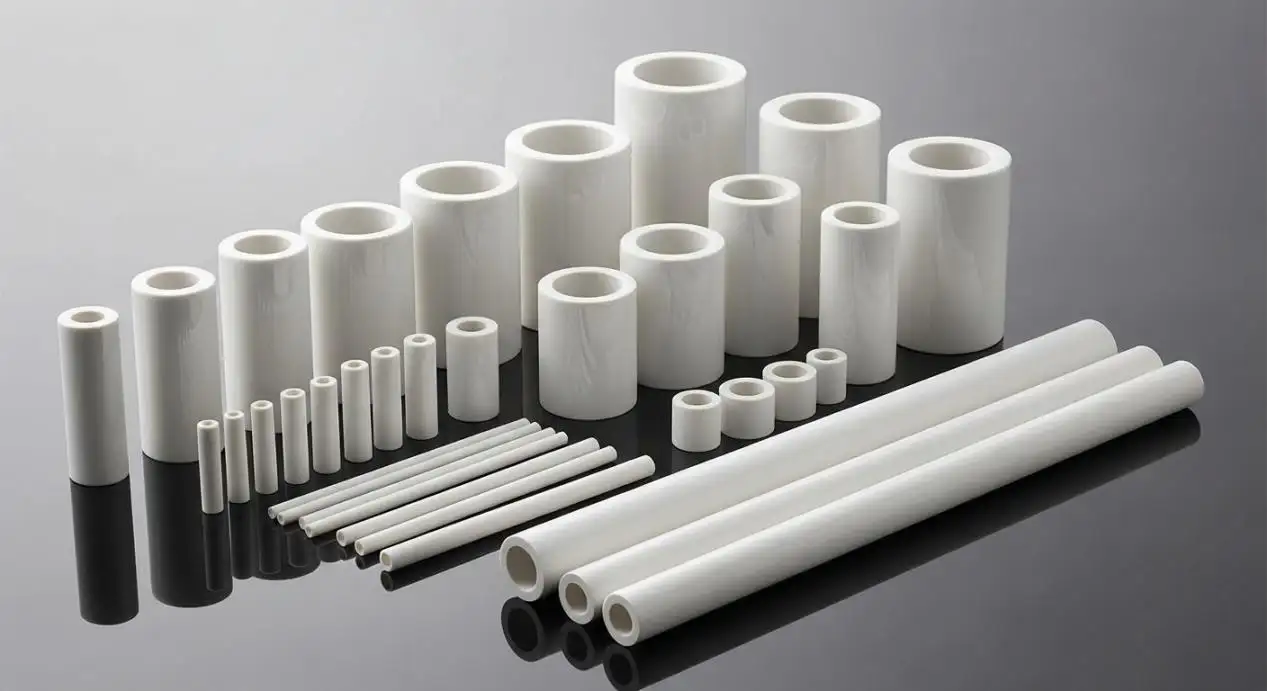
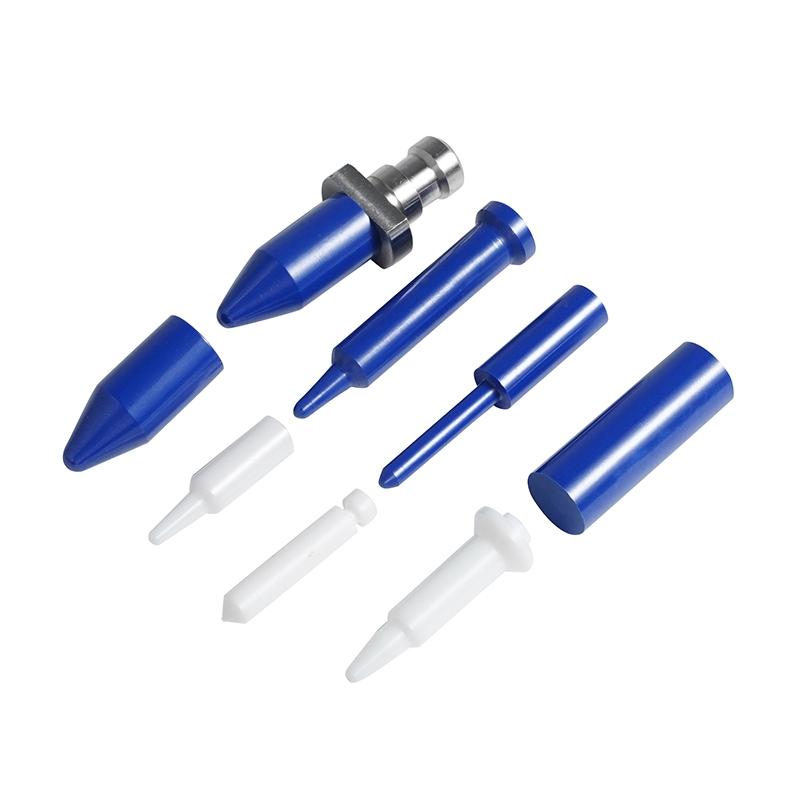
I. Introduction: Interaction Between Stress and Phase Transformation
Stress and phase transformation coexist and interact in zirconia ceramics. Among advanced ceramic materials, zirconia (ZrO₂) is distinguished by its unique stress-induced phase transformation mechanism. Understanding how stress drives phase transformation, and how transformation in turn modifies the stress field, is central to ensuring product reliability.
II. Core Mechanism: t-to-m Martensitic Transformation
Zirconia has three crystal structures: cubic (c), tetragonal (t), and monoclinic (m).
Metastable retention: By adding stabilizers such as Y₂O₃, the tetragonal phase (t), which normally exists only at high temperatures, can be retained or "frozen" as a metastable phase at room temperature.
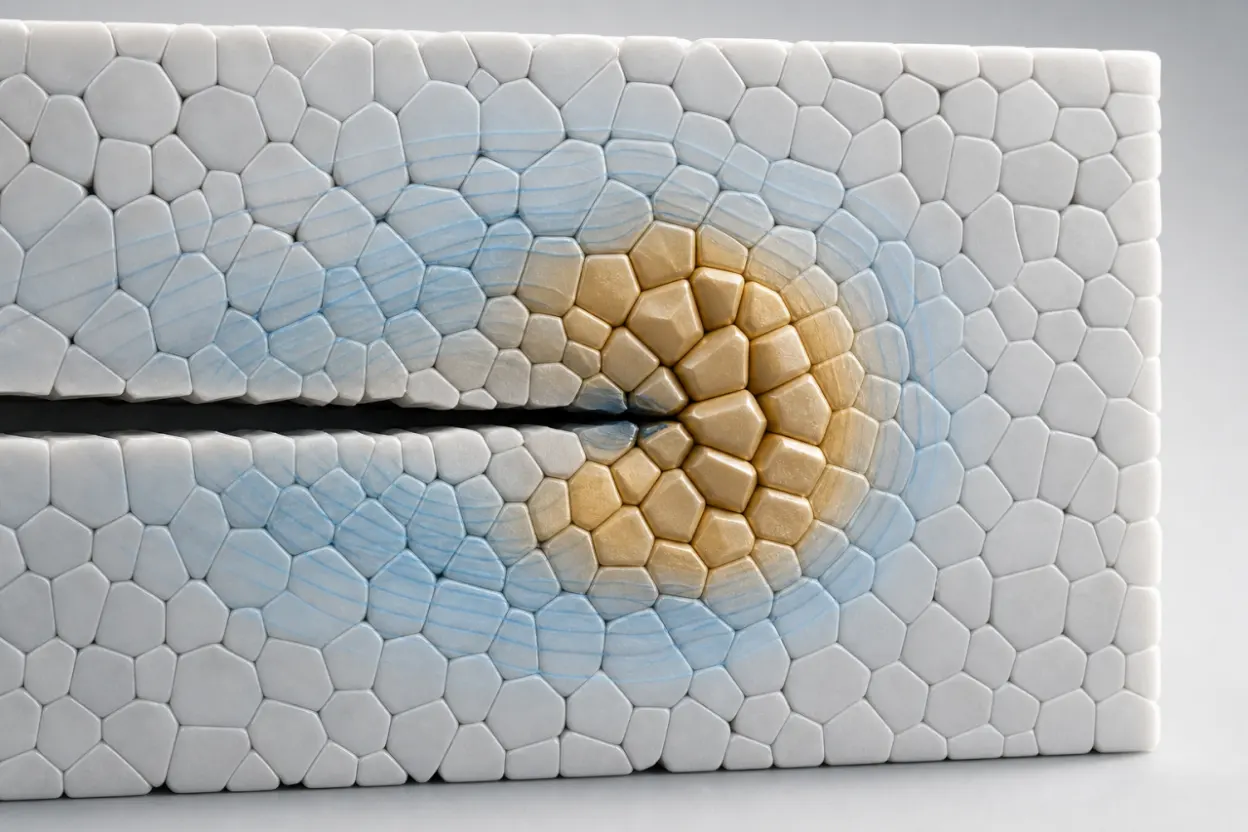
Stress activation: When the material is subjected to an external load, such as compression, impact, or crack propagation, the high tensile stress at the crack tip disrupts the metastable equilibrium and instantly triggers transformation from the tetragonal phase (t) to the monoclinic phase (m).
III. Research Priorities in Product Design: Balancing Toughening and Failure
In actual products, such as sleeves and structural components, the main research priority is to balance toughening against failure:
1. Critical Grain Size Control
Grain size acts as the switch for transformation. If the grains are too large, spontaneous t-to-m transformation may occur and cause cracking or spalling. If they are too small, stress cannot readily induce transformation, and the toughening effect is lost.
2. Creation of a Surface Residual-Stress Field
Sandblasting or subsequent heat treatment can be used to create a transformed surface layer approximately 10-100 μm thick. The resulting pre-compressive stress can significantly improve fatigue resistance.
3. Suppression of Low-Temperature Degradation (LTD)
Research focuses on preventing moisture (OH⁻) from inducing surface transformation without an external load. This is commonly addressed by adding a small amount of alumina or optimizing the sintering profile.
IV. Four Optimization Routes for Stress-Induced Phase Transformation
A difficult practical issue is why a zirconia sleeve may look smoother after fine grinding while its performance still depends on the match between machining-induced stress and transformation depth. This matching relationship is central to the production yield of high-precision ceramic components.
Optimizing the stress-induced phase transformation mechanism of zirconia ceramics is essentially a search for dynamic equilibrium: the metastable tetragonal phase (t-ZrO₂) must transform readily under load to absorb energy, yet remain sufficiently stable when no external load is present. Four core optimization routes are described below.
1. Precise Control of Grain Size (Size-Effect Optimization)
Identifying the critical size (Dc): When grain size exceeds the critical value, zirconia may transform spontaneously from t to m, reducing material strength. When grain size is far below the critical value, transformation resistance becomes too high for stress to trigger the transformation, eliminating the toughening effect.
Practical recommendation: For 3Y-TZP, grain size is commonly controlled within 0.3-0.5 μm to achieve an effective balance between transformation toughening and intrinsic material strength.
2. Asymmetric Design of Stabilizer Content
Stabilizers such as Y₂O₃, CeO₂, and MgO determine the chemical stability of the tetragonal phase.
Low-stabilization strategy: Moderately reducing yttria content, for example from 3 mol% to 2.5 mol%, can decrease tetragonal-phase stability and make it more responsive to stress at a crack tip, thereby enlarging the transformation zone around the crack.
Dual-component stabilization: Co-stabilization with cerium (Ce) and yttrium (Y) can combine the larger transformation zone and improved fracture toughness (KIC) associated with ceria-stabilized zirconia with the high hardness maintained by yttria.
3. Second-Phase Dispersion Toughening (ZTA/ATZ Systems)
Zirconia can be dispersed as a toughening phase in another matrix, such as alumina, so that elastic-modulus differences enhance stress transfer.
Modulus mismatch: The alumina matrix (Al₂O₃) is stiffer than zirconia. Under overall loading, stress is transferred more strongly to the zirconia particles, promoting transformation-related expansion and generating a stronger compressive stress field.
Microcrack synergy: Local microcracks associated with transformation can dissipate energy at the main crack tip, creating a combined transformation-plus-microcrack toughening barrier.
4. Gradient Design of Surface Residual Compressive Stress
Manufacturing processes can be used to build a reserve of compressive stress in the product surface.
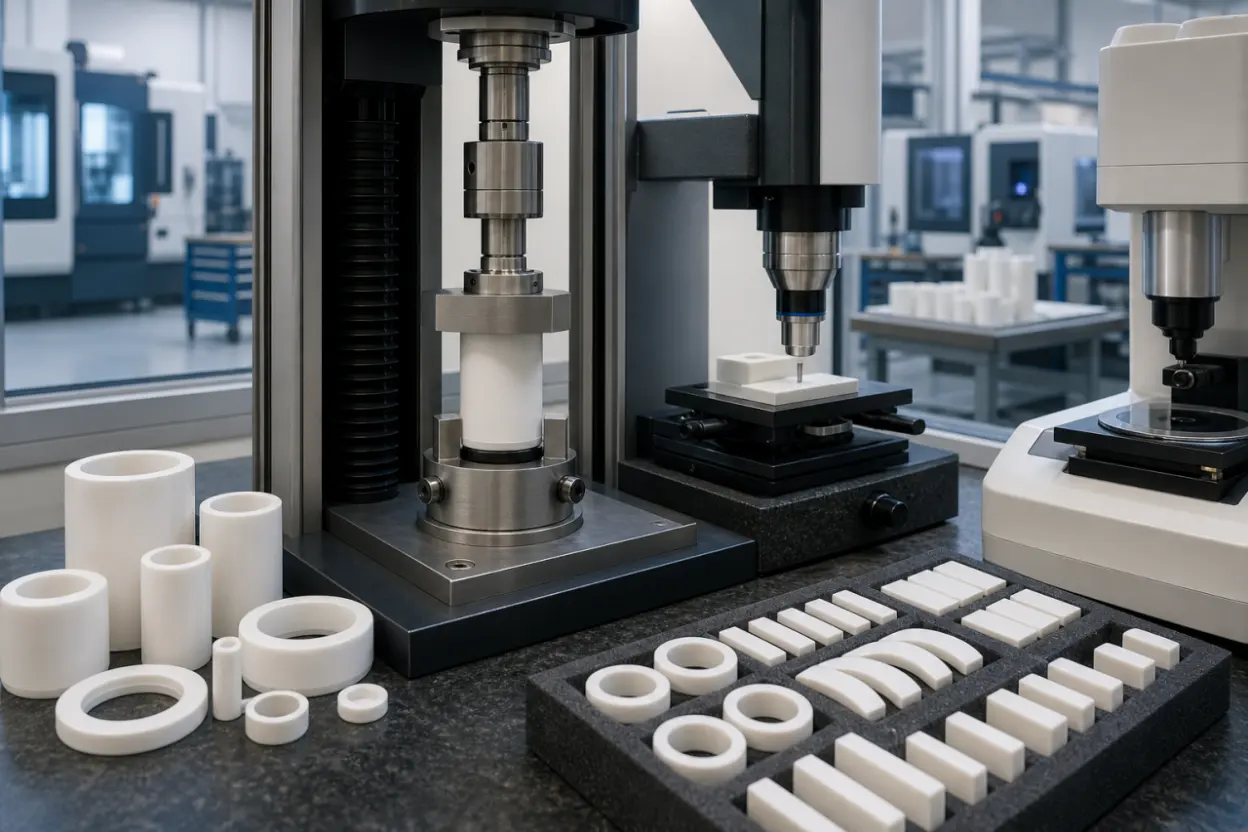
Surface-induced processing: Sandblasting or precision grinding can induce t-to-m transformation within a 10-50 μm surface layer. The resulting 3%-5% volume expansion is constrained by the underlying material, producing a strong residual compressive-stress layer at the surface.
Thermal-stress matching: Differences in cooling shrinkage between the surface and interior can be used to maintain surface compression, directly offsetting external tensile stress and increasing the fatigue limit.
V. Stress-Induced Transformation Toughening
The stress-transformation relationship in zirconia ceramics is based on using the volume effect of phase transformation to resist crack propagation, allowing the material to become tougher under load. This stress-induced transformation-toughening mechanism distinguishes zirconia from conventional ceramics.
As temperature changes, pure zirconia can exist in three crystal structures: monoclinic (m), tetragonal (t), and cubic (c). The transformation from tetragonal (t) to monoclinic (m) produces approximately 4%-5% volume expansion.
The key to toughening is retaining the metastable tetragonal phase. Stabilizers such as yttria can lock the tetragonal phase at room temperature. When stress is applied or a crack begins to form, concentrated stress at the crack tip instantly triggers transformation from tetragonal to monoclinic:
Energy absorption: The transformation process itself consumes energy that would otherwise drive crack propagation.
Crack-tip compression and closure: Transformation-related volume expansion compresses the crack tip, creates compressive stress, and may even close microcracks, preventing further propagation.
VI. The Dual Role of Stress and Key Thresholds
Stress is both the external load that the material must resist and the trigger that activates toughening. Several key thresholds are therefore important:
Stress threshold: A specific stress threshold exists, and significant transformation toughening occurs only when the applied stress exceeds this value.
Grain-size effect: Grain size is a key control parameter. Grains must be below the critical size, approximately 0.3 μm in the stated condition, to remain metastable. Within an appropriate range, larger grains produce a greater stress-induced transformed fraction and stronger toughening; however, excessive grain growth can cause spontaneous cracking during processing.
Residual compressive stress: Surface grinding and related processes can deliberately induce surface transformation and form a compressive-stress layer, effectively suppressing the initiation of surface cracks.
VII. Engineering Challenges and Toughened Material Systems
1. Key Application Challenges
Environmental stability: This is a classic issue in zirconia applications. In humid environments at relatively low temperatures, such as 100-400°C, low-temperature degradation may occur as the surface slowly and spontaneously transforms from t to m, leading to strength loss.
Reverse-transformation research: Some studies also examine the reversibility of transformation under cyclic loading and the different effects of stress states, such as tensile and compressive stress, on phase-transformation behavior.
2. Engineering Toughening Systems
Based on these mechanisms, industry has developed several established material systems:
| Material System | Stabilizer | Characteristics | Typical Applications |
| Y-TZP | Y₂O₃ | Fine-grained structure with the highest strength and toughness | Fiber-optic ferrules, cutting tools, dental materials |
| Mg-PSZ | MgO | Partially stabilized system with good thermal stability | Engine components |
| ZTA | Al₂O₃ matrix + ZrO₂ particles | High-strength matrix combined with high-toughness particles; cost-effective | General structural components |
Conclusion
The stress-transformation relationship in zirconia ceramics uses the volume effect of phase transformation to resist crack propagation and produce a material that becomes tougher under load. In actual product design and processing, stress and phase transformation coexist: stress can induce transformation toughening, while spontaneous transformation without an external load, as in low-temperature degradation, can reduce performance. The optimal engineering solution requires a dynamic balance among grain size, stabilizer content, second-phase additions, and the surface residual-stress gradient to ensure reliability and stability throughout the product life cycle.
Frequently Asked Questions (FAQ)
Q1: Why must the grain size of zirconia ceramics be neither too large nor too small?
A: Grain size is the switch for transformation. Grains that are too large and exceed the critical size may transform spontaneously from t to m, causing cracking and strength loss. If grains are too small, stress cannot overcome the transformation resistance, so transformation toughening cannot be activated. For 3Y-TZP, grain size is commonly controlled within 0.3-0.5 μm.
Q2: How can low-temperature degradation of zirconia ceramics be suppressed?
A: It is commonly suppressed by adding a small amount of alumina or optimizing the sintering profile.
Q3: What applications are suitable for Y-TZP, Mg-PSZ, and ZTA?
A: Y-TZP (yttria-stabilized tetragonal zirconia polycrystal) offers very high strength and toughness and is suitable for precision parts such as fiber-optic ferrules, cutting tools, and dental materials. Mg-PSZ (magnesia-partially-stabilized zirconia) has good thermal stability and is commonly used in engine components. ZTA (zirconia-toughened alumina) combines the high strength of alumina with the high toughness of zirconia and offers a cost-effective solution for general structural components.
Application Evaluation and Custom Manufacturing Support
Our company provides full-process production capabilities covering zirconia ceramic formulation design, forming, sintering, and precision machining. Using established material systems such as 3Y-TZP and ZTA, we can evaluate transformation-toughening solutions and optimize processes according to product service conditions and performance requirements. Our mass-production experience includes grain-size control, stabilizer-ratio optimization, and surface residual-stress management. We support custom development and batch production of precision ceramic structural components, sleeves, ferrules, and related products. Customers are welcome to contact our technical team with product drawings, technical specifications, and volume requirements.


