 English
 中文
中文







Zirconia Ceramic Materials and Precision Machining: Properties, Applications and Custom Design Tips
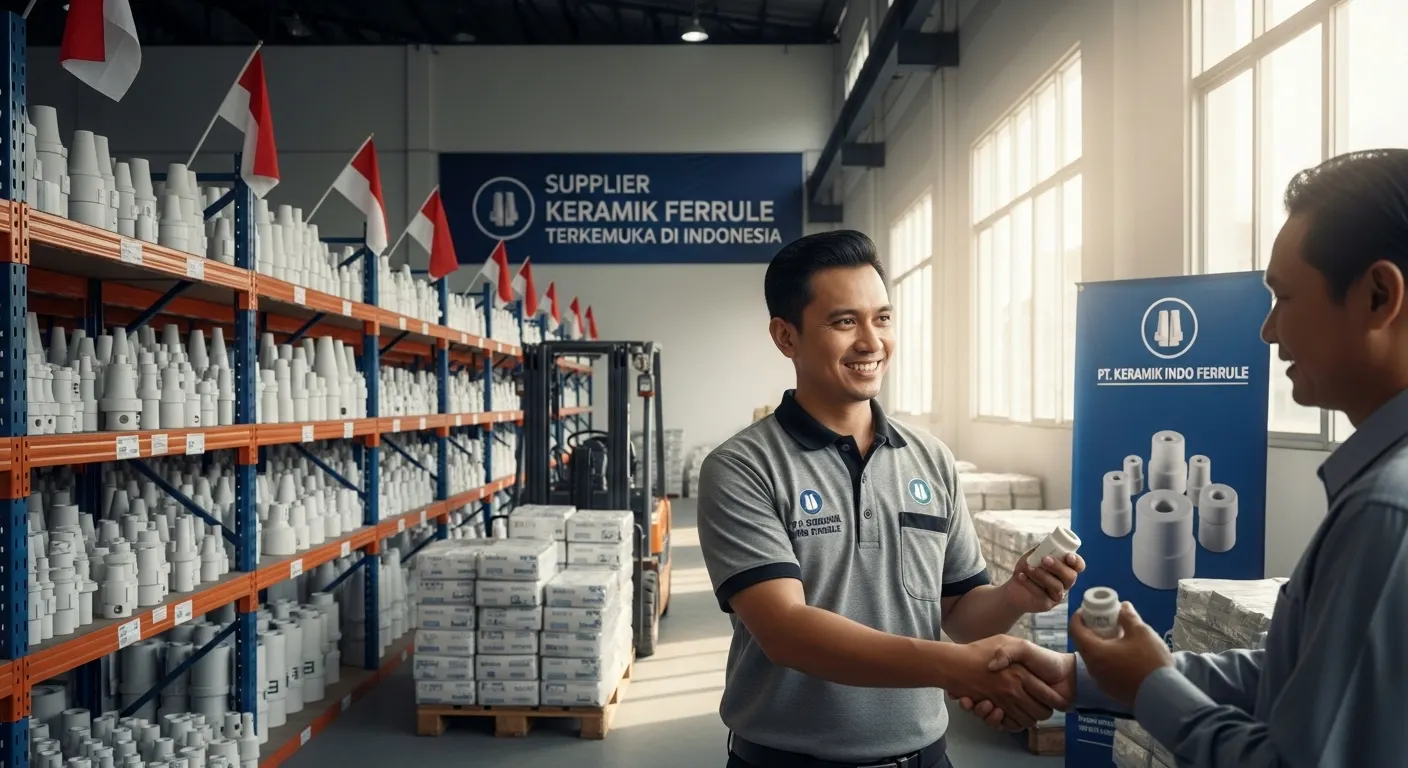
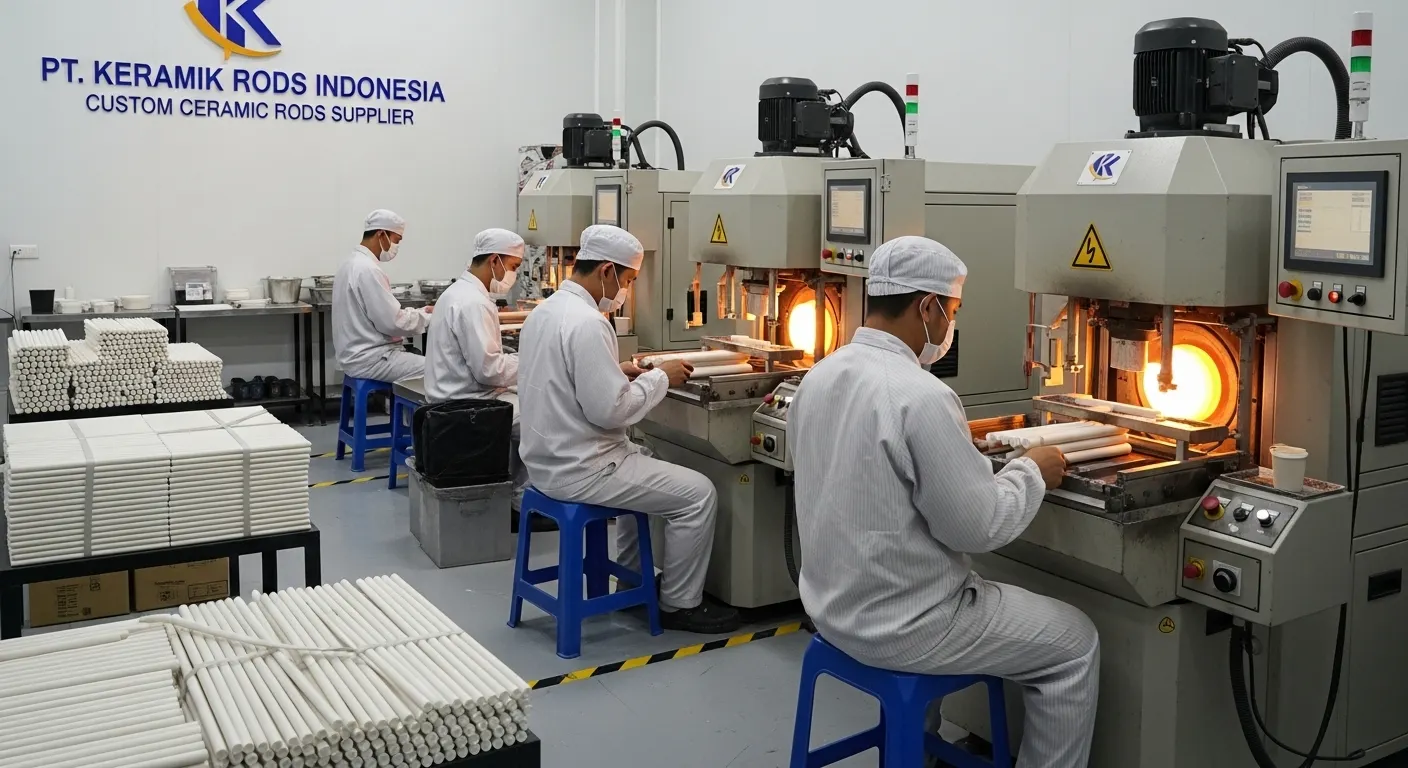
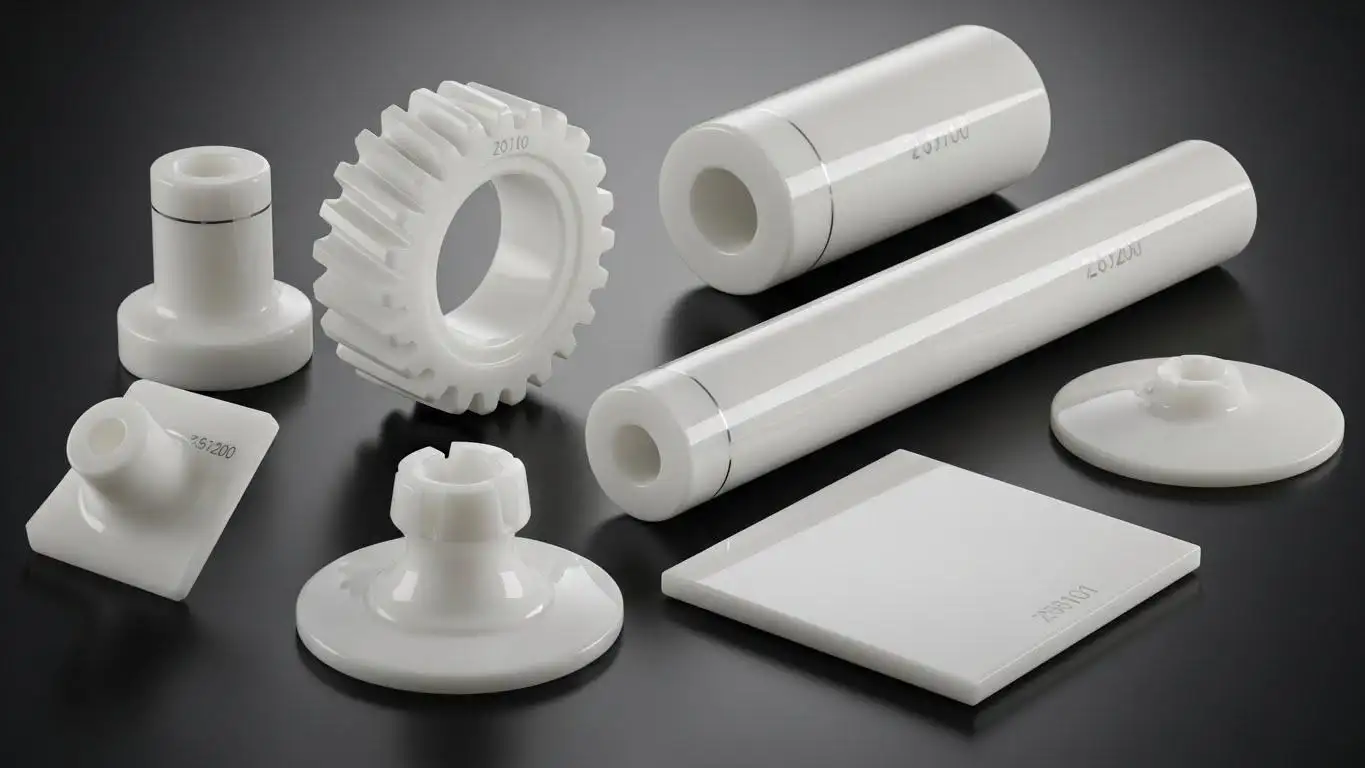
Zirconia ceramic is an advanced ceramic material known for its high strength, improved toughness, wear resistance and chemical stability. Compared with many conventional ceramics, zirconia offers better resistance to crack propagation and impact, making it suitable for precision structural components, wear parts, seals, valve components, bushings, medical parts and demanding industrial applications.
In practical projects, the value of zirconia ceramic depends not only on the material itself, but also on part design, forming method, sintering control, precision grinding, polishing and inspection capability. During material selection and quotation, customers should consider the working environment, critical dimensions, tolerances, surface roughness, assembly method and production quantity.
| Focus Area | Recommendation |
| Material advantages | Suitable for components requiring strength, wear resistance, corrosion resistance, electrical insulation or biocompatibility. |
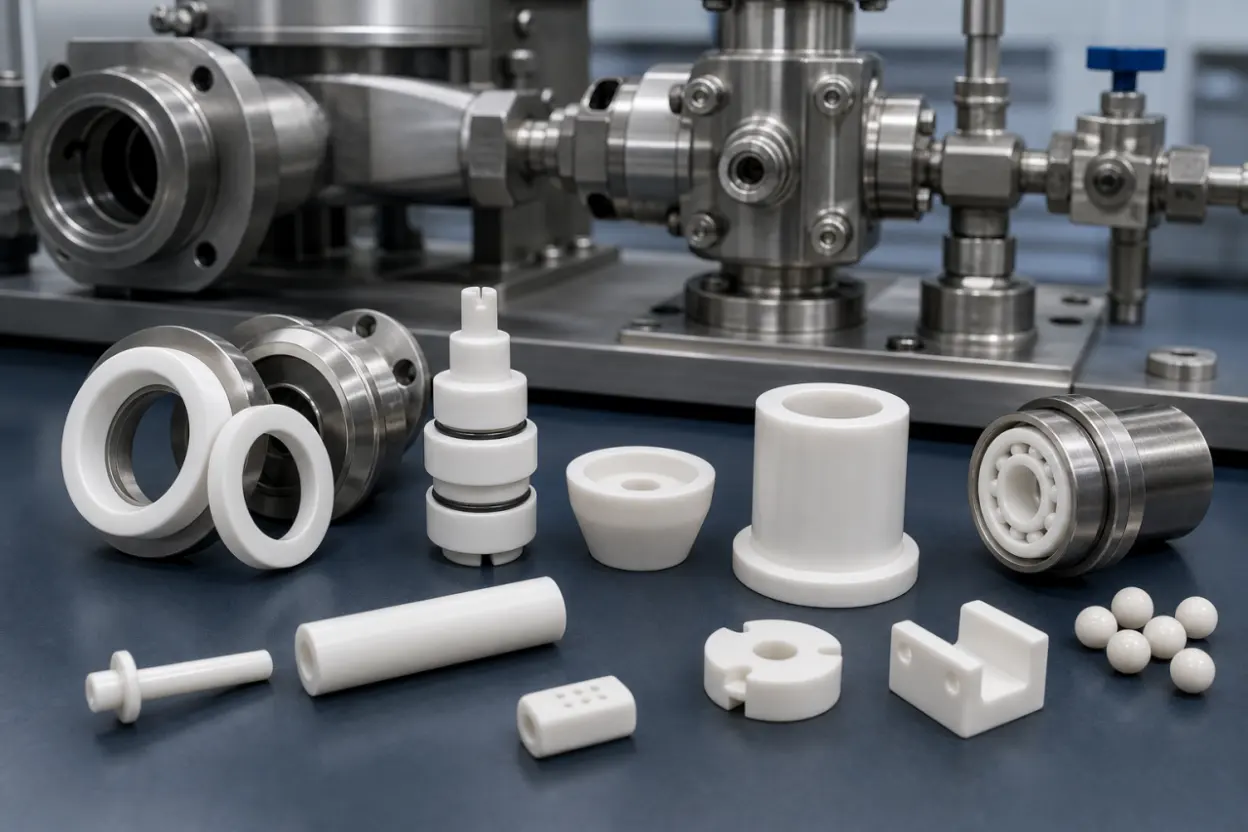
| Typical parts | Seal rings, valve cores, bushings, bearings, guide parts, plungers, micro-hole parts and custom precision components. |
| Machining focus | Pay attention to OD, ID, concentricity, roundness, surface roughness, chamfers and functional surfaces. |
| RFQ information | Provide drawings, material grade, quantity, working conditions, tolerance requirements and acceptance standards. |
1. Why Is Zirconia Ceramic Suitable for Precision Structural Components?
Many ceramic materials are hard and wear resistant, but they are also brittle. Zirconia ceramic is valued because its material system can improve crack resistance through transformation toughening, helping the material resist crack growth under local stress or external load.
For this reason, zirconia ceramic is often selected for components that require both wear resistance and better fracture resistance. In high-frequency sliding, high-pressure sealing, corrosive media, precision guiding or long-term friction applications, zirconia can provide a strong balance of dimensional stability and service life.
| Property | Engineering Meaning | Typical Applications |
| High strength and improved toughness | Helps reduce cracking and edge chipping under mechanical load. | Structural parts, bushings, guide parts, plungers. |
| High hardness and wear resistance | Supports longer service life in friction, sliding and sealing applications. | Ceramic bearings, seal rings, wear-resistant valve cores. |
| Corrosion resistance and chemical stability | Suitable for contact with chemical media or corrosive liquids. | Pump and valve parts, chemical equipment components. |
| Electrical insulation, non-magnetic behavior and biocompatibility | Useful for electronics, medical and measuring equipment. | Insulators, medical ceramic parts, precision positioning parts. |
| Low thermal conductivity and heat resistance | Can be used in selected insulation, thermal or high-temperature environments. | High-temperature equipment parts and thermal-related components. |
2. Common Applications of Zirconia Ceramic Components
Zirconia ceramic is not limited to one industry. Depending on part geometry and precision requirements, it can be used in applications ranging from industrial wear parts to medical, electronics, chemical and high-end equipment components.
- Industrial wear parts: seal rings, wear-resistant valve cores, ceramic bearings, guide wheels, sliding parts and guide sleeves.
- Pump, valve and fluid control: plungers, valve plates, valve cores, seal seats, nozzles and corrosion-resistant components.
- Electronics and measuring equipment: insulating structures, non-magnetic parts, positioning components and wear-resistant supports.
- Medical and dental applications: ceramic parts requiring biocompatibility, corrosion resistance and high surface quality.
- Precision machinery and automation: micro holes, slots, thin walls, curved surfaces and assembled ceramic structures.
It is important to note that material purity, appearance criteria, inspection methods and dimensional tolerances vary significantly by industry. The same zirconia part may require different specifications when used in general industrial equipment, medical equipment or semiconductor-related systems.
3. What Can Be Achieved by Zirconia Ceramic Precision Machining?
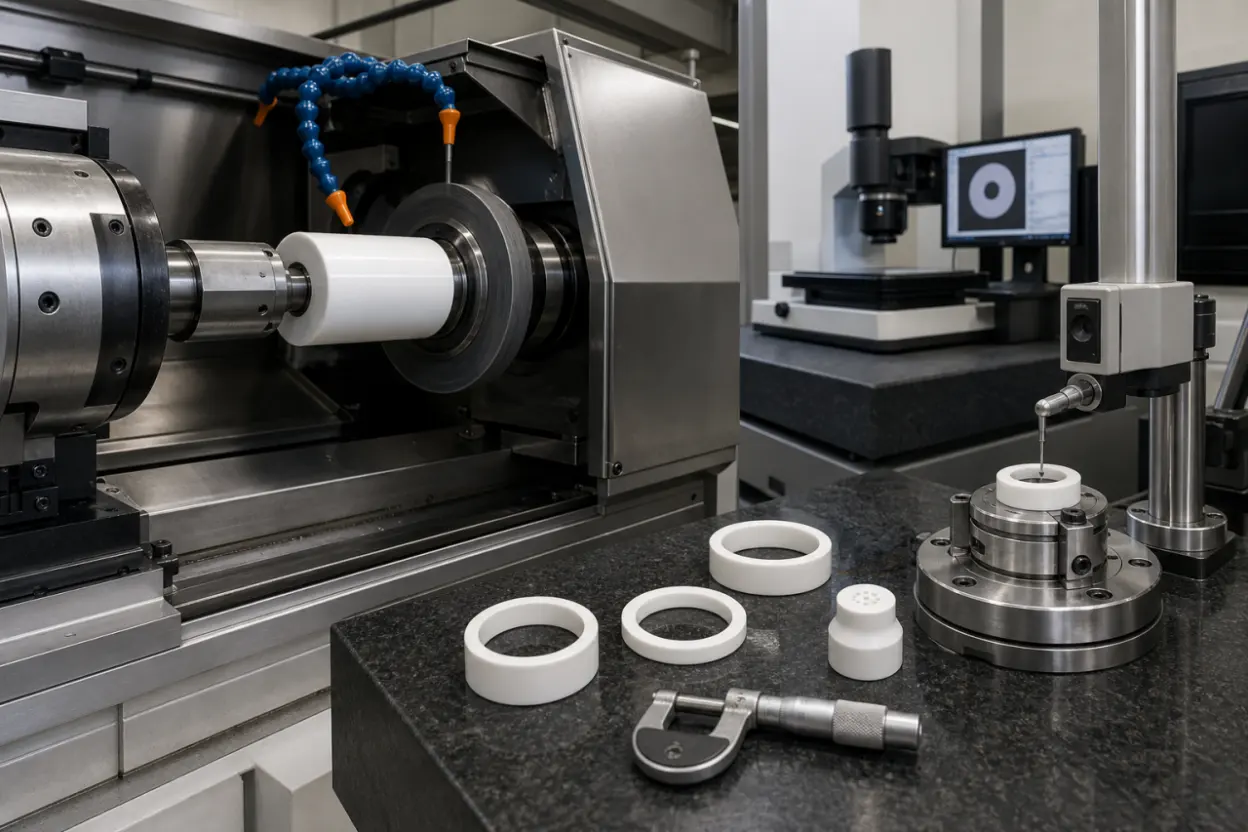
Zirconia ceramic is hard and undergoes significant shrinkage during sintering, so it cannot be treated like a metal component. A typical zirconia manufacturing process may include blank forming, sintering, precision grinding, cutting, slotting, micro-hole machining, chamfering, polishing and, when required, assembly operations.
| Machining Item | Suitable For | Design Notes |
| OD/ID grinding | Bushings, sleeves, seals, guide parts. | Confirm fit tolerance, concentricity, roundness and inspection method. |
| Flat and end-face grinding | Washers, supports, valve plates and assembly surfaces. | Confirm flatness, parallelism, thickness tolerance and surface requirement. |
| Micro-hole and slot machining | Nozzles, fluid channels, positioning holes and slot features. | Confirm hole diameter, depth, slot width and edge chipping criteria. |
| Custom shapes and curved surfaces | Non-standard structures, curved parts and complex assembly parts. | A 3D model is recommended, with key tolerances clearly marked. |
| Polishing and mirror finishing | Sealing surfaces, sliding surfaces, medical or visual surfaces. | Specify high roughness requirements only on functional surfaces to control cost. |
High dimensional accuracy and low surface roughness may be achievable on selected precision-ground or polished surfaces. However, the achievable tolerance and Ra value must be evaluated according to part size, geometry, material condition, machining location, inspection method and production quantity.
4. Designs That Increase Machining Difficulty and Cost
Although zirconia ceramic offers excellent overall performance, it is still a hard and brittle material. Unreasonable part design can increase machining cost, reduce yield or extend lead time.
- Thin-wall structures: thin areas are more likely to deform, chip or crack during sintering, grinding or assembly.
- Deep holes and micro holes: smaller diameters and greater depth make machining and inspection more difficult.
- Sharp corners and right angles: sharp features create stress concentration; chamfers or radii are recommended.
- Large-area mirror polishing: high surface finish on all surfaces significantly increases time and cost.
- High precision on every dimension: strict tolerances should be limited to functional dimensions when possible.
- Complex custom geometries: curved surfaces, angled faces, internal slots and multi-step structures should be evaluated with a 3D model.
A more practical approach is to apply tight tolerances and low roughness only to the surfaces that affect assembly, sealing, sliding or positioning. Non-functional surfaces can often use more relaxed specifications to reduce cost and shorten lead time.
5. Advantages Compared with Metal, Plastic and Other Ceramics
| Compared With | Advantages of Zirconia Ceramic | Limitations to Consider |
| Metal | Corrosion resistant, electrically insulating, non-magnetic, wear resistant and rust-free. | Still less ductile and impact-resistant than most metals; cannot deform plastically. |
| Plastic | Higher hardness, wear resistance, temperature resistance and dimensional stability. | Higher cost, higher weight and no flexibility. |
| Glass | Higher strength and wear resistance; suitable for load-bearing and friction applications. | More difficult and costly to machine. |
| Alumina ceramic | Better toughness and crack resistance in many structural applications. | Usually more expensive; hardness and high-temperature performance depend on the specific grade. |
6. Quality Control and Inspection Focus
Quality control for zirconia ceramic components should cover raw material selection, forming, sintering, machining and final inspection. In addition to dimensional accuracy, appearance defects, edge condition, roughness, cracks, chipping and assembly fit should be defined according to the application.
| Inspection Item | Common Method | Key Focus |
| Dimensional inspection | Micrometer, optical measuring system, projector or custom gauges. | OD, ID, length, thickness, hole location and critical fit dimensions. |
| Geometric inspection | Optical measurement, roundness tester, concentricity fixture or custom gauge. | Concentricity, roundness, flatness, perpendicularity and parallelism. |
| Surface inspection | Roughness tester, microscope or visual inspection. | Ra value, polished surfaces, sliding surfaces, sealing surfaces and defects. |
| Appearance and edges | Visual inspection under light or microscope. | Chipping, cracks, scratches, notches, burrs and chamfer condition. |
If the customer has special requirements for edge chipping, scratches, color difference or surface defects, acceptance criteria, inspection methods or reference photos should be provided during the RFQ stage to avoid misunderstanding during mass production.
7. Information Needed for Custom Zirconia Ceramic RFQs
To evaluate manufacturability and provide an accurate quotation, customers are encouraged to provide the following information:
- 2D drawings and 3D models: including key dimensions, tolerances, chamfers, roughness and geometric requirements.
- Material requirements: such as 3Y zirconia, zirconia grade, color, density or other material standards.
- Working conditions: temperature, media, pressure, friction mode, assembly method, insulation requirement or body-contact requirement.
- Quality criteria: dimensional inspection method, appearance standard, allowable edge chipping, roughness requirement and sampling plan.
- Quantity and lead time: prototype quantity, first batch quantity, estimated annual volume and target delivery date.
If the drawing is not finalized, customers may provide sketches, sample photos and functional descriptions. The engineering team can then perform an initial assessment of material selection, structural risk and machining feasibility.
Frequently Asked Questions
1. Is zirconia ceramic suitable for wear-resistant parts?
Yes. Zirconia ceramic has high hardness, good wear resistance and better toughness than many conventional ceramics, so it is commonly used for bushings, valve cores, seal rings, guide parts, sliding parts and ceramic bearings.
2. Can zirconia ceramic be precision machined?
Yes, but the achievable precision depends on part size, geometry, machining location, material condition and inspection method. Precision grinding and polishing can be applied to critical functional surfaces after drawing review.
3. How should I choose between zirconia and alumina ceramics?
Zirconia is often preferred when toughness, crack resistance, impact resistance and precision wear performance are important. Alumina is usually more economical when insulation, hardness, high-temperature stability and cost control are the main priorities.
4. Can zirconia ceramic be made into complex custom shapes?
Yes, many curved, slotted, stepped, micro-hole, thin-wall and custom structures can be evaluated through forming and machining. For complex parts, a 3D model and clearly defined key tolerances are strongly recommended.
5. What information is most important for a zirconia ceramic quotation?
Complete drawings, material requirements, quantity, working conditions and acceptance criteria are the most important. If drawings are not available, sample photos, sketches and functional descriptions can be used for an initial feasibility review.
CTA | Custom Zirconia Ceramic Machining Support
If your application requires high strength, wear resistance, corrosion resistance, electrical insulation, non-magnetic behavior or precision assembly performance, zirconia ceramic may be a suitable material option. Send us your drawings, sample photos, working conditions and quality requirements, and our team can assist with material selection, manufacturability review and custom machining quotation.


In This Article
- 1 1. Why Is Zirconia Ceramic Suitable for Precision Structural Components?
- 2 2. Common Applications of Zirconia Ceramic Components
- 3 3. What Can Be Achieved by Zirconia Ceramic Precision Machining?
- 4 4. Designs That Increase Machining Difficulty and Cost
- 5 5. Advantages Compared with Metal, Plastic and Other Ceramics
- 6 6. Quality Control and Inspection Focus
- 7 7. Information Needed for Custom Zirconia Ceramic RFQs
-
8
Frequently Asked Questions
- 8.1 1. Is zirconia ceramic suitable for wear-resistant parts?
- 8.2 2. Can zirconia ceramic be precision machined?
- 8.3 3. How should I choose between zirconia and alumina ceramics?
- 8.4 4. Can zirconia ceramic be made into complex custom shapes?
- 8.5 5. What information is most important for a zirconia ceramic quotation?
- 9 CTA | Custom Zirconia Ceramic Machining Support
