 English
 中文
中文







Zirconia Transformation Toughening: Why 3Y-TZP Ceramics Resist Brittle Fracture
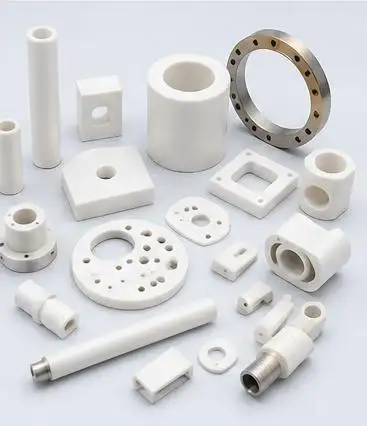
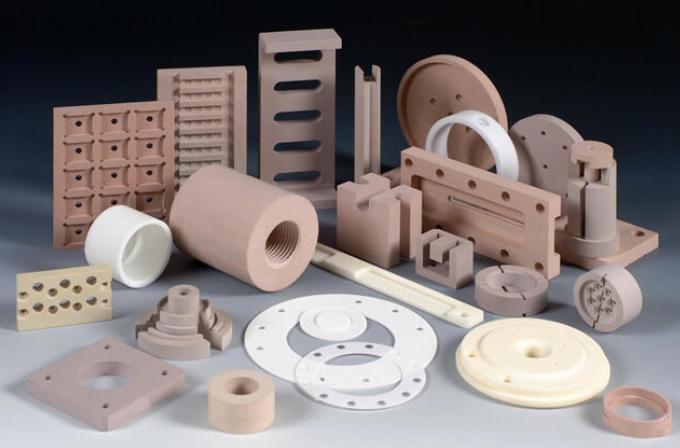
Among advanced structural ceramics, zirconia is often described as a “ceramic steel.” This does not mean zirconia behaves like a ductile metal. Rather, compared with many brittle ceramic materials, 3Y-TZP zirconia - a tetragonal zirconia polycrystal stabilized with about 3 mol% yttria (Y₂O₃) - offers a valuable combination of high strength and high fracture toughness.
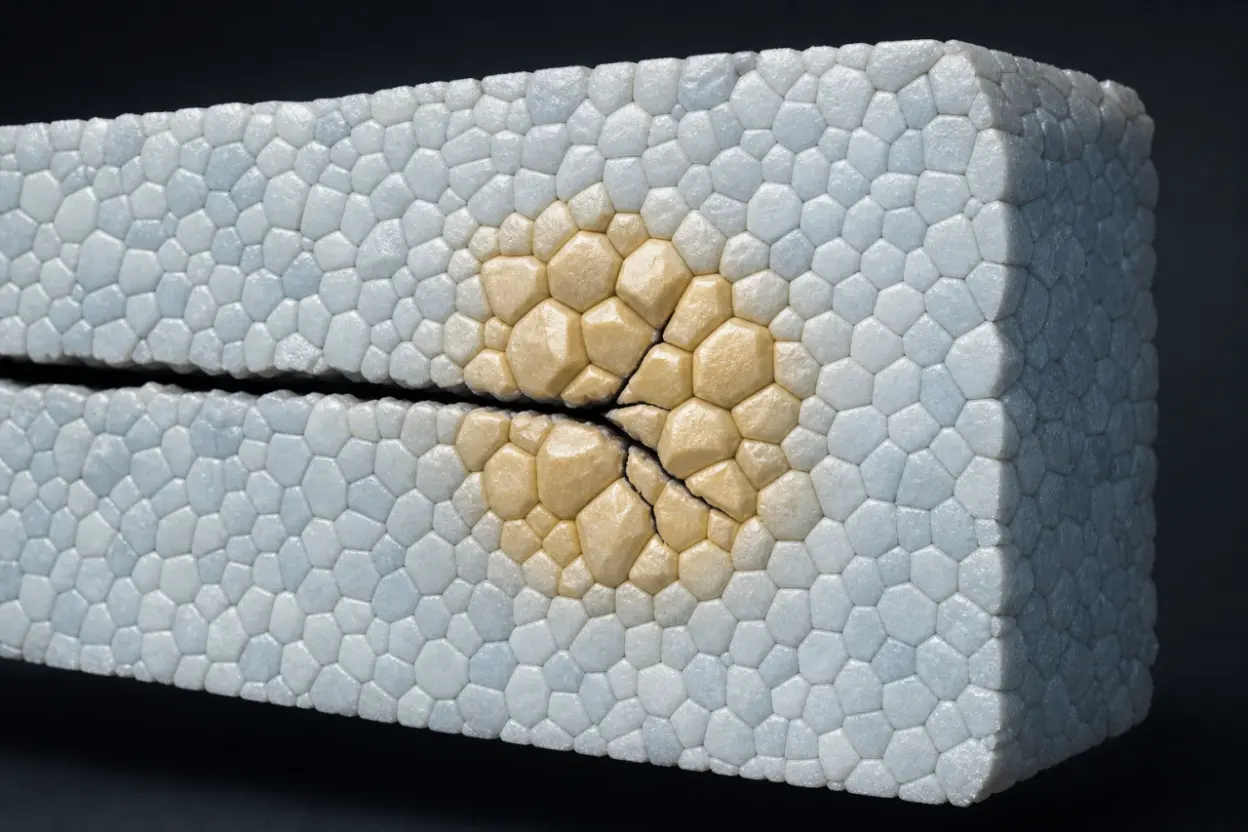
The key reason is transformation toughening. Inside 3Y-TZP, a large portion of tetragonal zirconia grains is retained at room temperature in a metastable state. When a crack starts to propagate, the high stress field near the crack tip can trigger a local tetragonal-to-monoclinic phase transformation. This transformation is accompanied by a small but important volume expansion, which generates compressive stress around the crack tip and makes further crack growth more difficult.
1. The Three Crystal Structures of Zirconia
Pure zirconia can exist in three major crystal structures depending on temperature. Understanding these phases is the starting point for understanding transformation toughening:
- Monoclinic zirconia (m-ZrO₂): Stable at room temperature, but relatively low in toughness. If a zirconia ceramic mainly contains monoclinic phase, it tends to behave more like a conventional brittle ceramic.
- Tetragonal zirconia (t-ZrO₂): Stable at higher temperature and capable of transformation toughening. However, in pure zirconia, tetragonal grains normally transform to monoclinic phase during cooling, with a volume expansion of about 3% to 5%, which can cause cracking or even disintegration.
- Cubic zirconia (c-ZrO₂): Stable at still higher temperature. A higher stabilizer content can increase the cubic phase fraction, which may be useful for translucency or ionic conductivity, but it usually reduces the transformation-toughening potential needed for structural components.
For high-strength structural ceramics, the goal is not simply to make zirconia “as stable as possible.” The real goal is to keep tetragonal grains metastable at room temperature: stable enough not to transform spontaneously, but responsive enough to transform under the stress field of a growing crack.
2. What Does Yttria Do in 3Y-TZP?
The “3Y” in 3Y-TZP generally means that about 3 mol% yttria is added as a stabilizer. Yttria helps retain the tetragonal phase at room temperature, even though this phase would normally be stable only at elevated temperatures in pure zirconia.
This stabilization does not make the tetragonal grains completely inert. Instead, it places them in a constrained metastable condition. That is exactly why transformation toughening can occur: the grains do not transform during normal service, but when the local stress at a crack tip becomes high enough, they can transform from tetragonal to monoclinic phase and consume part of the crack-driving energy.
This is one of the major differences between 3Y-TZP and many conventional ceramics. In a brittle ceramic, once a crack forms, it may propagate rapidly. In 3Y-TZP, the material can activate a local resistance mechanism around the crack tip.
3. How Transformation Toughening Works
1. Crack initiation: External load, impact, contact stress, machining damage, or residual stress may create microcracks in the ceramic. A strong tensile stress field forms at the crack tip.
2. Stress-induced phase transformation: Metastable tetragonal grains near the crack tip experience this high local stress. Once the critical condition is reached, they begin to transform into monoclinic grains.
3. Local volume expansion: The tetragonal-to-monoclinic transformation is associated with approximately 3% to 5% volume expansion. This expansion occurs in a microscopic zone near the crack tip, so it does not cause significant dimensional change of the whole part, but it is enough to alter the local stress state.
4. Compressive stress and crack resistance: The transformed grains press against the crack tip, creating a closing force that counteracts crack opening. The transformation zone may also deflect, branch, or lengthen the crack path, which consumes more fracture energy.
The result is not that cracks disappear. The result is that cracks become harder to propagate. This is critical for structural ceramics, because many failures start with uncontrolled crack growth from a small surface or internal flaw.
4. Why It Matters for Precision Ceramic Components
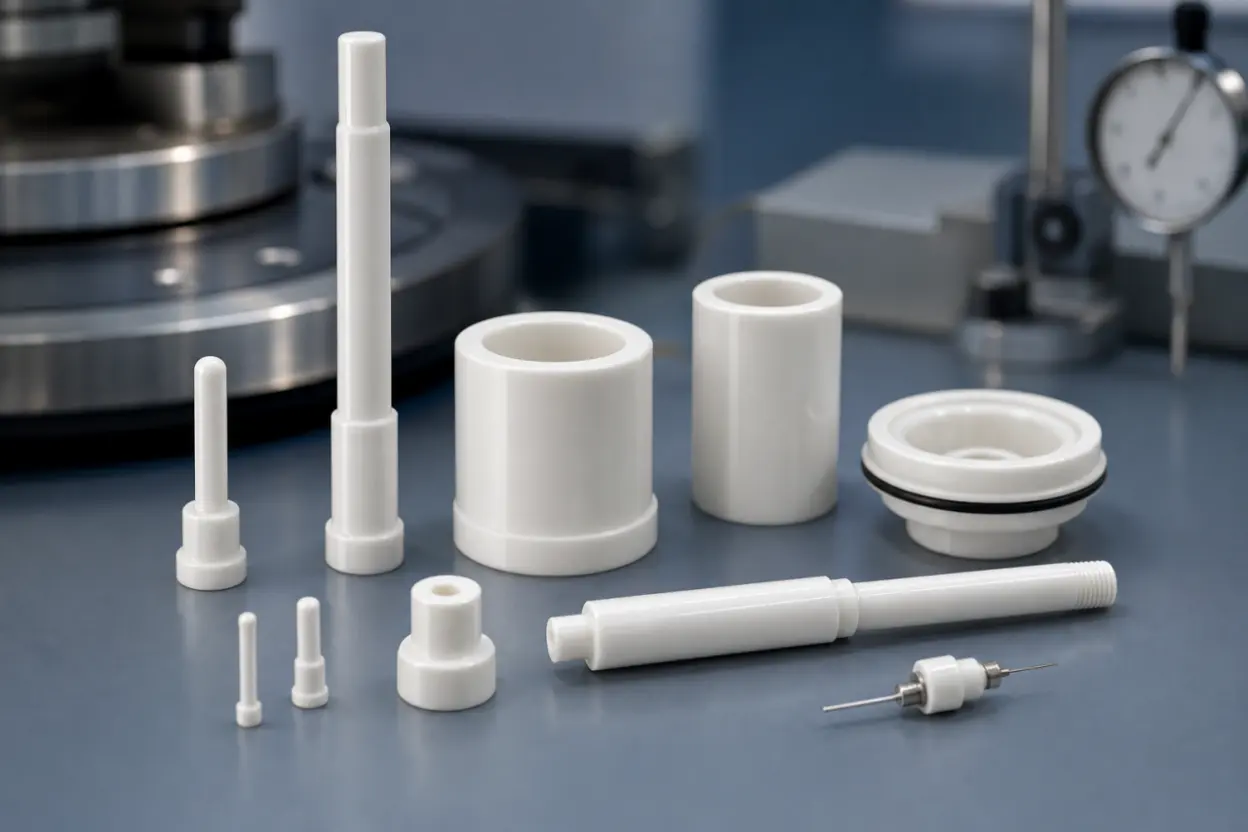
In fiber optics, medical devices, pump and valve systems, precision positioning, wear-resistant transmission parts, and automation equipment, ceramic components often work under small dimensions, tight tolerances, high contact stress, or long-term wear. The material must be hard, wear resistant, chemically stable, and less prone to sudden brittle fracture.
Transformation-toughened 3Y-TZP zirconia offers several advantages for these applications:
- Higher fracture toughness: Compared with many alumina ceramics, 3Y-TZP typically provides better resistance to crack propagation.
- Improved resistance to impact and edge chipping: Useful for small shafts, plungers, sleeves, positioning pins, guide parts, and other components exposed to local stress.
- Excellent suitability for precision machining: Zirconia can be ground, lapped, and polished to tight dimensional tolerances and low surface roughness.
- Good wear and corrosion resistance: Suitable for pump and valve parts, fluid-control components, fiber-connection parts, and other long-term contact or sliding applications.
5. Transformation Toughening Is Not a Universal Guarantee
Transformation toughening does not mean zirconia ceramics cannot break. It improves the material’s resistance to crack propagation; it does not make zirconia ductile like metal. Actual performance is strongly influenced by powder purity, stabilizer content, grain size, sintering profile, machining stress, surface defects, and service environment.
For example, oversized grains or uneven yttria distribution may cause premature transformation. Deep scratches, grinding burn, edge chipping, or excessive residual tensile stress from machining can reduce reliability. For 3Y-TZP components used for long periods in hot water, steam, or humid environments, hydrothermal aging should also be considered when selecting the material grade and manufacturing route.
Conclusion
3Y-TZP zirconia is widely used in high-strength precision ceramic components not simply because it is hard, but because it can resist crack growth through stress-induced transformation toughening. Yttria-stabilized metastable tetragonal grains, tetragonal-to-monoclinic transformation, local volume expansion, and compressive stress at the crack tip together form the core mechanism behind the high toughness of zirconia ceramics.
For applications requiring high strength, wear resistance, improved crack resistance, and precision dimensional control, 3Y-TZP zirconia is often one of the first material options worth evaluating.
Frequently Asked Questions
Q1: What is 3Y-TZP zirconia ceramic?
3Y-TZP is a tetragonal zirconia polycrystal stabilized with about 3 mol% yttria (Y₂O₃). It retains a large amount of metastable tetragonal zirconia at room temperature, allowing stress-induced transformation toughening to occur near crack tips.
Q2: Why is zirconia usually tougher than alumina?
The main reason is the stress-induced phase transformation in 3Y-TZP. When a crack propagates, tetragonal grains near the crack tip can transform into monoclinic grains with about 3% to 5% volume expansion. This creates local compressive stress and makes further crack growth more difficult. Most alumina ceramics do not have this transformation-toughening mechanism.
Q3: Does transformation toughening make zirconia parts dimensionally unstable?
Under normal conditions, it does not cause obvious dimensional change of the whole component. The transformation mainly occurs in a microscopic zone near the crack tip and changes the local stress state. However, for applications involving hot water, steam, or long-term humidity, hydrothermal aging should be evaluated based on the material grade, sintering process, and working conditions.
Q4: What precision ceramic components are suitable for 3Y-TZP zirconia?
3Y-TZP is suitable for components requiring high strength, wear resistance, crack resistance, and dimensional accuracy, such as ceramic plungers, shafts, positioning pins, guide parts, sleeves, pump and valve components, fiber-optic ceramic parts, and other small precision structural components.
Q5: Is the material name alone enough when selecting zirconia ceramics?
No. Even under the same zirconia material name, performance can vary depending on powder purity, stabilizer content, grain size, sintering conditions, machining method, surface roughness, and service environment. For production applications, drawings, tolerances, surface requirements, load conditions, and working media should be evaluated together.
Material Evaluation and Custom Manufacturing Support
If your application requires high strength, wear resistance, improved crack resistance, or precise dimensional control, our team can help evaluate 3Y-TZP zirconia or other advanced ceramic material options based on your drawings, tolerances, surface finish requirements, working environment, and production volume. You are welcome to share your component drawing or application conditions for further review of material selection, machining feasibility, and quality-control requirements.


In This Article
- 1 1. The Three Crystal Structures of Zirconia
- 2 2. What Does Yttria Do in 3Y-TZP?
- 3 3. How Transformation Toughening Works
- 4 4. Why It Matters for Precision Ceramic Components
- 5 5. Transformation Toughening Is Not a Universal Guarantee
- 6 Conclusion
-
7
Frequently Asked Questions
- 7.1 Q1: What is 3Y-TZP zirconia ceramic?
- 7.2 Q2: Why is zirconia usually tougher than alumina?
- 7.3 Q3: Does transformation toughening make zirconia parts dimensionally unstable?
- 7.4 Q4: What precision ceramic components are suitable for 3Y-TZP zirconia?
- 7.5 Q5: Is the material name alone enough when selecting zirconia ceramics?
- 8 Material Evaluation and Custom Manufacturing Support
