 English
 中文
中文







Alumina Ceramic Isolator: Heat, Voltage & Insulation Basics
Alumina Ceramic Isolator performance is often the quiet “make-or-break” factor behind safe voltage separation, stable heating, and long service life in demanding equipment.
1) What an Alumina Ceramic Isolator Is, in Plain Terms
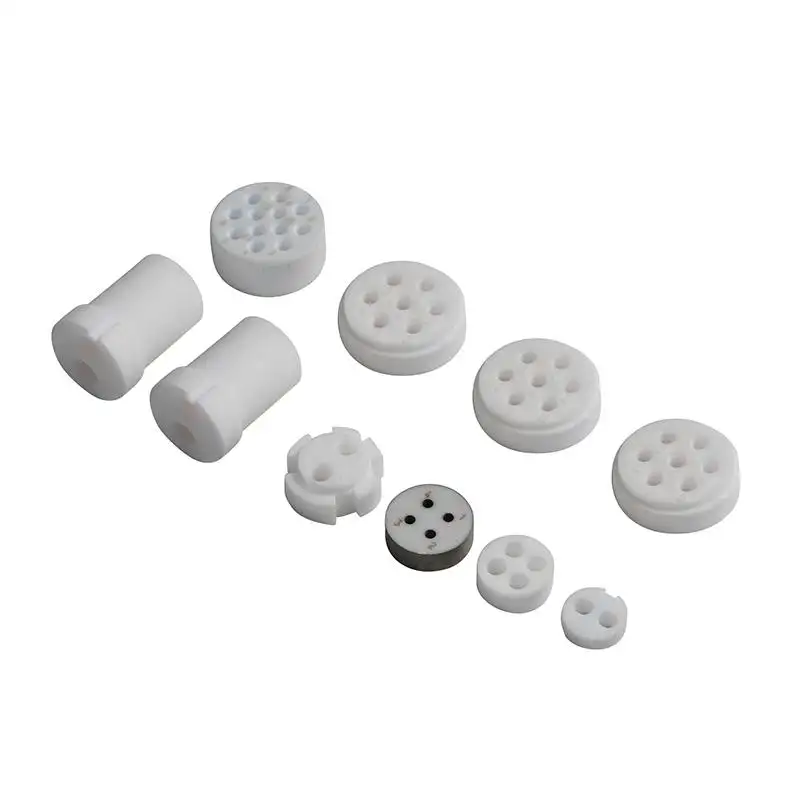
An Alumina Ceramic Isolator is a precision ceramic part that keeps electricity where it belongs. It separates conductive parts, supports controlled spacing, and helps systems stay stable when heat, voltage, vibration, or chemicals become unavoidable.
From UPCERA’s manufacturing perspective, the most important detail is material purity. Our alumina ceramic insulators are crafted from 99% pure alumina. High purity matters because it supports consistent insulation, stable behavior at temperature, and predictable machining results. In real projects, that translates into fewer hidden defects, fewer “random” failures, and easier engineering validation.
A second practical feature is structure. Many applications benefit from multi-hole designs, which allow wiring, leads, or even small routing paths to remain organized while maintaining electrical separation. For engineers, this simplifies assembly. For buyers, it reduces rework and improves line efficiency.
2) Heat Basics: Why Alumina Stays Stable When Temperatures Rise
Heat is not just “hot.” In electrical and heating systems, heat usually comes with thermal cycling, hot spots, and temperature gradients. Materials expand, interfaces loosen, and insulation can degrade if the structure is not stable.
A well-designed Alumina Ceramic Isolator helps because alumina offers strong thermal stability and can resist thermal shock better than many polymer options. This is why alumina ceramics are widely used around industrial heaters, furnaces, and heating elements where continuous heat exposure is routine.
From a user standpoint, the benefit is straightforward: stable insulation at temperature reduces downtime risk and helps keep equipment behavior consistent. It also helps maintain safe clearances when the system expands and contracts during start-stop cycles.
• Practical takeaway for beginners: when heat is constant or cycling, select an isolator material that stays dimensionally and electrically stable, not just “heat tolerant.”
3) Voltage Basics: What “Electrical Insulation“ Really Protects
Voltage problems are rarely dramatic at the beginning. They often show up as gradual leakage, intermittent faults, tracking, or unexpected breakdown under load. That is why the core job of an Alumina Ceramic Isolator is not simply “insulation,” but reliable electrical separation under real operating conditions.
High-purity alumina provides high dielectric strength and low dielectric loss, which supports stable performance in both AC and DC applications. In practical terms, this helps reduce unwanted heating from dielectric loss and improves safety margins when the system sees voltage spikes or long operating hours.
If you are designing or sourcing parts for high-voltage assemblies, you should also think about geometry. Insulation is not only material-based. It is also path-based. Hole layout, wall thickness, and surface finish all influence creepage and clearance behavior.
• Practical takeaway for beginners: voltage reliability is a “system outcome,” built from material purity + geometry + surface control.
4) Insulation Basics: Precision, Surface Finish, and Why They Matter
Many people assume an isolator is “easy to make.” In reality, insulation parts often fail because of micro-cracks, poor concentricity, or inconsistent surfaces that create stress points and field concentration.
UPCERA focuses on precision engineered alumina components with tight tolerances up to ±0.01 mm. This level of control is not only a manufacturing showcase. It has direct user value: parts fit correctly, align consistently, and reduce assembly variation that can cause premature failure.
For selected capabilities, typical processing ranges include:
• Length range: ≤300 mm
• Outer diameter: ≤150 mm
• Surface roughness: Ra 0.02–0.2
These numbers matter because they support stable interfaces, controlled friction or sealing behavior, and repeatable electrical spacing. For customers, this means less “trial-and-error fitting” and fewer tolerance stack issues across a production batch.
• What buyers can ask for (without overcomplicating it):
• Target dimensions and critical tolerance points
• Where alignment matters (holes, OD/ID, mounting surfaces)
• Required surface roughness if the part mates or slides
• Operating heat range and voltage scenario (AC/DC, spikes, duty cycle)
5) Where Alumina Ceramic Isolator Parts Are Commonly Used
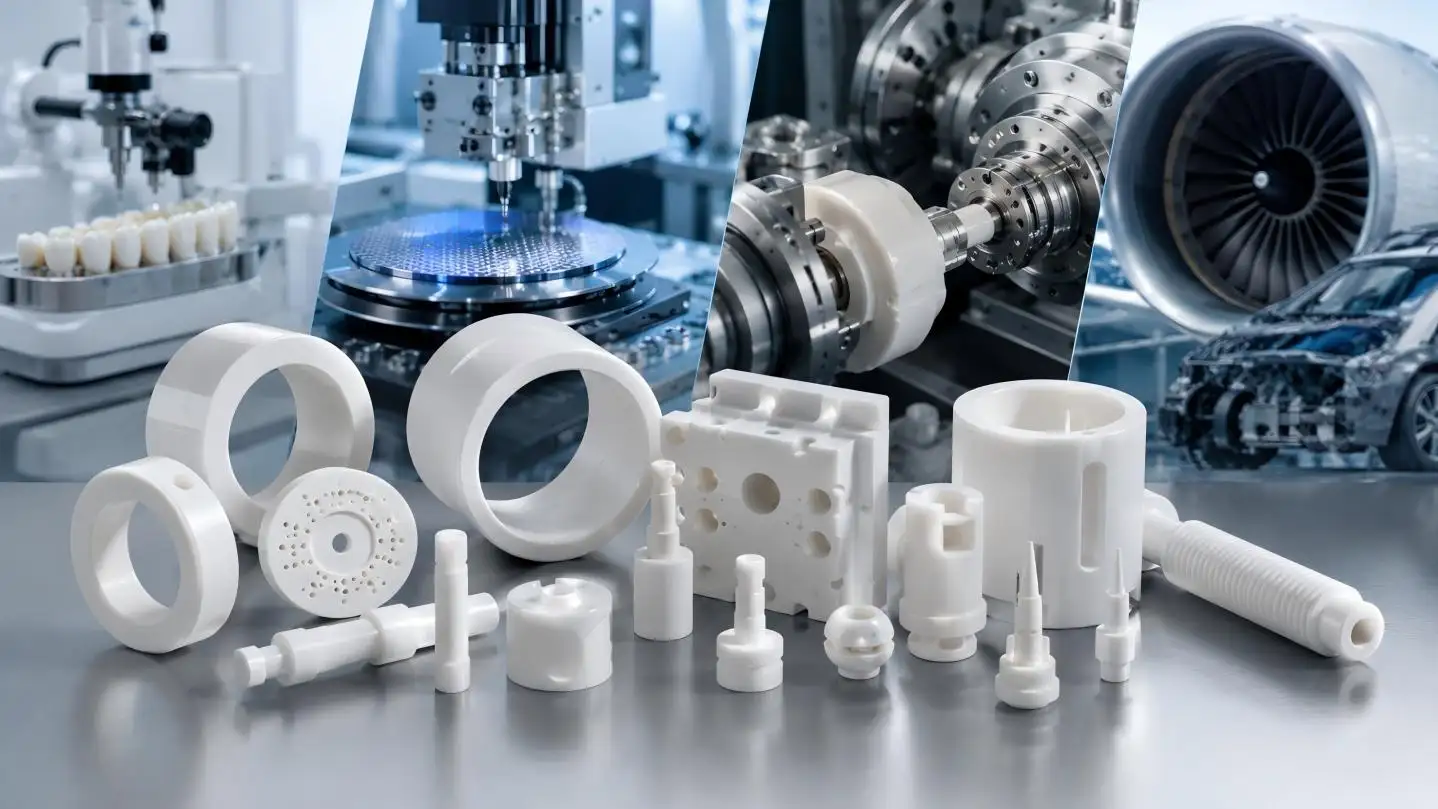
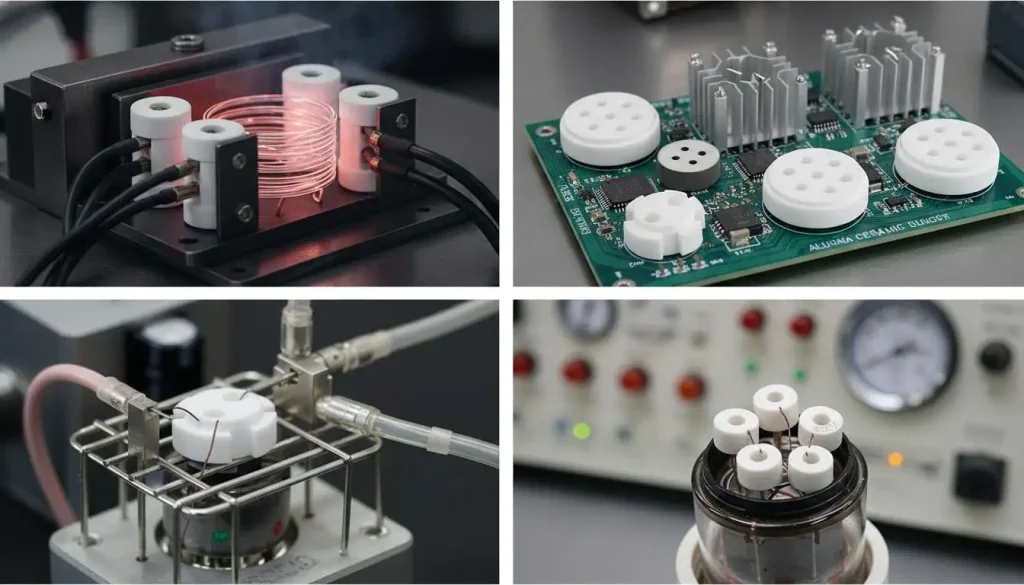
Because an Alumina Ceramic Isolator combines insulation with mechanical durability, it shows up in places where polymers or basic ceramics struggle over time.
Common application areas include:
• High-voltage electrical equipment (transformers, capacitors, circuit breakers)
• Semiconductor and electronics systems (clean, stable insulating structures)
• Vacuum and RF systems (where dielectric loss and breakdown must be controlled)
• Medical and diagnostic equipment (inert and suitable for sensitive environments)
• Industrial heaters and furnaces (heat + electrical separation together)
• Automotive and aerospace electronics (thermal and electrical insulation in tight spaces)
Not every project needs the same design. Multi-hole parts, special geometries, and mounting features often depend on wiring layout and safety standards. That is where a manufacturer’s input becomes useful early, before drawings become expensive to change.
6) Compliance and a Clear Next Step for Sourcing
Modern supply chains also require environmental compliance and documentation. UPCERA alumina ceramic insulators are RoHS/REACH compliant, helping procurement teams meet sustainability requirements while lowering qualification friction.
When you source an Alumina Ceramic Isolator, focus on practical alignment between the part and the real operating environment. It is not only about selecting alumina. It is about selecting the right purity, geometry, tolerance strategy, and surface targets for your voltage and heat reality.
CTA (Call-to-Action)
If you are evaluating an Alumina Ceramic Isolator for a high-heat or high-voltage application, contact UPCERA with your drawing (or key dimensions), operating temperature range, voltage type (AC/DC), and installation scenario. We will select a practical alumina structure for your use case, confirm tolerance targets (including ±0.01 mm for critical areas), and propose a manufacturing plan that protects repeatability from first article to volume runs.


In This Article
- 1 1) What an Alumina Ceramic Isolator Is, in Plain Terms
- 2 2) Heat Basics: Why Alumina Stays Stable When Temperatures Rise
- 3 3) Voltage Basics: What “Electrical Insulation“ Really Protects
- 4 4) Insulation Basics: Precision, Surface Finish, and Why They Matter
- 5 5) Where Alumina Ceramic Isolator Parts Are Commonly Used
- 6 6) Compliance and a Clear Next Step for Sourcing
