 English
 中文
中文







Alumina Ceramic Plate In 2026: How To Choose The Right Grade, Design, And Supply Path
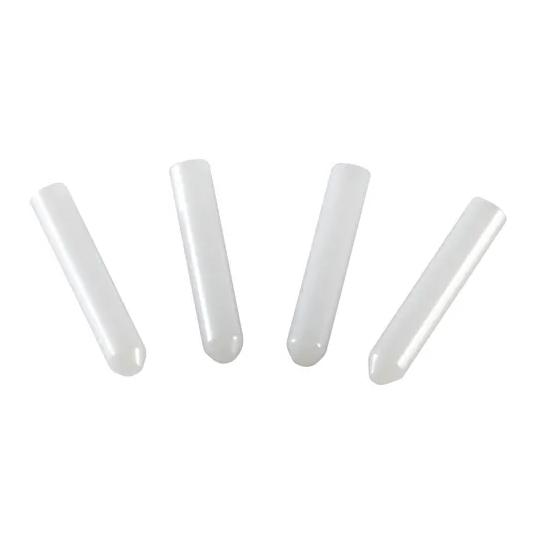
Alumina Ceramic Plate remains a go-to technical ceramic in 2026 because it brings wear resistance, electrical insulation, and high-temperature stability into one engineered component. From UPCERA’s manufacturing perspective, the “right” plate is not decided by thickness alone. It is decided by purity grade, microstructure control, and how the plate is supported, loaded, and protected in real service.
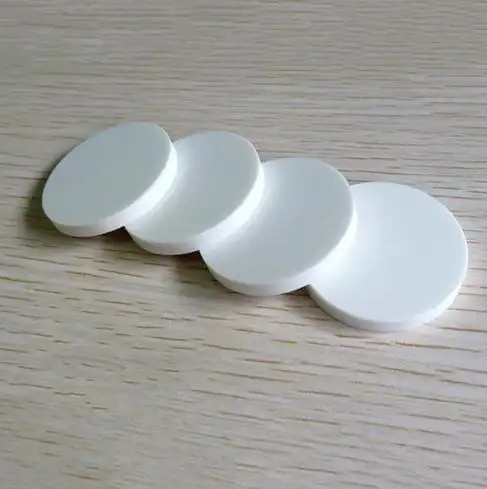
Many buyers start with a drawing and a size list. That is normal. But ceramic plates do not behave like metal plates. A metal plate may tolerate bending stress, point clamping, or minor misalignment. A ceramic plate usually will not. If you treat an Alumina Ceramic Plate like a steel wear liner, you can get chipping, corner cracks, or early failure even when the material itself is high quality.
The goal of this guide is simple: help you specify an Alumina Ceramic Plate in a way that is realistic for manufacturing, stable in assembly, and repeatable across batches.
1) What an Alumina Ceramic Plate Is and Where People Misjudge It
An Alumina Ceramic Plate is a dense plate made mainly from aluminum oxide (Al₂O₃). It is formed and fired at high temperature until it becomes a hard, stable ceramic body. That “stone-like” feel comes from real structure. It is neither a coating nor a soft composite material, but a fully sintered engineering ceramic.
Where people misjudge it is in failure thinking. Alumina is excellent under compression and has high hardness. But it is still a ceramic. Ceramics dislike concentrated tensile stress, sharp impacts, and forced bending from rigid mounting. That is why design details matter more than many first-time buyers expect.
At UPCERA, we treat selection as an application problem first. We ask how the plate will be used, not just what it measures. If we understand the wear mode, temperature profile, insulation requirement, and mounting style, we can propose a plate grade and processing route that fits the job.
2) The Performance Trio That Makes Alumina Practical
A well-made Alumina Ceramic Plate is popular because it solves three common engineering needs at the same time. This is the reason it shows up across wear parts, insulation structures, and thermal assemblies.
• Hardness And Wear Resistance
Alumina has high hardness and strong abrasion resistance. It is often chosen for sliding wear, particle erosion, and contact surfaces that destroy metals too quickly.
• Electrical Insulation
Alumina is a strong dielectric material. In many industrial environments, it maintains stable insulation behavior. That is why it is widely used in electronics-related structures and insulating components.
• Heat Stability
Alumina ceramics are commonly used in high-temperature systems. Many industrial references describe operating capability up to around 1550°C in typical use contexts, but the real safe limit depends on your thermal shocks, fixtures, and atmosphere, not a single number.
One more practical benefit is predictable thermal behavior. Alumina’s thermal expansion is stable and consistent, which helps in assemblies that see temperature cycling. It can also conduct heat better than many insulating plastics, so it is often used where you need insulation plus controlled heat flow.
Important note: performance is not “automatic.” Purity, porosity, forming method, grain control, and firing profile can change results. Two products can both be called “alumina plate,” and still behave very differently in service.
3) Purity Grades in 2026: Why the Percentage Changes Real Outcomes
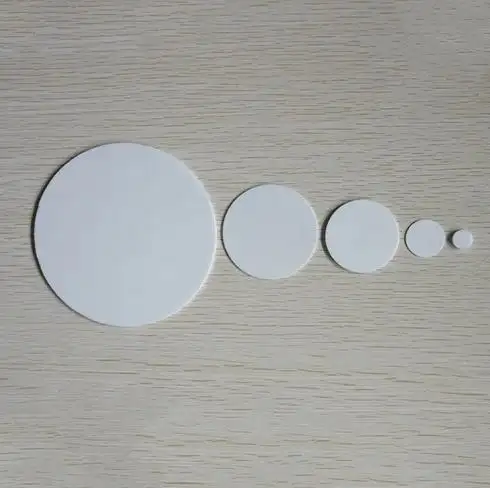
In real procurement, “grade” usually means Al₂O₃ purity plus the additives used for sintering and property balance. Common families range from about 80% alumina to >99% alumina. Higher purity often improves wear stability and high-temperature performance. But higher purity is not always the best value choice.
95%–96% Alumina: The Workhorse Range
Grades around 95%–96% are widely selected as a practical default. They often balance performance, manufacturability, and cost in a way that suits many industrial components and insulating structures.
This family is often a strong first evaluation if:
• You need reliable insulation,
• You need good strength and wear resistance,
• Your environment is not extremely harsh, and your budget needs to stay efficient across volume.
99%+ Alumina: When Conditions Get Demanding
When temperature is higher, wear is more aggressive, electrical performance requirements are tighter, or failure cost is high, engineers often move toward 99%+ alumina. Fewer impurities can mean better stability and resistance under demanding conditions.
At UPCERA, we do not push 99%+ “by default.” We recommend it when the operating conditions justify it, or when you need extra margin for service life, stability, or qualification requirements.
A practical way to think about grade is this: buy the purity that matches the risk. Overbuying purity can waste budget. Underbuying purity can create downtime, frequent replacement, or a quality dispute that costs far more than the material upgrade.
4) Plate Design Details That Prevent Chipping and Early Cracks
Most buyers focus on length × width × thickness. That matters, but it is not the full story. In ceramic plate projects, success often depends on details that look “small” on paper.
• Edge Treatment And Corner Radius
Sharp corners concentrate stress. Even a modest radius can reduce chipping risk during handling and assembly. If impact is possible, corner protection becomes even more important.
• Flatness And Parallelism Expectations
Ceramics dislike forced bending. If your mounting surface is not flat, or your assembly clamps unevenly, the plate can crack from assembly stress. Flatness and parallelism are not luxury items in ceramic assemblies. They are stability controls.
• Mounting Method
Point clamping is risky. Distributed support is safer. If you must clamp, avoid concentrating force at a few hard points. Consider compliant layers where appropriate.
• Surface Condition And Counterface Choice
Sliding wear is not only about the alumina. It is about the pair. Surface finish, counterface material, lubrication, and particle contamination can change wear behavior dramatically.
If you are replacing a metal wear plate with an Alumina Ceramic Plate, do not copy the metal mounting logic. Metals can accept forced constraint. Ceramics usually prefer supportive constraint. They want stable seating, controlled contact, and less bending stress.
5) Where Alumina Ceramic Plate Fits Best in 2026
An Alumina Ceramic Plate is commonly chosen where a component must resist wear, insulate electrically, or stay stable at elevated temperature. In 2026, most applications fall into three practical buckets.
Wear and Contact Surfaces
These applications use alumina for abrasion resistance and hardness. Typical examples include wear liners, sliding plates, and particle-contact zones in equipment where metals wear too fast.
Good fit signals:
•Abrasive dust or granules dominate wear
•Repeated sliding contact
•Stable load paths with limited impact
If impact is frequent or unavoidable, you may need design changes (support, shielding, thickness strategy) or a different ceramic approach.
Electrical Insulation and Thermal-Design Structures
Alumina is widely used as a substrate and insulating structural element in electronics and power-related assemblies. This is where designers value insulation plus controlled thermal expansion and thermal behavior.
In these cases, “plate quality” is often judged by consistency. Repeatable properties, controlled dimensions, and stable surface condition can matter as much as raw hardness.
High-Temperature Fixtures and Protective Plates
In furnaces, heaters, sensors, and hot zones, alumina ceramics are used because they keep shape under heat and resist corrosion in many operating atmospheres.
If your temperature is close to the upper limits of polymers or common metals, alumina often becomes a shortlist candidate. But the correct grade and mounting method still decide whether it lasts.
6) A Selection Checklist and a Manufacturing-Ready Next Step
If you are new to specifying an Alumina Ceramic Plate, use a structured checklist. It speeds quoting and reduces redesign loops. It also helps a manufacturer give you the right recommendation quickly.
•What is the dominant failure mode?
Abrasion, erosion, electrical leakage, heat distortion, thermal shock, or a mix?
•What is the operating temperature profile?
Steady temperature, peak temperature, and cycling range.
•How is the plate loaded and supported?
Support area, clamping style, contact pressure, and impact risk.
•What is the counterface material and condition?
Metal, polymer, another ceramic, particles, dry sliding, or lubricated contact.
•Which grade family fits the risk?
In many projects, 95–96% alumina delivers the best balance of performance and cost. When your environment becomes more extreme—higher heat, stronger wear, or stricter electrical demands—99%+ alumina often provides the extra stability engineers need.
CTA (Call-to-Action)
If your 2026 project requires an Alumina Ceramic Plate, send UPCERA your use scenario, operating temperatures (steady and peak), plate dimensions, and mounting approach. We will recommend a suitable grade direction, advise on design details that reduce chipping, and provide a manufacturing-ready quotation path for repeatable production.
Share on Social:


In This Article
- 1 1) What an Alumina Ceramic Plate Is and Where People Misjudge It
- 2 2) The Performance Trio That Makes Alumina Practical
- 3 3) Purity Grades in 2026: Why the Percentage Changes Real Outcomes
- 4 4) Plate Design Details That Prevent Chipping and Early Cracks
- 5 5) Where Alumina Ceramic Plate Fits Best in 2026
- 6 6) A Selection Checklist and a Manufacturing-Ready Next Step
