 English
 中文
中文







Practical Guide to High-Quality, Cost-Effective Precision Ceramic Industrial Components
Ceramic Industrial systems live or die by the quality of their precision parts. When components hold geometry under heat and load, resist wear, and remain chemically inert, entire platforms become more stable, more predictable, and less costly to operate over time. That is the promise of advanced ceramics in mission-critical environments: reliable alignment, consistent interfaces, and performance that does not drift when conditions get tough. This guide presents a practical path to components that perform and pay back. The details appear in the next sections.

Defining Precision Ceramic Industrial Components
Precision ceramic industrial components are engineered parts made from advanced ceramics with tight dimensional control and functional surfaces designed for demanding mechanical, thermal, chemical, and electrical conditions. They retain geometry under load and heat, resist wear, and remain chemically inert. Metals can deform, corrode, or gall under stress and temperature. Polymers may creep, absorb moisture, and lose dimensional stability. Advanced ceramics deliver high hardness, low wear rates, excellent corrosion resistance, electrical insulation, and strong thermal stability, making them suitable for the most exacting Ceramic Industrial use cases.
Precision at the micro scale determines system performance. Micron-scale accuracy underpins stable optical performance. Ferrules, sleeves, and alignment parts must hold concentricity, roundness, and end-face geometry to control insertion and return loss. High-purity zirconia matches glass fiber thermal behavior, cutting stress and stopping drift. Smooth finishes and polished end faces reduce scatter and improve contact. In fluidics, refined bores suppress turbulence and slow wear. In insulating components, managed porosity prevents partial discharge and leakage.
At UPCERA, we develop and manufacture components from zirconia, alumina, sapphire, ruby, aluminum nitride, silicon nitride, and silicon carbide. Each material solves a different class of problem.
•Zirconia: High toughness, wear resistance, and fiber-matched expansion; fit for ferrules, sleeves, and precision guides.
•Alumina: Strong electrical insulation, hardness, and corrosion resistance; used in bushings, substrates, and insulating supports.
•Silicon Nitride: High strength and thermal shock resistance; ideal for bearings and high-speed, high-heat interfaces.
•Silicon Carbide: Engineered for extreme wear and chemical exposure; the choice for seals, plungers, and abrasive flow systems.
•Aluminum Nitride: Moves heat quickly while remaining electrically inert; ideal for heat spreaders and temperature control solutions.
•Sapphire/Ruby: Single-crystal Al₂O₃ with optical clarity and Mohs 9 hardness; suited to windows, lenses, and precision fluidics.
Designing Cost–Effective Ceramic Industrial Performance
Cost-effectiveness begins with the right material, the right geometry, and the right tolerance strategy. Over-specifying a surface finish or an unnecessary tolerance adds cost without improving function. Under-specifying critical dimensions invites misalignment, increased wear, and rework. In Ceramic Industrial programs, the balance depends on duty cycles, temperature swings, chemical exposure, and the sensitivity of the interface.
UPCERA applies two decades of process expertise to guide these trade-offs. We standardize where it improves yield and repeatability, and we customize where performance requires it. Our approach integrates advanced molding, calibrated sintering, fine grinding, end-face polishing, and laser marking for traceability. Statistical process control and metrology verify geometry, surface integrity, and batch consistency. The result is high-volume, stable production and predictable component behavior.
Precision goes beyond nominal dimension. Concentricity and roundness affect optical coupling. Porosity and grain size influence dielectric strength and wear mechanisms. Surface integrity governs friction, debris generation, and sealing efficiency. We manage these details to protect signal integrity in optical links, minimize particle generation in semiconductor tools, and maintain stable clearances in bearings and seals.
•Define operating extremes: temperature range, thermal cycling, chemical media, mechanical load, and electric field.
•Map functional interfaces: fiber alignment, seal contact, bearing surface, insulation barrier, or heat path.
•Choose material by failure mode: toughness for impact (zirconia), insulation for high voltage (alumina), shock resistance for rapid thermal cycles (silicon nitride), wear resistance for abrasive media (silicon carbide), thermal conductivity for heat spreaders (aluminum nitride).
•Specify only critical tolerances and finishes: concentricity, roundness, end-face geometry, and surface roughness where they affect transmission, friction, or sealing.
•Plan value-added processes: end-face polishing for optics, laser marking for traceability, metallization or metal bonding for hybrid assemblies.

Hidden cost drivers often appear late in the lifecycle. Thermal mismatch can degrade optical links. Inconsistent ceramic batches can shift sintered density and dimensions. Insufficient polishing may raise back reflection. Overly complex geometries increase scrap without functional benefit. Missing QA checkpoints allow micro-defects to enter assemblies and reduce mean time between failures.
•Mismatched thermal expansion causing optical drift and insertion loss.
•Variable density or porosity leading to dimensional instability.
•Inadequate polishing raising back reflection or wear rates.
•Non-functional complexity inflating cost and scrap.
•Gaps in QA enabling micro-defects and early failures.
UPCERA Ceramic Industrial Components and Applications
UPCERA delivers high-quality, cost-effective precision ceramic components with proven stability at scale. Our optical alignment portfolio includes ceramic sleeves and ferrules produced from high-purity zirconia. These parts maintain tight concentricity and micron-level tolerances, with end-face polishing available to protect signal integrity. They support optical communication networks, large data centers, computing power infrastructure, FTTx deployments, 5G backbones, and precision testing equipment. By matching fiber expansion and controlling surface geometry, they keep optical paths stable through temperature cycles and mechanical vibration.
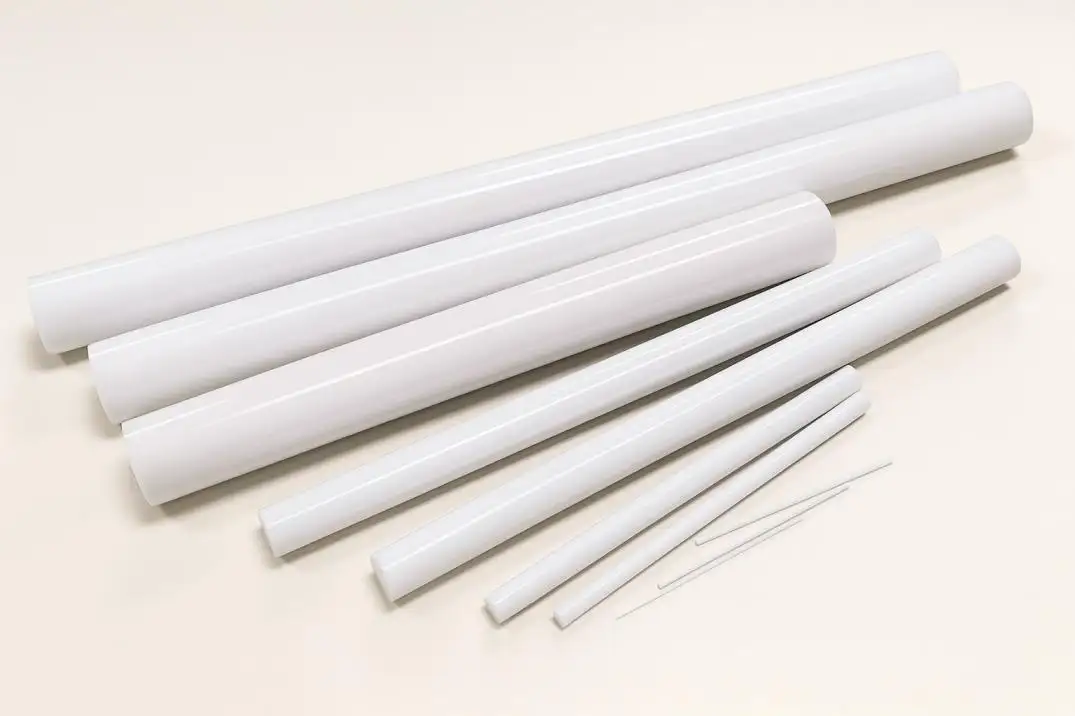
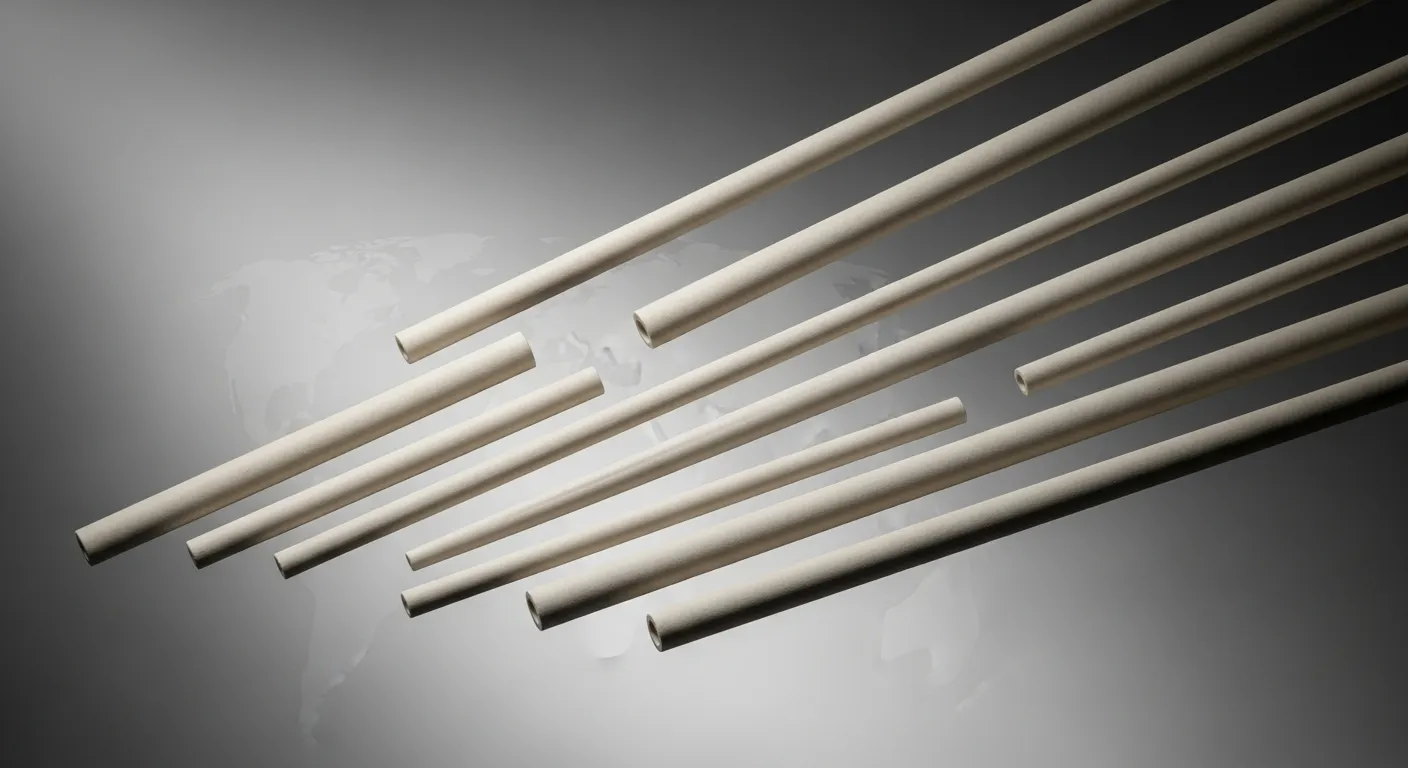
Our ceramic rods, pins, and plungers come in solid, hollow, stepped, and threaded forms, enabling guidance, sealing, probing, and insulation. Smooth finishes reduce friction and debris. Dimensional accuracy prevents drift in precision motion systems. In semiconductor manufacturing, these rods help lower particle generation and maintain clean processes. In machinery and medical devices, they resist abrasion and corrosive media, extending service intervals and stabilizing performance.
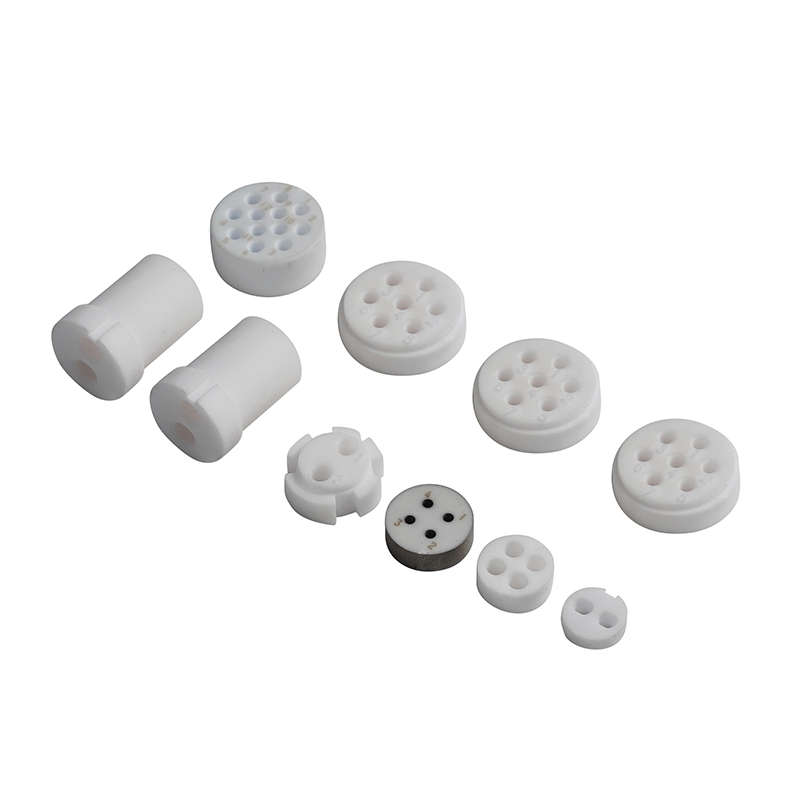
Custom processing is central to our Ceramic Industrial offering. We engineer bushings and nozzles for wear- and corrosion-resistant fluid control. Metallized ceramics provide robust electrical isolation and a dependable joining surface for metal housings or lead frames. Metal-ceramic assemblies marry ceramic stability – thermal, dimensional, and chemical – with metallic toughness. Special-form parts are accurately machined to non-standard profiles, supporting unique structures with consistent, repeatable quality.
Every component is supported by advanced molding, controlled sintering profiles, fine grinding, and precision finishing. Our metrology verifies geometry and surface integrity across batches. Sapphire and ruby parts supply single-crystal clarity and Mohs 9 hardness for aerospace optics, medical imaging, and precision fluidics, where abrasion, heat, and chemicals challenge ordinary materials. With 20 years of professional expertise, we integrate material science and manufacturing discipline to lower total cost of ownership: fewer replacements, reduced downtime, and stable performance in harsh conditions.
•Optical Sleeves and Ferrules: Tough zirconia ferrules and sleeves with tight ID/OD control, concentricity, and UPC/APC-grade polishes for stable alignment under thermal cycling.
•Sapphire and Ruby Components: Single-crystal optics and wear interfaces – windows, lenses, valve seats – engineered for hot, corrosive, abrasive service.
•Ceramic Rods and Pins: Structural ceramics (ZrO2, Al2O3, SiC) machined for bearings, seal guides, precision probes, and dielectric supports in production tools.
•Custom Structures: Bushings, nozzles, metallized insulators, and bonded ceramic-metal assemblies engineered for high insulation, high wear resistance, and high precision.
Call to Action
Advance your Ceramic Industrial program with UPCERA. Share your operating conditions, performance targets, and drawings for a rapid design-for-manufacture review. Request samples for optical or mechanical evaluation. Consult our engineering team on material selection, tolerance strategy, and finishing. We will deliver high-quality, cost-effective precision ceramic components that protect alignment, resist wear, and stabilize performance across the lifecycle. Contact UPCERA to begin your project and scale with confidence.


