 English
 中文
中文







Ceramic Insulator:Vacuum Feedthrough & Sealing Technology
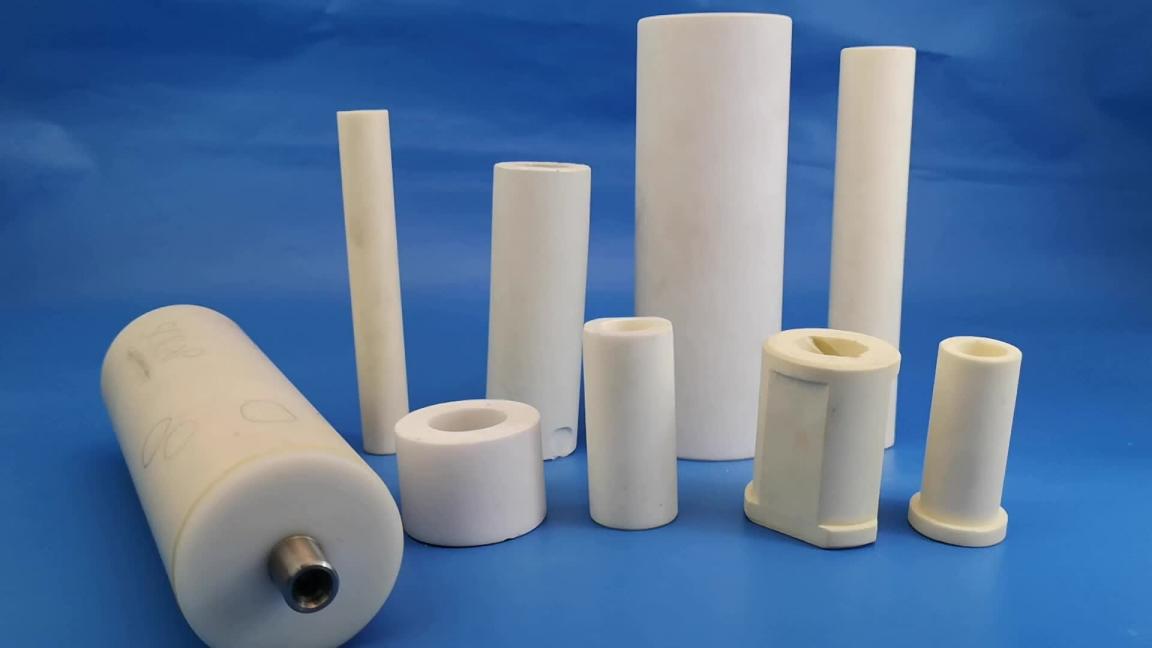
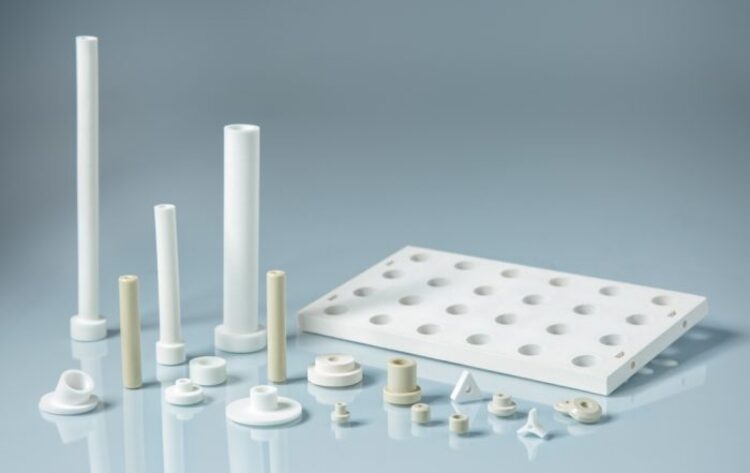
Electrical isolation is becoming an essential design feature for high-precision engineering systems, especially those that operate with vacuum or ultra-clean environments. The Ceramic Insulator is one of the predominant solutions. In particular, alumina-based systems incorporated in vacuum feedthroughs and sealing technologies.
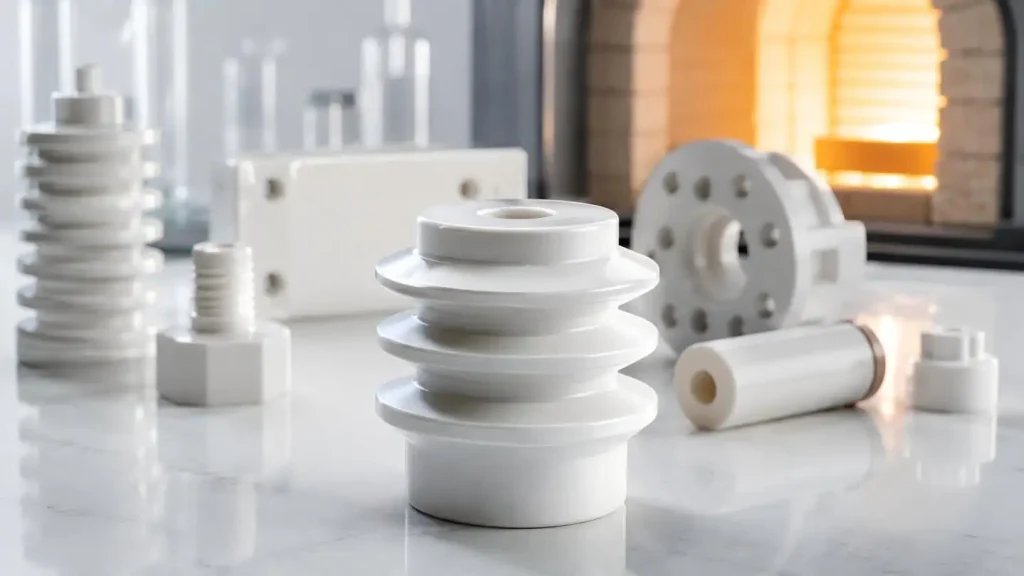
UPCERA is one of the advanced manufacturers in this area and offers a variety of high-purity alumina ceramics that are designed for the needs of electrical, thermal, and mechanical stability in harsh industrial systems.
The aim of this document is to present a clear picture in a structured and technical format regarding the technology of Ceramic Insulators with particular focus on vacuum feedthroughs, the properties of alumina, the considerations of design structures and the placement of systems.
1. What is a Vacuum System Ceramic Insulator?
A ceramic insulator in a vacuum system provides electrical separation in a hermetically sealed vacuum partition of an insulator. This vacuum insulator separates two or more regions of different pressure.
Ceramic insulators can be found in:
•Vacuum Systems
•Semiconductor Processing Tools
•High Voltage Feedthroughs
•RF and Plasma Systems
When compared to glass and polymers, alumina and most ceramics have superior resistance to thermal, electrical, breakdown, and plasma erosion.
Ceramics serve many important functions, such as:
•Vacuum sealing
•Mechanical and thermal stability
•Electrical insulation
2. Alumina Ceramic Insulator: Material Basis
Currently, most high-performance systems of Ceramic Insulators utilize high-purity alumina (Al2O3 ~99%). This material is found to be advantageous because of its intermediate range of mechanical, thermal, and electrical properties.
Core material characteristics:
•High-purity alumina content: Assures reliable long-term dielectric stability
•Low dielectric loss: Minimizes energy loss in the case of AC and RF
•High breakdown voltage: Provides safety with high-voltage operation
•Excellent thermal resistance: Maintains structural integrity >1000°C in many applications
•Chemical inertness: Does not corrode when exposed to acids, alkalis and process gases
3. Vacuum Feedthrough and Sealing Structure Design
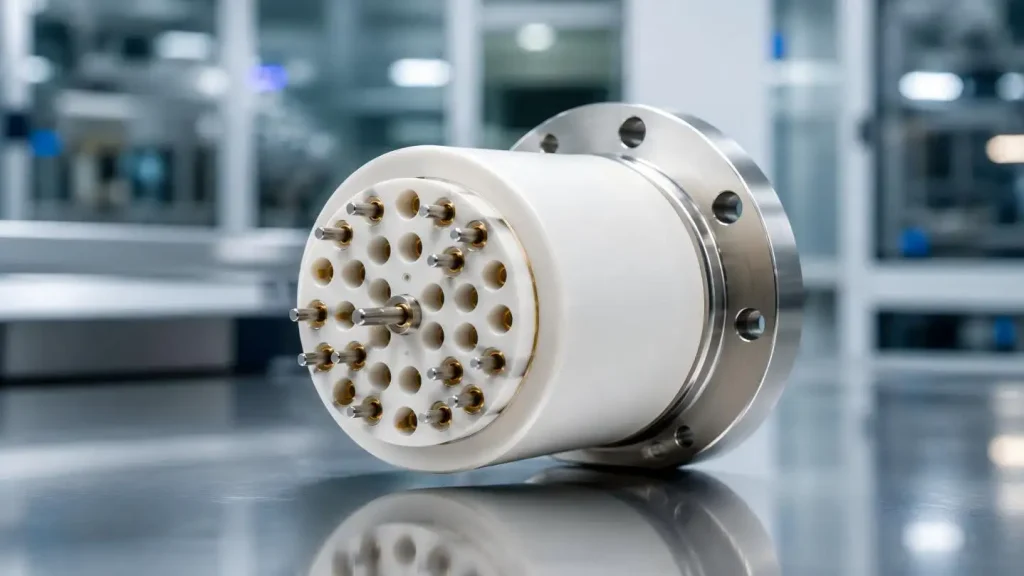
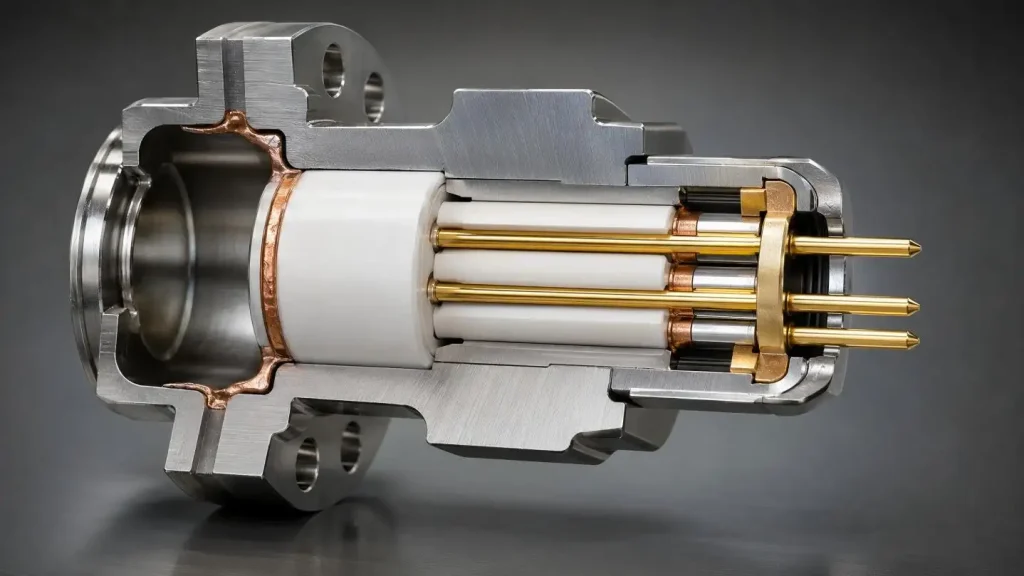
In vacuum systems, Ceramic Insulator components are part of vacuum feedthrough assemblies to transfer electrical signals or power from one side of a vacuum chamber to the other without breaking the vacuum.
Typical structures consist of:
•Ceramic insulating body
•Metal flange or housing
•Glass or brazed sealing interface
•Conductive pins or multi-channel electrodes
Important design considerations:
•Ceramic-to-metal brazing: Results in a hermetic and mechanical strong bond
• Matching thermal expansions: Minimizes the stress and damage during temperature cycles
• Multi-hole design: Allows the routing of multiple conductors or fluid channels in a compact manner
• Gap design tolerance: Affects both the electrical performance and the mechanical stability of the assembly
4. Multi-Hole Alumina Ceramic Insulator Design
Compact and multifunctional feedthroughs are a requirement of many modern industrial systems. Addressing this need, Multi-hole Ceramic Insulator designs contain a number of channels in one ceramic body.
Advantages of a Multi-Hole Design
1) High integration density
• Facilitates the arrangement of many signal paths within a single component
2) Space Efficiency
• Allows a smaller vacuum assembly footprint
3) Wiring Flexibility
• Permits more intricate designs of the electronics
4) Sealing Reliability
• Less sealing penetrations
5. Precision Engineering and Technical Requirements
• Within vacuum and high-voltage systems, performance advanced engineering ceramic insulators are required to have very limited tolerances, in the order of microns.
Typical Values
| Specification | Typical Value |
| Length | ≤ 300 mm |
| Outer Dimension | ≤ 150 mm |
| Surface Finish | Ra 0.02 – Ra 0.2 |
| Wall Thickness | ≥ 0.1 mm |
| Roundness | ≤ 0.002 mm |
| Concentricity | ≤ 0.002 mm |
| Straightness | ≤ 0.004 mm |
| Perpendicularity | ≤ 0.005 mm |
These tolerances are crucial to:
• Ensure vacuum integrity in ultra low pressure
• Stabilize performance of electrically insulating materials
• Ensure ease of assembly for mass production
6. Manufacturing and Engineering Capabilities (UPCERA)
UPCERA focuses on developing advanced systems for high strength alumina ceramics and offers state of the art Ceramic Insulator solutions for vacuum and high voltage applications.
Some of the notable benefits of our engineering capabilities are:
• Precision Machining: Micron-level control of complex geometries
• Advanced Material Development: Controlled formulation of 99% high purity alumina
• Control of Manufacture: Tolerance of ±0.01 mm achievable for precision assemblies
• Multi-Hole Structural Design: Capability to design high density feedthroughs
• Global Compliance: Products are compliant with RoHS and REACH
Taking the above into consideration, the features of UPCERA Ceramic Insulators are designed to satisfy integration into semiconductor tools, power systems, and advanced industrial equipment.
7. Benefits of Ceramic Insulator Technology
The performance within vacuum environments of Ceramic Insulator systems is a comprehensive measure of their electrical, mechanical and chemical stability.
Main advantages:
• Strong dielectric strength: Does not break down under high-voltage
• Thermal stability: Retains the same properties with high temperature and rapid cooling
• Mechanical durability: Does not crack, deform, fatigue, etc., with time
• Corrosion resistance: Good performance in chemically aggressive vacuum environments
• Non-magnetic behavior: Does not disturb sensitive RF and electronic measurement systems
• Low outgassing: Acceptable for ultra-high vacuum (UHV) conditions
8. Applications of Ceramic Vacuum Feedthrough Systems
Ceramic Insulator based feedthroughs are commonly used in advanced industries requiring vacuum and electrical isolation.
Semiconductor and Electronics Manufacturing
• Wafer processing: Signal transmission in vacuum chambers
• Etching and deposition: Electrical isolation while exposed to plasma
• Cleanroom automation: No contamination or signal interference
Vacuum and RF Systems
• RF plasma: Stable dielectric in high frequency RF vacuum plasma
• Vacuum research: Precision and accuracy of measurements
• Particle accelerators: Insulation withstands electrical breakdown
High-Voltage Industrial Equipment
• Power systems: Safe electrical isolation in small assemblies
• High-voltage switches: No arcing in sealed environments
• Energy systems: Stable long-term insulation
Aerospace and Medical Systems
• Aerospace sensors: Insulation with no arcing in vacuum and thermal stress
• Medical devices: Electrical insulation with sterility
• Precision instruments: Sensitive area with no interference of electrical signals
Final Words
As modern industries continue to operate in more vacuum and rely on more high voltage, the demand for more precise and electrical reliable systems, the Ceramic Insulator has become one of the more basic components.
Utilizing high-purity alumina, multi-hole structural design, and precision manufacturing, Ceramic Insulator technology offers:
•Stable operation in vacuum feedthrough systems
•Reliable electrical insulation under extreme conditions
•Long-term mechanical and chemical durability
•Integration into compact and complex industrial systems
Ceramic-based vacuum sealing and insulation technology, utilizing advanced manufacturer capabilities, is still essential to semiconductor and energy industries as well as precision engineering, particularly with UPCERA and other manufacturers.
Frequently Asked Questions
Q1. What does a Ceramic Insulator do in the context of vacuum systems?
A Ceramic Insulator is used for providing electrical insulation while ensuring vacuum closure in feedthrough systems.
Q2. Why is alumina the most common choice in manufacturing Ceramic Insulators?
Alumina has high dielectric strength and can offer thermal stability and vacuum containment.
Q3. What does a vacuum ceramic feedthrough mean?
A vacuum ceramic feedthrough means a sealed structure of an interface, permitting the transfer of electrical signals in a vacuum environment.
Q4. In what way does a Ceramic Insulator provide the integrity of a vacuum?
A Ceramic Insulator provides the integrity of a vacuum by preventing gas leakage, and also provides support of hermetic bonding to the metal parts.
Q5. Why can Alumina Ceramic Insulator withstand high voltages?
Alumina Ceramic Insulator can withstand high voltages due to its very high breakdown voltage.


In This Article
- 1 1. What is a Vacuum System Ceramic Insulator?
- 2 2. Alumina Ceramic Insulator: Material Basis
- 3 3. Vacuum Feedthrough and Sealing Structure Design
- 4 4. Multi-Hole Alumina Ceramic Insulator Design
- 5 6. Manufacturing and Engineering Capabilities (UPCERA)
- 6 7. Benefits of Ceramic Insulator Technology
- 7 8. Applications of Ceramic Vacuum Feedthrough Systems
