 English
 中文
中文







Aluminum Oxide Nozzle: From Material Science to Industrial Applications
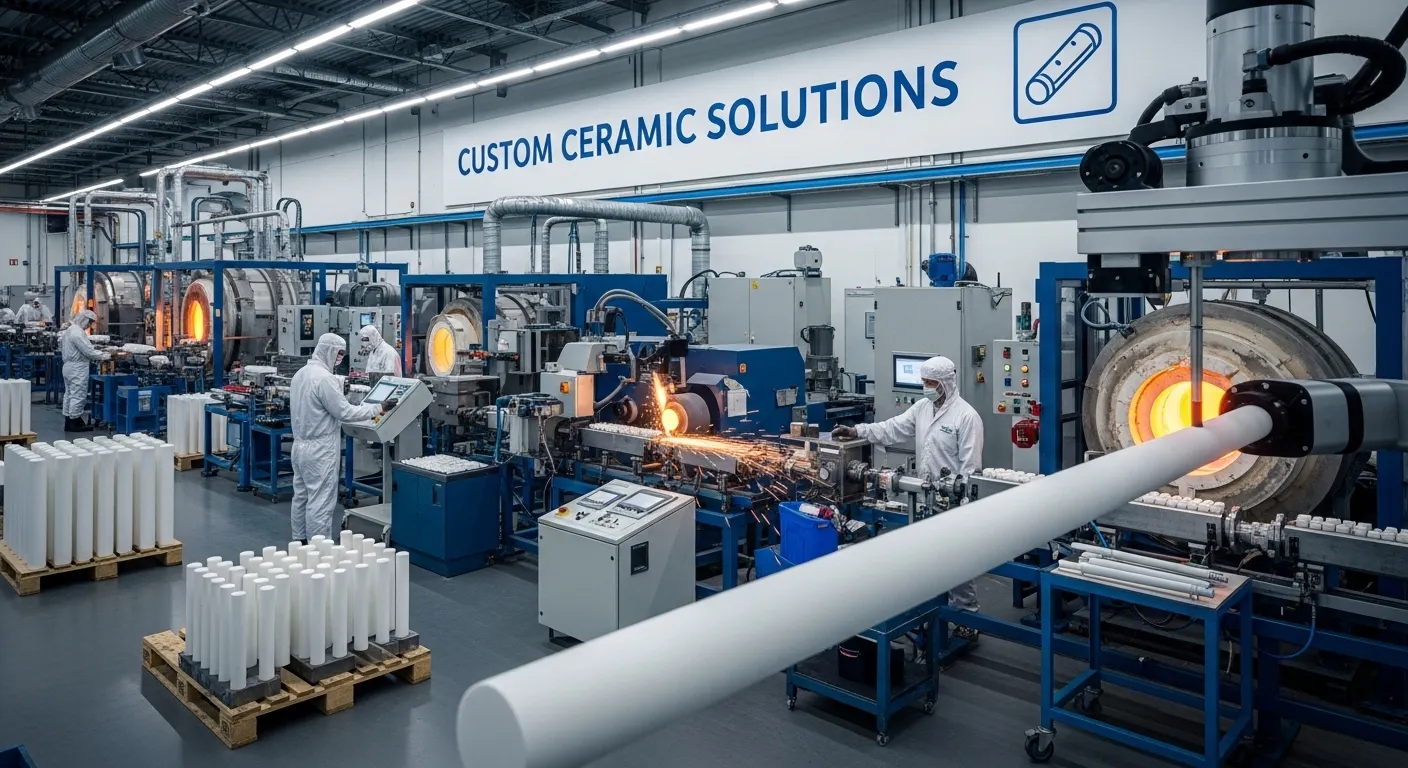
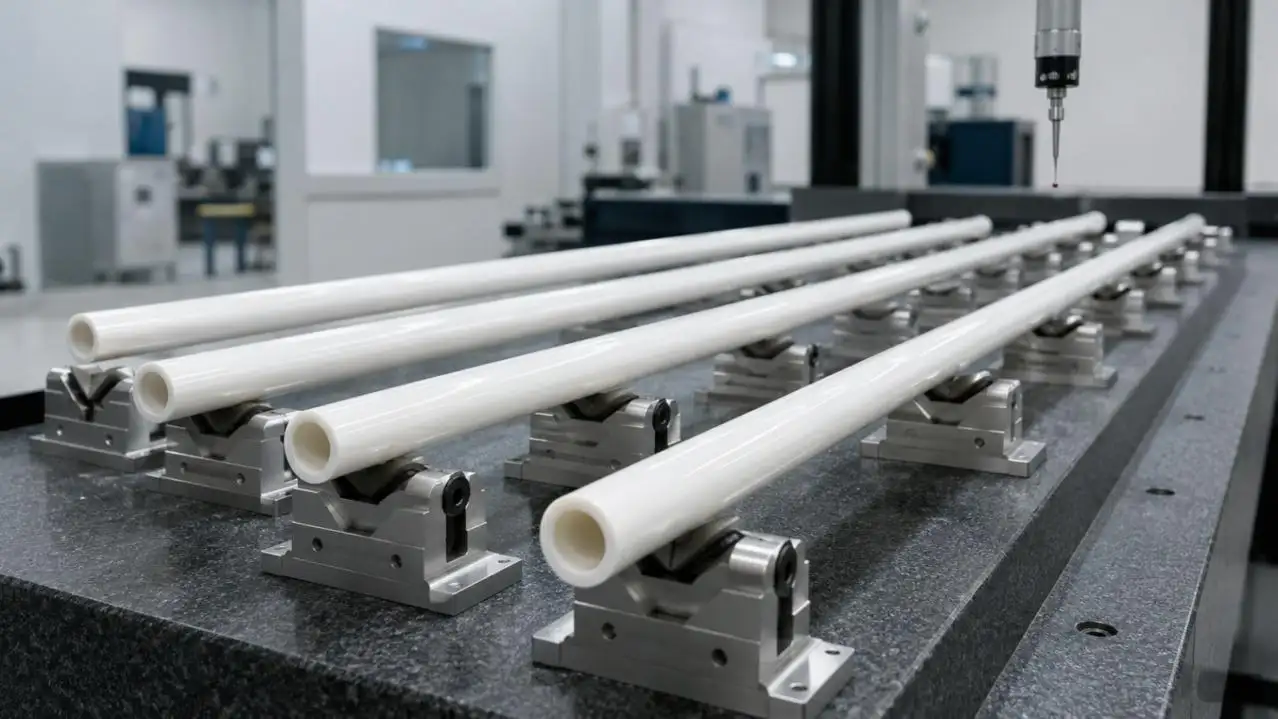

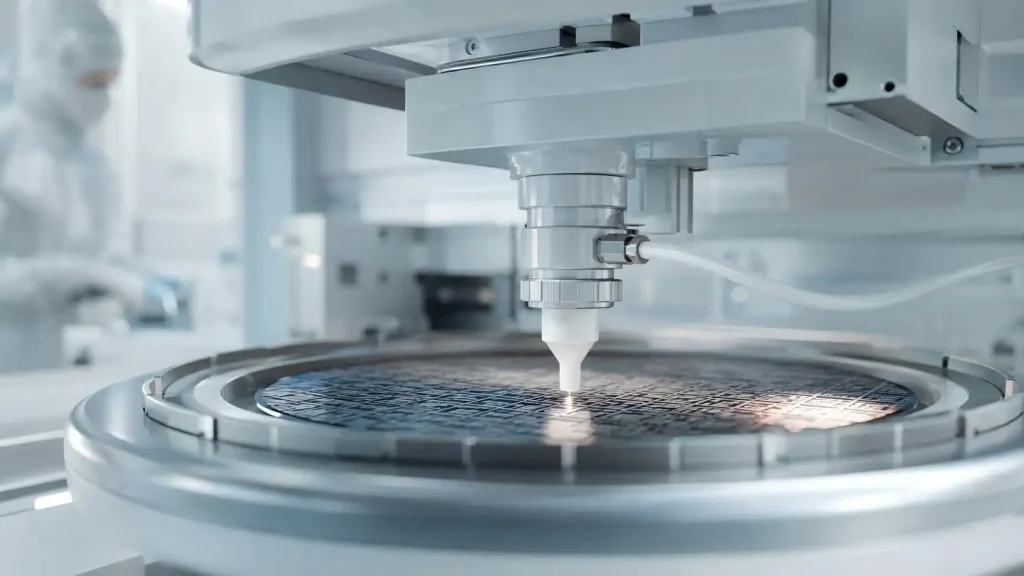
An aluminum oxide nozzle (usually an alumina ceramic nozzle or a ceramic spray nozzle) is a component made from high-purity alumina (Al₂O₃) and is a highly specialized part used in many industrial systems. Where materials might become corroded or where materials and components are exposed to high levels of abrasion or high temperatures or where materials are subjected to electrically demanding environments, the aluminum oxide nozzle will serve a functional purpose. In contemporary engineering, aluminum oxide nozzles are critical components and consumables in the semiconductor industry, as well as industrial automation, medical manufacturing, and thermal processing.
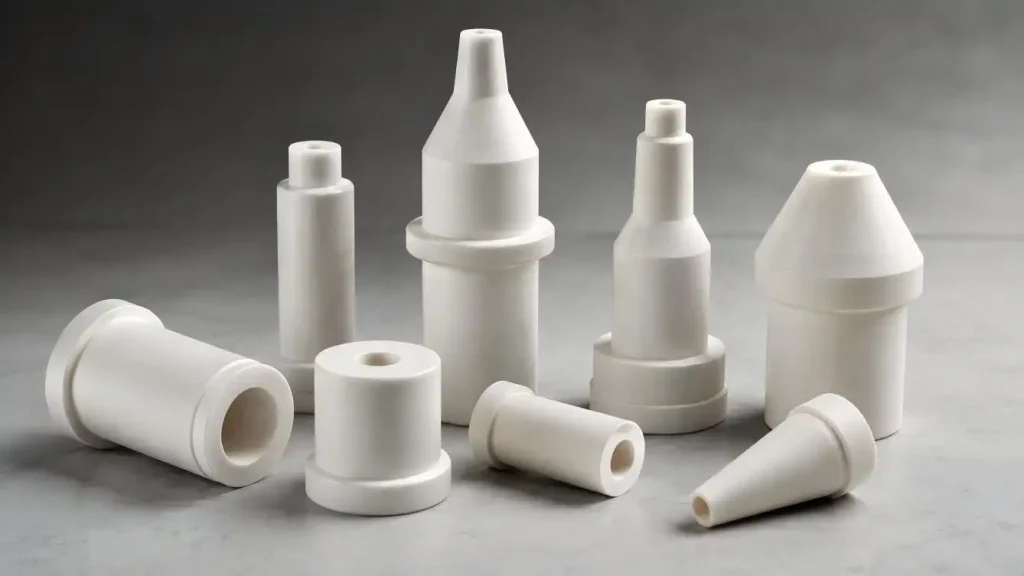
The aim of this document is to explain aluminum oxide nozzle technology in a logical framework, encompassing the science of the materials involved, the technology of the processes, the industrial applications, and the technical capabilities of advanced ceramics such as UPCERA.
What is an Aluminum Oxide Nozzle?
An aluminum oxide nozzle is a precise ceramic component designed to control the direction and/or velocity and/or dispersion of some combination of gases, liquids, and/or solids. While metal nozzles may be designed to serve the same purpose, alumina (Al₂O₃) nozzles are designed to serve this purpose in extreme operating conditions.
Its typical applications include the following:
•Spray generation in chemical and coating systems.
•Gas or liquid (fluid) directing in semiconductor manufacturing equipment.
•Control of high temperature particle flow in industrial furnaces.
•Precision dispensing in manufacturing automation.
Because metal nozzles may be designed to accomplish the same purpose, alumina nozzles are typically the nozzles of choice when the metal nozzles that serve the same purpose fail due to wear, oxidation, or contamination.
Material Science of the Aluminum Oxide Nozzle
The abundant and dominant material in aluminum oxide nozzles is excellent from a materials science point of view because of its extreme stability—both chemically and physically.
Key material characteristics include:
•High hardness: Similar to structure of sapphire-like ceramics
•Thermal stability: Structure is stable above 1500°C
•Chemical stability: Stable in acids, alkalis, and other media
•Electrical insulation: High dielectric strength in elevated voltages
•Wear resistance: Erosion is low in flow of abrasive particles
From a material science standpoint, a rigid crystalline lattice structure makes alumina suitable for applications involving precision control over the flow of substances and where stability in dimensions is essential.
Why Aluminum Oxide Nozzles Are Popular in the Industry
The use of Aluminum Oxide Nozzle components is more popular in the industry because of the requirements of more advanced manufacturing systems.
The main reasons are:
•Longer service life: Reduces the number of necessary replacements
•Performance stability: Maintains the same structure under stress and high temperatures
•Compatible with clean processing: Understandable in semiconductor and medical manufacturing systems
•Control over dimensions: Precision control over fluid and gas flows
•Control over contamination: Metal ions are avoided in the processes
The alumina nozzles are the best choice in many demanding applications compared to stainless steel, tungsten carbide, and polymer nozzles.
Aluminum Oxide Nozzles Manufacturing
To obtain a high-performance Aluminum Oxide Nozzle, advanced technologies for ceramics and precision manufacturing are necessary.
The most common steps of manufacturing are:
•Preparation of powders: High purity alumina is powdered and size sorted
•Forming process: Pressing, injection, or slip casting
•Sintering: High-temperature ceramization
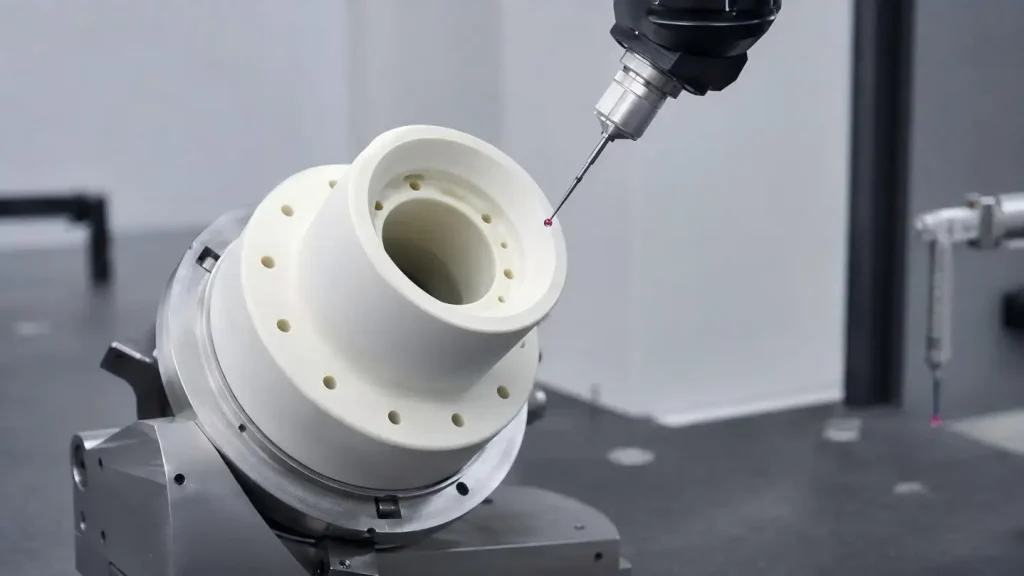
•Precision machining: Diamond tools are used to achieve tight tolerances
•Surface finishing: Polishing to achieve low levels of roughness
UPCERA is one of the manufacturers who uses enhanced control of the process to obtain repeatable results.
Complex Alumina Components and Technical Capability
Modern designs for Aluminum Oxide Nozzles are classified as Complex Alumina Components. These designs require Alumina Components to satisfy geometry and tolerance requirements within the scope of industrial performance specifications and standards.
Some common specifications are:
| Parameter | Typical Range |
| Length Range | ≤300 mm |
| Outer Diameter | ≤150 mm |
| Surface Roughness | Ra 0.02 – 0.2 |
| Minimum Wall Thickness | 0.1 mm |
| Roundness | 0.002 mm |
| Concentricity | 0.002 mm |
| Straightness | 0.004 mm |
| Perpendicularity | 0.005 mm |
Advanced Aluminum Oxide Nozzles require a high level of engineering skill as evidenced by the above values.
Benefits of Aluminum Oxide Nozzle Parts
Aluminum Oxide Nozzles have multiple benefits thanks to alumina ceramics along with high-precision design and construction.
•Easily Adjustable Shapes: Can perform even complex geometric adaptations and modifications quickly.
•Uniform Performance: Speed of changes does not affect performance.
•Deterioration Resistance: In hostile environments, the active life does not drop significantly.
•Resistant to Corrosion: Keeps the System Intact in a Corrosive Environment.
•Ability of Electrical Insulation: Doesn't allow electric leakage even in very high voltages.
•Stable mechanical performance: remains dimensionally stable and consistent with high loads.
These advantages combined also define the environments in which alumina nozzles are reliable and thus the environments in which these nozzles are utilized.
Industrial Applications of Aluminum Oxide Nozzles
Aluminum Oxide Nozzles are used in many advanced manufacturing and precision engineering applications and processes where stable flow of high quality is required.
1. 3D Printing and Additive Manufacturing
•Material extrusion systems: Creates a consistent flow of material
•High-performance filaments: Abrasion-resistant reinforced polymers and composite filaments
•Continuous printing systems: Stability over long run
2. Welding and Cutting Equipment
•Plasma cutting nozzles: Thermal resistance to extreme arc temperatures
•Laser processing systems: Integrity with exposure to focused energy
•High-heat torch systems: Stable gas flow and minimal distortion of nozzle
3. Aerospace and Automotive
•Precision fluid delivery systems: Controlled flow of fuel, coolant, or lubricant
•High-vibration environments: Stability under stress
•Long-life components: Minimal maintenance on time-critical systems
4. Medical and Laboratory Devices
•Chemical dispensing systems: Delivery of chemicals contamination-free
•Diagnostic sampling equipment: Purity of ultra-small fluid volumes
•Analytical instruments: Delivery of reagents with great precision and extremely low variance
5. Industrial Spraying Systems
•Coating applications: Consistent spray for surface treatment
•Paint and adhesive systems: Stable flow for continuous operation
•Corrosive media handling: Chemically resilient
6. Electronics Manufacturing
•Solder paste dispensing: Micro-dot placement on PCBs with accuracy
•Micro-assembly processes: Placement of conductive materials with high accuracy
•High-precision electronics production: Repeatability of automated production lines
UPCERA Engineering Strength in Alumina Components
In technical ceramics, high-precision alumina systems from UPCERA can solve complex problems throughout many different industries. One example of these advanced Alumina Oxide systems are our nozzles.
Some of the key advantages incorporate:
1.High purity alumina has great physical and chemical stabilities.
2.Exceptional engineering precision and very tight tolerances on complex geometries.
3.Development of application-specific nozzles via custom design support.
4.Long-term reliable performance in the most challenging of environments.
5. Versatility to support semiconductor, medical, and industrial automation.
The Complex Alumina Components platform provides the foundation to manufacture high-performance Aluminum Oxide Nozzle systems where typical machining materials would be inadequate.
Conclusion
The Aluminum Oxide Nozzle makes use of the advances in material science and precision engineering. These components can be used in difficult areas of an industry with high precision when combined with high purity alumina which is thermally stable, wear-resistant as well as an electrical insulator.
The increased market demand for improved precision and cleaner manufacturing gives advanced ceramics an important role in UPCERA's future industry, for advanced industrial systems.
For a high-tech industry the Aluminum Oxide Nozzle is far from a consumable component, offering stability, efficiency and durable high-tech industrial systems.
FAQ - Aluminum Oxide Nozzle
Q1. What is an Aluminum Oxide Nozzle?
An Aluminum Oxide nozzle is a flow control device made of a ceramic shell of high purity alumina, which provides control of wear, heat and corrosion.
Q2. Why alumina instead of metal for nozzles?
Use of alumina provides a hardness and wear and corrosion resistance much greater than most metals.
Q3. In which industries are Aluminum Oxide Nozzles used?
These nozzles are used in industries such as 3D printing, aerospace, welding, medical, and electronics.
Q4. Do Aluminum Oxide Nozzles withstand high temperatures?
Yes, alumina ceramics have excellent stability at very high temperatures, generally above 1500 °C.
Q5. Are Aluminum Oxide Nozzles wear-resistant?
Yes, they are wear-resistant, especially when abrasion is caused by a flow of particles or composite materials.


In This Article
- 1 What is an Aluminum Oxide Nozzle?
- 2 Material Science of the Aluminum Oxide Nozzle
- 3 Why Aluminum Oxide Nozzles Are Popular in the Industry
- 4 Aluminum Oxide Nozzles Manufacturing
- 5 Complex Alumina Components and Technical Capability
- 6 Benefits of Aluminum Oxide Nozzle Parts
- 7 Industrial Applications of Aluminum Oxide Nozzles
- 8 UPCERA Engineering Strength in Alumina Components
