 English
 中文
中文





Custom Ceramic Tube Design: Diameter, Length, Holes, and End Features
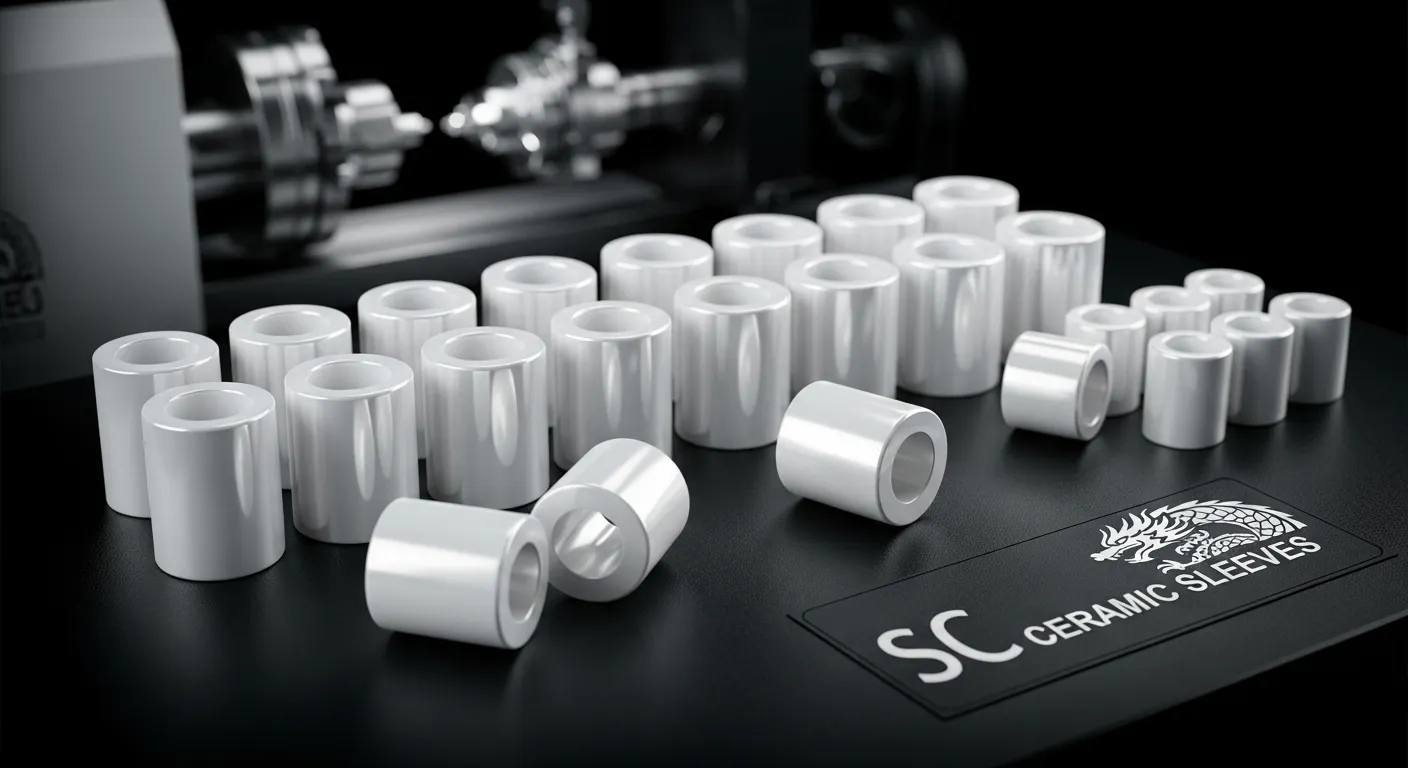
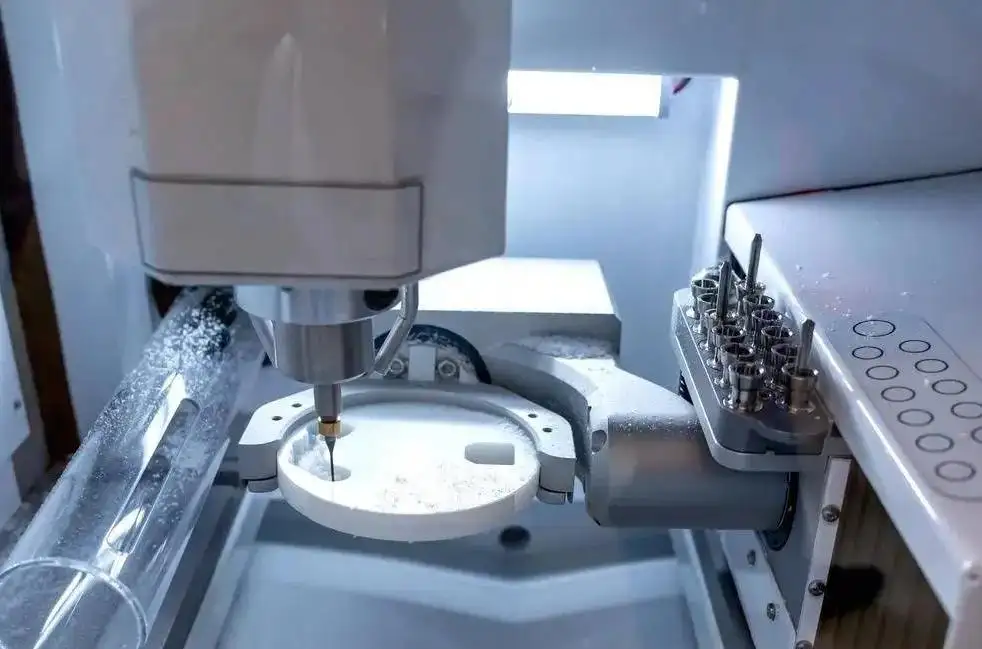
Custom Ceramic Tubes are designed through the specification of the outer and inner diameter, length, wall thickness, holes, stepped sections, end features, material, and dimensional tolerances. These elements can’t be specified separately because strength and thermal stability and service life and sealing are all affected. This also includes machining and assembly accuracy.
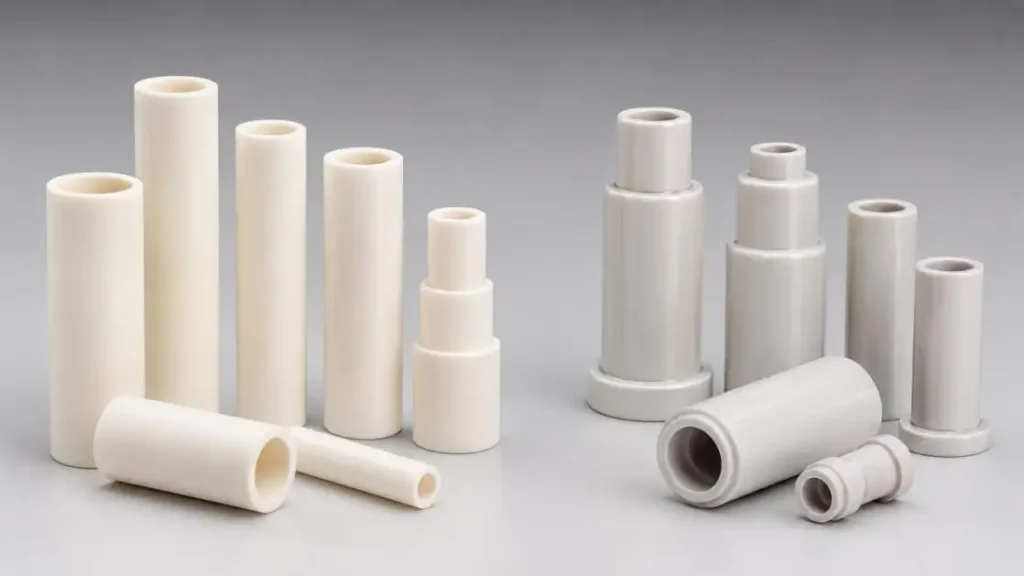
A precision Ceramic Tube is used in semiconductor, vacuum, fluid-control, insulation, thermal-processing, sensor, analytical, and automation systems. Tubes with the same diameter and length may still perform differently because of wall thickness, material, end geometry, surface finish, and tolerance.
Key Custom Parameter Details for Ceramic Tubes
| Parameter | Engineering Function | Design Risk |
| Outer diameter | Establishes outer limits for interfaces | Assembly errors leading to either a loose fit or interference |
| Inner diameter | Determines passage for flow or internal clearance | Insufficient internal clearance or flow restriction |
| Wall thickness | Influences structural integrity and response to temperature changes | Causes cracking or insufficient wall thickness |
| Length | Establishes the focus for support and span | Errors for straightness or bending |
| Holes and slots | Eliminate local sections for fixation, flow, or measurement | Insufficient strength in the local area |
| Stepped sections | Introduce positioning and sealing capability | Positioning errors with poor concentricity |
| End features | Assist in design for connection and ease of fitting | Chipping with high localized stresses |
| Tolerance | Defines design and manufacturing limits | High production costs |
The design of a Ceramic Tube must balance trade offs in positioning and flow, thermal and chemical considerations, and manufacturability and life.
How to Design the Diameter of a Ceramic Tube?
Outer Diameter and Assembly
The outer diameter is generally dictated by the outer components, such as the supporting or enclosing structures and sealing elements (sleeves and gaskets). The following are common fits:
•Clearance fit: Easy assembly and disassembly
•Transition fit: Intended position fit
•Precision fit: Alignment is repeatable
•Sealing fit: A sealing fit may be achieved with an O-ring, gaskets, or a metal sleeve.
When a Ceramic Tube is assembled with metal, the difference in the thermal expansion must be considered in order to avoid excessive contact pressure or a loosening of the assembly.
Inner Diameter and Functional Clearance
The inner diameter may define a passage for flow or may serve a protective function around wires, serve to house measuring devices, or guide sensor elements.
Bore designs must accommodate a range of considerations, including flow and thermal expansion as well as the finish and clearance desired.
Bores of excessive clearance may weaken the structure, while overly restrictive bores may impede flow.
Wall Thickness
Ceramic Tubes of greater thickness can better resist bending, compression, and impacts. However, there are drawbacks such as:
•Greater temperature differentials
•Increased thermal stress
•Prolonged sintering cycles
•Increased costs of materials and machining
Ceramic Tubes wall thickness should be designed to the actual loads and pressures, the method of mounting, and the operating temperature.
What Impact Does Length Have on Accuracy of Ceramic Tubes?
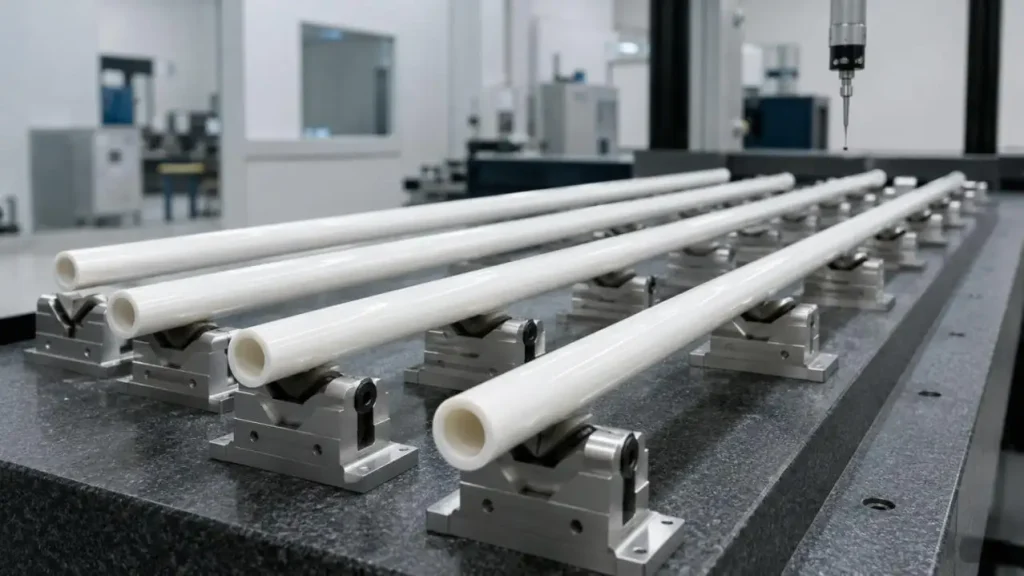
Length has effects on straightness, and concentricity. It also affects bending, vibration, thermal expansion, and ease of inspection. Long Ceramic Tubes are more likely to suffer from deformation due to sintering, uneven wall thickness, vibration during grinding, and damage due to handling.
When the length to diameter ratio increases, the following are to be assessed.
•Support Location
•Method of Installation
•Deflection Allowance
•Tolerance for Straightness
•Range of Operating Temperatures
Long Ceramic Tubes may also require support when being machined, inspected, transported, and assembled.
Design Considerations for Holes, Slots and Openings
Holes and slots serve various functions including position support, flow paths for ventilation and fluids, passage for wiring, fastening, and sensor or inspection system integration.
Ensure sufficient edge distance. Avoid holes next to abrupt edges. Match hole diameter with wall thickness. Avoid sharp corners on slots to reduce stress concentration and crack risk.
| Manufacturing Method | Main Characteristic | Suitable Use |
| Formed before sintering | Lower cost but affected by shrinkage | Wider dimensional tolerances |
| Machined after sintering | Better dimensional and positional control | Precision assembly and sealing |
For many precision applications, post-sintering CNC machining is used to improve dimensional accuracy and sealing/alignment performance.
Typical End Features for Ceramic Tubes
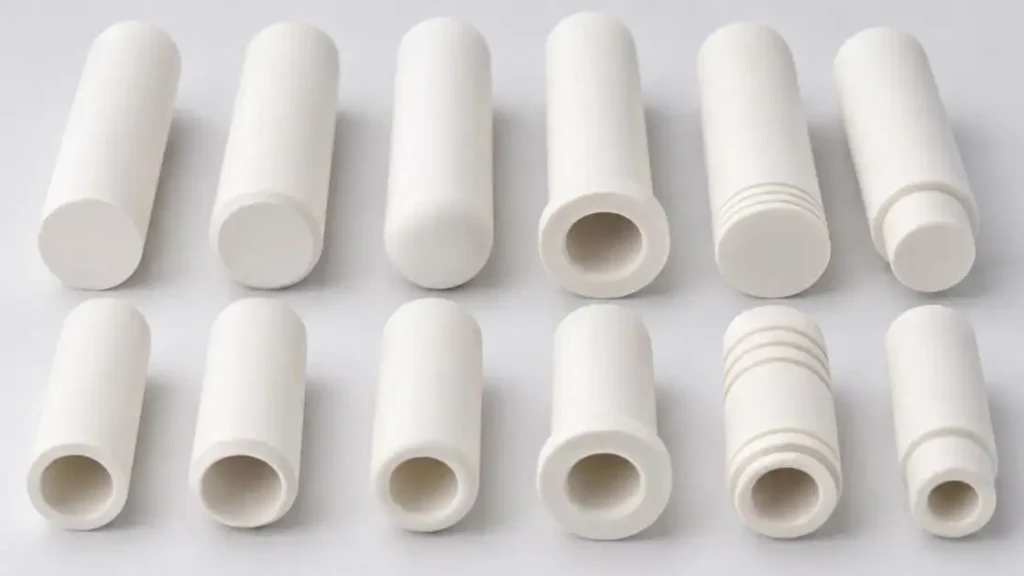
Flat Ends, Chamfered Ends, and Rounded Ends
Flat ends serve basic support. Chamfered ends help guide assembly and chip edges. Rounded ends create less stress for repeated contacts and seal soft ends.
Flanges and Grooved Ends
Flanges serve an axial position and a seal. Grooves are used to accommodate O-rings and retention and sealing rings.
A stepped Ceramic Tube uses multiple inner or outer diameters for:
•Multi-stage positioning
•Precision mechanical assembly
•Axial limitation
•Sealing
•Diameter transition
Step height, concentricity, shoulder perpendicularity, and transition radius are important inspection items. Sharp transitions should be avoided where they could create localized stress.
Alumina vs Zirconia Ceramic Tube
| Selection Factor | Alumina Ceramic Tube | Zirconia Ceramic Tube |
| Electrical insulation | Excellent | Good |
| High-temperature performance | Higher | Moderate to high |
| Fracture toughness | Moderate | High |
| Impact resistance | Moderate | High |
| Wear resistance | Excellent | Excellent |
| Typical use | Insulation, furnaces, vacuum | Positioning, sealing, fluid control |
An alumina Ceramic Tube is generally suited to high-temperature insulation, gas transfer, furnace systems, corrosive environments, and vacuum components.
A zirconia Ceramic Tube is often preferred for repeated assembly, high-strength positioning, wear-resistant fitting, fluid control, and sealing.
Material selection should also consider:
•Continuous and peak temperature
•Mechanical and impact loads
•Electrical insulation requirements
•Chemical media
•Thermal cycling
•Required machining tolerance
Tolerance Priorities for Precision Ceramic Tube Parts
Typical controls include diameters, length, wall consistency, roundness, straightness, concentricity, step height, hole position, roughness, and end-face perpendicularity.
Not all dimensions of a Ceramic Tube need to have tight tolerances. Over-specifying tolerances can increase the time needed for CNC machining, make inspections more complicated, increase rejections, and increase costs and lead times.
Engineering drawings should clearly indicate the following:
•Functional dimensions
•Assembly dimensions
•Inspection references
•Non-critical dimensions
UPCERA Stepped Ceramic Tube Manufacturing
Stepped ceramic tubes require control not only of the raw material but also of the shrinkage from the sintering process, the CNC machining, the concentricity, and the dimensional inspection.
UPCERA produces Y-TZP zirconia ceramic tube components that have high fracture toughness, impact resistance and low friction and are wear resistant. Dimensional tolerances of ±0.005 mm are achievable to support the demands of the sealing and positioning in vacuum and other high-precision analytical instruments and automation systems.
Stepped ceramic tube components manufactured by UPCERA from ≥99.5% alumina offer electrical insulation and are also wear resistant and stable under high temperatures with tolerances of ±0.01 mm and operational temperatures reaching 1600°C, depending on the design and the working conditions.
Design Around Function, Not Dimensions
The design of a custom ceramic tube should focus on the intended application rather than on the dimensions. This includes the consideration of the material, the diameter, the wall thickness, the presence of holes, steps, end geometry, and tolerance, as well as the temperature, media, and the assembly method.
Are you considering a custom ceramic tube or a stepped tube? Provide your drawings, preferred materials, the temperature you will be operating in, assembly method, critical dimensions, and tolerances to UPCERA. Our engineers will evaluate your design and offer suitable configurations using alumina or zirconia ceramic tubes.
FAQs
Q1. What is the application for a stepped Ceramic Tube?
A stepped Ceramic Tube offers integration of diametric changes, positioning, alignment, sealing, and structured assembly within a number of tools and equipment across the vacuum, fluid-control, analytical, semiconductor, and automation sectors.
Q2. Is it possible for UPCERA to make adjusted size Ceramic Tubes?
UPCERA is able to adjust size for outer diameter, inner diameter, adjust wall thickness, overall length, modified stepped sections, and added features such as holes, slots, grooves, and modified end geometry in accordance to customer specifications.
Q3. What is the material for a custom Ceramic Tube?
High-purity alumina Ceramic Tubes and Y-TZP zirconia Ceramic Tubes are the main ceramic materials provided by UPCERA for custom Ceramic Tubes for use in the thermal, electrical, mechanical, vacuum, and fluid-control domains.
Q4. What tolerance can UPCERA achieve for custom Ceramic Tubes?
With respect to the material and geometry of the Ceramic Tube, it could be said that stepped zirconia tubes could reach a tolerance of ±0.005 mm and stepped alumina tubes a tolerance of approximately ±0.01 mm.
Q5. Is it possible to machine Ceramic Tubes from UPCERA to include holes and slots?Yes. If a design is created that incorporates a hole, slot, sealing groove, or positioning feature, UPCERA can evaluate machining holes, slots, grooves and positioning features according to customer drawings.
Share on Social:


In This Article
- 1 Key Custom Parameter Details for Ceramic Tubes
- 2 How to Design the Diameter of a Ceramic Tube?
- 3 What Impact Does Length Have on Accuracy of Ceramic Tubes?
- 4 Design Considerations for Holes, Slots and Openings
- 5 Typical End Features for Ceramic Tubes
- 6 Alumina vs Zirconia Ceramic Tube
- 7 Tolerance Priorities for Precision Ceramic Tube Parts
- 8 UPCERA Stepped Ceramic Tube Manufacturing
