 English
 中文
中文







How Ceramic Pin Surface Finish Affects Friction and Wear
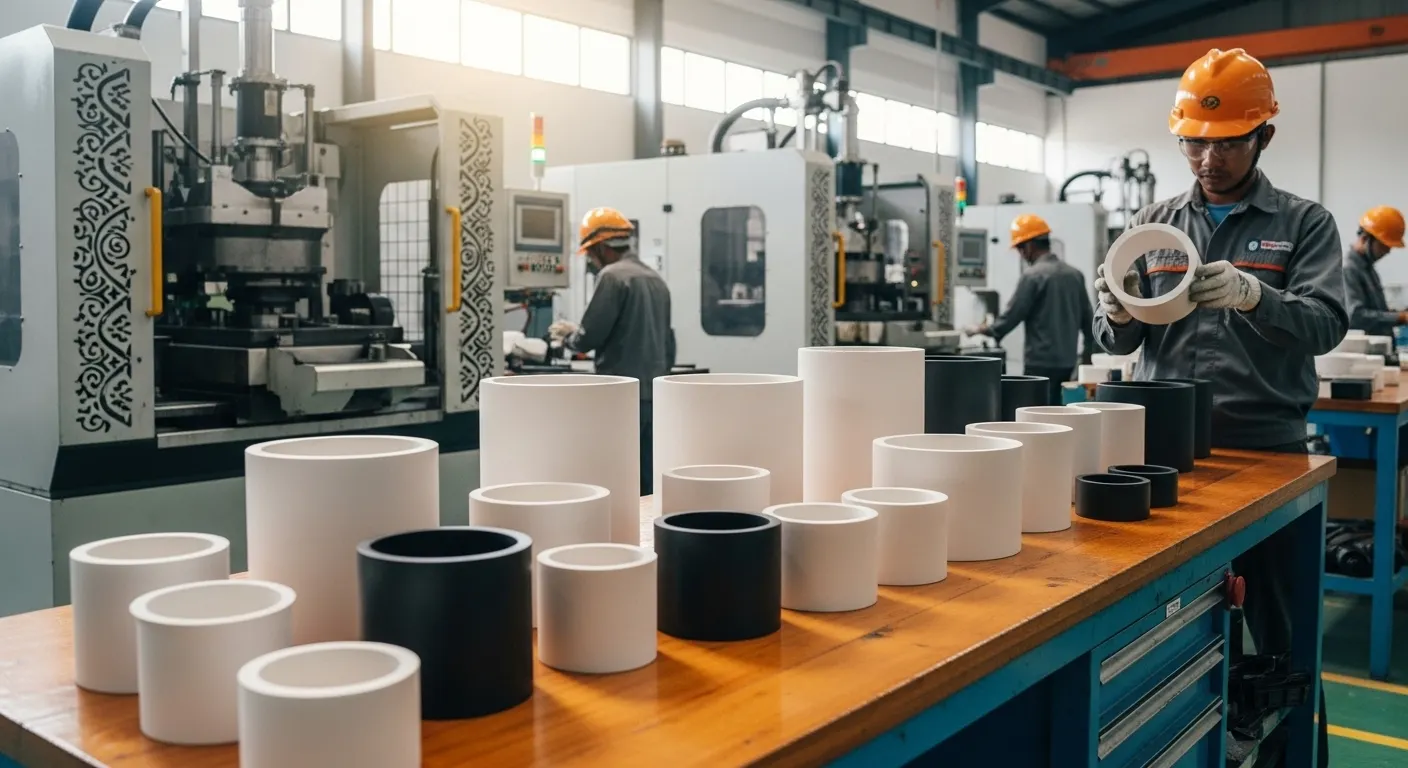
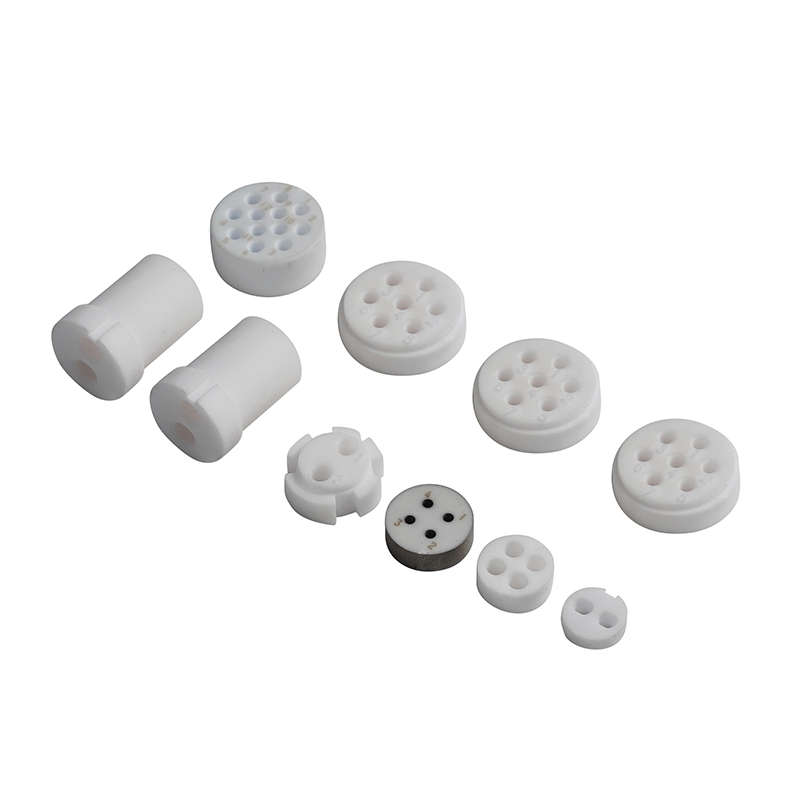
The ceramic pin’s surface finish controls the microscopic peaks that contact a mating component. A rougher surface can increase friction, abrasive wear, particle generation, and insertion-force variation. A controlled low-roughness surface can reduce local stress and improve repeatability.
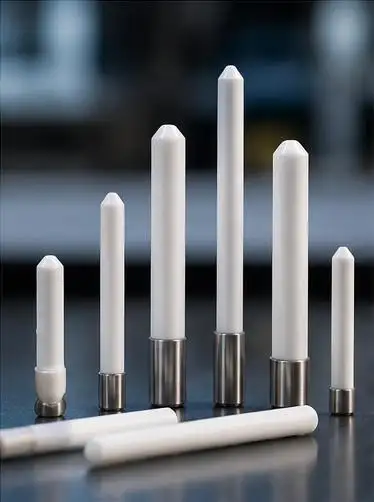
What Is Ceramic Pin Surface Finish?
Fabrication of a Ceramic Pin may use a number of processes and surface finishes, giving it a variety of different textures, some of which may be imperceptible to the naked eye.
Some specifications to describe surface finish include:
•Ra: Generally accepted average roughness.Rz: The height of surface roughness from the highest peak to the lowest valley.
•Surface waviness and undulations.
•Defects in surface finish: Microcracks, chips, scratches, and marks.
Roughness average alone is insufficient to predict friction, for two Ceramic Pin components with the same Ra, different performances can be attributed to the waviness, peak shape, surface defects and grinding direction.
How Does Surface Roughness Change Friction?
Initially in contact with another part, only the microscopic peaks of the surface support the load. These peaks become problematic under sliding contact. Frequent pin insertions can degrade the surface and generate debris, which can result in the formation of an abrasive body.
The following observations were recorded:
•Initial friction is higher and running-in wear from abrasion is greater for surfaces that are rougher.
•Roughness can be reduced with lapping and polishing.
•Ra should not be relied upon completely when predicting friction.
•Behavior of friction can vary with different materials.
•Cleanliness is critical in dry, vacuum, or cleanroom conditions.
How Does Ceramic Pin Surface Finish Affect Wear?
| Wear Type | Surface-Finish Relationship | Possible Result |
| Abrasive wear | Rough peaks or particles scratch the mating surface | Grooves, debris, dimensional change |
| Adhesive wear | Local pressure transfers softer material | Unstable friction, deposits |
| Fatigue wear | Repeated contact accumulates stress | Pitting, microcracks, flaking |
| Impact damage | Poor chamfers or edge defects concentrate stress | Chipping or cracking |
A Ceramic Pin is usually harder and more wear-resistant than many metal or polymer parts. However, that hardness may accelerate wear on a softer mating component. The complete contact pair should therefore be evaluated rather than focusing only on the Ceramic Pin.
Is a Lower Ra Always Better for a Ceramic Pin?
Not always. Although lower Ra values can reduce friction variation, scratching, and abrasive wear, manufacturing costs can increase due to ultra-fine polishing. A finish approaching a mirror-like state may be unnecessary for static assemblies and low-frequency assemblies.
| Application | Recommended Approach | Main Concern |
| Static positioning | Moderate controlled roughness | Dimensional accuracy |
| Frequent insertion | Lower, consistent roughness | Friction and particles |
| Precision sliding | Control roughness and grinding direction | Motion stability |
| Cleanroom equipment | Avoid scratches, chips, and contamination | Particle generation |
| High-temperature systems | Consider expansion and fit clearance | Thermal stability |
| Plastic mating parts | Minimize sharp peaks and defects | Mating-part life |
UPCERA’s typical Ceramic Pin processing capability covers Ra 0.02 to Ra 0.2, depending on the material, geometry, dimensions, and inspection requirements.
Other Ceramic Pin Specifications That Influence Wear
Surface roughness must be considered together with geometric accuracy:
•Diameter tolerance: Controls clearance or interference.
•Roundness: Affects contact-pressure distribution.
•Straightness: Reduces interference in long Ceramic Pin components.
•Concentricity: Relevant to multiple levels of stepped or composite Ceramic Pin designs.
•Perpendicularity: Impacts the positioning of end-faces.
•Chamfers: Reduce scratching and chipping during insertion.
| Parameter | Typical UPCERA Capability |
| Length | ≤300 mm |
| Outer diameter | ≤150 mm |
| Surface roughness | Ra 0.02–Ra 0.2 |
| Minimum wall thickness | 0.1 mm |
| Roundness | 0.002 mm |
| Concentricity | 0.002 mm |
| Straightness | 0.004 mm |
| Perpendicularity | 0.005 mm |
Actual achievable specifications depend on the Ceramic Pin material, dimensions, geometry, production quantity, and inspection requirements.
How to Select Ceramic Pin Surface Finish?
First, define whether the Ceramic Pin is used for static positioning, sliding, rotation, repeated insertion, or press fitting. Each contact condition produces a different combination of pressure, movement, and wear.
Next, identify the mating material, such as:
•Stainless steel or tool steel;
•Aluminum alloy;
•Engineering plastic;
•Coated or plated metal;
•Another advanced ceramic.
Engineers should also evaluate load, speed, cycle count, temperature, lubrication, corrosion, vacuum, and cleanliness requirements. Only the Ra, roundness, and dimensional tolerances needed for reliable function should be specified. An unnecessarily low Ra may increase processing cost without improving actual Ceramic Pin performance.
Applications Requiring Controlled Ceramic Pin Surfaces
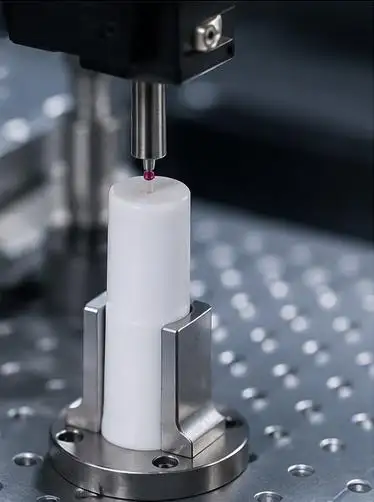
Controlled Ceramic Pin surfaces are commonly used in precision assembly fixtures, semiconductor equipment, medical-device production, automated machinery, and optical systems.
Stable surface quality is conducive to repeatable positioning as a result of predictable loading and unloading in precision fixtures. The use of a Ceramic Pin in electronic and semiconductor systems can aid in the alignment of components and wafers as a result of its electrical insulation, non-magnetic property, cleanliness, and wear resistance.
In applications involving medical devices and in automated systems, persistence of insertion force and dimensional stability is preferred. In addition, optical and laser systems benefit from the design of ceramic locating components with low thermal variations and stability.
UPCERA Ceramic Locating Pin Manufacturing Capabilities
UPCERA offers custom manufacture of Ceramic Pins and ceramic locating pins in both alumina and zirconia as well as other technical ceramics. Our design capability includes both straight and stepped pins, rounded and flat ends, chamfers, and ceramic-metal composites.
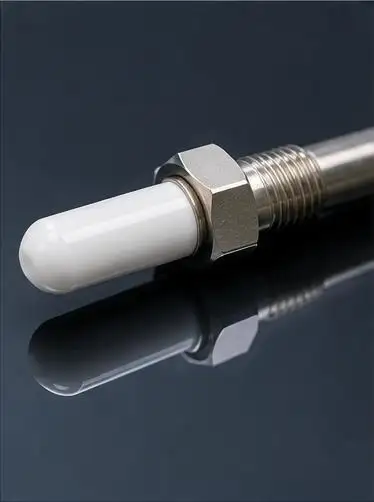
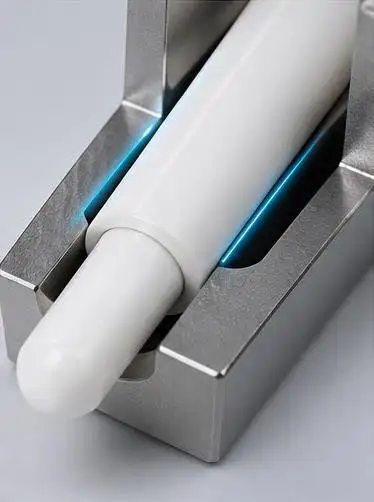
A design consideration may be a blue zirconia Ceramic Pin with a wear resistant ceramic working surface and an integrated, practical metallic mounting surface. This may be appropriate for use in precision couplings and connectors, but should be evaluated against load, fit, temperature, and the joining method.
Precision grinding, lapping, and polishing offered by UPCERA provides the ability to inspect and control roundness, straightness, and perpendicularity. As for Ceramic Pins, dimensions, end features, tolerances, and surface roughness can be evaluated based on the intended positioning or alignment.
Conclusion: Surface Finish Should Match the Function
The surface finish of a Ceramic Pin can impact wear, debris generation, control of insertion force, and the repeatability of positioning. Reducing surface finish to the lowest Ra value possible may result in overspecification. Operating conditions, clearances, fits, and motions should be evaluated in concert with the surface finish.
Please provide UPCERA with your drawing for Ceramic Pins, as well as your mating material, fit type, target surface roughness, your max operating temperature, and your expected cycle life. Our engineering team can evaluate your design for practicability and provide assistance with regards to tolerances, material, and surface finish, as well as ceramic-to-metal joints.
FAQs
Q1. What materials does UPCERA use for Ceramic Pin products?
Ceramic Pin components at UPCERA can be made from alumina, zirconia, and other engineering ceramics depending on the requirements of wear, strength, insulation, and temperature.
Q2. What surface roughness can UPCERA achieve for a Ceramic Pin?
Surface roughness of UPCERA’s Ceramic Pins can be in the range of Ra 0.02 to 0.2, and can vary by material, geometry and dimensions, as well as the requirements for inspection.
Q3. Can UPCERA customize Ceramic Pin dimensions?
Custom Ceramic Pins with respect to diameter, length, chamfers, stepped sections, end shapes, mounting features, and fitting tolerances, as specified in customer drawings, can be made by UPCERA.
Q4. What is the maximum Ceramic Pin length UPCERA can process?
The typical processing capability for UPCERA is 300 mm, but the actual limitation may depend on the diameter, material, and design of the pin, as well as straightness.
Q5. Can UPCERA manufacture ceramic-to-metal locating pins?
Yes, the composite structures of Ceramic Pins with a ceramic working section and a metal shank can be manufactured by UPCERA to facilitate mounting into connectors, fixtures, and precision couplings.


In This Article
- 1 What Is Ceramic Pin Surface Finish?
- 2 How Does Surface Roughness Change Friction?
- 3 How Does Ceramic Pin Surface Finish Affect Wear?
- 4 Is a Lower Ra Always Better for a Ceramic Pin?
- 5 Other Ceramic Pin Specifications That Influence Wear
- 6 How to Select Ceramic Pin Surface Finish?
- 7 Applications Requiring Controlled Ceramic Pin Surfaces
- 8 UPCERA Ceramic Locating Pin Manufacturing Capabilities
