 English
 中文
中文






Alumina vs. Zirconia Ceramic Valve Components: How to Choose the Right Material
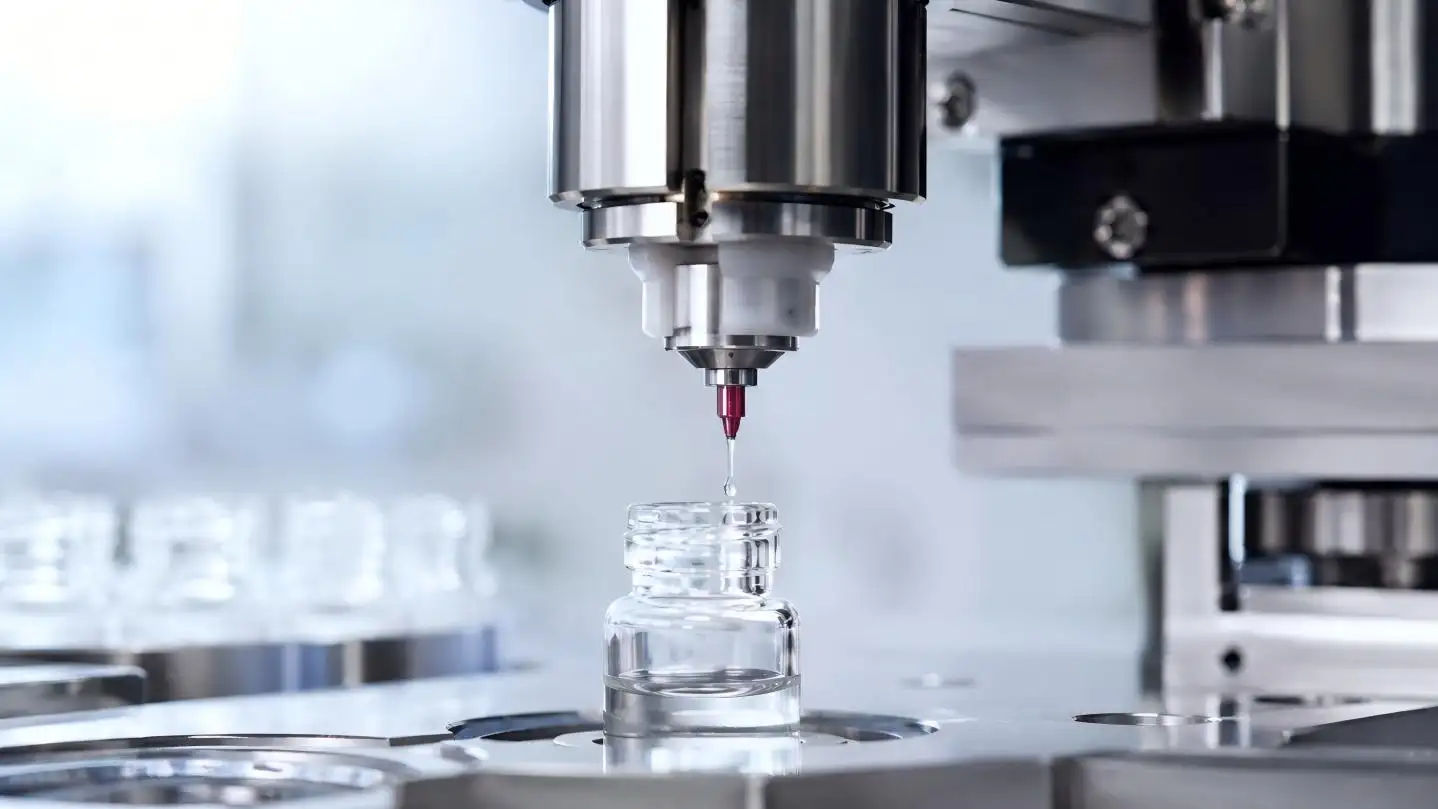

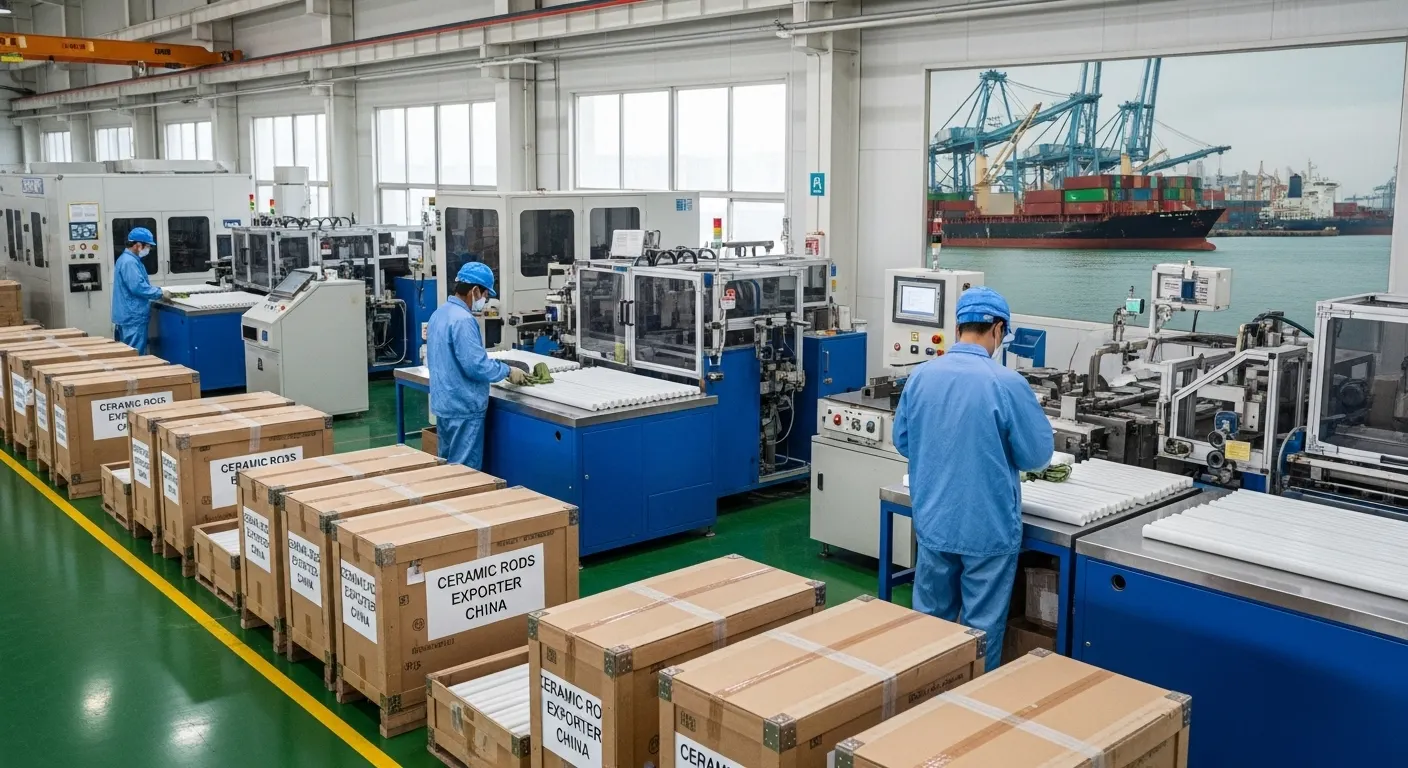
Alumina and zirconia are both important materials for use in the manufacture of Ceramic Valve Components, but both serve different engineering requirements. Zirconia offers superior toughness, resistance to impact and mechanical stress, whereas Alumina is generally more cost-effective and provides superior hardness, wear resistance and stability with chemical attacks.
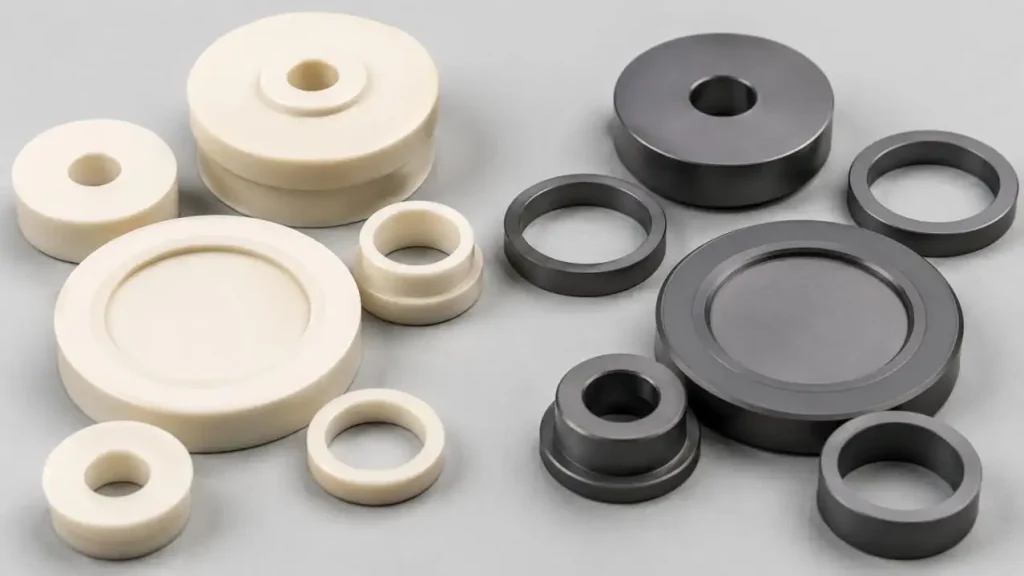
Selection of the appropriate material hinges on the design and construction of the valve as influenced by operational parameters such as pressure, temperature, the nature of the fluid media, impact loads, and the desired life of the valve.
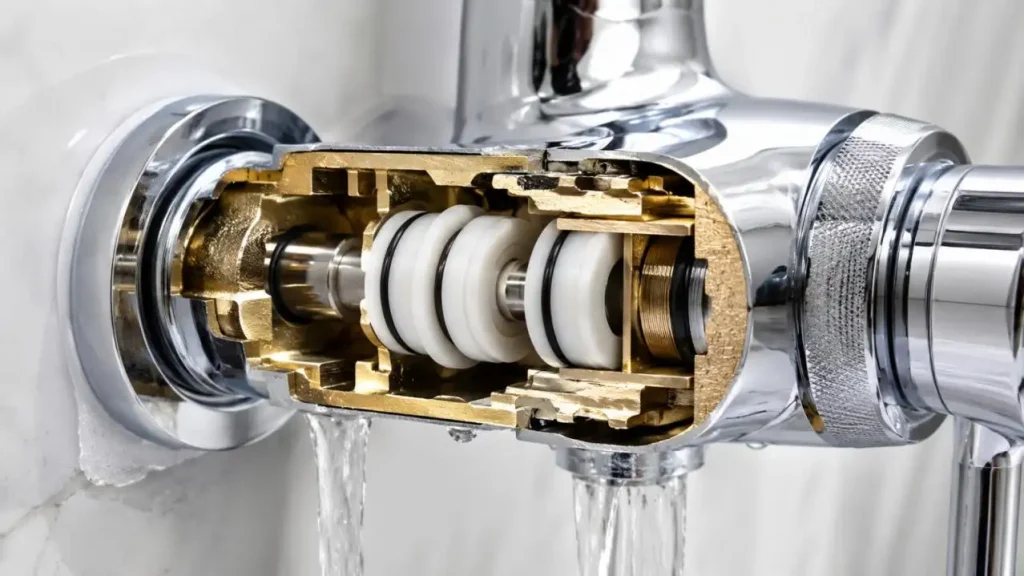
Ceramic Valve Components are utilized in a wide range of applications including but not limited to faucets and mixer valves, chemical fluid systems, water treatment, slurry transfer, steam control, laboratory and food processing equipment. Selection of a material should not be based solely on hardness.
What Are Ceramic Valve Components?
Ceramic Valve Components are custom made from advanced ceramic materials to provide the benefits of wear resistance, corrosion resistance, dimensional stability, and assurance of sealing for fluid control systems.
Examples of such components are:
•Ceramic valve discs
•Valve seats and sealing rings
•Ceramic balls
•Plungers and spools
•Sleeves and wear plates
•Flow-control plates
These components solve problems of corrosion, scratching, sealing-surface deformation, mineral deposits, abrasive wear, and dimensional variations in conventional metal or plastic valve parts.
What Is Alumina Ceramic?
Alumina is an extensively used ceramic material in manufacturing ceramic valve components. Its advantage of being hard and wear resistant makes alumina an ideal material for use in valve components which come in contact with other components due to sliding or rotating motion and for use in components which come in contact with abrasive liquids.
The principal characteristics of alumina include:
•High hardness and surface durability
•High wear and corrosion resistance
•Stability of the chemical structure
•Greater stability at the elevated temperatures
•Good grinding and polishing
•Economic for the mass production
Alumina ceramic valve components are used in a number of applications such as in valve discs, mixer valves, sealing plates, in the control of water systems and in several industrial wear parts.
What Is Zirconia Ceramic?
Zirconia is selected when fracture toughness and resistance to mechanical stress are more important than maximum hardness.
Compared with alumina, zirconia generally offers:
•Higher fracture toughness
•Better impact resistance
•Higher bending strength
•Greater tolerance to edge loading
•Better performance in thin or complex geometries
•Better resistance to concentrated mechanical stress in properly designed components.
However, zirconia ceramic valve components normally have higher material and machining costs. Zirconia also has a higher density and different thermal-expansion characteristics from alumina.
Alumina vs. Zirconia Ceramic Valve Components
| Comparison Factor | Alumina Ceramic Valve Components | Zirconia Ceramic Valve Components |
| Hardness | Generally higher | High, but usually lower |
| Wear resistance | Excellent for sliding and abrasive wear | Very good under combined stress |
| Fracture toughness | Moderate | Significantly higher |
| Impact resistance | Best for stable loads | Better for shock loading |
| Chemical resistance | Excellent in many fluids | Excellent in many corrosive media |
| Thermal stability | Strong at elevated temperatures | Better suited to moderate-temperature mechanical applications |
| Density | Lower | Higher |
| Processing cost | Generally more economical | Usually higher |
| Edge damage resistance | Requires controlled design and assembly | Better resistance to chipping |
| Typical applications | Valve discs, seal plates, wear parts | Seats, plungers and impact-loaded parts |
Neither material is universally better. The correct choice depends on how the valve is loaded, sealed, installed, and operated.
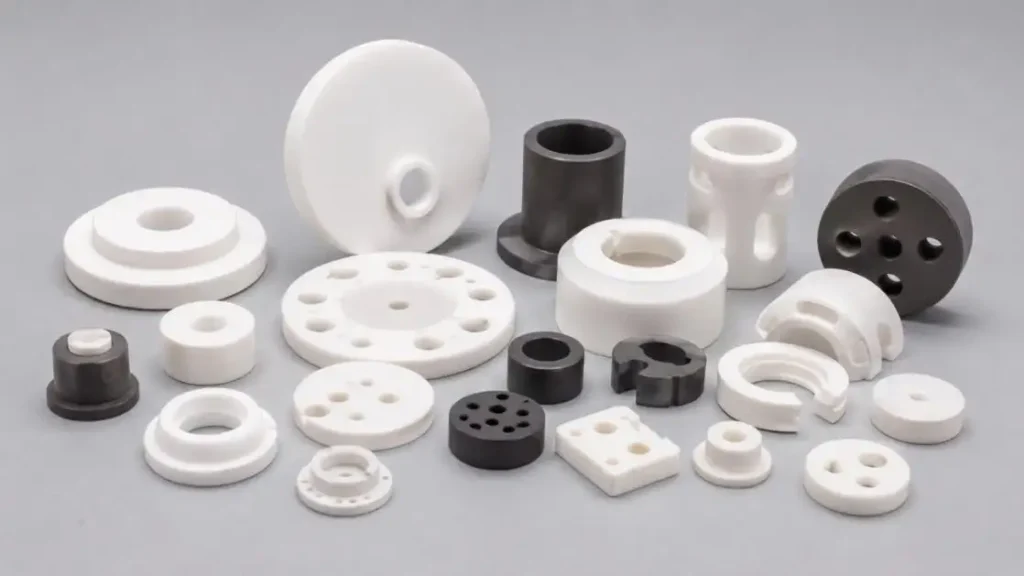
How Does Hardness Impact Ceramic Valve Components?
Higher levels of hardness in Ceramic Valve Components assists in increasing resistance to abrasive wear, mineral deposits, and scale, as well as wear from sliding contact. It is also beneficial in maintaining the shape of the seal contact area after many operating cycles.
When the primary concerns are resistance to wear, relatively low damage to the contact area, and long-term stability of the dimensions, Alumina is often the material of choice.
However, hardness and wear resistance do not guarantee that a material will be tough. High stresses may be caused by sharp corners, uneven assembly forces, foreign bodies, and distortion of the housing. Therefore, Alumina components also need the proper design and treatment of the edges and need to ensure proper load distribution and assembly.
Why Is Fracture Toughness Important?
Fracture toughness is a measure of a material’s ability to resist the propagation of a crack.
This becomes critical for Ceramic Valve Components that are subjected to:
•Rapid opening and closing of the valve
•Fluctuating pressures
•Misalignment of assembly
•Deformation of metal housings
•Contact on edges
•Trapping of foreign bodies
•Impacts during handling or installation
In such cases, components made of Zirconia are often the more appropriate choice.
Which Material Provides Better Sealing?
Sealing performance is not determined by ceramic material alone. Important factors include:
•Flatness
•Surface roughness
•Parallelism
•Dimensional tolerance
•Hole-position accuracy
•Contact pressure
•Counterface material
•Particle contamination
A precisely ground alumina ceramic water valve disc may provide better sealing than a poorly finished zirconia part, even though zirconia has higher fracture toughness.
Thus, Ceramic Valve Components require precision lapping, polishing, and dimensional inspection.
How to Choose the Material for Engineers ?
| Operating Requirement | Suggested Material |
| Frequent sliding or rotation | Alumina |
| Abrasive or mineral-containing water | Alumina |
| Cost-sensitive volume production | Alumina |
| Precision faucet valve discs | Alumina |
| High impact or shock loading | Zirconia |
| Thin or mechanically complex parts | Zirconia |
| High edge-load risk | Zirconia |
| Combined wear and impact | Zirconia |
The design and operating requirements should also be considered as well as the pressure, temperature, composition, and abrasiveness of the flowing medium, cycling frequency, sealing areas, hole patterns, assembly method, and desired service life.
Common Applications of Alumina Ceramic Valve Components
Alumina Ceramic Valve Components are found in:
•Residential and commercial faucets
•Sanitary fittings
•Control and processing equipment for food and beverages
•Medical equipment and laboratory devices
•Valves for HVAC and heating systems
•Agricultural and irrigation systems
These components operate consistently even after repeated use due to their smooth surfaces, resistance to corrosion, and dimensional stability.
Capabilities of UPCERA Ceramic Water Valve Discs
For alumina Ceramic Valve Components, the performance of the material must be supported by stable forming and sintering, as well as precision grinding, lapping, polishing, and inspection.
UPCERA’s alumina ceramic water valve discs for faucet and industrial fluid control. Based on customer needs, we can produce custom profiles, dimensions, flow holes, and sealing surfaces.
| Parameter | Typical UPCERA Capability |
| Size range | Up to 400 mm × 400 mm |
| Size precision | ±0.005 mm |
| Surface roughness | Ra 0.02–Ra 0.2 |
| Flatness | 0.003 mm |
| Customization | Shapes, dimensions and hole patterns |
Actual tolerances depend on component size, thickness, geometry, ceramic grade, hole arrangement, and inspection requirements.
Final Material Selection Summary
Alumina Ceramic Valve Components are often suitable for wear-resistant, corrosion-resistant, and cost-efficient sealing applications. Zirconia is generally more appropriate when impact resistance, fracture toughness, and complex mechanical loading are critical.
Material selection and manufacturing precision should be evaluated together. Surface roughness, flatness, dimensional accuracy, edge quality, and assembly design can be just as important as the ceramic grade itself.
Discuss Your Ceramic Valve Component Requirements With UPCERA
Selecting Ceramic Valve Components requires balancing material properties, sealing accuracy, fluid media, pressure, temperature, and mechanical loading. For UPCERA to assess a compatible design of an alumina ceramic water valve disk, please provide drawings, dimensions, conditions of use, required hole patterns, and surface needs.
FAQs
Q1. What types of Valve Components are manufactured by UPCERA?
UPCERA manufactures alumina ceramic water valve discs and other precision ceramic sealing components used in faucets, sanitary fittings, and industrial control systems.
Q2. What are the available materials for UPCERA Ceramic Valve Components?
There is an alumina option available, and UPCERA can assess the use of zirconia or other advanced ceramics based on the requirements of mechanical load, wear, media, and sealing for the Ceramic Valve Components.
Q3. Will UPCERA make custom ceramic water valve discs?
Yes, UPCERA can make changes to dimensions, external profiles, thickness, flow holes, positioning holes, grooves, and sealing surfaces in accordance with customer drawings.
Q4. What is the processing size range for UPCERA?
For ceramic components, sizes up to 400 mm × 400 mm can be evaluated depending on material, geometry and processing requirements, but it depends on the material grade, thickness, geometry, precision, and other requirements.
Q5. What is the available dimensional precision?
Size precision typically can reach ±0.005 mm, but the limit of achievable tolerance should be verified based on the part size, shape, hole layout, and the method of inspection.


In This Article
- 1 What Are Ceramic Valve Components?
- 2 What Is Alumina Ceramic?
- 3 What Is Zirconia Ceramic?
- 4 Alumina vs. Zirconia Ceramic Valve Components
- 5 How Does Hardness Impact Ceramic Valve Components?
- 6 Why Is Fracture Toughness Important?
- 7 Which Material Provides Better Sealing?
- 8 How to Choose the Material for Engineers ?
- 9 Common Applications of Alumina Ceramic Valve Components
- 10 Capabilities of UPCERA Ceramic Water Valve Discs
