 English
 中文
中文






Ceramic Seals for Mechanical Seal Systems: Design and Operating Principles
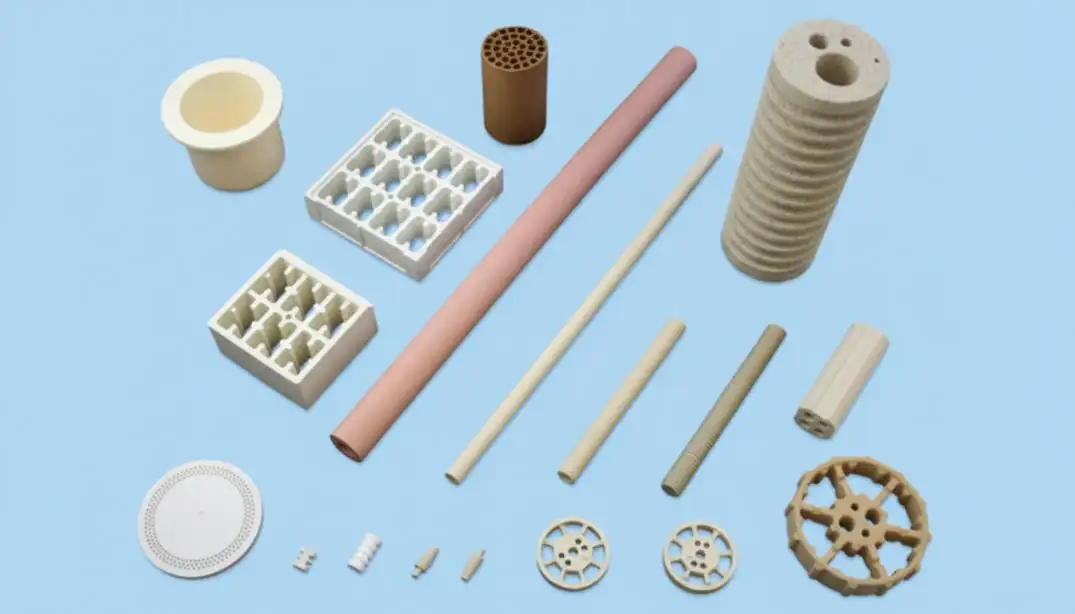
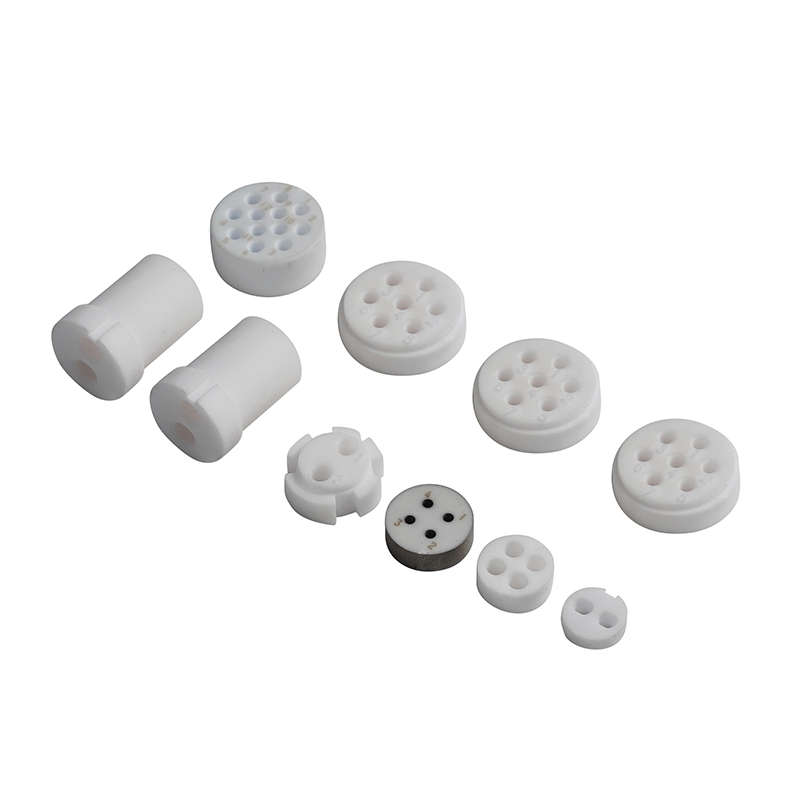
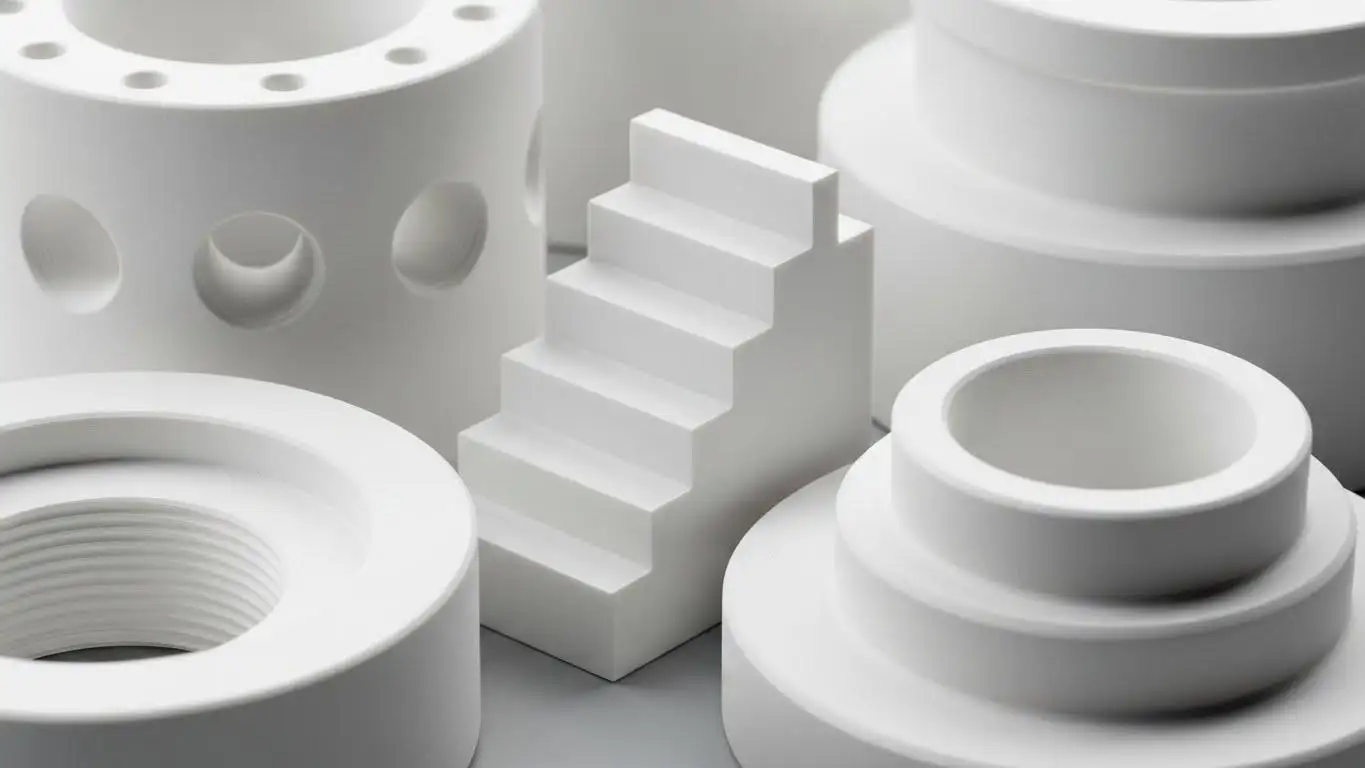
Ceramic Seals serve as stationary or rotating sealing faces in mechanical seal systems. UPCERA supplies precision ceramic sealing components rather than complete mechanical seal assemblies. These components can be used in many type of fluid handling equipment. Their versatile nature is enabled by their physical properties including wear resistance, surface finish, corrosion resistance, hardness, and dimensional stability.
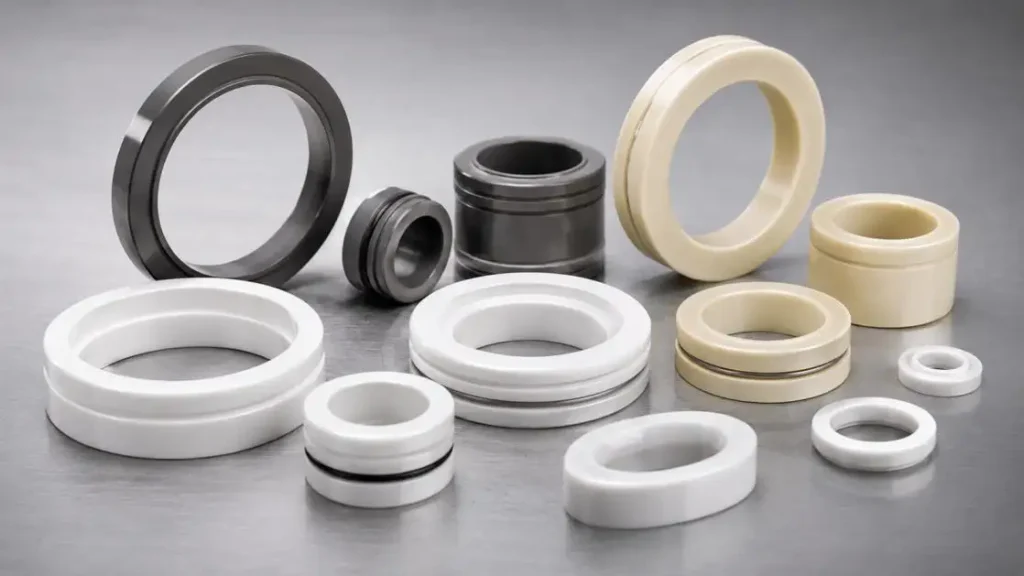
However, as with all other sealing technologies, the ceramic material does not solely determine the quality of the seal. The performance of the seal will also be determined by alignment, face geometry, surface roughness, material pairing, operating conditions, and lubrication.
What Are Ceramic Seals in a Mechanical Seal System?
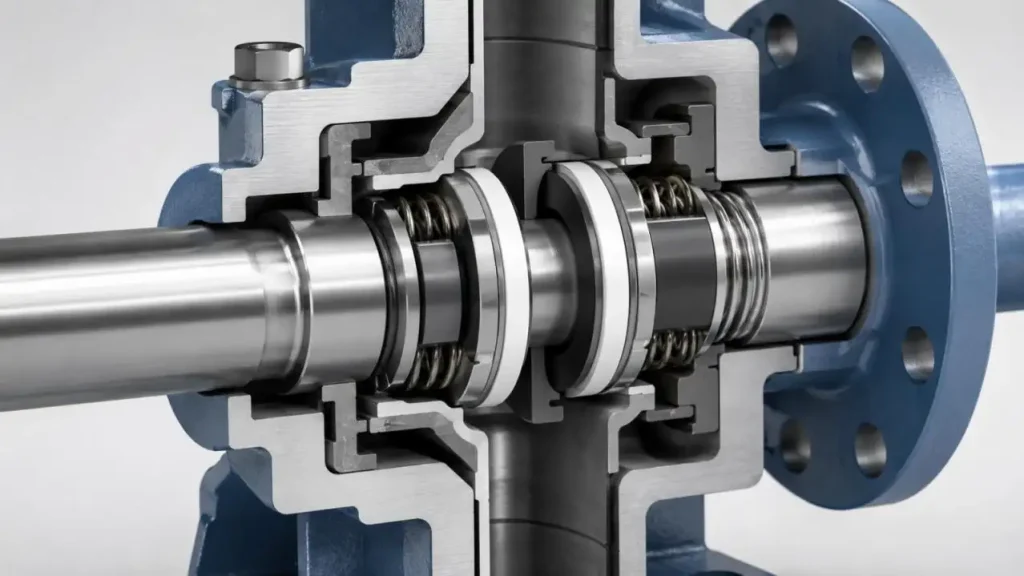
To contain leakage along a shaft in a housing, a typical mechanical seal will have the following components:
•A gland plate
•Springs or metal bellows
•Drive and retaining components
•A Rotating seal ring
•A stationary seal ring
•O-rings or gaskets
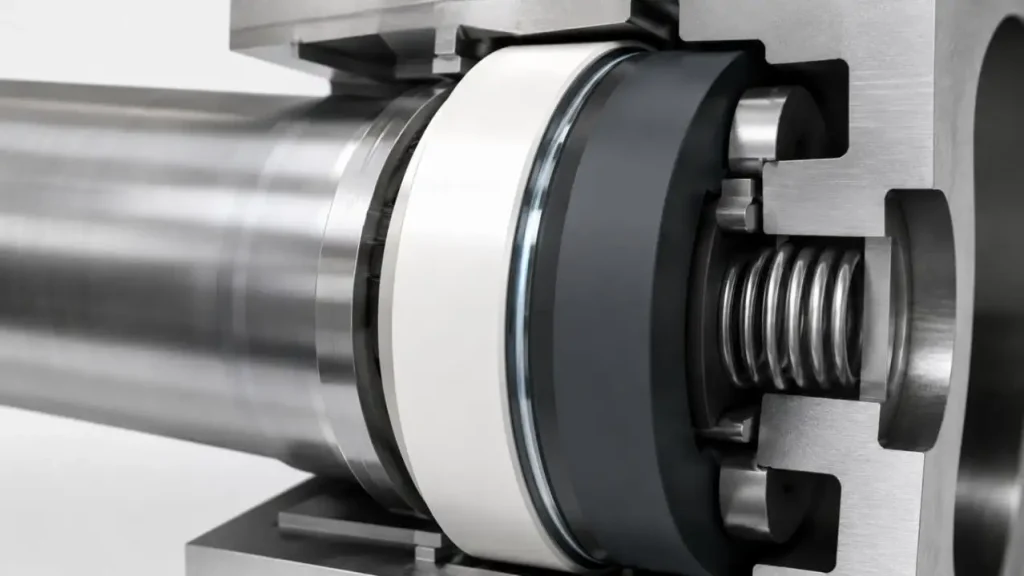
Ceramic Seals are usually found in one or both of the primary sealing faces. These typically face in opposite directions, one of which rotates with the shaft, the other is stationary. The sealing face assemblies are kept close by system pressure and mechanical means such as springs and bellows.
The ceramic faces provide the primary dynamic seal. O-rings, gaskets, and bellows provide secondary sealing around the shaft, housing, or seal-ring mounting areas.
How Do Ceramic Seals Work?
Ceramic Seals do not normally operate as completely dry surfaces pressed tightly together. Instead, a properly designed mechanical seal maintains a controlled interface between the two precision faces.
The operating process includes:
•Springs or bellows apply an initial closing force.
•System pressure adds force to the sealing faces.
•A very thin fluid film develops between the rotating and stationary faces.
•The fluid film helps reduce friction and remove heat.
•Face flatness and surface finish limit the leakage path.
•The ceramic material is resistant to abrasion, corrosion and changes in dimensions.
Mechanical seals are designed to control leakage to a very low and predictable level while maintaining sufficient lubrication between the seal faces. Excessive face contact can generate heat, while excessive separation can increase leakage.
Why Are Ceramics Used for Mechanical Seal Faces?
Ceramic materials have important functional characteristics for mechanical sealing systems.
| Characteristic of ceramic materials | Effect on the sealing system |
| High hardness | Minimizes scratch on the surface and reduces wear |
| Corrosion resistance | Permits usage with many corrosive chemical fluids |
| Dimensional stability | Maintains the geometric configuration of seal-face |
| Fine surface finish | Minimized leakage paths |
| Electrical insulation | Enables the use of electrically isolated assemblies |
| Temperature resistance | Withstands high temperatures compared to many polymers |
| Low density | Minimizes weight of some rotating components |
Not withstanding the advantages, the design of Ceramic Seals has to be done carefully. Ceramics have a higher brittleness compared to metals and are sensitive to impact, uneven tightening, high press-fit, and thermal shocks.
Thin walls, sharp corners, and unsupported edges should therefore be reviewed carefully.
Common Materials Used for Ceramic Seals
Alumina Ceramic Seals
Alumina offers high hardness, electrical insulation, wear resistance, and relatively mature manufacturing processes. Alumina Ceramic Seals are widely used in water pumps, valves, household equipment, and general industrial fluid systems.
Zirconia Ceramic Seals
Compared to alumina, zirconia typically demonstrates greater fracture toughness. It also tends to have superior resistance to edge chipping and mechanical shock, therefore, it is appropriate for thinner, compact, and precision seal design applications. Compatibility of the design with the intended operating temperature and the fluids also needs to be assessed.
Silicon Carbide Seal Faces
Silicon carbide is often a good candidate for many applications because of the advantages it possesses of being very hard and resistant to corrosion, being wear resistant and having fairly good thermal conductivity. It is a common design choice in applications involving high speed, chemically aggressive fluids with embedded solid abrasive particles.
| Material | Main Advantages | Key Considerations |
| Alumina | Wear resistance, good as an insulating material, good for established production | Mechanical impact and thermal shock |
| Zirconia | More resistant to chipping and has greater toughness | Temperature and fluid compatibility |
| Silicon carbide | Very hard, corrosion resistant, and good heat transfer material | Cost, grade, and how it interacts with other materials in a seal |
Important Design Considerations for Ceramic Seals
Seal-Face Geometry
Seal-Face geometry design can have one or more of the following features: flat faces, stepped profiles, grooves, chamfers, shoulders, and mounting holes. In addition, designs can include thin wall rings. The geometry of the seal face should consider the direction of pressure, how it will be mounted, the
Surface Roughness
Surface roughness affects fluid-film development, friction, leakage, heat generation, initial running-in, and mating-face wear. UPCERA can manufacture Ceramic Seals with typical surface roughness from Ra 0.02 to Ra 0.2, depending on the application and inspection method.
A lower Ra value is not automatically better for every system. The correct finish depends on the fluid, speed, lubrication, material combination, and seal-face design.
Roundness and Concentricity
Roundness and concentricity control radial runout and ensure uniform face contact. Inadequate concentricity leads to uneven wear, leakage, pressure and vibration.
Typical capabilities at UPCERA are:
•Roundness: 0.002mm
•Concentricity: 0.002mm
•Straightness and Perpendicularity
Straightness affects the alignment of cylindrical elements, whereas perpendicularity defines the relationship of a sealing face to the reference axis or the supporting surface of the seal.
At UPCERA, typical capabilities are:
•Straightness: 0.004mm
•Perpendicularity: 0.005mm
Wall Thickness and Edge Design
Thin-wall Ceramic Seals are lightweight and allow for compact designs. However, they are susceptible to damage and deformation during the assembly process and sintering. At UPCERA, we support minimum wall thickness of 0.1mm, depending on material, length, geometry and tolerances.
Controlled interfacing fits and loads as well as chamfers of appropriate size help to minimize edge damage.
Effects of Operating Conditions on Ceramic Seal Behavior
| Operating Factor | Potential Effects |
| Pressure | Modifies closing force and changes the behavior of the fluid film |
| Rotational speed | Modifies the friction and the wear |
| Temperature | Thermal stresses and friction |
| Fluid chemistry | Changes the compatibility |
| Abrasives | Influence wear |
| Dry running | Scuffs ceramic surfaces and changes the wear mode |
Shaft running intermittently causes contact and wear.
Seals of this design can withstand dry running only for very short periods. High-speed and corrosive-fluid applications are possible, provided that materials, face finish, cooling, alignment, and mating surfaces are properly selected.
Common Failure Modes of Ceramic Seals
Typical failures include:
•Face wear caused by poor lubrication or abrasive particles
•Thermal cracking caused by dry running or rapid temperature change
•Edge chipping caused by impact or concentrated assembly loads
•Uneven wear caused by shaft runout or poor alignment
•Leakage caused by damaged faces, vibration, or incorrect geometry
•Fracture caused by excessive interference or thin unsupported sections
•Deposits caused by fluid crystallization or chemical buildup
Failure is rarely caused by material alone. Seal design, machining precision, mounting stress, operating conditions, lubrication, and maintenance must be considered together.
UPCERA Manufacturing Capabilities for Custom Ceramic Seals
When custom dimensions, thin walls, fine finishes, and controlled geometric tolerances are required, forming, grinding, lapping, polishing, and inspection capabilities become important.
| Parameter | Typical Range |
| Length Range | ≤300 mm |
| Outer Diameter | ≤150 mm |
| Surface Roughness | Ra 0.02–Ra 0.2 |
| Minimum Wall Thickness | 0.1 mm |
| Roundness | 0.002 mm |
| Concentricity | 0.002 mm |
| Straightness | 0.004 mm |
| Perpendicularity | 0.005 mm |
These values represent typical manufacturing capabilities rather than guaranteed specifications for every geometry. Achievable results depend on material, part size, wall thickness, datum structure, feature design, and inspection method.
Closing Words
Reliable Ceramic Seals depend on the combined control of material selection, face geometry, surface finish, dimensional accuracy, mounting, lubrication, and operating conditions. High hardness and corrosion resistance are valuable, but they cannot replace correct alignment, suitable mating materials, or stable fluid-film conditions.
Please provide your drawings of Ceramic Seals along with your specifications for the mating materials, fluid conditions, pressure, speed, temperature, and tolerances to UPCERA. Our engineering team will assist you with assessment of the materials, reviews of manufacturability and prototypes, and precise ceramic production.
FAQs
Q1. What types of Ceramic Seals does UPCERA manufacture?
UPCERA manufactures ceramic seals along with customized ceramic components including sealing rings, valve seats, sleeves, wear rings, and other precision ceramic elements for mechanical seal and fluid-handling systems.
Q2. Which materials are available for UPCERA Ceramic Seals?
The most common materials are alumina and zirconia ceramics. The selection of the optimal material depends on the requirements of the application with respect to wear, corrosion, temperature, impact, electrical insulation and dimensions.
Q3. What is the maximum size of UPCERA Ceramic Seals?
UPCERA typically manufactures ceramic components with a maximum length of 300 mm and an outer diameter of 150 mm.
Q4. What surface roughness can UPCERA achieve?
Depending on the material and geometry, and the method of inspection, UPCERA typically can manufacture Ceramic Seals with surface roughness in the range of Ra 0.02–0.2 μm.
Q5. Can UPCERA manufacture thin-wall Ceramic Seals?Yes. UPCERA can achieve minimum wall thickness of 0.1 mm for appropriate designs. Feasibility depends on requirements of material, diameter, length and tolerance.


In This Article
- 1 What Are Ceramic Seals in a Mechanical Seal System?
- 2 How Do Ceramic Seals Work?
- 3 Why Are Ceramics Used for Mechanical Seal Faces?
- 4 Common Materials Used for Ceramic Seals
- 5 Important Design Considerations for Ceramic Seals
- 6 Effects of Operating Conditions on Ceramic Seal Behavior
- 7 Common Failure Modes of Ceramic Seals
- 8 UPCERA Manufacturing Capabilities for Custom Ceramic Seals
