 English
 中文
中文







LC Sleeve for 800G and 1.6T AI Data Center Optical Interconnects

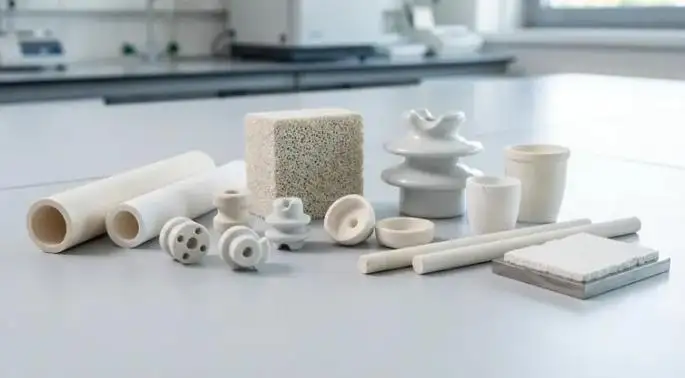
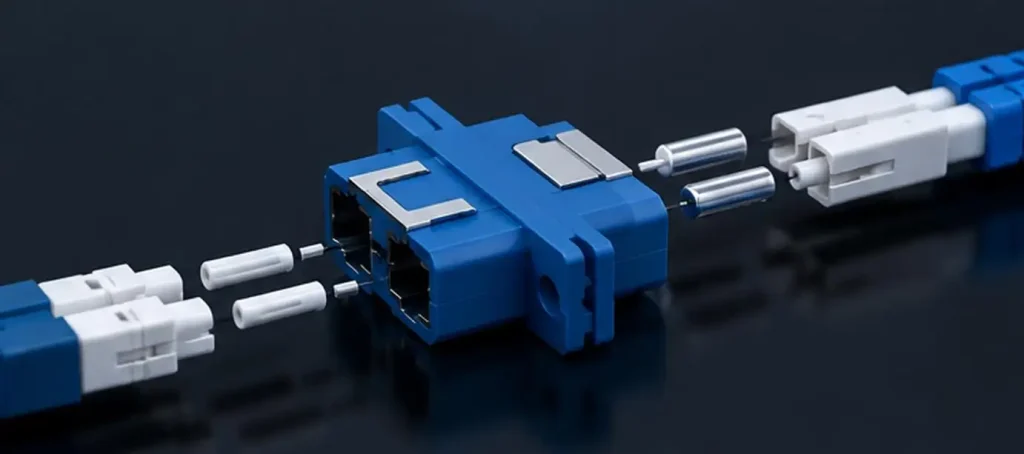
An LC Sleeve is a precision alignment component installed inside an LC fiber adapter. In AI data center links using duplex LC connectivity, it aligns two 1.25 mm-class ferrules, limits radial and angular offset, and helps maintain stable insertion loss after repeated mating.
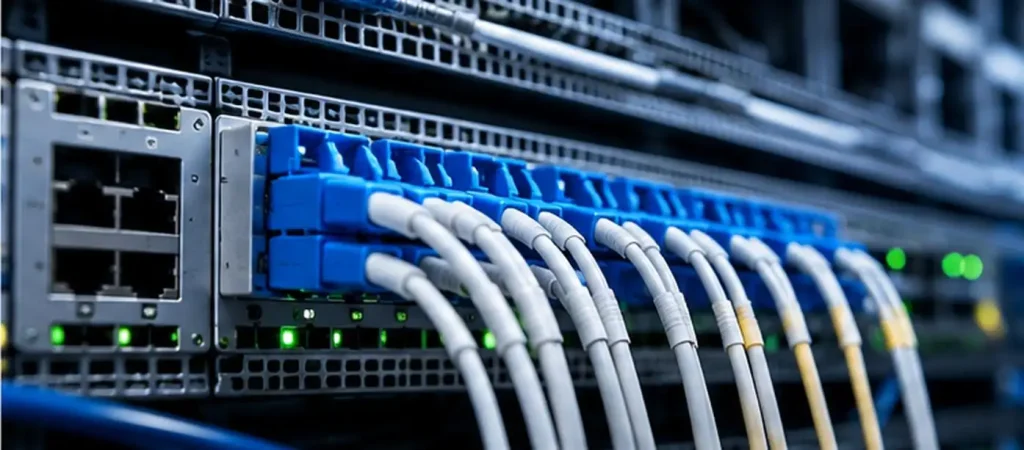
Where Is an LC Sleeve Used in 800G and 1.6T Networks?
Not every 800G or 1.6T transceiver uses an LC interface. Parallel-optics architectures such as DR8 or VR8 commonly use MPO connectors, while wavelength-multiplexed, dual-carrier, breakout, and test-access architectures may continue to use duplex LC.
Typical LC Sleeve applications include:
•Duplex LC adapters in 400G FR4, 800G 2×400G, and related WDM links
•Patch panels between leaf, spine, and optical switching layers
•Breakout systems dividing a high-capacity port into LC channels
•Optical test adapters used for transceiver validation
•Fiber distribution units requiring compact, serviceable connections
An LC Sleeve does not increase network bandwidth. It keeps opposing ferrules mechanically aligned so the optical link can operate close to its intended loss budget.
Why Alignment Matters in AI Data Centers
A precision LC Sleeve provides three practical advantages in high-speed AI networks.
Stable Remating Performance
Accurate bore geometry reduces ferrule-position changes after a cable is disconnected and reconnected. This matters during rack changes and fault isolation.
Inconsistent ferrule positioning can produce different insertion-loss readings after each mating, even when the same connectors are used.
Higher Port Density
LC uses a smaller ferrule system than SC. An LC Sleeve with an outer diameter near 1.62 mm supports compact duplex adapter layouts and more serviceable connections within a limited panel area.
This is valuable in AI data centers where switches, optical distribution frames, and test panels must accommodate a growing number of fiber channels.
Better Environmental Stability
The creation of thermal variation is a product of high-density GPU and switch racks. Zirconia aids in the diminution of alignment drift risk during the long-term operation due to the stability of dimensions and wear.
How Does an LC Sleeve Control Alignment?
The alignment chain is:
LC connector → ferrule → LC Sleeve → opposing ferrule → optical fiber
The LC Sleeve mainly controls lateral and angular error. Axial separation is also affected by ferrule end-face geometry, connector spring force, polishing, and contamination.
Three geometric parameters must be evaluated independently:
•Roundness: Whether each bore cross-section is close to a true circle
•Straightness: Whether the bore axis remains straight along the sleeve
•Concentricity: Whether the bore axis aligns with the external reference
A correct nominal inner diameter is not sufficient. Poor roundness creates uneven contact, poor straightness tilts the ferrules, and poor concentricity shifts the assembled optical axis.
LC Sleeve Parameters and Performance Effects
| Parameter Condition | Mechanical Effect | Possible Optical Result |
| Bore too large | Excess radial clearance | Variable remating loss |
| Bore too small | High friction | Difficult mating and debris |
| Poor roundness | Uneven contact pressure | Direction-dependent alignment |
| Poor straightness | Ferrule-axis tilt | Higher angular coupling loss |
| Incorrect slot width | Unstable elastic clamping | Holding force too low or too high |
| Rough or dirty bore | Increased friction | Intermittent optical loss |
| Low wear resistance | Bore changes over time | Long-term alignment drift |
The longitudinal slot in a split LC Sleeve creates elastic clamping. Insertion force therefore depends on bore diameter, slot geometry, ceramic elasticity, ferrule size, and internal surface finish—not bore size alone.
Excessive insertion force can increase wear or generate particles. Insufficient force can allow ferrule movement and reduce repeatability.
Why Is Zirconia Used for Precision LC Sleeves?
Zirconia is a preferred material for single-mode LC adaptors because of the following:
•Durability from hardness and wear resistance
•Ability to achieve concentricity and very fine bores
•Dimensional stability for repeated connections
•Resistance to corrosion and cleaning chemicals
•Strength in small structures
•Stability when exposed to the range of temperatures found in telecom applications
Phosphor bronze sleeves would be applicable in multimode applications where cost is a consideration. However, outside of cost, zirconia is preferred when consideration is given to the precision of alignment, the number of times the sleeves connect, and the consistency of the dimensions of the sleeves.
| Comparison | Zirconia LC Sleeve | Phosphor Bronze Sleeve |
| Precision potential | High | Dependent on forming quality |
| Wear resistance | High | Relatively lower |
| Elasticity source | Split ceramic geometry | Metal elasticity |
| Environmental stability | High | Oxidation may require consideration |
| Typical use | Precision single-mode links | Cost-sensitive or multimode links |
| Relative cost | Higher | Lower |
UPCERA LC Sleeve Reference Specifications
UPCERA manufactures precision zirconia LC Sleeve products for compact adapters and duplex LC systems.
| Parameter | Reference Specification |
| Outer diameter | φ1.62 ± 0.01 mm |
| Inner diameter | φ1.245 ± 0.001 mm |
| Length | 6.8 ± 0.1 mm |
| Insertion force | 1–3 N |
| Insertion loss | ≤0.2 dB under applicable test conditions |
| Working temperature | −40°C to +85°C |
| Material | Precision zirconia ceramic |
Insertion loss must be assessed at the assembly level because ferrule geometry, polishing, cleanliness, and mating quality also affect performance.
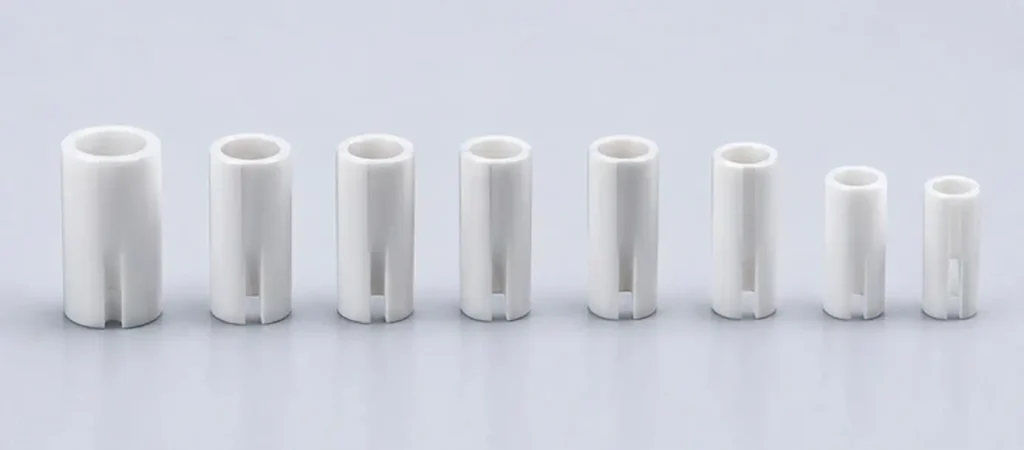
LC Sleeve Reliability and Quality Verification
A qualified LC Sleeve should be evaluated through dimensional, mechanical, optical, and environmental testing.
Recommended inspections include:
•Inner and outer diameter measurement
•Roundness, straightness, and concentricity inspection
•Slot-width and slot-position verification
•Bore-surface, crack, burr, and contamination checks
•Insertion and withdrawal-force testing
•Initial and repeated-mating insertion loss
•Random mating across multiple ferrules
•Temperature cycling and high/low-temperature exposure
• Wear and particle generation after repeated use
Testing multiple sleeves and ferrules is more informative than measuring only one matched pair. Statistical random-mating data can reveal batch variation that may not appear during a single inspection.
When Is a Custom LC Sleeve Necessary?
Customization may be needed for:
• Non-standard adapter housings
• Requests for tighter bore or concentricity tolerances
• Specific ranges for insertion forces
• High-cycle optical test systems
• Robust telecom, aerospace, or military applications
• Requirements for specific temperature and durability profiles for the application
A complete RFQ should specify the outside diameter and length as well as the internal bore and slot geometry, the applicable tolerances, the desired range for the insertion force, the working temperature and the target for the number of mating cycles, the quantity, and the desired inspection reports.
UPCERA can review LC Sleeve dimensions, bore tolerances, insertion-force targets, environmental conditions, and drawings before confirming manufacturability.

Final Thoughts
The move to 800G and 1.6T does not eliminate LC connectivity. Interface selection still depends on transmission distance, wavelength architecture, breakout strategy, maintainability, and panel density.
Where duplex LC is used, the LC Sleeve remains important for ferrule alignment, repeatable insertion loss, compact port design, and long-term connection stability. Its performance must be evaluated together with the ferrule, adapter housing, connector end face, and complete optical assembly.
UPCERA provides standard φ1.62 mm zirconia LC Sleeve designs and the ability to customize application-specific tolerances. Engineering teams can submit the following for technical review: drawings, insertion-force targets, operating temperatures, mating-cycle requirements, and order quantities.
FAQs
Q1. What type of LC Sleeve does UPCERA manufacture?
UPCERA’s LC Sleeves are precise zirconia ceramics for 1.25 mm-class ferrule alignment in LC fiber optic adapters. These Sleeves are designed for compact systems used in both Single Mode as well as Duplex LC connectivity.
Q2. Can LC Sleeves be used in 800G optical networks?
LC Sleeves can be utilized in 800G systems with Duplex LC interfaces and within certain WDM and FR4, dual-400G, breakout, patch-panel, and optical testing applications. Parallel-optics modules with MPO connectors are outside the scope of LC Sleeves.
Q3. Are UPCERA LC Sleeves suitable for 1.6T AI data center interconnects?
1.6T optical frameworks with duplex or multiple LC connections can also utilize these Sleeves. Since 1.6T interfaces are in an early stage of design, it is important to align the sleeve requirements with the transceiver, ferrule, connectors, adapters, and the complete optical link.
Q4. What are the standard dimensions of UPCERA’s LC-Type Ceramic Sleeve?
According to UPCERA’s specifications, the outer diameter is φ1.62 ± 0.01 mm, the inner diameter is φ1.245 ± 0.001 mm, and their length is 6.8 ± 0.1 mm. These measurements should be verified on a case-by-case basis.
Q5. What insertion force does UPCERA specify for its LC Sleeve?
For UPCERA LC Sleeves, the reference insertion force is in the range of 1-3 N. Actual insertion force will depend on sleeve bore, slot design, surface finish, ferrule dimensions, and assembly of the adapter.


In This Article
- 1 Where Is an LC Sleeve Used in 800G and 1.6T Networks?
- 2 Why Alignment Matters in AI Data Centers
- 3 How Does an LC Sleeve Control Alignment?
- 4 LC Sleeve Parameters and Performance Effects
- 5 Why Is Zirconia Used for Precision LC Sleeves?
- 6 UPCERA LC Sleeve Reference Specifications
- 7 LC Sleeve Reliability and Quality Verification
- 8 When Is a Custom LC Sleeve Necessary?
