 English
 中文
中文







Alumina Ceramic Thermal Conductivity and Heat Dissipation Performance
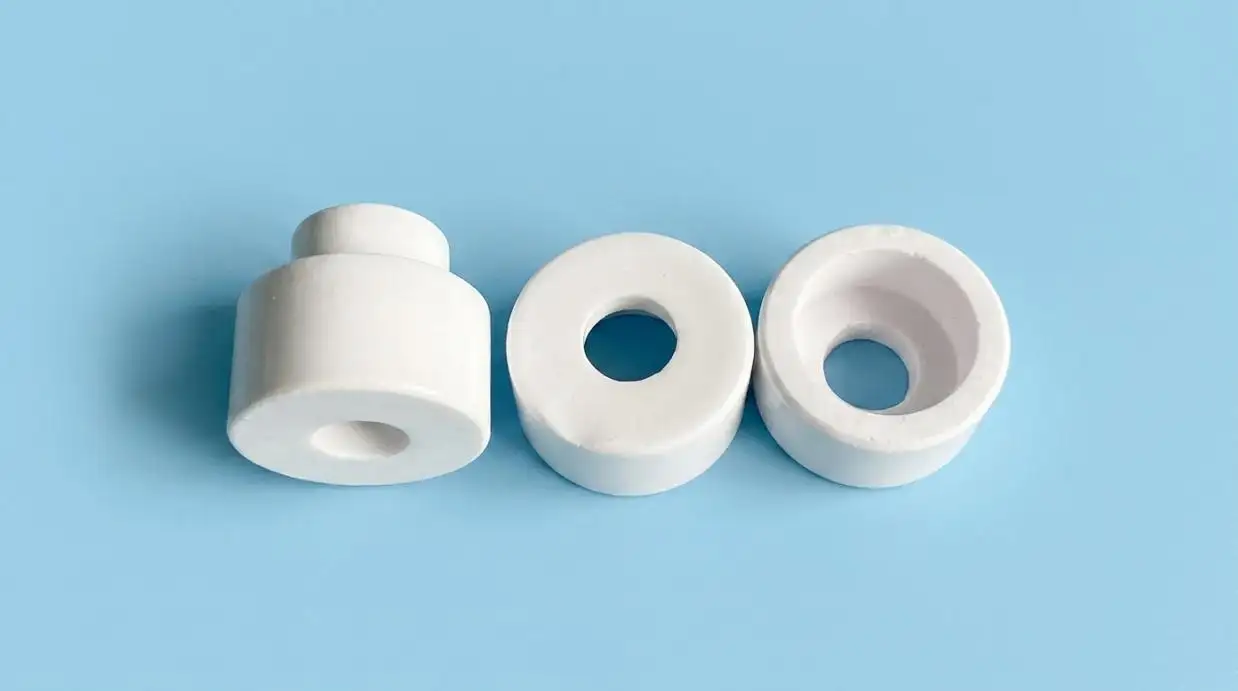
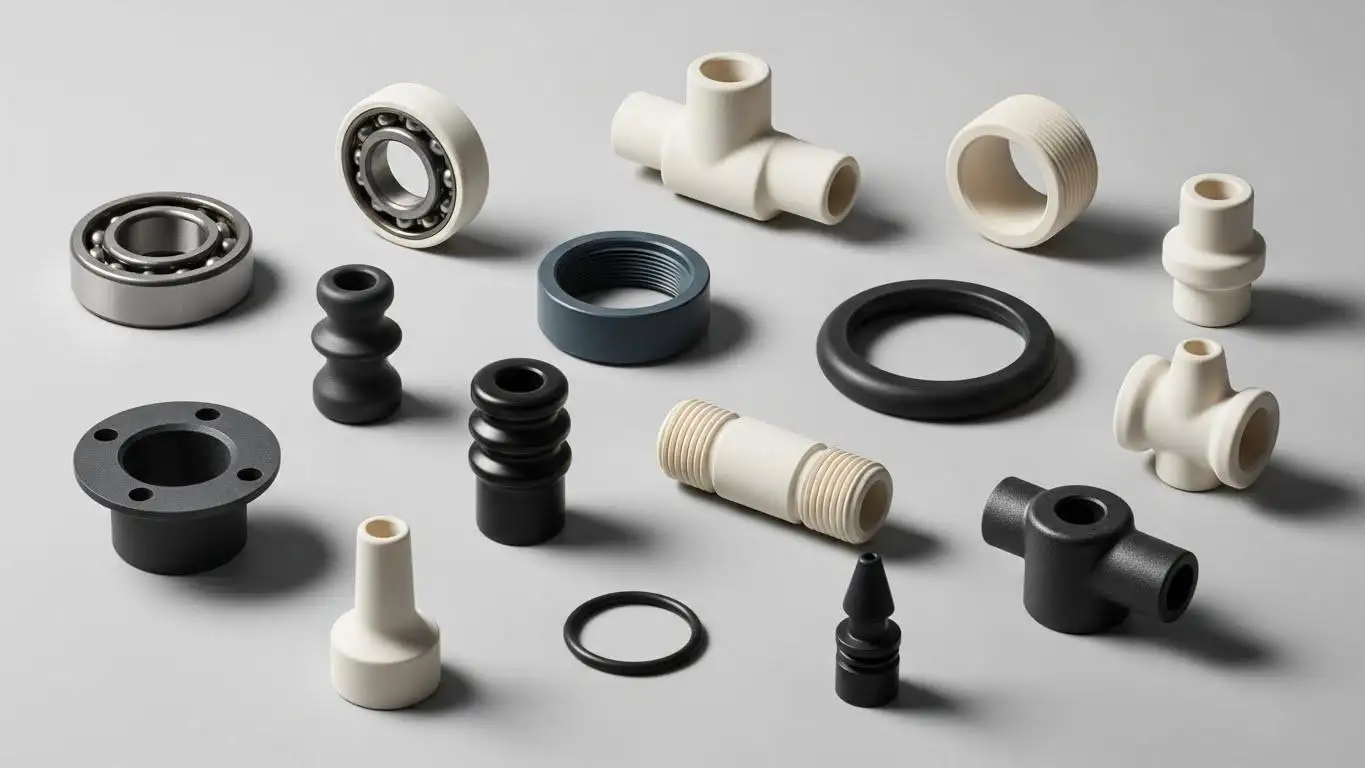
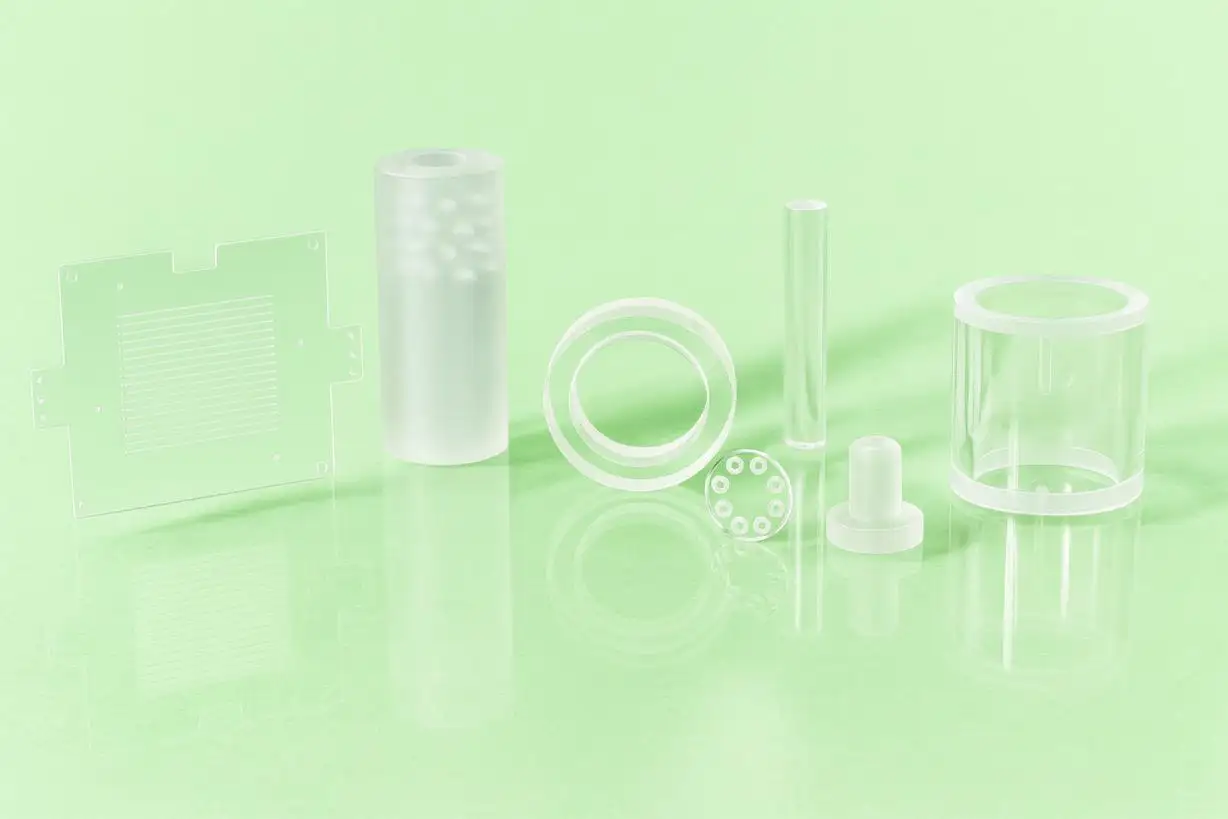
Alumina ceramic allows for the combination of several useful material characteristics. These features are a result of ceramic alumina’s moderate thermal conductivity, outstanding electrical insulation, thermal stability, and mechanical strength. Corrosion resistance is also a desirable and advantageous characteristic of alumina ceramics. The many beneficial characteristics of alumina ceramic provide for a broad range of applications for alumina ceramic in electronics substrates, semiconductor equipment, power modules, heating systems, and electrically insulating heat-dissipation structures.
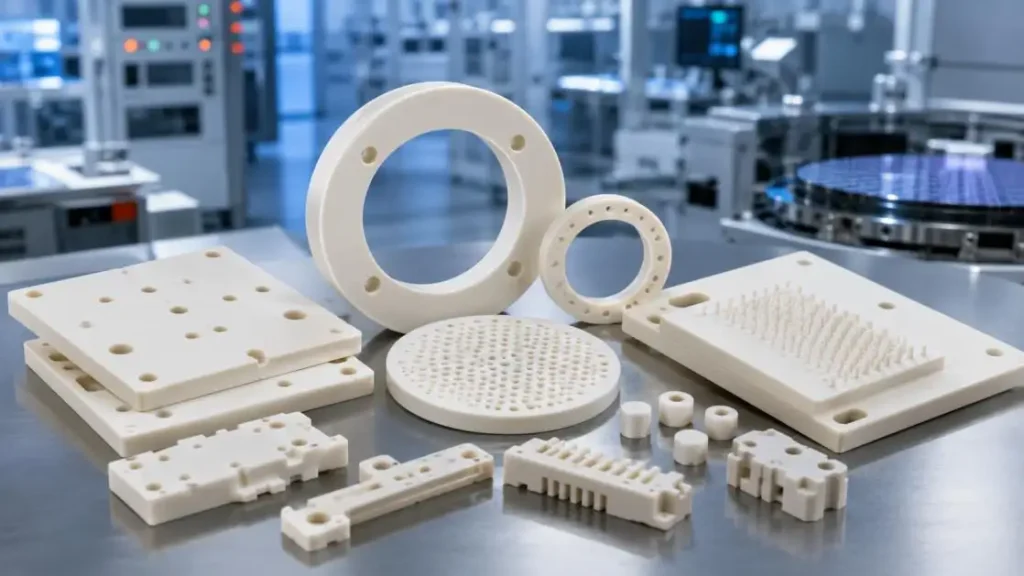
Alumina ceramic is a valuable material for many applications according to its many useful characteristics, however in terms of thermal conductivity, alumina ceramic is not the best of the available ceramic options.
What is the Thermal Conductivity of Alumina Ceramic?
The definition of thermal conductivity is how easily a material can conduct heat. The unit of measurement is W/m·K, with a more desirable conductivity demonstrated by a higher number.
The thermal conductivity of Alumina Ceramic varies with purity, density, porosity, grain structure, additives, temperature, and test method. Published figures should therefore be treated as reference ranges rather than universal specifications.
| Alumina Ceramic Grade | Relative Performance | Main Feature | Typical Application |
| 95% | Moderate | Balanced cost and strength | Insulators and structural parts |
| 96% | Moderate to higher | Common substrate grade | Circuits and power modules |
| 99% | Higher | Fewer impurities | Semiconductor parts |
| 99.5%+ | More consistent | High purity and stability | Vacuum and precision systems |
These grades show general trends; actual performance depends on formulation and processing.
How Does Alumina Ceramic Dissipate Heat?
Heat transfer occurs across the ceramic microstructure to the periphery from the source. Ceramic microstructure dissipates heat to the surrounding environment or to the metal heat sink, metal cooling plates, or to the cooling fluid.
Alumina Ceramic does not provide a complete cooling solution. Alumina Ceramic is designed to be a thermally insulating layer, a substrate, or a spacer and may act as a thermal component to enhance heat spreading. The final thermal conductivity of Alumina Ceramic is affected by thickness, contact area, interface, and external cooling.
What Factors Influence Alumina Ceramic Thermal Conductivity?
Purity
Greater purity in Alumina Ceramic consists of fewer impurities and less glassy phase. Thus, stable insulating performance can be achieved. However, Alumina Ceramic does not require the highest level of purity in every application. Cost, forming, strength, and machining must be considered.
Porosity and Density
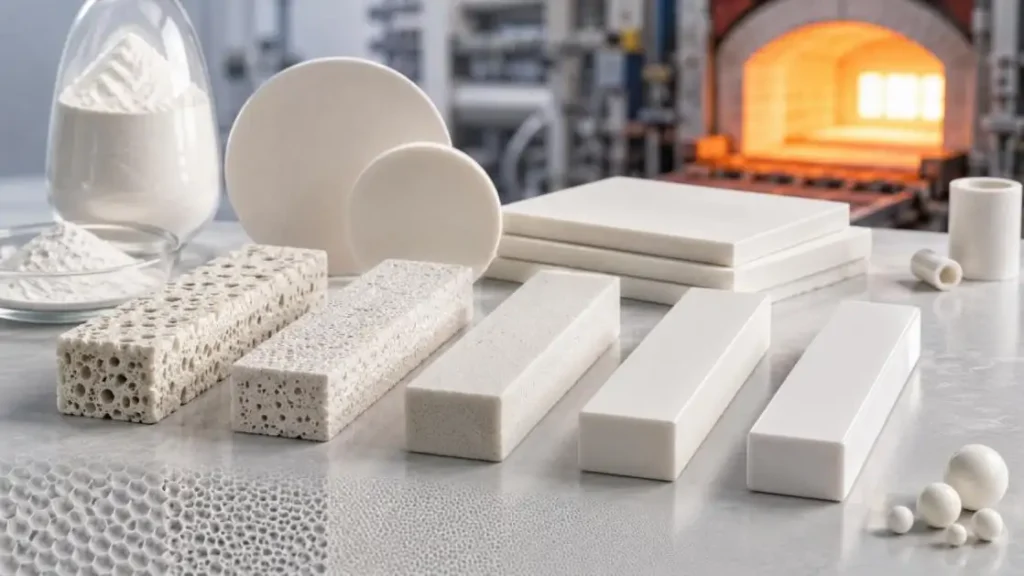
Porous materials have poor thermal conductivity due to the air contained in the pores. Thermal paths may be disrupted due to porosity, however, Alumina Ceramic may have enhanced thermal conductivity through improved density. Final density is affected by powder preparation, forming pressure, debinding, and sintering.
Grain Structure
Grain boundaries can impede heat transfer. Uneven grains, abnormal growth, and secondary phases may cause performance variation. Powder size and the sintering profile should therefore be controlled together.
Additives and Temperature
While additive sintering promotes densification, it may negatively affect the thermal and dielectric properties as well as the corrosion resistance of the ceramic. Alumina ceramics have thermal conductivity that is also a function of temperature, and therefore, when designing for high-temperature applications, the ceramic data should be measured as close as possible to the expected operating temperature of the ceramic.
The Impact of Thickness and Design on Heat Transfer
Part design influences thermal resistance. Key aspects include:
• Thickness of ceramics and distance of heat flow
• Area of contact with the heat source
• Wall thickness and uniformity
• Slots, holes, corners, and other geometric features
• How the part interfaces with the heatsink
Zirconia ceramics have a higher thermal resistance than their Alumina counterparts on a per unit thickness basis. Increased thickness of Zirconia over Alumina increases resistance even further. On the other hand, if a part is made very thin, it may have low dielectric strength, low mechanical strength, and unstable assembly. Thickness of a part is often a balance of the thermal, mechanical, and electrical considerations.
Why is Surface Flatness Critical?
If a ceramic surface is not flat, it may not make full contact with the adjoining surface, and thermal interface resistances may be increased. This can be a major limitation to the performance of Alumina Ceramics. To minimize interface resistances, control gaps, warpage, and assembly pressure. Surface improvement is achieved through lapping, and polishing. Contact interfaces may be helped by using a thermal interface material.
Differences in thermal expansion of the Alumina Ceramic and adjoining metals should also be considered.
Alumina Ceramic vs Other Thermal Management Materials
| Material | Heat Transfer | Insulation | Main Consideration |
| Alumina Ceramic | Moderate | Excellent | Balanced performance and mature processing |
| Aluminum Nitride | High | Excellent | Higher cost and processing demands |
| Zirconia Ceramic | Lower | Excellent | Greater toughness |
| Aluminum Metal | High | Poor | Requires added insulation |
| Thermal Polymer | Low to moderate | Good | Temperature and aging limits |
Aluminum nitride may suit very high heat flux, while zirconia may be selected where toughness is more important. Alumina Ceramic is often preferred when insulation, durability, availability, and cost must be balanced.
Common Alumina Ceramic Heat Dissipation Applications
Typical applications include:
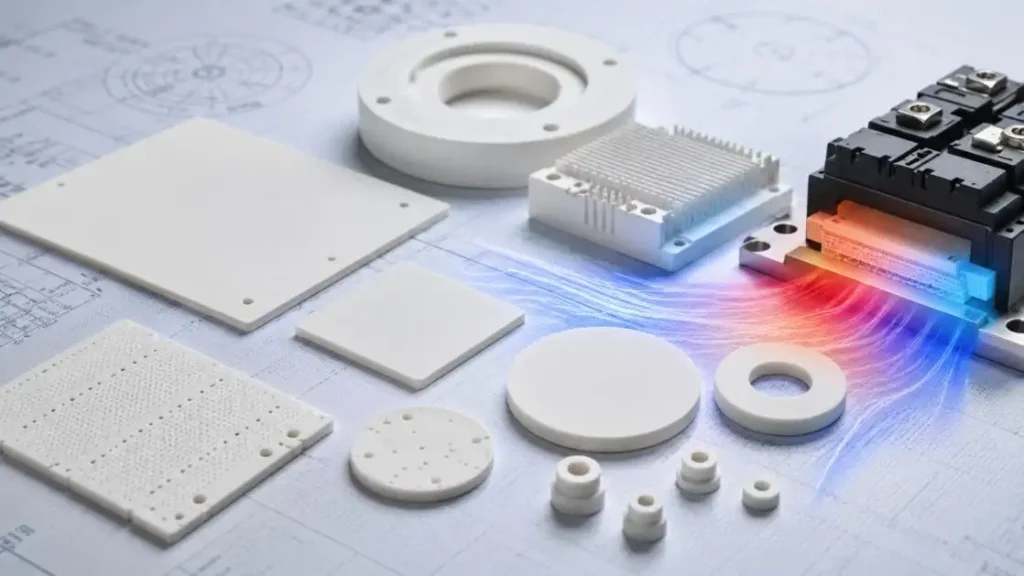
• Thick-film and power electronic substrates
• LED and resistor substrates
• Semiconductor equipment insulation parts
• Heater supports and isolation components
• Power-module insulating plates
• High-voltage electrical structures
• Sensor protection parts
• Ceramic heater bases
Limitations of Alumina Ceramic
Alumina Ceramic conducts less heat than aluminum nitride and many metals. It is also brittle, and thin walls, large sizes, or complex geometries may increase manufacturing difficulty.
Considerations include discrepancies in thermal expansion, sintering shrinkage, the conditions of receipt and mounting, and the precision of fit. A related aspect is that, in particular, high purity and higher dimensional tolerances can increase the cost of alumina ceramics.
When the requirements for electrical insulation, dimensional stability, mechanical strength, and moderate thermal conductivity are needed simultaneously, alumina ceramics are the best solution.
Closing Words
Alongside the attributes of thermal conductivity, alumina ceramics possess the capability of being electrically insulated, thermally resistive, strong, wear resistant, and dimensionally stable, and therefore, reliable thermal management of electronic, electrical, and semiconductor systems.
Purity, porosity, microstructure, temperature, thickness, geometry, and interface quality all affect real performance. For high-heat-flux applications, Alumina Ceramic should be compared with aluminum nitride, metals, and other thermal management materials under actual operating conditions.
Discuss Your Alumina Ceramic Requirements With UPCERA
Planning an Alumina Ceramic component for insulation or heat dissipation? Share the operating temperature, dimensions, purity, surface finish, electrical requirements, drawings, and assembly conditions with UPCERA. Our engineering team can help evaluate material grades, manufacturing methods, tolerances, and inspection requirements.
FAQs
Q1. Are Alumina Ceramic parts compatible with metal heat sinks?
Indeed. Alumina Ceramic parts can be designed to serve as an insulating layer between a metal heat sink and a heat-generating component. This is valid assuming the interfaces are designed appropriately.
Q2. Can UPCERA design and manufacture customized Alumina Ceramic heat-dissipation components?
Yes. According to the customer’s design specifications, customized components can be manufactured with varying dimensions, mounting features, operating temperatures, and assembly conditions.
Q3. Is UPCERA’s Alumina Ceramic suited for electrical insulation?
Alumina Ceramic offers excellent insulation for electrical applications as well as the ability to withstand high temperatures and add mechanical strength to the assembly, therefore it is well suited for a number of electrical and electronic assemblies.
Q4. Can UPCERA manage the flatness of Alumina Ceramic components?
Yes. Flatness can be managed within the context of component size and application requirements through a combination of forming, sintering, grinding, lapping, and inspecting.
Q5. What are the available finishes for UPCERA Alumina Ceramic?
Alumina Ceramic components can be supplied as-fired, ground, lapped or polished based on the design requirements.
Share on Social:


In This Article
- 1 What is the Thermal Conductivity of Alumina Ceramic?
- 2 How Does Alumina Ceramic Dissipate Heat?
- 3 What Factors Influence Alumina Ceramic Thermal Conductivity?
- 4 The Impact of Thickness and Design on Heat Transfer
- 5 Why is Surface Flatness Critical?
- 6 Common Alumina Ceramic Heat Dissipation Applications
- 7 Limitations of Alumina Ceramic
