 English
 中文
中文







Porosity Control in Advanced Ceramics Manufacturing

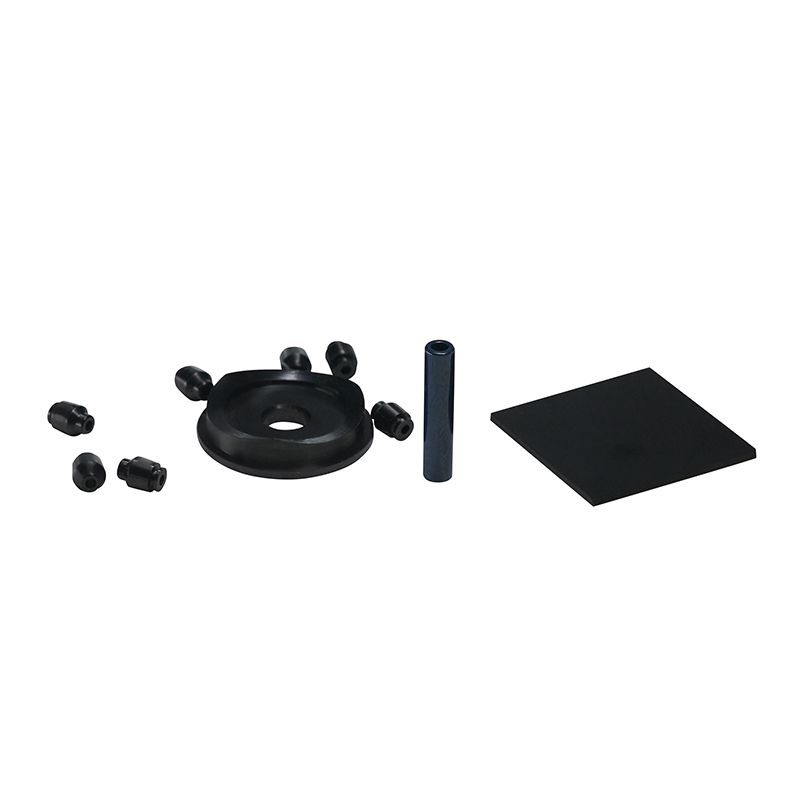
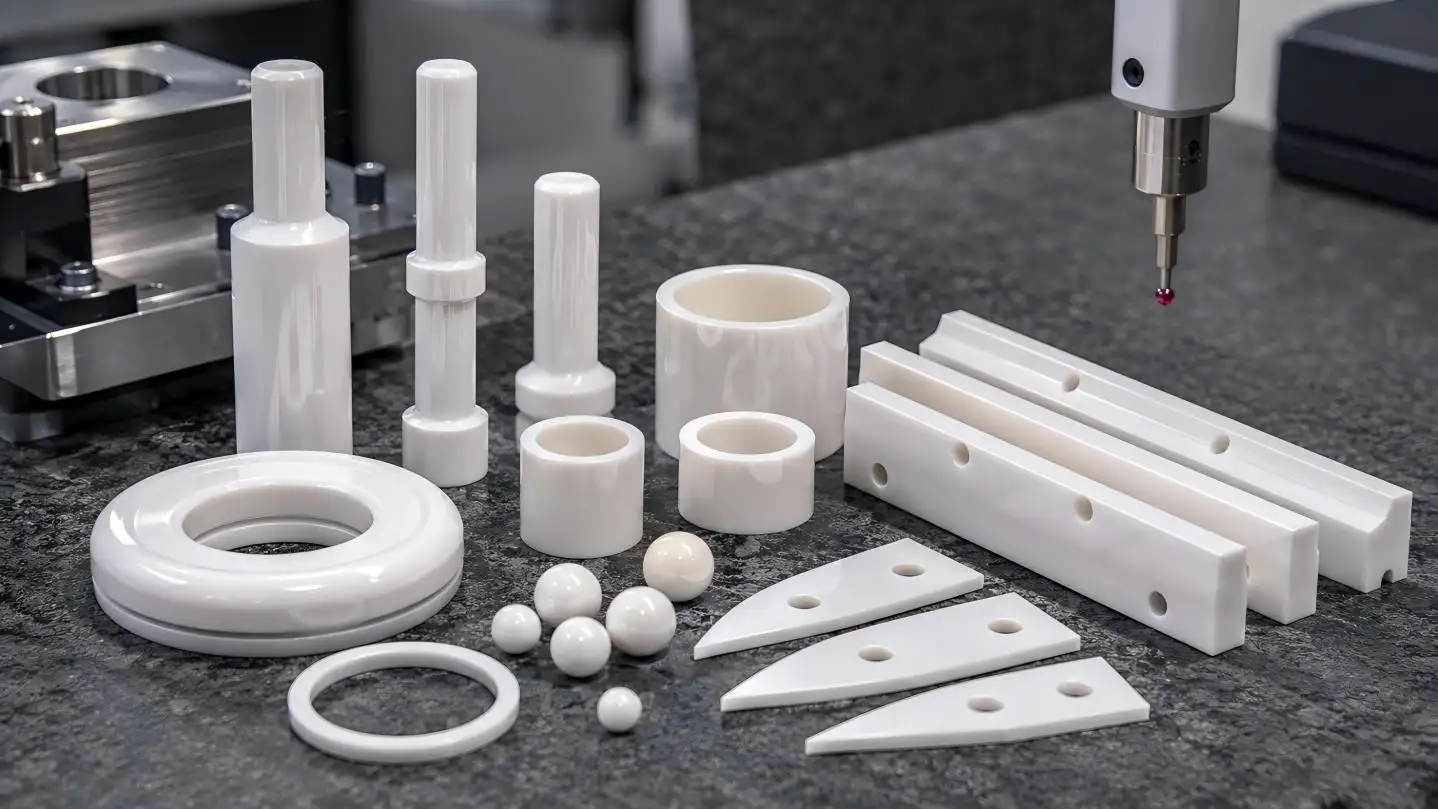
Porosity in advanced ceramic structures is influenced by the quality of the starting powder, the forming density, the removal of the binder, the sintering parameters, and final machining. Densification and control of the pore size and distribution play a major role in the strength, insulation, wear and corrosion resistance, sealing, and dimensional accuracy of the advanced ceramic product.
What Is Porosity in Advanced Ceramics?
Porosity indicates empty regions in a ceramic body. These are some classifications of porosity:
• Open porosity: Voids can be found in an open configuration to the environment. This kind of porosity can decrease a material’s absorption and corrosion resistance, as well as its sealing effectiveness.
• Closed porosity: This kind of porosity can restrict some voids in a material. This closed kind of porosity can affect the material’s density, strength, and thermal characteristics.
• Interconnected porosity: When porosity is of the interconnected kind, the flow of liquid or gas can be induced.
• Designed porosity: When porosity is of the designed kind, it can offer a material increased functionality and effectiveness for a number of applications, including but not limited to the control of fluids, catalysis, thermal insulation, and filtration.
Advanced ceramic components may exhibit designed porosity. The amount of porosity is dependent upon the application of the component.
Why Porosity Matters?
High or uneven porosity may result in a reduced load-bearing area, increased cracking, reduced gas tightness, and deterioration of the insulation. It may also result in the emergence of pores after polishing, uneven shrinkage, and deterioration of the surface finish. It should be evaluated along with the density of the component, the grain structure, and the machining requirements.
How Are Pores Formed During Manufacturing?
Ceramic Powder Characteristics
Green density in advanced ceramics is influenced by the starting ceramic powder characteristics, including the particle size and shape, degree of agglomeration, purity, moisture content, and flowability. Advanced ceramics are manufactured using the principles of optimized packing. Particle size distribution that is finely graded improves packing and reduces the void space that needs to be removed during the densification (sintering).
Binder and Additive Distribution
In Advanced Ceramics, uneven distribution and/or poor quality of binders, additives, and sintering aids may lead to internal defects, large voids, and
Forming Pressure and Green Density
Different forming methods such as dry pressing, cold isostatic pressing, injection molding, extrusion and tape casting yield different green density profiles. The formation of pores is a result of insufficient forming pressure. On the other hand, pressure imbalances typically result in strong residual stresses and may also result in laminations and cracking. For most cases involving the formation of complex geometries, the key consideration should be achieving uniform green density rather than maximizing the forming pressure.
Effect of Debinding on Porosity
The main consideration in debinding is the removal of the binding material without compromising the integrity of the green body. Rapid heating may be a cause of gas trapping, while residual binders are the cause of black cores, large pores, and cracks.
Defects are more easily addressed before sintering than after. This is particularly important for thick walls, blind holes, and narrow channels that often create gas trapping.
Effect of Sintering on Density
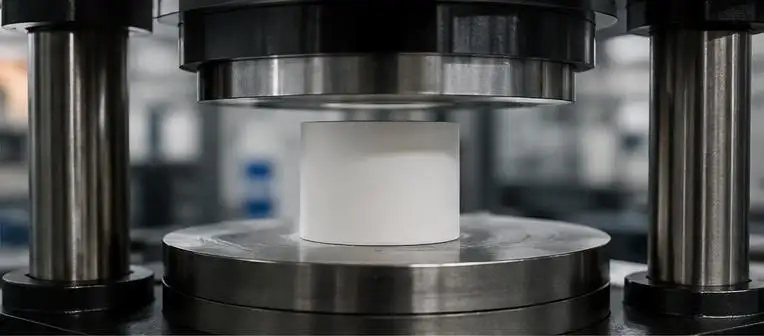
The purpose of sintering is to achieve bonding of the particles, and consequently, a reduction of pore volume.
• Sintering at low temperatures results in a high degree of residual porosity, while bonding is incomplete.
• High temperatures within the range lead to average grain size, while control of the holding time leads to improved densification.
• Long holding time negatively impacts the grain size.
• Heating and cooling within the appropriate range leads to control of the stresses and shrinkage.
• Atmosphere: Air, vacuum, inert gas, or specialized atmospheres may be required.
Different Advanced Ceramics materials require material-specific sintering cycles.
Porosity Control for Different Advanced Ceramics Materials
| Material | Main Control Focus | Typical Applications |
| Zirconia | Densification, grain size, phase stability | Sleeves, medical parts, wear components |
| Alumina | Purity, temperature, insulation stability | Insulators, substrates, structural parts |
| Silicon nitride | Sintering aids, atmosphere, internal defects | Bearings, aerospace, high-load parts |
| Silicon carbide | Powder uniformity, high-temperature sintering, gas tightness | Semiconductor and chemical equipment |
Material name alone does not determine performance. Density, pore distribution, grain structure, and finished condition must also be reviewed.
How Is Porosity Measured?
Common methods include Archimedes testing, helium pycnometry, microscopy, X-ray or CT inspection, leak testing, and ultrasonic inspection. A single density value cannot fully describe porosity; pore size, shape, location, connectivity, and distribution also matter.
What is the Effect of Porosity on Precision Machining?
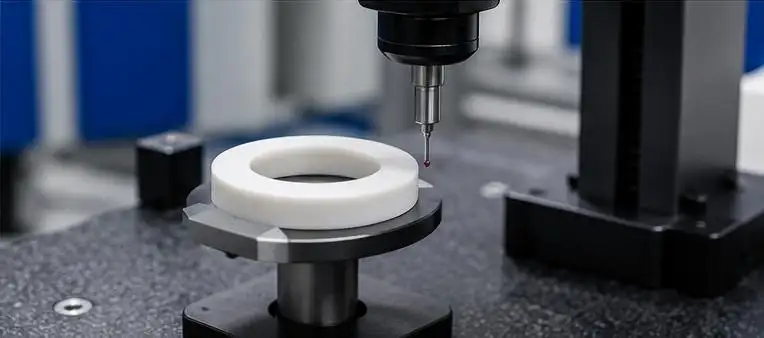
Pores may become subsurface visible after finishing operations such as grinding or polishing. Edge chipping, unstable roughness, sealing failures, etc. can be caused by irregular variations of density. To manufacture thin walls, microholes, close fits, and threaded components, uniform material is a prerequisite.
For complex Advanced Ceramics parts, porosity control must be planned together with sintering shrinkage, machining allowance, geometric tolerances, and final surface finish.
UPCERA’s Approach to Precision Advanced Ceramics Manufacturing
Porosity control becomes more challenging when a component combines thin walls, deep holes, complex geometries, metallized surfaces, or micron-level tolerances. UPCERA integrates material selection, forming, sintering, and precision machining for custom Advanced Ceramics components.
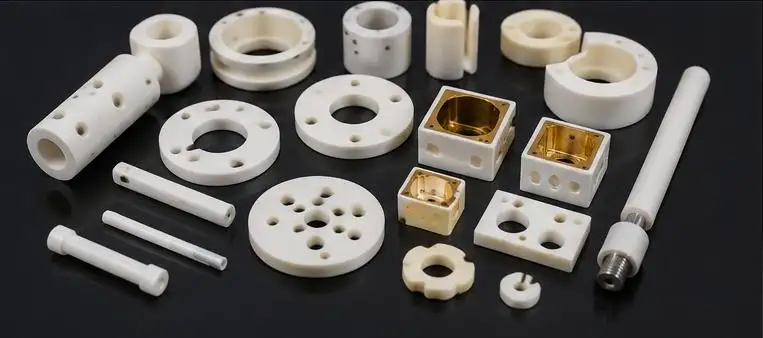
UPCERA works with zirconia, alumina, silicon nitride, silicon carbide, and other materials. It also supports ceramic metallization, ceramic-metal bonding, and assembly. Custom products include bushings, nozzles, square-hole parts, blind-hole components, metallized parts, and non-standard structural shapes.
| Item | Reference Capability |
| Tube and rod length | Up to 1,000 mm |
| Plate size | Up to 400 × 400 mm |
| Minimum wall thickness | 0.1–0.2 mm |
| Minimum drilled hole | ≥φ0.4 mm |
| Length/thickness precision | ±0.005 mm |
| Surface roughness | Ra 0.02–Ra 0.2 |
These are reference capabilities, not universal tolerances. Material, geometry, wall thickness, hole depth, finish, and volume may affect achievable results.
Founded in 2003, UPCERA has more than 23 years of ceramic manufacturing experience. Its development from zirconia sleeves and ferrules into precision structural ceramics, supported by powder-to-finished-part collaboration, helps manage porosity, shrinkage, tolerance, and surface-quality risks earlier in projects.
Final Words
To achieve effective porosity control in Advanced Ceramics, full-process management is essential. This means that each step in the process from powder preparation, forming, debinding, and sintering to including inspection and machining, must be aligned based on both the material and the intended application.
Are you attempting to design and develop a custom Advanced Ceramics component that has thin walls, small holes, metallization, or perhaps needs to meet close tolerances? Share your drawings, target material, operating conditions, surface requirements, and expected volume with UPCERA for an engineering evaluation of material selection, porosity control, manufacturability, cost, and delivery.
FAQs
Q1. How does UPCERA manage porosity in Advanced Ceramics?
UPCERA handles the selection of powders and formulation as well as the control of molding density, debinding, and sintering, along with precision machining to control pore size and distribution.
Q2. What Advanced Ceramics materials can UPCERA handle?
UPCERA has the capability to handle and process advanced ceramics like zirconia, alumina, silicon nitride, silicon carbide, and single crystal alumina as well as various other niche ceramics.
Q3. Does UPCERA have the capability to create intricate ceramic structural components?
Definitely. UPCERA can create custom structural components with intricate designs, including thin walls, deep and stepped holes, threads, and other non-standard designs.
Q4. What is the least wall thickness UPCERA can consider?
The generally referenced minimum wall thickness is around 0.1 to 0.2 mm, although this is subject to the type of material, design, dimensions, and the specific requirements of the application.
Q5. What is UPCERA’s minimum capability for drilling of ceramics?
UPCERA’s minimum capability for drilling is represented by holes of approximately φ0.4 mm, although this is dependent on the type of material, wall thickness, the depth of the hole, and tolerance.


