 English
 中文
中文







Key Factors Affecting the Quality of Zirconia Ceramic Custom Components
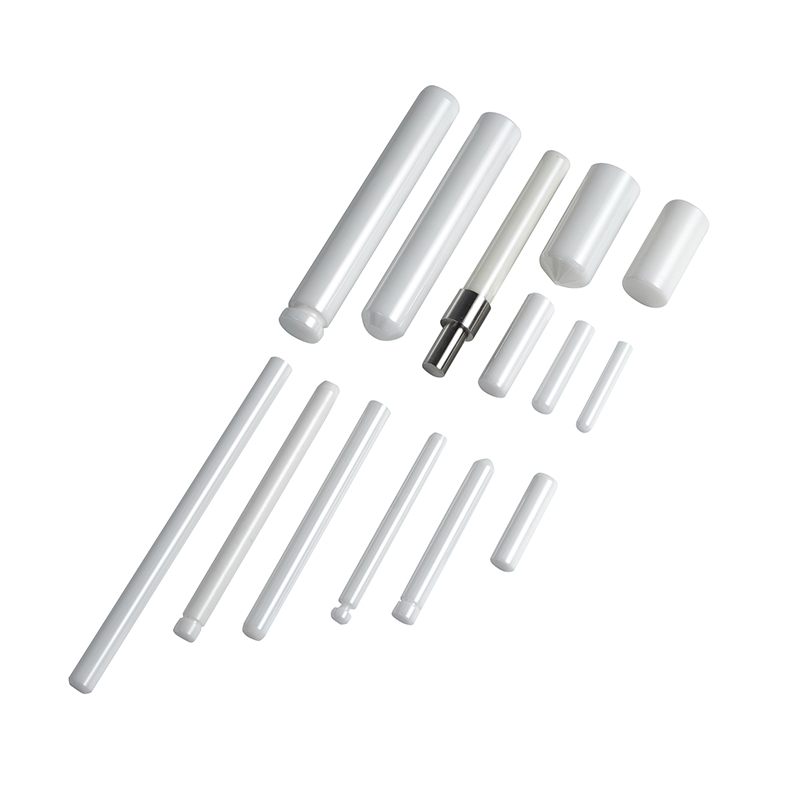
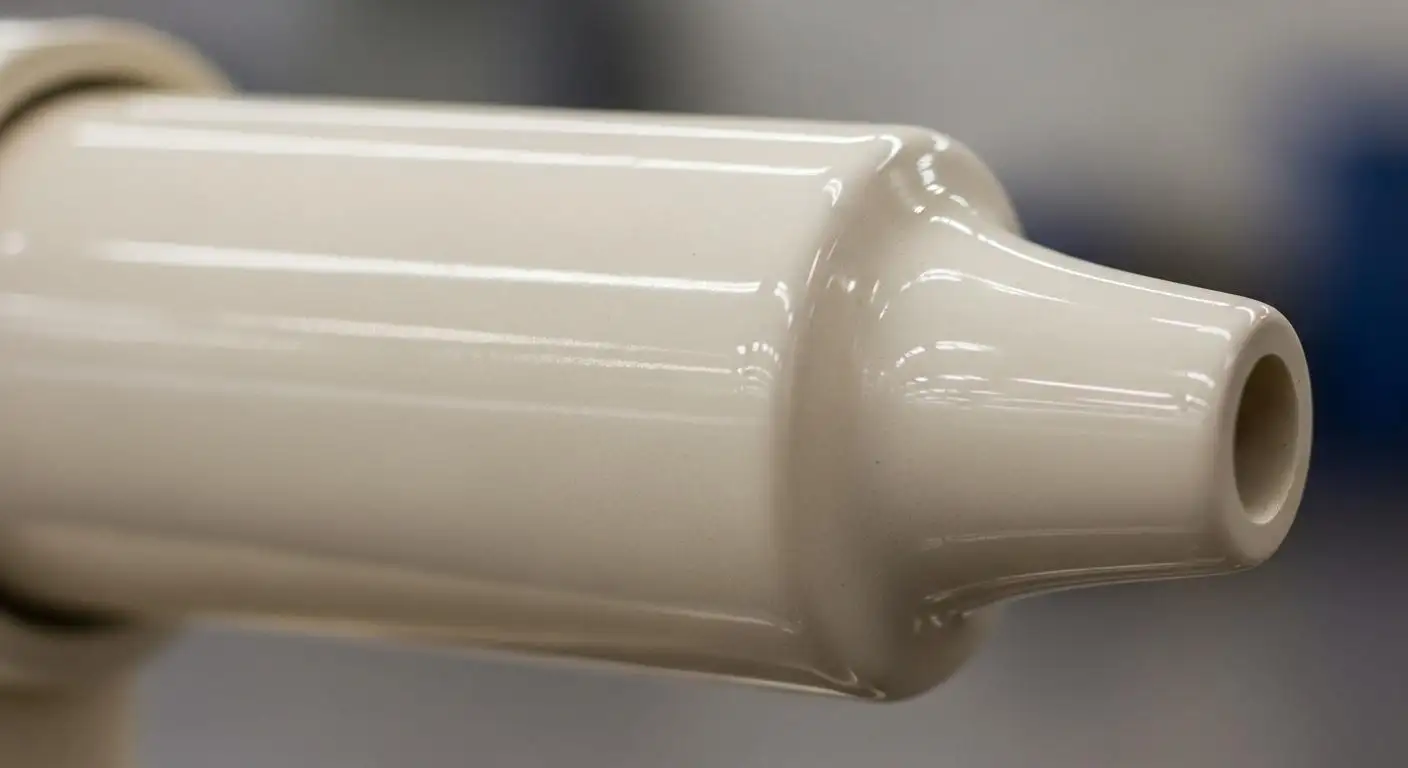
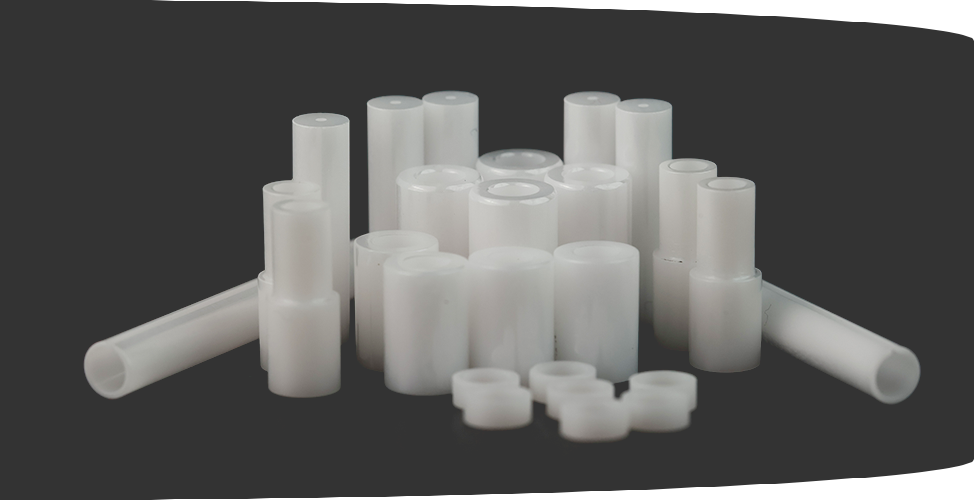
Zirconia Ceramic Custom Component solutions are critical Zirconia Ceramic Custom Components for the emerging field of precision engineering. Zirconia is in demand for additional strength and wear resistance for devices and components used in the die and fabrication of semiconductors and medical instruments and for devices and components used in the fabrication of semiconductors and medical equipment. Zirconia Ceramic Custom Components are custom engineered precision components. The following factors will help engineers and purchasers of Zirconia Ceramic Custom Components assess the likely reliability and performance of Zirconia Ceramic Custom Components.
1. Quality of the Starting Materials
Zirconia is the starting material for custom ceramic components. The quality of the starting materials for Zirconia Ceramic Custom Components is very important to the structural integrity of the finished component.
The quality of the starting materials of the Zirconia Ceramic Custom Component includes:
•The level of purity of the powder: High levels of purity in the powder yield stable crystal structures and minimizes defects.
•Particle size uniformity: Uniform particle size of the starting powder yields uniform density in the final product.
•Stabilizer composition: The content of stabilizer determines the toughness of zirconia and the stabilized phase.
•Impurity of the powder: Reduced impurities of the starting powder minimizes micro fractures.
2. Forming Process and Green Body Control
Zirconia is shaped into a green body of the final component. The green body is then sintered, and any inconsistencies in the green body will be reflected in the final component. The consistency of green bodies is determined by the uniformity of the pressure applied during shaping.
•Injection Molding Stability: Balance allows designing flow for complex shapes.
•Binder System Control: To have the optimal binder amount, the binder maintains its shape prior to binder extraction.
•Green Density Consistency: Density Consistency lower the distortion risk during Sintering.
When the forming process is adequately controlled, a Zirconia Ceramic Custom Component retains shape post distortion from High temp processing.
3. Sintering Profile & Thermal Control
Sintering is a crucial step to the processing of a functional Zirconia Ceramic Custom Component. It is when Densification and the phase transition of the material occur.
Densification of Zirconia is controlled during the Sintering process by:
•Thermal Control: The Thermal profile must be even to avoid Stresses.
•Dwell Time: While controlling grain growth, full densification needs to be achieved.
•Cooling Rates: A controlled cooling rate reduces the chance of distortion in the material.
•Atmosphere Control: Changing the furnace environment can differently structure the material.
Lack of proper control during the sintering process is one of the main reasons for poor consistency of dimensions of zirconia ceramics.
4. Precision Machining and Post Processing
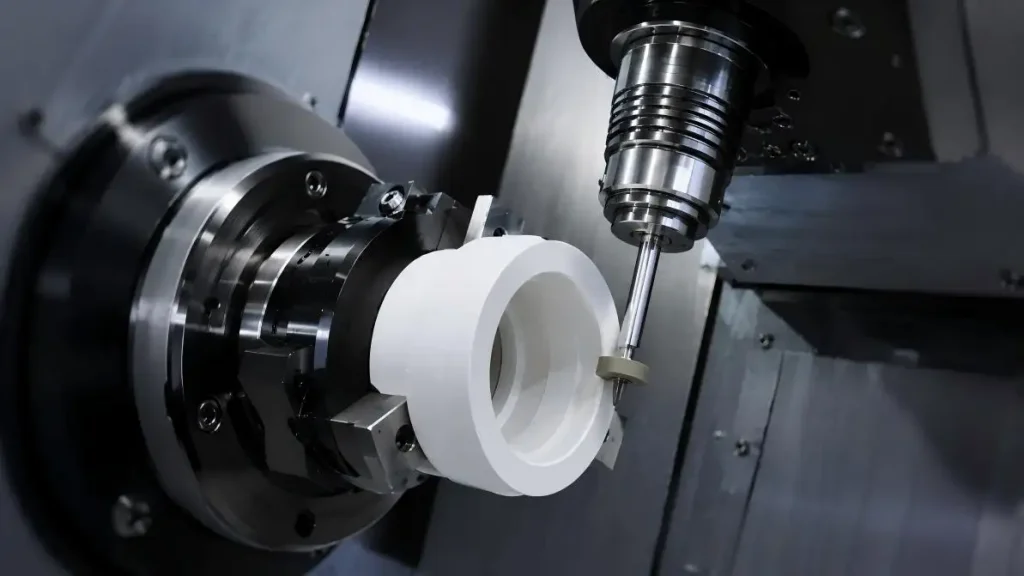
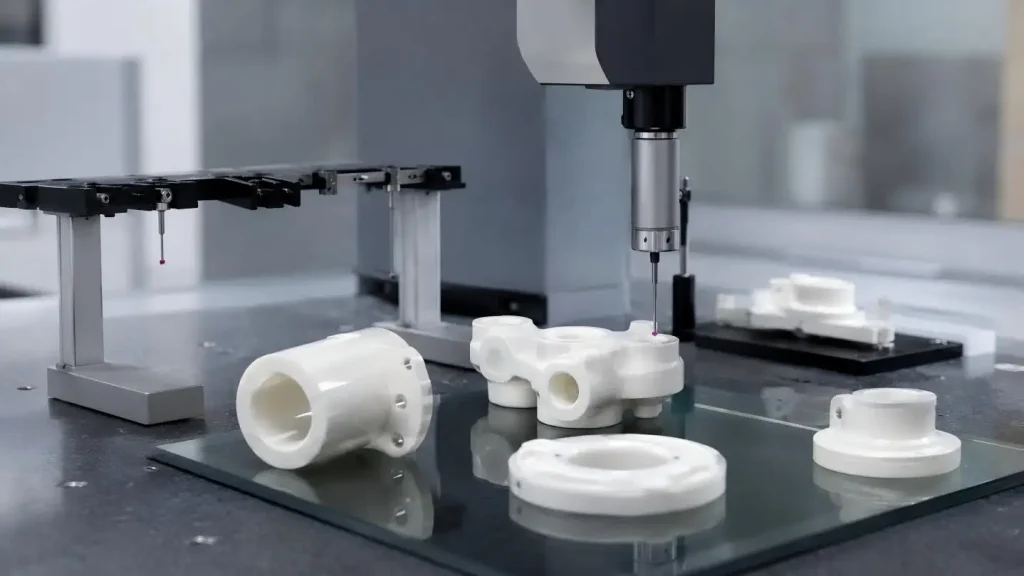
Although zirconia ceramics are durable and tough, Precision Zirconia Ceramic Custom Components requires significant machining.
Some of the machining considerations are:
•Diamond Tools: Tools of high hardness are needed to avoid static machining.
High Precision Grinding: The integrity of the edge must be controlled to avoid chipping.
•Capabilities for Multi-axis Machining: This is required when complex geometries are involved.
Typical requirements for a high-end Zirconia Ceramic Custom Component include:
•Roundness: 0.002 mm
•Concentricity: 0.002 mm
•Straightness: 0.004 mm
•Perpendicularity: 0.005 mm
The above requirements depict the capability of the utilized system.
5. Surface Quality and Functional Performance
Surface Finish of the component influences the performance of the component in terms of friction, wear, and sealing. In this regard, a high-end Zirconia Ceramic Custom Component should have very high surface finish.
Some of the surface finish characteristics include:
•Surface Finish (Roughness): Precision grade performance of the component is rated as Ra 0.02–0.20.
•Polishing: Evenly polished surfaces have less friction.
•Micro Defects: Surface finish should be free of defects as they can lead to failure of the component.
•Surface Cleanliness: Surface should be free of contamination especially for medical and semiconductor applications.
In several applications, surface finish is as important as the mechanical strength of the component.
6. Dimensional Tolerance and Inspection Systems
Quality of the Zirconia Ceramic Custom Components is judged in terms of the adherence of the component to the stringent engineering requirements.
Some of the inspection requirements include:
•3D Metrology: Inspection of complex component and verification of compliance of the component to the requirements.
•GD&T: Inspection of form, orientation, and position.
•Consistency of Results: Ensuring consistent results during multiple production runs.
•Statistical Process Control: Monitoring the control and stability of the Manufacturing Process.
High precision inspection systems ensure that the deviations are kept to a minimum.
7. Design Optimization and Engineering Integration
Zirconia Ceramic Custom Components are often assessed based on the surface, however, the main consideration in the design of the component is the ceramics and the stresses the component will be subjected to.
Some of the design considerations include:
•Stress Distribution: A design that distributes stress to the entire component reduces the chances of fracture of the component.
•Geometry optimization: Enhances manufacturability while preserving function.
•Thermal expansion consideration: Guarantees consistent operation within assemblies of different materials.
8. UPCERA Technical and Manufacturing Benefits
As an advanced ceramics expert, UPCERA has a deep knowledge of the entire production process of Custom Zirconia Ceramic Components, from the design stage to the stage of achieving final precision.
Advanced Ceramics solution of UPCERA:
•Advanced ceramics: Zirconia in Custom formulations for design and medical applications.
•Precision: Multi-axis CNC can achieve diamond machining to tolerances of one micron.
•Consistency: High volume production of the same excellent quality is possible.
•Optimized design: Engineering support is available to best suit the purpose of the Zirconia Ceramic Component.
•Control of Quality: Inspections are made to confirm that the dimensions and the integrity of the structure have been achieved.
| Technical Specifications of Zirconia Ceramic Custom Component | |
| Parameter | Typical Range |
| Density | ≥ 6.0 g/cm³ |
| Hardness | ≥ 12 GPa |
| Fracture Toughness | 6–10 MPa·m¹/² |
| Flexural Strength | 800–1200 MPa |
| Max Size (Length) | ≤ 300 mm |
| Max Outer Diameter | ≤ 150 mm |
| Minimum Wall Thickness | 0.1 mm |
| Surface Roughness | Ra 0.02 – 0.2 μm |
| Roundness | ≤ 0.002 mm |
| Concentricity | ≤ 0.002 mm |
| Straightness | ≤ 0.004 mm |
| Perpendicularity | ≤ 0.005 mm |
| Thermal Resistance | Up to 800–1000°C |
| Electrical Property | Electrical Insulation |
| Chemical Resistance | Excellent |
| Biocompatibility | Medical-grade available |
These systems allow UPCERA to cover the demands of the market where advanced ceramics are required.
9. Performance Requirements Based on Application
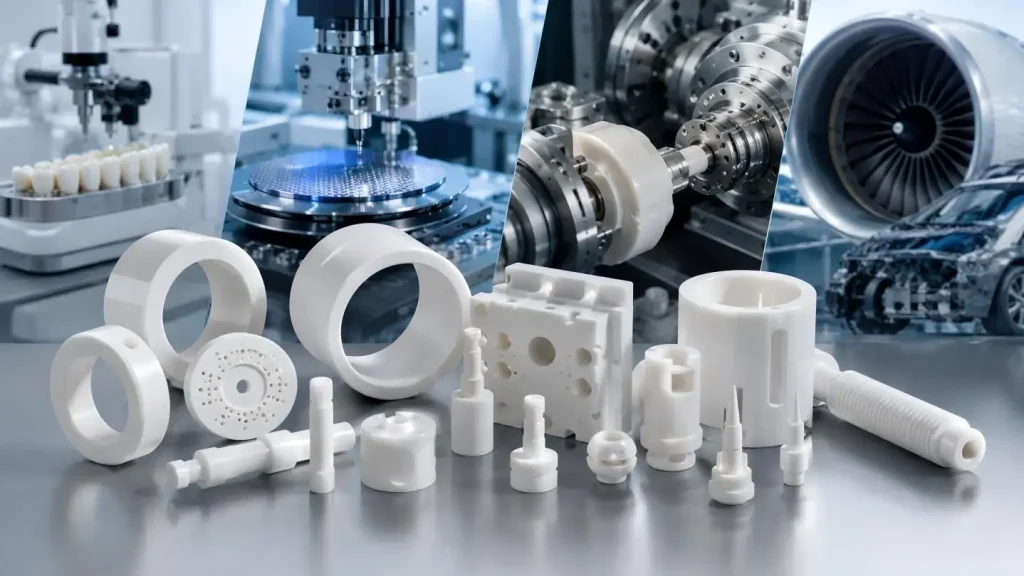
Different markets require different performance characteristics from a Custom Zirconia Ceramic Component. Examples include:
•Medical and dental systems: Sterilization-resistant and biocompatible systems are required.
•Semiconductor manufacturing equipment: Systems are required that have ultra-clean surfaces with electrically insulated components.
•Industrial machinery: Systems are required that provide components with friction wear resistant and extraordinarily long service life.
•Aerospace and automotive systems: Systems are required that provide components with stability under thermal and vibrational stresses.
•Chemical environments: require components to be inert and resistant to corrosion.
All of these affect the design and manufacturing process of the component.
Closing Words
A Zirconia Ceramic Custom Component's quality hinges on many factors including balance of material, process, machining, and design. Each process from powder to inspection has an effect on the stability and reliability of the product.
Manufacturers with the advantages of modern material processing and precision engineering like UPCERA are important for high quality, consistent zirconia ceramics for the challenges of modern industry.
An understanding of these factors will help buyers and designers of Zirconia Ceramic Custom Components intended for high end applications.
FAQ – Zirconia Ceramic Custom Component
Q1: What exactly is a Zirconia Ceramic Custom Component?
This is a custom component manufactured from a strong and tough ceramic material, Zirconia.
Q2: What are the advantages of zirconia vs metal?
Zirconia has superior resistance to wear, as well as better insulating properties and resistance to corrosion.
Q3: What is the average surface roughness?
Typical Ra is in the range of 0.02 to 0.2 μm.
Q4: What about zirconia's high temperature resistance?
Zirconia can withstand up to approximately 800–1000°C without issue.
Q5: How thin can the walls of a zirconia part be?
At the thinnest, 100 μm; dependent on the part's design.


In This Article
- 1 1. Quality of the Starting Materials
- 2 2. Forming Process and Green Body Control
- 3 3. Sintering Profile & Thermal Control
- 4 4. Precision Machining and Post Processing
- 5 5. Surface Quality and Functional Performance
- 6 6. Dimensional Tolerance and Inspection Systems
- 7 7. Design Optimization and Engineering Integration
- 8 8. UPCERA Technical and Manufacturing Benefits
- 9 9. Performance Requirements Based on Application
