 English
 中文
中文







What Ceramic Insulator Grades Fit High-End Manufacturing? 2026 Practical Guide
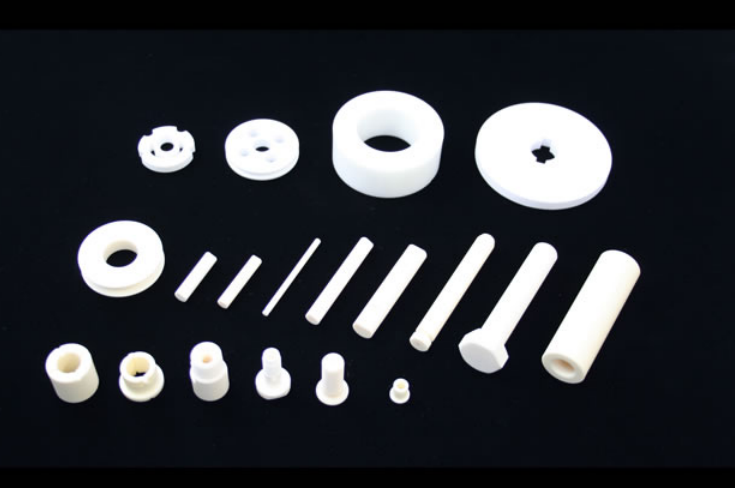
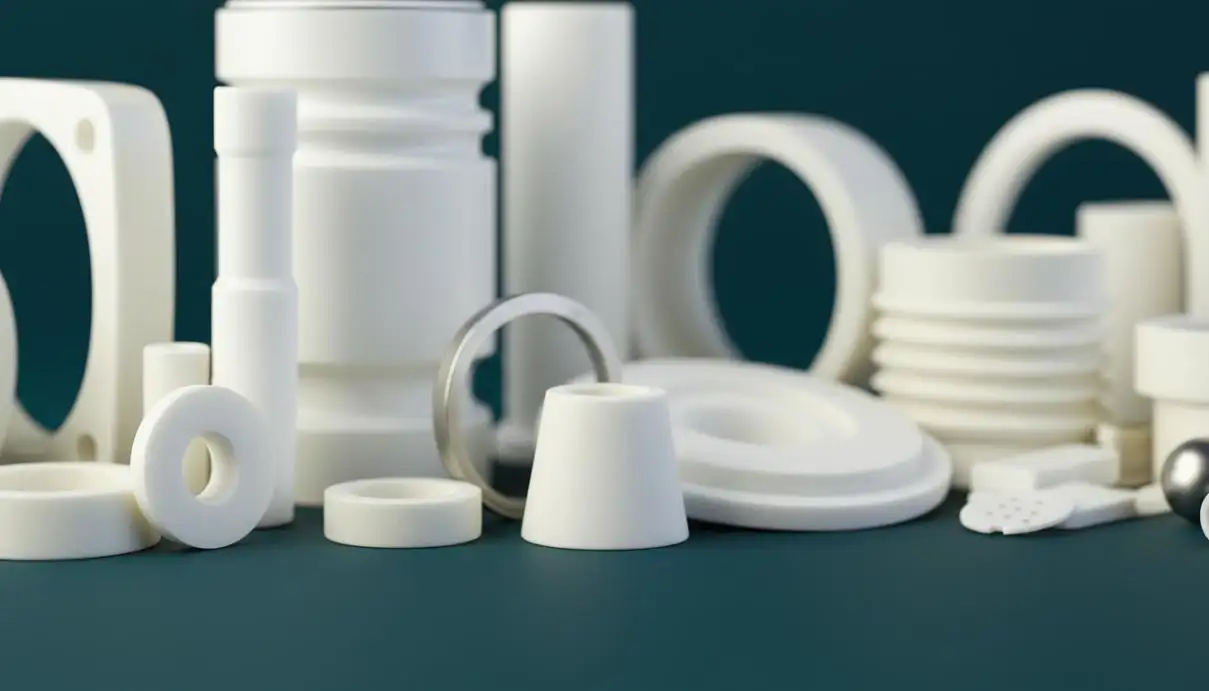
Choosing a Ceramic Insulator has moved from a routine buy to a strategic engineering decision. In tightly integrated factories – semiconductor, EV powertrains, aerospace, medical devices, and renewable energy – the wrong choice can drive field failures, thermal runaway, or RF noise, while the right insulator shrinks footprints, stabilizes high voltages, and improves yield. This 2026 guide explains what a Ceramic Insulator is, how grades differ, which chemistry fits your load cases and environments, what tolerances and cleanliness levels matter, and how UPCERA helps teams compress evaluation time and standardize reliable supply.
What a Ceramic Insulator Is – and Why It Matters Now
A Ceramic Insulator is an inorganic, non-metallic component designed to block electrical conduction while managing heat, mechanical stress, and contamination. In advanced manufacturing, you don’t just need “non-conductive” – you need high dielectric strength for compact high-voltage layouts, stable thermal behavior under continuous flux, mechanical resilience against vibration and clamping, and cleanroom-ready purity. As devices pack more power in smaller volumes and control loops accelerate, the insulator becomes part of the electrical, thermal, and mechanical system – not an afterthought.
n Understanding the Grades
Ceramic Insulator grades diverge by base chemistry, purity, grain size, stabilizers, and densification route. Those choices set the dielectric strength, loss tangent, thermal conductivity, coefficient of thermal expansion (CTE), fracture toughness, and RF behavior. Before you pick a grade, answer four practical questions that reflect your loads:
• Electrical: What voltages and frequencies are in play? Compact high-voltage designs commonly target dielectric strength in the ballpark of 8-15 kV/mm. Low dielectric loss becomes crucial for RF isolation and fast-switching controls.
• Thermal: What heat flux must you move, and what temperature rise can your assembly tolerate? Thermal conductivity spans roughly 2 W/m·K for zirconia to 140-180 W/m·K for aluminum nitride. CTE compatibility with adjacent metals and semiconductors reduces joint stress during thermal cycling.
• Mechanical: Will the Ceramic Insulator see vibration, shock, or clamping? Toughness and strength vary meaningfully: zirconia and silicon nitride bring higher fracture toughness than standard alumina, which can prevent brittle failures in dynamic environments.
• Process environment: Are you in a cleanroom, corrosive area, or vacuum/UHV? High purity and low ionic content help protect wafer yields and sensitive medical assemblies, while appropriate degassing supports vacuum performance.
Five workhorse Ceramic Insulator Materials – and Where Each Excels
No single ceramic wins every load case. The following materials cover most high-end use scenarios; property ranges are typical and depend on specific formulations and processing.
High-purity alumina (99-99.8% Al2O3). The versatile baseline for many Ceramic Insulator applications. Expect dielectric strength around 8-15 kV/mm, room-temperature thermal conductivity roughly 20-30 W/m·K, and CTE near 7.5-8.0 × 10⁻⁶/K. It’s a solid choice for general high-voltage insulation, plasma-facing fixtures, and RF components where low dielectric loss matters. Properly designed, alumina remains stable at elevated temperatures, often in the 1000-1400°C envelope.
Zirconia-toughened alumina (ZTA). ZTA blends alumina with a zirconia phase to boost strength and wear resistance without losing overall insulation performance. Thermal conductivity typically sits in the 15-25 W/m·K range. ZTA shines when a Ceramic Insulator must survive mixed electrical and mechanical loads, precision guide duties, or wear-critical jigs that still need electrical isolation.
Yttria-stabilized zirconia (YSZ). When impact risk and compliance enter the picture, YSZ’s fracture toughness – commonly around 6-10 MPa·m^0.5 – helps prevent crack propagation. Thermal conductivity is lower (about 2-3 W/m·K), and dielectric strength typically falls near 7-9 kV/mm. Use YSZ where a Ceramic Insulator must accommodate strain, seal interfaces, or buffer mismatch stresses without sacrificing essential insulation.
Silicon nitride (Si3N4). Known for toughness and thermal shock resistance, silicon nitride balances mechanical resilience with electrical performance. Fracture toughness often measures around 5-7 MPa·m^0.5, thermal conductivity roughly 20-30 W/m·K, and dielectric strength in the vicinity of 8-12 kV/mm. It excels in rotor-side insulators, high-speed machinery, and fixtures exposed to rapid temperature gradients.
Aluminum nitride (AlN). The heat mover of the group, aluminum nitride offers high thermal conductivity – commonly 140-180 W/m·K – plus dielectric strength near 10-12 kV/mm and a CTE around 4.5 × 10⁻⁶/K that tracks close to silicon. It’s a prime Ceramic Insulator for power electronics substrates, spacers, and baseplates where swift heat removal improves junction reliability. Moisture control and clean joining practices are essential to preserve AlN’s performance.
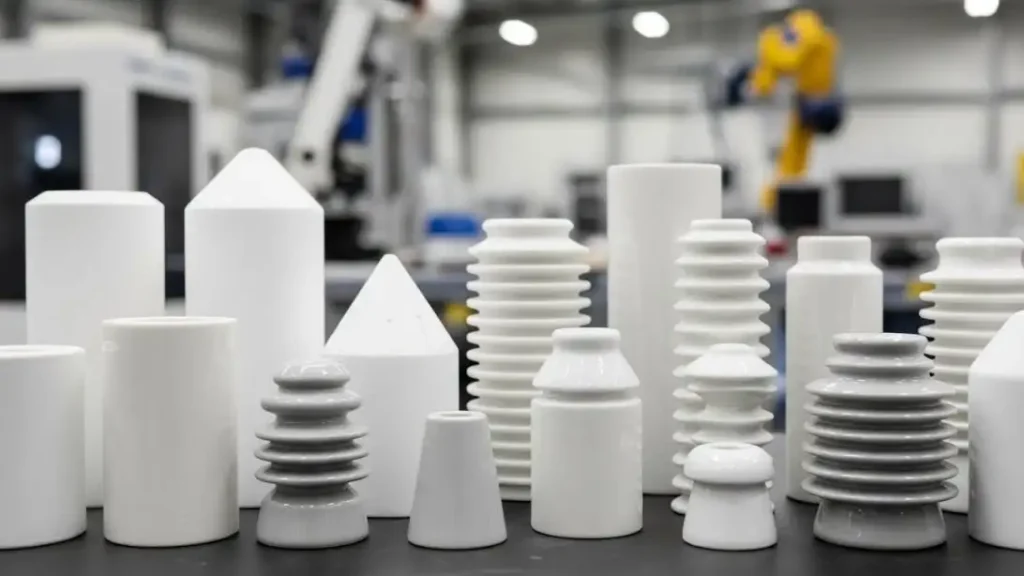
Matching Ceramic Insulator to Real-World Applications
Semiconductor and advanced packaging. As geometries shrink, electric field density and heat flux rise. High-purity alumina provides reliable RF isolation and low dielectric loss in probe fixtures and sensor housings. For power device mounts and thermal pathways, AlN’s high conductivity lowers junction temperatures and limits thermal runaway. Proper CTE matching safeguards solders, sintered die attach, and metallized joins during cyclic operation.
EV powertrains and charging. Fast-switching SiC and GaN modules need ceramic insulator materials that handle high-frequency, high-voltage conditions and rapidly shed heat. Aluminum nitride fits baseplates and bus structures very well; alumina or ZTA can fill housings and spacers when low cost must align with robust insulation. Target dielectric strength around 10-12 kV/mm and finishes that minimize partial discharge during repetitive pulses.
Aerospace, defense, and photonics. Systems see weight limits, shocks, and broad temperature swings. Silicon nitride offers both toughness and thermal shock resistance for rotating equipment and high-vibration frames. YSZ or ZTA helps stabilize interfaces exposed to impacts and mismatch strains, while alumina remains the dependable high-temperature Ceramic Insulator for sensor suites and avionics.
Medical and analytical equipment. Biocompatibility, ionic cleanliness, and stable dielectric performance protect both patient safety and instrument uptime. High-purity alumina is a go-to insulator for compact high-voltage isolation in imaging, diagnostic, and analytical devices. ZTA and YSZ provide added mechanical durability for wear components that still require robust insulation and clean surfaces.
Renewable energy and high-voltage systems. Switchgear, inverters, and grid-side components operate at continuous high voltages with thermal gradients. Alumina grades with about 10-12 kV/mm dielectric strength often suffice for many insulator roles. Where gradients and shocks intensify, silicon nitride or AlN can reduce thermal stress and balance mechanical reliability with heat management.
Production Realities in 2026: Tolerances, Cleanliness, and Reliability
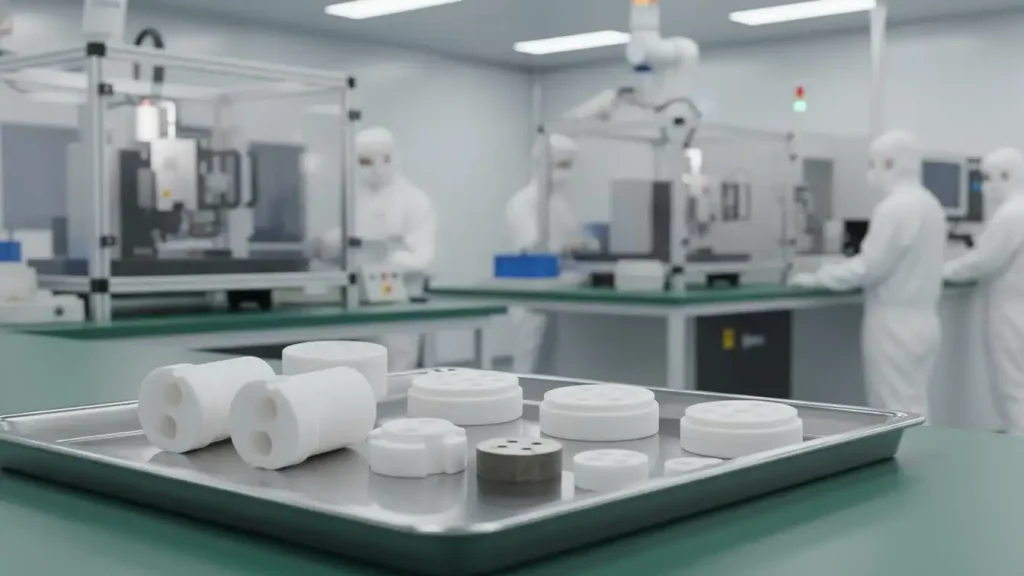
In many factories, the limiting factor for Ceramic Insulator adoption is not basic material capability but process control. High-end lines need repeatable precision and clean execution:
• Precision. Ground and lapped critical dimensions routinely hold tolerances on the order of ±10-20 μm. Smooth surfaces – often targeting Ra below 0.2 μm – help suppress localized field enhancement, tracking, and partial discharge in HV/RF environments.
• Cleanliness. Low sodium/potassium content, controlled particle levels, and clean packaging reduce defects in wafer-level and medical assembly. Defined degassing profiles support vacuum and UHV readiness and reduce contamination risk.
• Reliability metrics. Aim for a Weibull modulus above 10 for strength consistency in structural Ceramic Insulator parts. For dielectric breakdown, tight distributions and validated humidity aging are essential. Thermal shock testing over 200-300°C gradients helps qualify fixtures, carriers, and tools for real factory conditions.
These controls should be explicit in your Ceramic Insulator drawings and supplier quality plans. They directly affect yield, downtime, and field failure rates.
How UPCERA Simplifies Specification and Supply
UPCERA integrates material science with manufacturing discipline to turn Ceramic Insulator selection into a predictable process rather than trial-and-error.
• Application-driven material mapping. UPCERA benchmarks your voltage, frequency, heat flux, and mechanical loads, then recommends the right Ceramic Insulator grade – alumina, ZTA, YSZ, Si3N4, or AlN – backed by clear trade-off analysis across performance and cost.
• Co-design and rapid prototyping. Design-for-ceramics guidance covers wall thickness, fillets, and joint features that reduce stress and partial discharge. Early prototypes confirm fit, finish, thermal path, and dielectric behavior before you lock tooling.
• Controlled manufacturing and metrology. Precision grinding, lapping, and polishing support tight tolerances and excellent surface finish for modern HV and RF systems. Statistical process control delivers batch-to-batch consistency in mechanical strength and breakdown voltage.
• Qualification support. UPCERA partners with you to plan and run thermal shock, dielectric, humidity aging, and environmental testing compliant with your protocols. We advise on metallization, brazing, and protective coatings to keep your Ceramic Insulator performing through build and service life.
Plan your 2026 Ceramic Insulator Roadmap
If your line depends on compact high voltages, fast thermal pathways, or cleanroom-grade assemblies, make Ceramic Insulator selection a proactive part of your 2026 plan. Request UPCERA’s material selection session and sample set for alumina, ZTA, yttria-stabilized zirconia, silicon nitride, and aluminum nitride. Our engineers will review your load cases and propose a validated route from prototype to volume – balancing dielectric strength, thermal stability, mechanical reliability, and cleanliness – to keep your production line fast, safe, and consistent.
Share on Social:


In This Article
- 1 What a Ceramic Insulator Is – and Why It Matters Now
- 2 Five workhorse Ceramic Insulator Materials – and Where Each Excels
- 3 Matching Ceramic Insulator to Real-World Applications
- 4 Production Realities in 2026: Tolerances, Cleanliness, and Reliability
- 5 How UPCERA Simplifies Specification and Supply
