 English
 中文
中文







How Ceramic Protection Tubes Support Green Manufacturing
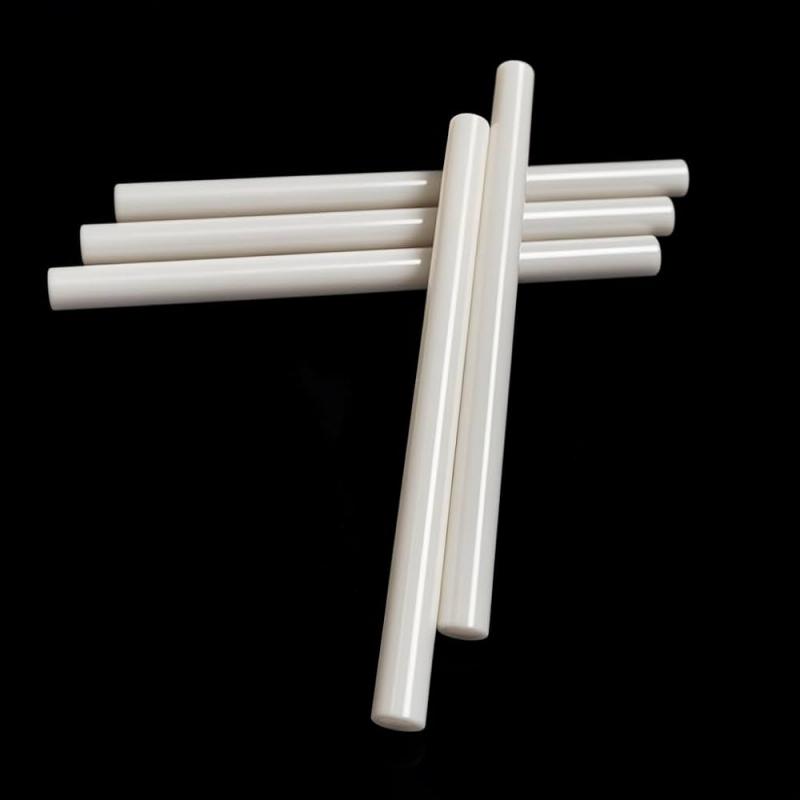
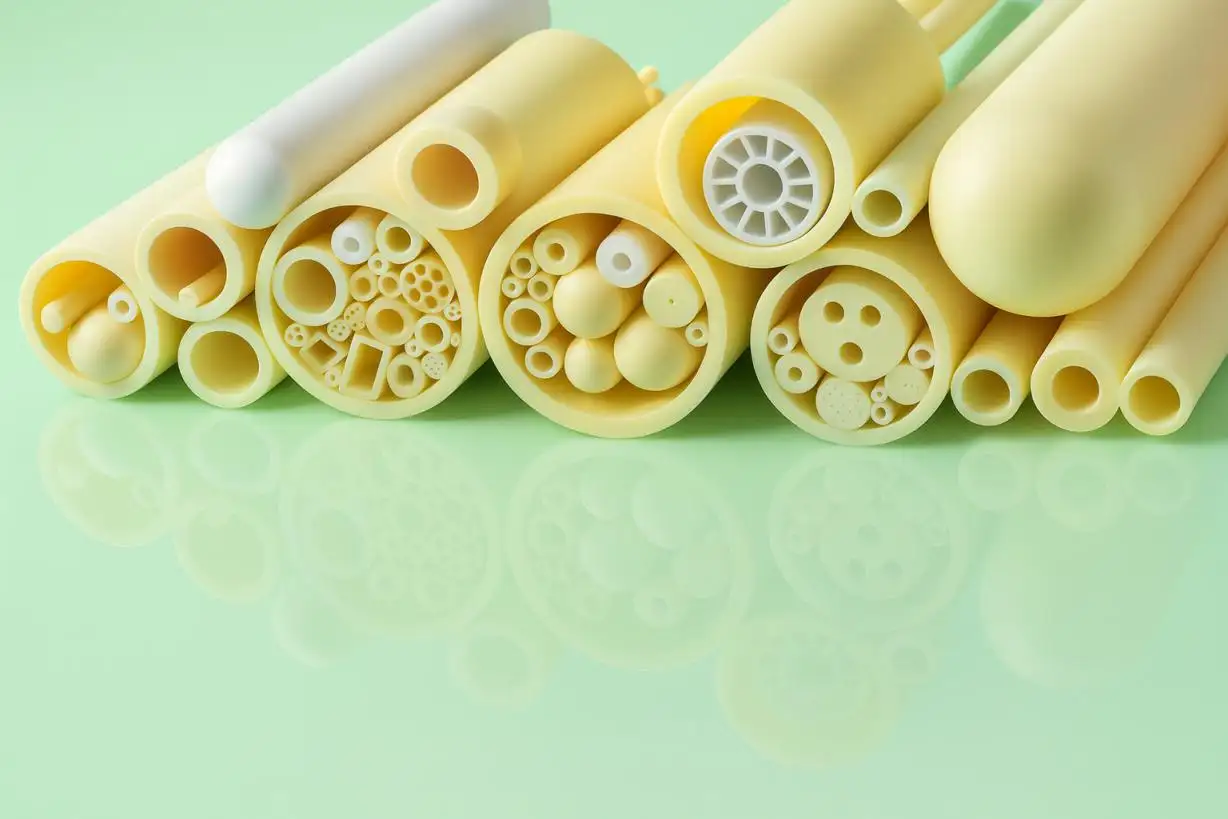
As green manufacturing develops, Ceramic Protection Tubes are becoming more valuable because they contribute to better system stability, longer-lasting performance, and lower replacement rates. From UPCERA's perspective as a manufacturer, this matters because sustainable production is no longer limited to energy sourcing alone. It also depends on how materials perform inside heat-intensive, high-voltage, and chemically demanding processes.
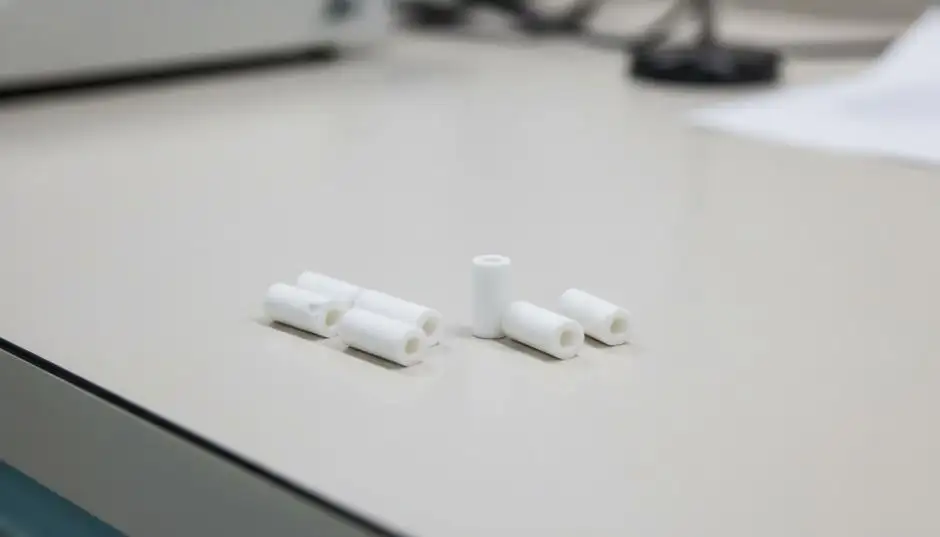
The broader industry direction supports this view. The International Energy Agency notes that industry accounts for nearly 40% of global final energy demand, while energy efficiency remains one of the most important routes for reducing emissions and improving competitiveness. In this context, durable technical ceramics deserve more attention.
Why Green Manufacturing Needs More Than Energy Saving
Green manufacturing is often discussed in terms of electricity, fuel, and emissions targets. That is important, but equipment reliability also plays a practical role. When core components fail too early, plants face more waste, more maintenance events, and more production disruption.
Across many industrial systems, protection tubes must handle challenging conditions, including:
• High operating heat
• Fast thermal cycling
• Corrosive gases or liquids
• Wear during repeated service
• Strict dimensional control in compact assemblies
Where material stability is insufficient, cracking, leakage risk, and shorter service life can become real concerns. Ceramic Protection Tubes help minimize these problems by offering a more robust material solution for aggressive environments.
From UPCERA's perspective, sustainability should be measured by practical performance. A component contributes to green manufacturing when it remains in service longer, supports reliable processing, and helps reduce unnecessary material loss.
Our alumina-based Ceramic Protection Tubes are made from 99%+ pure alumina. This material is widely valued for electrical insulation, chemical stability, mechanical strength, and long service life in technical applications. CeramTec also describes alumina ceramics as materials that offer electrical insulation, chemical and mechanical stability, and long operating life in demanding systems.
For clients, that translates into several sustainability benefits:
• Fewer replacements over the service cycle
• Lower risk of process interruption
• Better protection in corrosive and high-temperature systems
• More stable equipment performance over time
This is a more operational form of sustainability. It helps users lower waste and improve manufacturing consistency without compromising technical performance.
What Makes UPCERA Ceramic Protection Tubes Practical
UPCERA's alumina ceramic tube is widely used in furnaces, thermocouple protection, electrical feedthroughs, vacuum systems, and analytical equipment. Its dense structure supports long-term use in reactive or vacuum environments, while its smooth surface and tight dimensional control support clean integration into advanced assemblies.
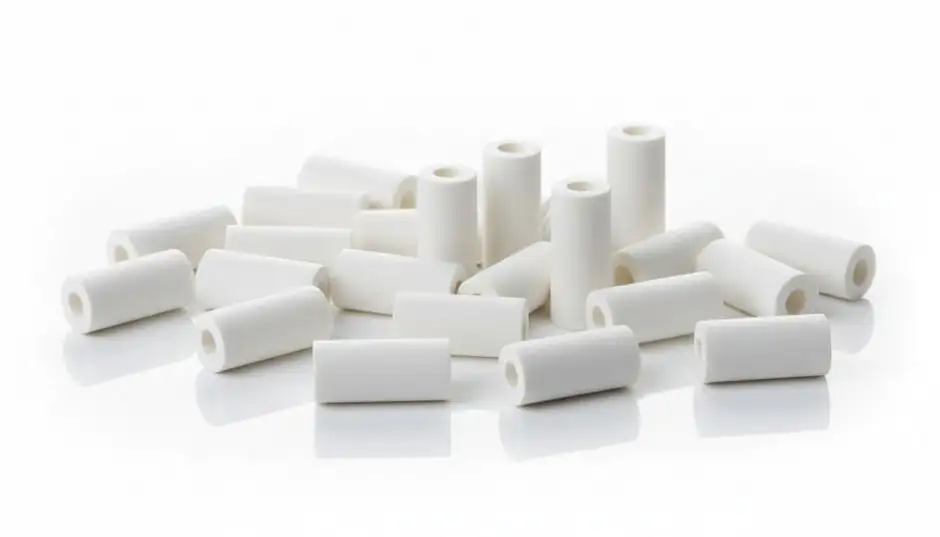
Selected processing capability includes:
• Length up to 300 mm
• Outer diameter up to 150 mm
• Minimum wall thickness of 0.1 mm
• Surface roughness from Ra0.02 to Ra0.2
• Roundness of 0.002 mm
• Concentricity of 0.002 mm
These figures matter because dimensional stability affects installation quality, sealing behavior, and repeatability in precision systems. Enhanced machining control can help clients achieve more reliable assembly performance and minimize losses caused by fit issues or premature wear.
Where Ceramic Protection Tubes Create Green Value
Ceramic Protection Tubes are especially useful in applications where thermal and chemical stress can shorten the life of conventional materials. Common use areas include furnace and kiln equipment, thermocouple sheaths, laboratory instruments, semiconductor processing, and chemical handling systems.
Their value is not only technical. It is also operational. In these sectors, a longer-lasting protection tube can help reduce shutdowns, maintain measurement reliability, and support cleaner process control.
Industrial efficiency and decarbonization remain central manufacturing priorities for the U.S. Department of Energy, particularly in relation to technologies that reduce emissions and improve operational efficiency. That makes durable, precision ceramic components increasingly relevant to procurement and engineering decisions.
Why Material Selection Should Be More Strategic
A green manufacturing strategy should include material selection at the component level. Choosing the right Ceramic Protection Tubes can help avoid over-frequent replacement, reduce maintenance pressure, and support more stable operation in demanding environments.
At UPCERA, we recommend evaluating tube selection by operating temperature, chemical exposure, dimensional requirements, and expected service conditions rather than by price alone. That approach helps clients make better long-term decisions and build more reliable systems.
If your project requires Ceramic Protection Tubes for high-temperature, corrosive, or electrically demanding environments, UPCERA can help you assess the right alumina tube specification for your application. Get in touch with our team to evaluate dimensions, tolerances, surface finish, and custom production requirements.
Share on Social:


