 English
 中文
中文







How Ceramic Structural Components Tackle Abrasion and Thermal Shock?
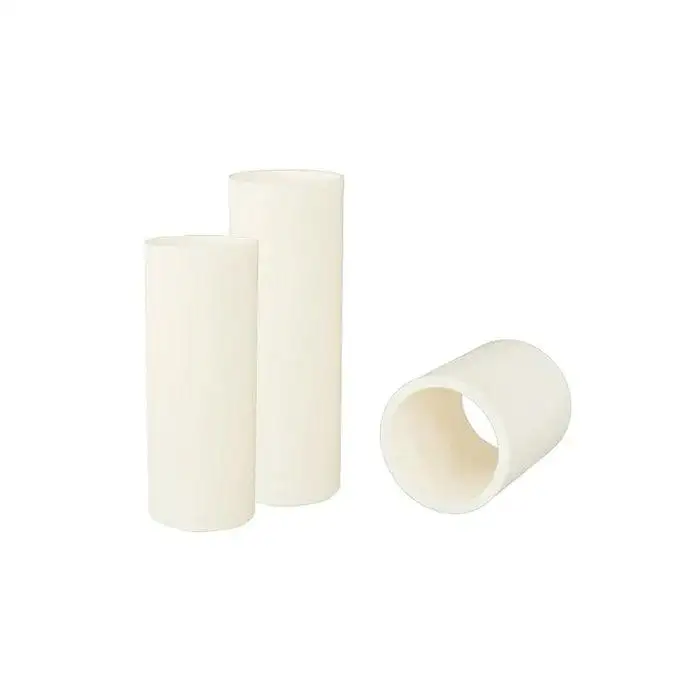
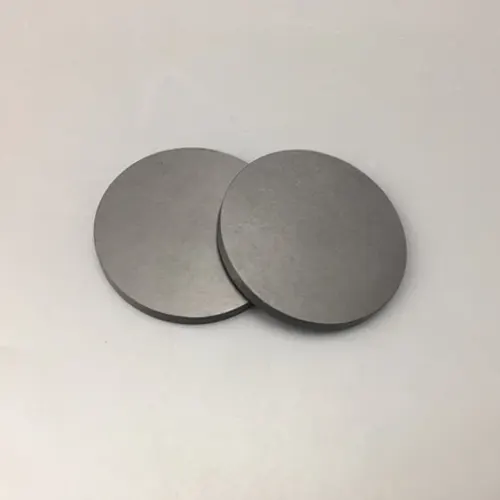
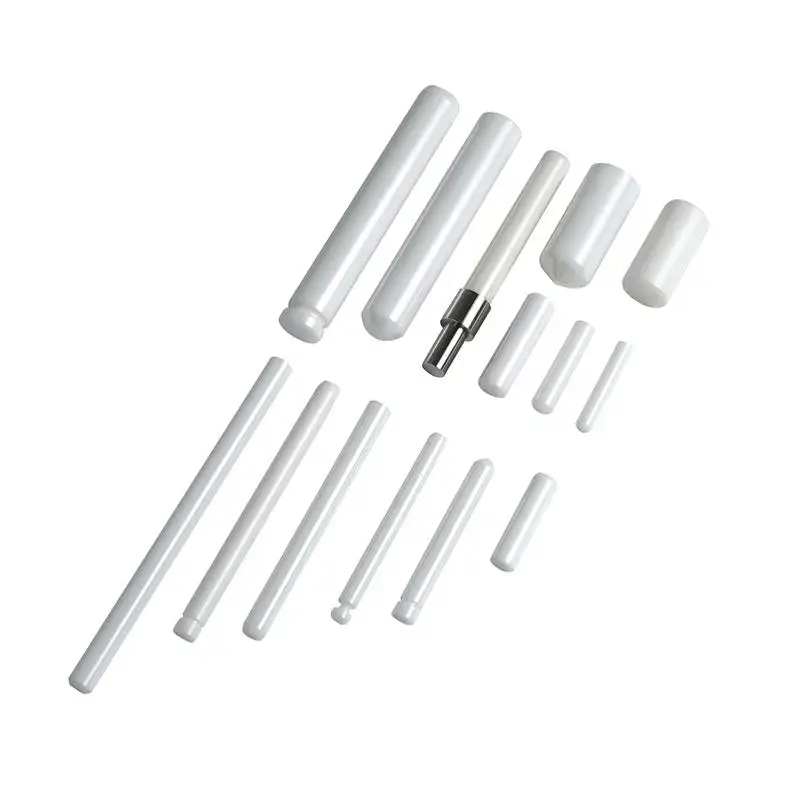
Ceramic Structural Components are engineered parts made from advanced ceramics for structural and precision use. They operate in harsh environments and support loads. In abrasive flows and rapid thermal cycling, metals and polymers often fail. Yet these ceramics persist. What enables their resistance to wear and thermal shock? Which material cues and design decisions lead to gains? The next sections clarify the mechanisms and show how reliability is ensured.
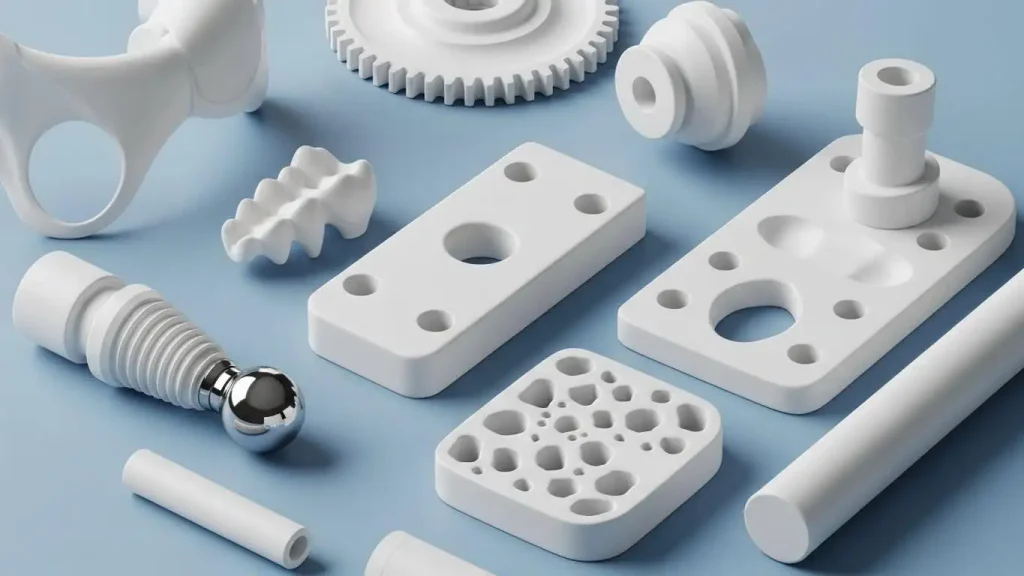
What Are Ceramic Structural Components?
Ceramic Structural Components are precision-engineered parts designed to carry load, maintain dimensional accuracy, and survive extreme service conditions. Unlike commodity ceramics, they are selected and processed for mechanical reliability as well as chemical and thermal stability. They work where metals and polymers struggle, especially under high friction, rapid temperature change, and corrosive media.
Among structural ceramics, zirconia (zirconium dioxide, ZrO₂) stands out. Zirconia ceramic structural parts combine high fracture toughness with outstanding thermal stability, enabling components to absorb mechanical shock and resist crack propagation. They also offer excellent resistance to wear and corrosion, so sliding or rotating interfaces maintain their surface integrity and geometry. Dimensional fidelity remains stable even under thermal cycling, which protects clearances, contact patterns, and sealing lines.
The material brings additional functional benefits. As a high-performance insulator, zirconia eliminates stray conduction and arc events in electronics and high-voltage assemblies. Being non-magnetic, it enables precise control in magnetically sensitive applications and clean metrology. Metals seldom combine both advantages, and zirconia keeps them stable through long duty cycles.
Contemporary manufacturing brings Ceramic Structural Components to tight tolerances and sophisticated geometries. Precision machining and polishing unlock thin walls, complex apertures, and accurate fits – raising mechanical reliability without reworking adjacent hardware. Factory-direct supply, certified quality, and dependable capacity help teams reduce risk and meet schedule demands.Custom designs, tailored materials, and application-specific geometries match the realities of field use rather than imposing constraints.
How Ceramic Structural Components Confront Abrasion and Thermal Shock
Abrasion destroys surfaces through repetitive micro-cutting, ploughing, and particle impact. Thermal shock fractures components when steep gradients and rapid cycling impose tensile stresses that exceed material tolerance. The combined effect accelerates wear, misalignment, and leakage. Zirconia-based Ceramic Structural Components counter these failure modes through a set of reinforcing material responses and design-ready characteristics.
High fracture toughness is the foundation. When an impact or a thermal gradient tries to open a crack, zirconia resists and helps arrest the flaw. This preserves the load path and prevents catastrophic breakage. Outstanding thermal stability further limits microstructural change under heat, so parts retain their strength and geometry after cycling. Excellent wear resistance keeps contact surfaces smooth, which lowers frictional heating and cut-in, and slows the growth of abrasive grooves. Corrosion resistance limits chemical attack that would otherwise undermine the surface and open new crack origins under stress.
These materials also protect system function. Electrical insulation isolates circuits and prevents stray conduction when temperatures climb. Non-magnetic behavior avoids force disturbances in sensor arrays, motors, and medical imaging setups. Performance remains consistent across environments and over time.
•Deliver exceptional mechanical strength: high fracture toughness resists cracking under load and impact.
•Maintain stability in high-friction environments: surfaces keep their finish in rotating and sliding interfaces.
•Persistent dimensional accuracy: tolerances hold through thermal cycling and shock events.
•Chemical and thermal endurance: reliability in aggressive media at high temperatures.
•Insulation where it counts: essential for electronic and high-voltage architectures.
•No magnetic signature: protects measurement integrity and motion control.
•Wear-resistant performance: longer life reduces downtime and costs.
•Complex geometry, precise fit: precision features integrate without redesign.
In practice, these advantages simplify engineering trade-offs. Designers can reduce overbuild in metallic housings because the ceramic insert or guide maintains clearances. Operators see fewer stoppages for surface refurbishment. Quality teams record stable dimensional data across long runs, even when heat and friction are persistent.
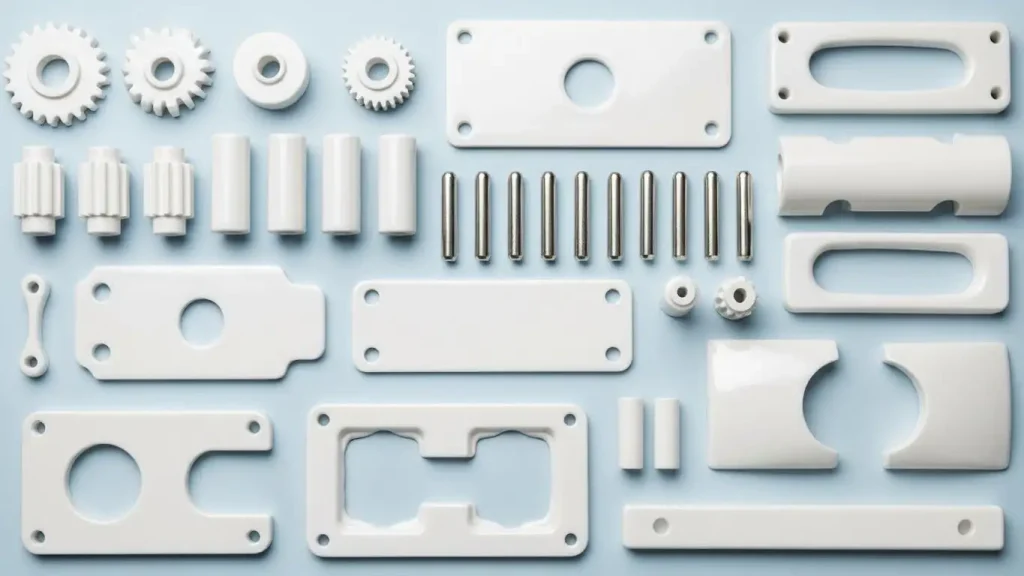
Design, Supply, and ROI with Ceramic Structural Components
Value is created when the right material meets the right geometry, supported by dependable supply. Ceramic Structural Components made from zirconia are configured to meet those conditions across aerospace, automotive, medical, and industrial manufacturing applications. They perform in dynamic assemblies – bushings, nozzles, guides, plungers, valves, wear plates – where both abrasion and thermal shock are routine. They also support electronic and high-voltage systems as insulating spacers and fixtures, where heat and cleanliness must be controlled without magnetic interference.
Factory-direct supply with guaranteed quality shortens the path from concept to production. Custom designs align material choice, wall thickness, and feature layout with the specific load case. Precision-machined parts reach tight tolerances, so interchangeability is reliable. Stable supply with high-volume delivery capability sustains serial programs and mitigates risk from demand spikes or maintenance cycles. Traceable processes and consistent inspection criteria maintain lot-to-lot consistency, which protects downstream yields.
The ROI emerges in several layers. Longer service life stretches replacement intervals, which lowers direct spend on spares. Better wear resistance stabilizes process parameters, reducing scrap and rework. Dimensional stability keeps machines in tolerance, which protects throughput and quality KPIs. Corrosion resistance reduces unplanned stoppages when fluids or vapors are aggressive. Insulating, non-magnetic components make compact layouts possible without extra barriers, cutting space and parts. The payoff is a lower TCO and higher availability over the entire lifecycle.
- Applications that benefit most:
•Sliding and rotating contacts in dusty, abrasive flows or poor lubrication
•Hot-work tooling exposed to fast cycling and steep thermal gradients
•Fixtures for corrosive, high-temperature chemical environments
• lectronics and HV assemblies needing dependable insulation and non-magnetic hardware
- Integration steps:
•Define contact loads, temperature profiles, media, and tolerance goals
•Shape parts to distribute stress and simplify fixturing
•Select manufacturing that supports complex features while protecting the ceramic
•Align supply with maintenance timing and production ramps
Call to Action
When abrasion or thermal shock increases risk, move to zirconia-based Ceramic Structural Components. Submit drawings for a quick DFM, tolerance guidance, and a quote. Request samples for validation or plan a pilot backed by factory-direct supply and QA.


