 English
 中文
中文






Zirconia Multi-Hole Ceramic Disc: Solve 5 Wear & Stability Issues for Long-Life Precision
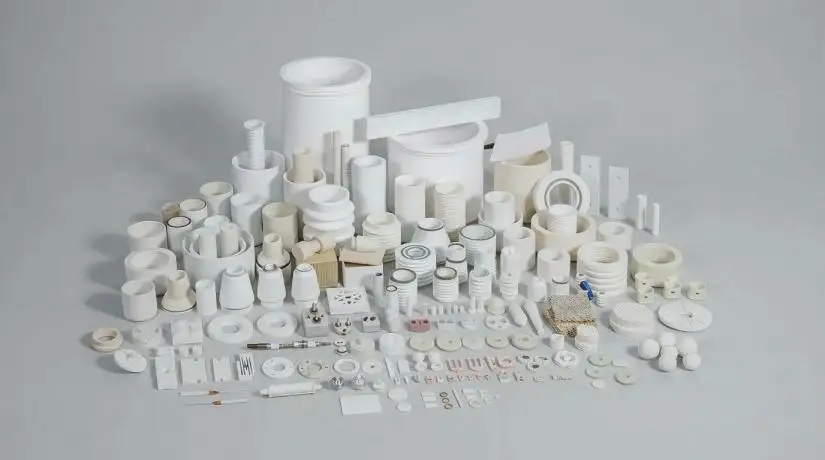
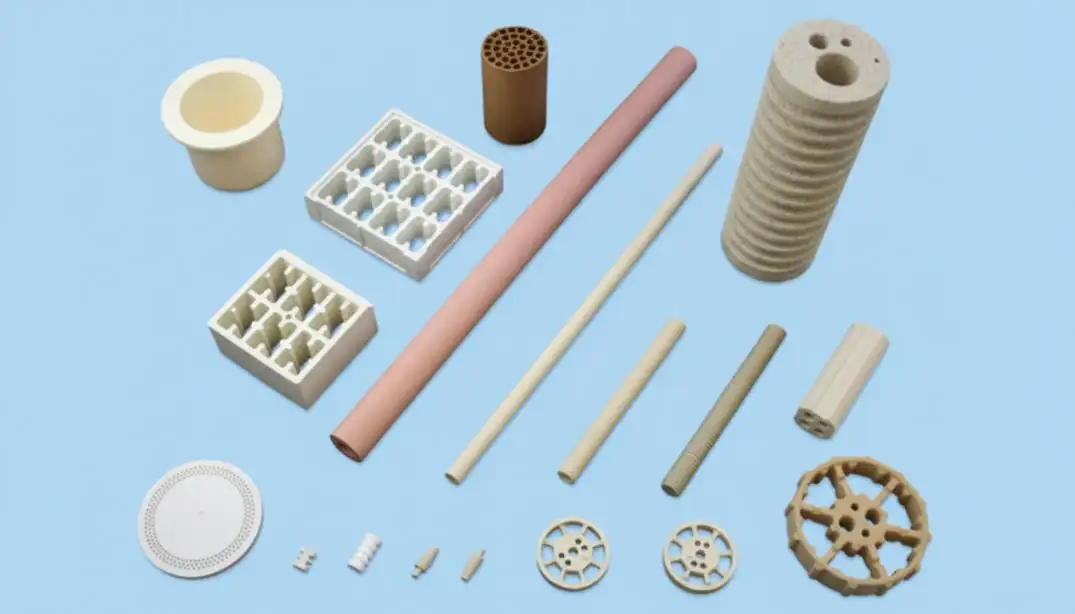
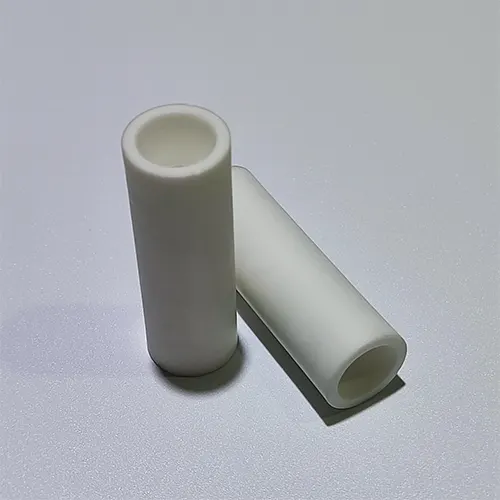
Demanding fluid systems live or die by how well they meter, seal, and guide flow. When abrasive media, aggressive chemistry, and rapid thermal swings enter the picture, most metallic or polymer components drift out of spec. A purpose-built zirconia multi-orifice plate that keeps systems on spec: YSZ with precision lapped/grind finishes maintains clearances and metering accuracy, boosting longevity in pumps, valves, dosing heads, and atomization assemblies.
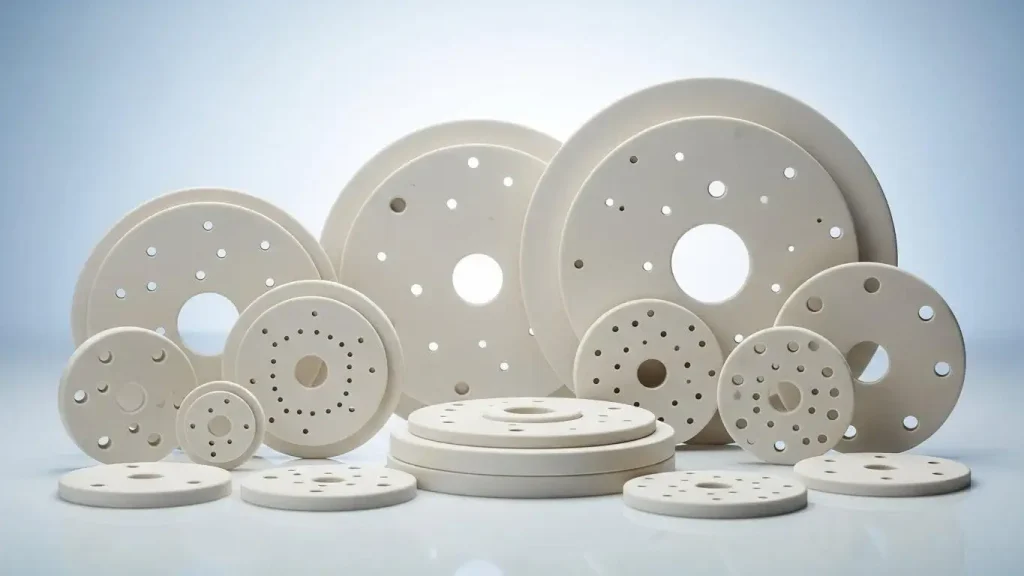
What is a Zirconia Multi-Hole Ceramic Disc
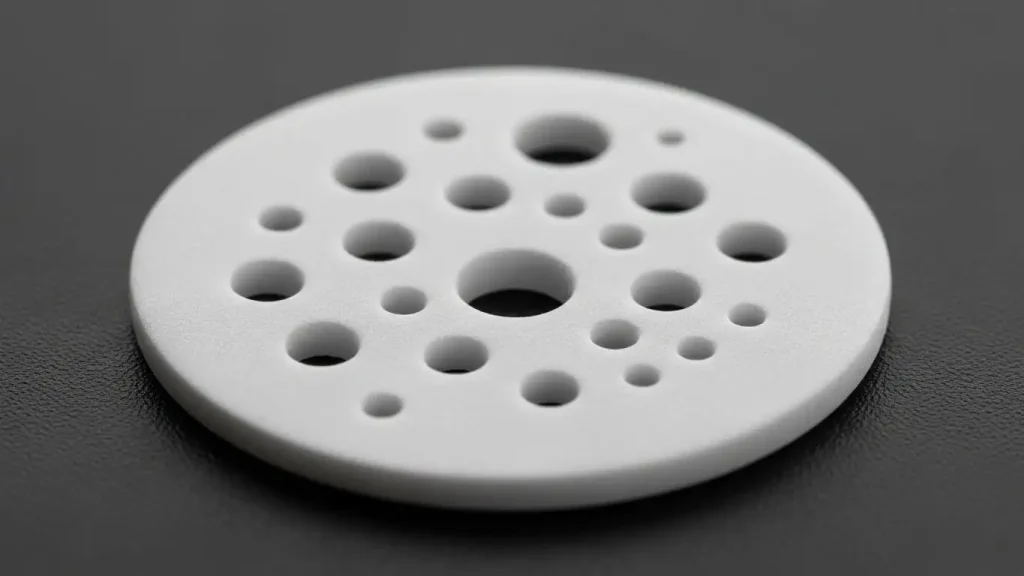
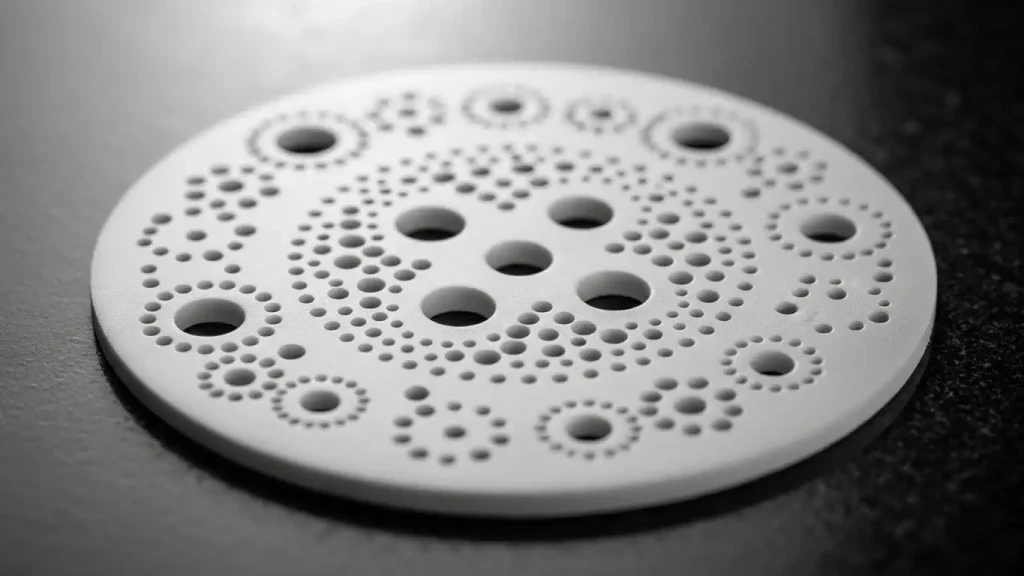
At its core, a Zirconia Multi-Hole Ceramic Disc is a thin, high-density plate of toughened zirconia featuring multiple through-holes laid out in a controlled pattern. Those holes define how fluid divides, mixes, or sprays. In rotary or sliding assemblies, the disc acts as a metering and sealing interface; in static fixtures, it provides jet shaping, distribution, or back-pressure control. The geometry is fully customizable – hole count, diameter, spacing, and disc outline can be tuned to your fluid’s viscosity, operating pressure, and cycle rate. Most manufacturers use 3Y-TZP (3 mol% yttria-stabilized tetragonal zirconia polycrystal) for its toughness, high hardness, and chemical inertness.
Compared with metals and alumina, zirconia offers:
• Superior wear resistance and hardness (Vickers >1200 HV) that better protect sealing geometries in sliding contact.
• Smoother achievable sealing surfaces (Ra ~0.1 – 0.2 μm) for tighter, lower-torque interfaces.
• Wider chemical inertness, reducing corrosion risk in mixed chemistries.
• Thermal behavior that maintains flatness and sealing pressure through heat-up and cool-down.
Five Common Failure Modes
1) Abrasive wear grows clearances and wrecks dosing accuracy.
Solution: Zirconia’s dense, fine-grained microstructure resists scratching and grooving.Transformation toughening blunts crack propagation, so the disc holds its dimensions across millions of cycles even in particle-laden fluids.
- Micro-leakage from roughness, edge chipping, or micro-cracks erodes yield.
Solution: Micron-level flatness and mirror-like finishes create intimate contact with the counterface. Carefully chamfered edges and the toughened ceramic matrix reduce chipping at impact points, tightening seals without excessive preload.
- Chemical etching skews droplet spectra and dose rates.
Solution: Inert YSZ resists acids, alkalis, and solvents, limiting pitting and surface change that disturb spray and flow curves.
- Thermal shocks upset seals and spray stability.
Solution: Low k damps temperature gradients; flatness and parallelism survive rapid ramps to keep seal lines tight and sprays uniform.
- Hole drift alters atomization and repeatability.
Solution: Pressure-assisted sintering, CNC, and double-lap finishing lock orifice diameter and position; 900 – 1200 MPa flexural strength resists deformation under load.
Core Material Advantages that Show Up in the Data
The promise of a Zirconia Multi-Hole Ceramic Disc is practical, not theoretical. Hardness north of 1200 HV slows wear against mating plates, so calibration stays inside tolerance longer. Polished faces reduce running friction, which lowers drive torque and heat while cutting micro-leaks. Chemical resilience keeps surfaces smooth in contact with fragrances, pigments, saline solutions, cleaning agents, or process chemicals. Zirconia’s thermal stability maintains flatness and hole alignment, preserving dosing uniformity and atomization consistency over time. The net effect: fewer recalibrations, fewer rejects, and longer maintenance intervals.
- Ideal Applications
• Precision metering pumps in cosmetics, inks, nutraceuticals, pharma
• High-cycle rotary/slide valves in medical and lab devices
• Atomizers/spray modules for coatings, humidification, disinfection
• Semiconductor wet benches and chemical skids with corrosive media
• Food/beverage dispensers requiring hygienic, abrasion-resistant surfaces
- Integration Essentials
• Hard, smooth counterface to limit friction/wear
• Uniform preload; avoid edge point loads
• Fine upstream filtration to remove abrasives
• Flat, rigid pocket with full-area support
• Precise hole-to-port alignment
• Careful handling and compatible cleaning
- Selection Essentials
• Hole pattern and diameter with tight tolerances
• Thickness/flatness/parallelism for sealing stability
• Surface finish and chamfer for leakage/chip resistance
• Appropriate zirconia grade (e.g., 3Y-TZP)
• Media, temperature, and cycling compatibility
• Mating materials/coatings and preload strategy
• Cleaning/sterilization methods that preserve finish
Financial Impact
Slower clearance growth and smoother seals keep processes in control, cut micro-leaks, reduce scrap, and extend uptime – improving ROI. Corrosion resistance prevents surface roughening that shifts flow or droplet size, so you recalibrate less often. Thermal stability preserves performance during start-ups and temperature transients, reducing drift-related variability.Over a campaign, these gains translate into fewer planned interventions, fewer unplanned outages, longer component life, and steadier yield – all of which improve OEE and drive down total cost of ownership.
Because geometry is configurable, you can often meet new performance targets – tighter sealing, specific droplet distributions, or defined volumetric throughput – without adding complexity elsewhere.That flexibility shortens development cycles and limits tooling changes, further improving ROI.
Call to Action
If wear, leakage, or unstable dosing is holding back your process, it’s time to evaluate a Zirconia Multi-Hole Ceramic Disc. Provide your media profile, dosing or atomization target, orifice layout constraints, and operating envelope. Our team will specify hole arrays, tolerance stacks, surface finishing, and counterface/preload plans to your spec. Request a prototype and on-site technical review to validate in service – then benefit from longer intervals, less maintenance, and lower total cost.


