 English
 中文
中文







Alumina Ceramic Rods 101: Which Specs Fit Your Project?
If you’re wrestling with heat, abrasion, corrosive media, or strict electrical isolation, Alumina Ceramic Rods are a direct way to improve uptime and cut maintenance. They deliver high mechanical strength, excellent wear resistance, and dependable insulation without the creep, corrosion, or magnetism that can derail metal and polymer parts. For designers and maintenance teams, the real advantage is predictable performance under tough conditions and over long duty cycles.
What are Alumina Ceramic Rods
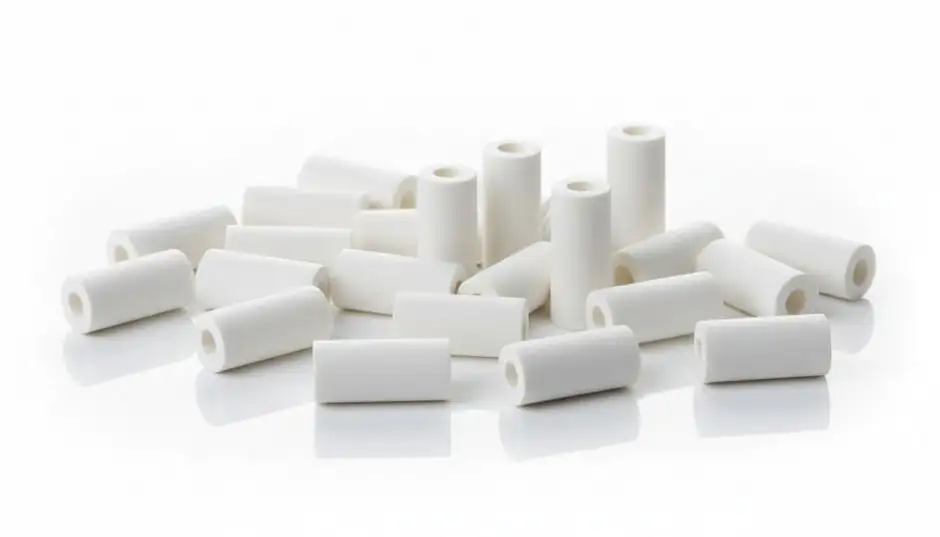
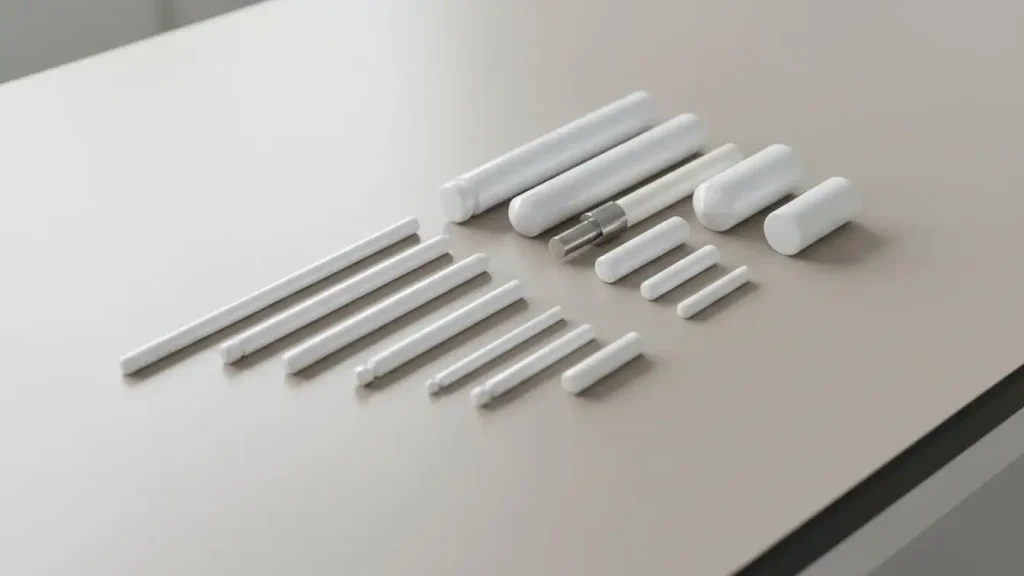
Alumina Ceramic Rods are precision components manufactured from dense alumina (aluminum oxide) ceramics. You’ll find them working as structural dowels, guide pins, rollers, standoffs, spacers, and insulation elements in mechanical, fluid handling, and electronic assemblies. Tough against wear, steady under heat, and immune to harsh chemicals – alumina resists abrasion and chipping, holds dimensions through temperature swings, withstands acids/alkalis/solvents, and delivers powerful insulation for space-constrained high-voltage builds.
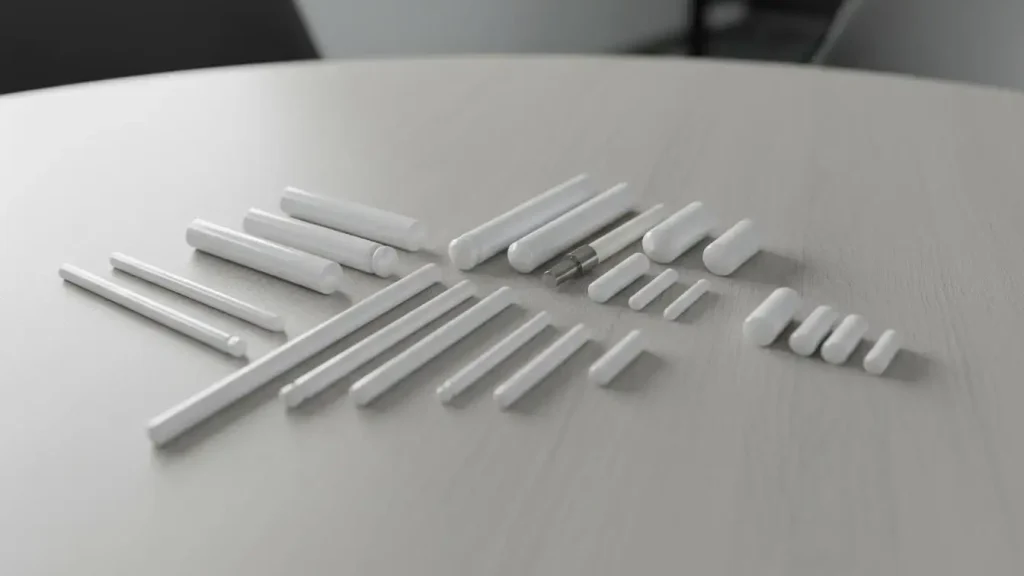
We supply Alumina Ceramic Rods in standard and custom builds. Standard sizes help teams keep spares on hand and get rapid replacements installed. From prototype to volume, we machine, grind, and polish to specification, aligning geometry, tolerances, and finishes with your assembly method for reliable press fits and extended wear life.
- Grades (Al2O3):
• 95 – 96% economy grade for durable, insulated components
• 99 – 99.5% balance of purity and strength for harsh chemistries and heat
• 99.8% ultra-pure for contamination-critical medical and semiconductor use
- Sizes & Geometries:
• Standard OD 0.5 – 20 mm; custom larger diameters and micro-bores on request
• Solid, bored, slotted; stepped shoulders and reliefs for fixtures
• Through/cross holes, vacuum ports, flats, and alignment features
• Chamfers, fillets, and tip radii for stress and chip control
- Tolerances & Finish:
• OD ±0.01 mm standard; ±0.005 mm precision; length ±0.005 – 0.01 mm
• Concentricity ≤0.02 mm; straightness ≤0.05 mm/100 mm on request
• Ground/polished finish to Ra ≤0.03 μm for sliding/rotary interfaces
Why Alumina Ceramic Rods Solve Common Pain Points
Failures in mixed-duty assemblies often share the same root causes: sliding interfaces wear and widen clearances, corrosive streams attack wetted parts, heat drives creep and distortion, and leakage or drift undermines calibration and data integrity. Tight packages magnify these risks.
Alumina Ceramic Rods address this combination of stresses with a balanced property set. Dense alumina’s crystal structure delivers high hardness and useful fracture toughness, so guides, rollers, and standoffs resist abrasion and edge chipping. Low thermal expansion steadies length and diameter through thermal cycles. Chemical inertness keeps surfaces intact when exposed to aggressive media. High dielectric strength blocks unintended current paths. Fine, smooth finishes reduce friction and particle generation in clean processes.
- Key Benefits at a Glance
• Wear and friction: Hard, smooth contact areas reduce galling and debris in linear guides, pins, and rollers, preserving motion quality.
• Dimensional integrity at heat: Stable in ovens, reactors, and hot gas; length/diameter stay within tolerance.
• Clean operation: No leaching or metal ions, enabling contamination-free pipelines and precision connections.
• Compact HV design: Strong dielectric properties prevent flashover in tight electrical layouts.
• Long-run accuracy: Low expansion and stiffness hold alignment, calibration, and seal force over long duty.
• Signal-friendly: Non-magnetic with Ra ≈ 0.03 finish keeps interfaces clean and reduces sensor/actuator interference.
Specifications that Drive Real–world Performance
Start with form and tolerance targets, then confirm surface finish and production method. The following ranges reflect what most teams need for reliable builds:
• Size envelope: Lengths up to 1000 mm and outer diameters up to 150 mm suit guides, sleeves, standoffs, and protection tubes. Tight OD control preserves uniform clearance in long, slender rods.
• Fit accuracy: ±0.002 mm on small ODs; ±0.010 – ±0.050 mm on larger sizes for repeatable press fits, concentric alignment, and controlled runout.
• Dimensional stability: ±0.005 mm on length and thickness to secure stack-ups, shim settings, and preload targets.
• Low friction: Ra ~0.03; reduced wear/debris, improved sealing, lower breakaway torque.
• Fine features: φ0.4 mm min holes; capillary flow paths and sensor interfaces with maintained integrity.
• Reliability: High-temp strength retention; high dielectric insulation for dense thermal/electrical designs.
These numbers aren’t cosmetic. Tight OD and length tolerances deliver the fit you intended and the smooth motion your mechanism relies on. Fine finishes reduce abrasive wear during startup and help seals stay leak-tight. Small, accurate holes let you route fluids or embed sensors without forcing the package to grow. If your drawing includes sharp corners, add fillets or chamfers to lower stress concentrations and prevent edge chipping during machining, handling, and assembly.
u Where Alumina Ceramic Rods Add Value
Alumina Ceramic Rods stand out in environments where standard metals and polymers struggle.
• Electrical and electronics: Reliable standoffs, spacers, and insulators with high dielectric strength maintain safe clearances in compact, high-voltage assemblies. Smooth surfaces support clean installation and stable creepage distances.
• Industrial machinery: Used as shafts, guide pins, and rollers in abrasive settings, rods help cut downtime, keep alignment tight, and resist galling in repetitive motion systems.
• Semiconductor: Non-magnetic, inert; wafer handling/metrology/tooling; low particles preserve yield.
• Medical/Lab: Bioinert + dimensional fidelity; stirrers/probes/tools survive sterilization without drift.
• Aerospace and automotive: Thermal stability and vibration robustness keep sensors, isolators, and precision interfaces within microns through cycling and stress.
Practical Use Cases
• Process piping and protection: Suited for high-temperature media, protective sleeves, and corrosion-resistant fittings demanding simultaneous thermal and chemical resilience.


