 English
 中文
中文







How Ceramic Valve Discs Work: From Microstructure to a Drip-Free Seal
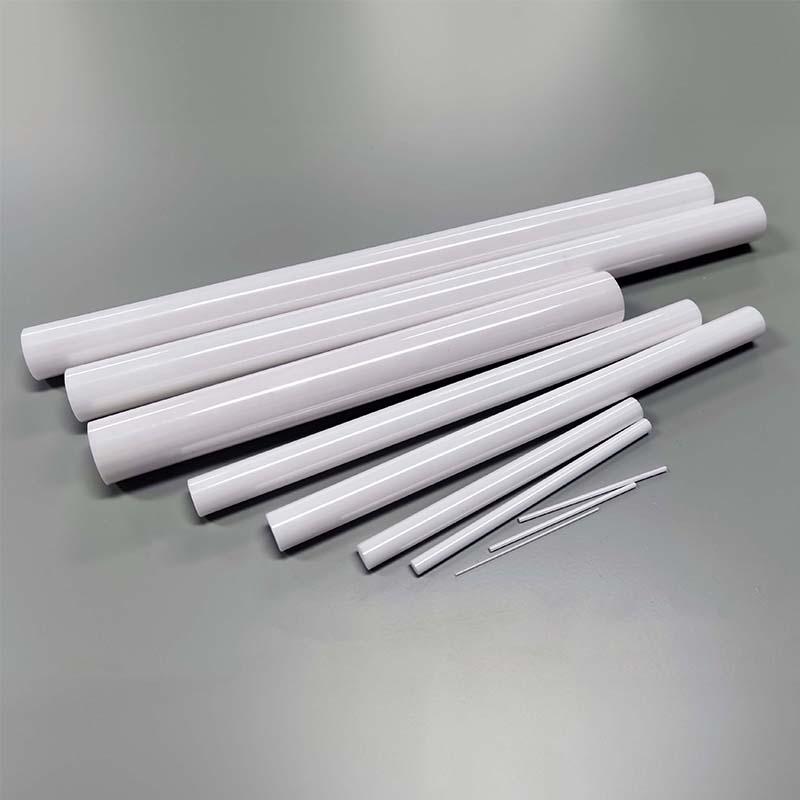
Think about operating a faucet thousands of times over its service life. High-quality ceramic valve components are designed to support reliable sealing performance and smooth operation over repeated use.? This faucet component is the unsung hero and part of the family of the Ceramic Valve Disc, and it has changed the way we control fluid.
When it comes to valve discs manufacturers, we can say that UPCERA has precision ceramic manufacturing experience and, therefore, has a better Alumina Ceramic Water Valve Disc than the competition. How can it be that a valve disc made out of ceramic can do things that valve discs made out of metal or plastic cannot? The answers can be found in ceramic microstructure, advanced manufacturing techniques, and the company's innovative way of designing the sealing mechanism.
1. Microstructure: Why Alumina?
Ceramic Water Valve Discs would not be the same without the alumina. UPCERA is using a type of alumina that has a better-than-average purity and taper grade, and is therefore distinguished from other ceramics due to the following properties:
•Crystal Structure: Alumina is made of densely packed, nano-sized hexagonal crystals. This allows it to reach high hardness compared with most metals and engineering materials and makes it one of the strongest compressive materials.
•Grain Boundaries: Why is ceramic better than metal? Alumina is better than metals thanks to its stable microstructure. Compared to metals, ceramic do not deform, migrate or recrystallize and do not promote wear.
•No Porosity. The advanced sintering of the disc in UPCERA allows for near-absolute porosity in the material — that is, using their ceramic discs, there are no voids or micro-leaks present.
2. Precision Engineering: From Powder to Near-Perfect Flatness
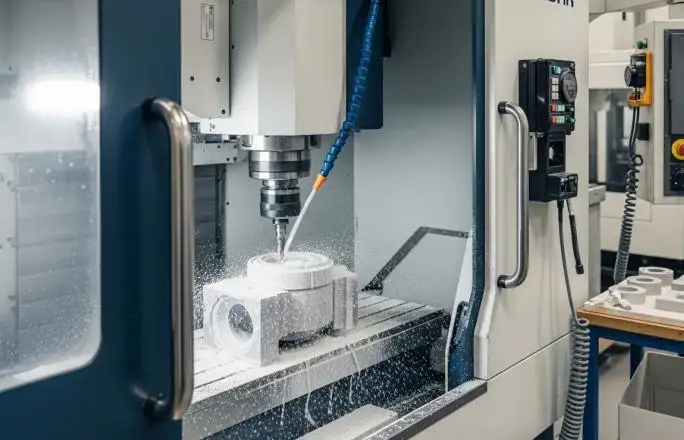
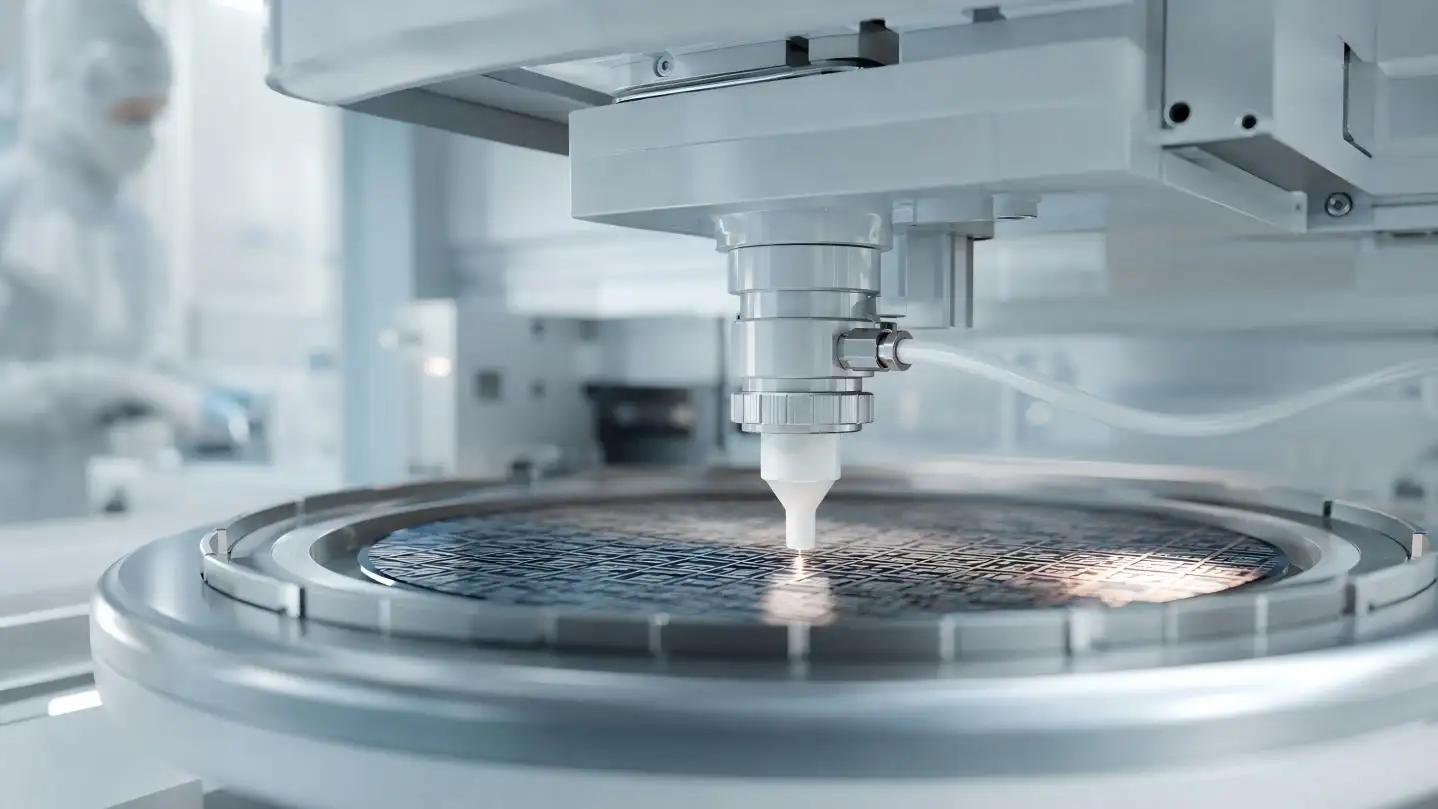
A raw ceramic disc would not seal anything. The magic happens during precision machining. UPCERA employs state-of-the-art grinding and lapping technologies to achieve what metals rarely can.
| Parameter | Typical Range (UPCERA) |
| Size Precision | ±0.005 mm |
| Surface Roughness (Ra) | 0.02 – 0.2 μm |
| Flatness | 0.003 mm |
•Flatness of 0.003 mm: That is three microns — thinner than a human hair. When two discs are pressed together, this helps reduce leakage paths when paired with proper design and assembly.
•Superfinish Surface (Ra0.02): A mirror-like finish reduces friction and allows the discs to slide smoothly while maintaining intimate contact.
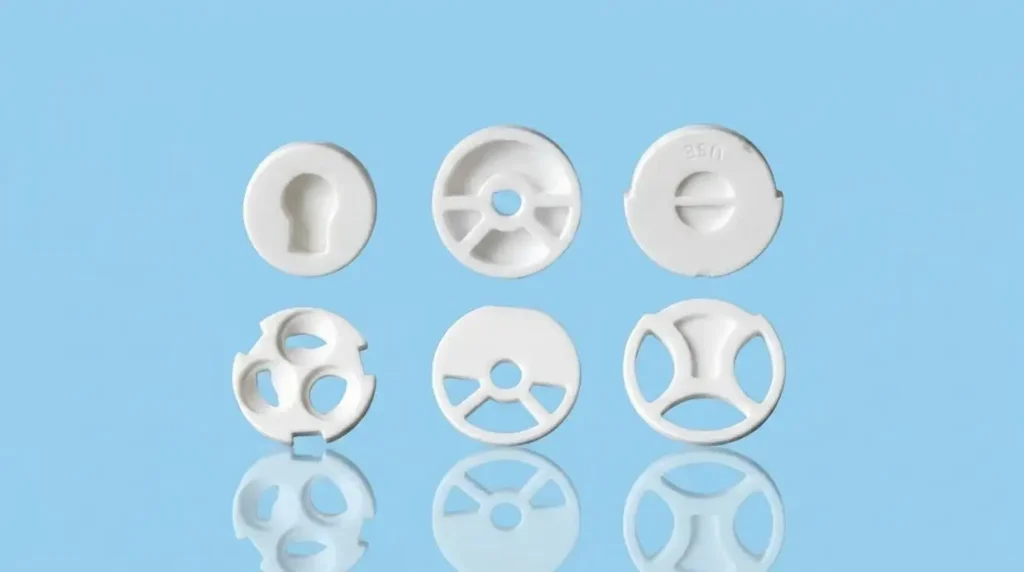
•UPCERA is capable of tailoring flow control in your valve designs with specialized hole patterns and providing an array of shapes which include but are not limited to, D-Shaped, Circular, and Crescent, among other geometries.
At UPCERA, we are getting less friction, tight tolerances and firm, optimized, and fully sealed interfaces with our Alumina Ceramic Water Valve Disc.
3. The Sealing Mechanism: The Process of Two Discs Becoming "Drip-Free"
An example of a Ceramic Disc Valve consists of two like discs positioned to be face-to-face. One disc attaches to the valve body, and the other disc rotates with the handle. The design follows certain physics to make the valve "drip-free".
Step 1 – Hydrostatic Sealing: Pressure from water causes the freely rotating ceramic disc to press against the fixed disc. The surface of these discs are made ultra-flat with a flatness of 0.003, meaning the gap between the two discs is at a distance which is a very small and controlled sealing gap. It is for this reason that water cannot pass through the gap.
Step 2 – Sliding & Self-Lapping: Each time you turn the valve, the two discs slide against each other. Unlike rubber washers that deform and crack, the Alumina Ceramic Water Valve Disc undergoes a gentle "self-lapping" action. Microscopic high spots are polished further, improving the seal with use rather than degrading it.
Step 3 – Lubricious Surface: The smooth finish (Ra0.02–0.2) can help maintain smoother sliding contact under suitable working conditions. Lower friction means less wear, and less wear means no dripping even after 500,000 cycles.
Step 4 – Alignment & Port Matching: When the valve is closed, the solid parts of both discs fully overlap the water ports. Any misalignment would cause leakage — but UPCERA's ±0.005 mm precision ensures perfect registration every time.
�� In short: The seal is not a soft gasket being compressed; it is two ultra-hard, ultra-flat ceramics being pressed together by water pressure. The harder the material, the longer the seal lasts.
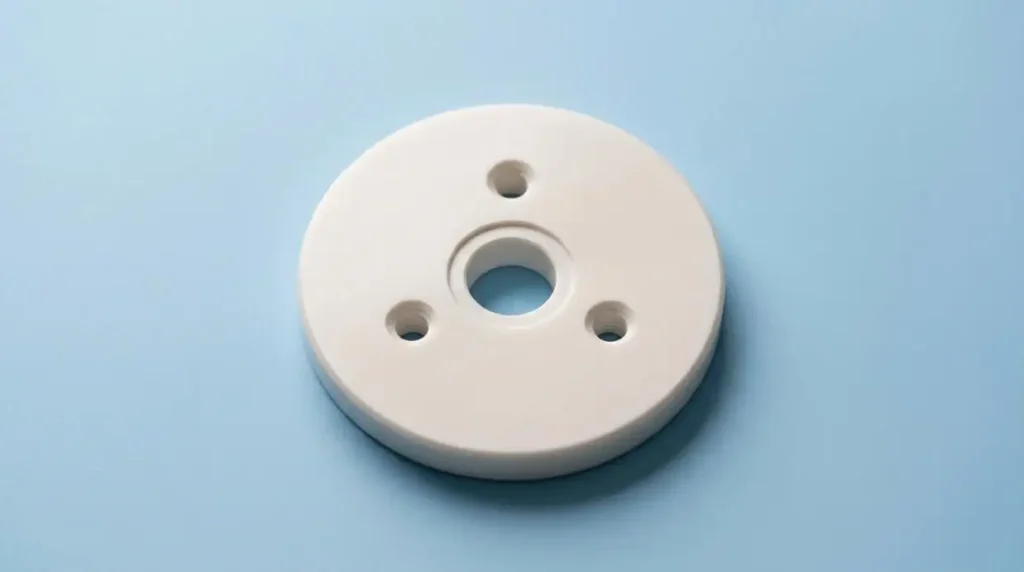
4. Advantages of UPCERA's Alumina Ceramic Water Valve Disc
What components of UPCERA's Ceramic Valve Disc are appealing to Engineers in relation to a standard valve? Let's break it down:
•Exceptional Hardness & Wear Resistance: Alumina (HV 1500–1700) outlasts stainless steel (HV 200) by a factor of 7–8. In abrasive water (e.g., well water with sand), a metal disc would erode in months; UPCERA's disc can significantly extend service life in suitable water valve applications.
•Corrosion Resistance: Chlorine, lime scale, acidic water — alumina offers good resistance to many water and chemical environments. This is why Alumina Ceramic Water Valve Discs are standard in chemical processing and desalination plants.
•Thermal Stability: From near-freezing to 300°C (572°F), alumina maintains its flatness and hardness. Rubber swells and metal warps; ceramic does not.
•Long Service Life: Independent tests show UPCERA's discs can support long service life in suitable valve applications
•Low Maintenance: No washers to replace, no cartridges to rebuild. Once a Ceramic Valve Disc is installed, it can help reduce maintenance requirements compared with some traditional sealing materials.
•Hygienic & Non-Toxic: Alumina is also not biofilm promoting like Rubber and Plastic. Alumina is also inert and is used in food and drinking water applications.
5. Real-World Applications
UPCERA's Alumina Ceramic Water Valve Disc is much broader than just kitchen taps. Its precision sealing and durability include applications in:
•Residential & Commercial Plumbing – Mixer taps as well as thermostatic and shower diverter valves.
•Industrial Fluid Control – Chemical metering pumps, slurry handling, and steam valves.
•Medical & Laboratory Equipment: laboratory and analytical equipment where low metal contamination is preferred.
•HVAC Systems – Pressure-balancing valves in hot water radiators and chilled water loops.
•Agriculture & Irrigation – Valves exposed to silt, fertilizer, and long operational cycles.
Conclusion: A Microstructure That Delivers Macroscopic Reliability
From raw alumina to a drip-free Ceramic Valve Disc, success rests on three pillars: a dense, hard microstructure; precision machining (flat to 0.003 mm, Ra0.02); and a self-renewing sliding seal. UPCERA's Alumina Ceramic Water Valve Disc outlasts metal and plastic in wear, corrosion, and thermal stability. Next time a faucet shuts silently, remember—it's not luck. It's a ceramic valve disc working at the microscopic level.
FAQs - Ceramic Valve Discs and UPCERA
Q1. How does a Ceramic Valve Disc create a drip-proof seal?
A. Two discs are pressed together by water pressure. The discs have an ultra-flat surface (flatness ≤0.003 mm). Their surface smoothing leaves no gap for water to pass (Ra0.02 to 0.2).
Q2. What are the alumina ceramic water valve discs' advantages when metals and rubbers are compared?
A. For alumina, hardness values are very high (HV 1500+). The stability remains excellent when temperatures change as it is non-corroding. It will not wear off like rubbers and metals do.
Q3. Can these discs withstand hot water or chemicals?
A. Certainly. Alumina can withstand temperatures of 300 °C and offers good resistance to many water, chlorine-containing, and mildly chemical environments depending on conditions making them ideal for water boilers, chemical dosing, and desalination.
Q4. How much up-keep do the ceramic discs need?Ceramic valve discs can help reduce maintenance frequency in suitable valve designs.


