 English
 中文
中文







CNC Machining of Ceramic Materials: From Brittleness Control to High-Performance Manufacturing
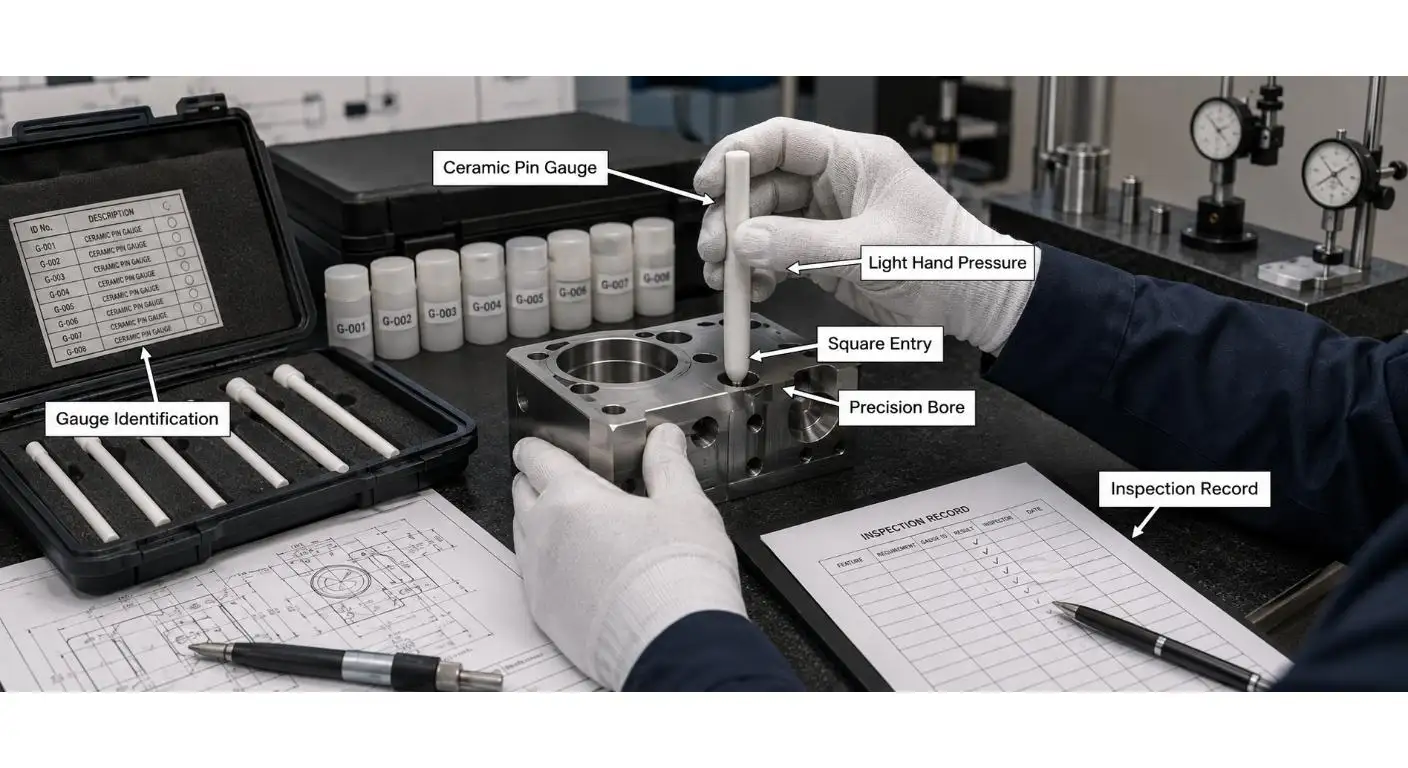
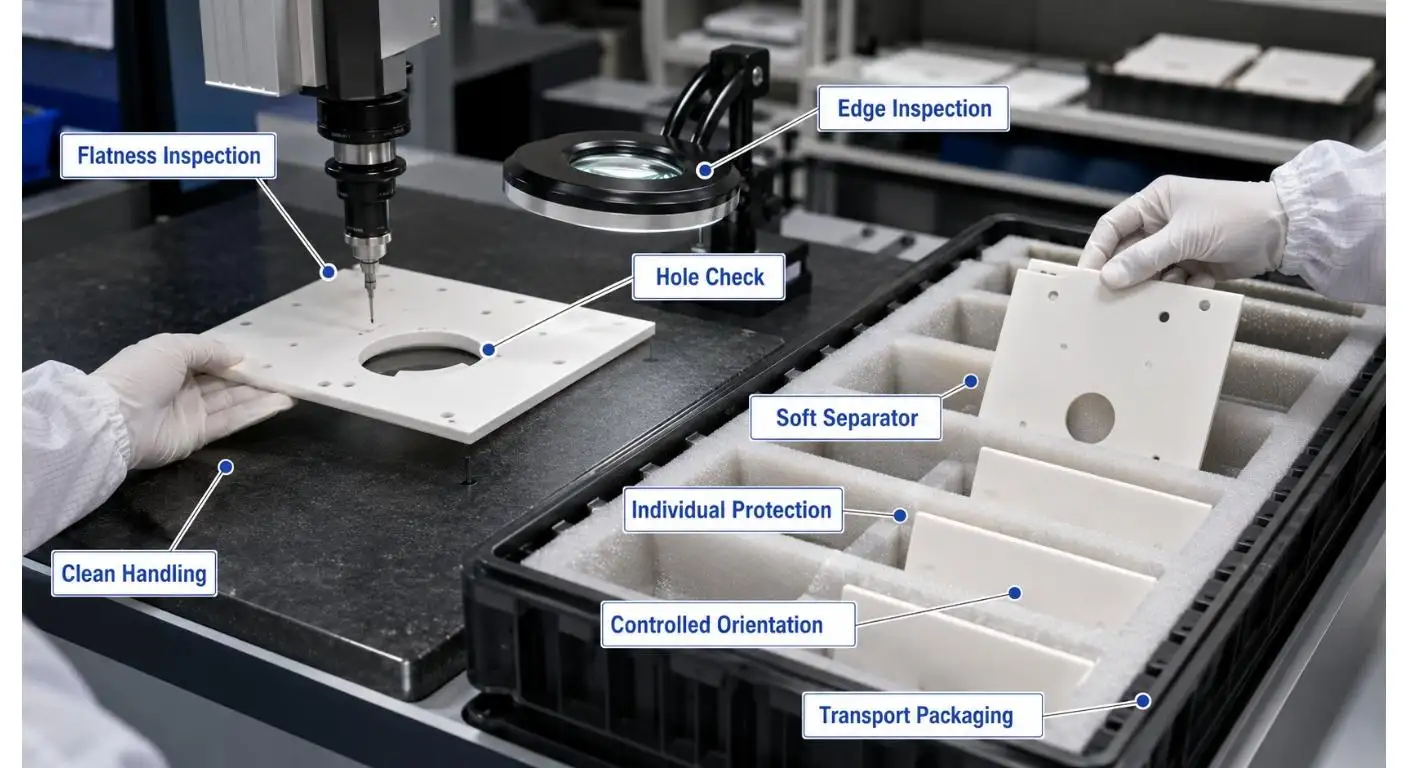
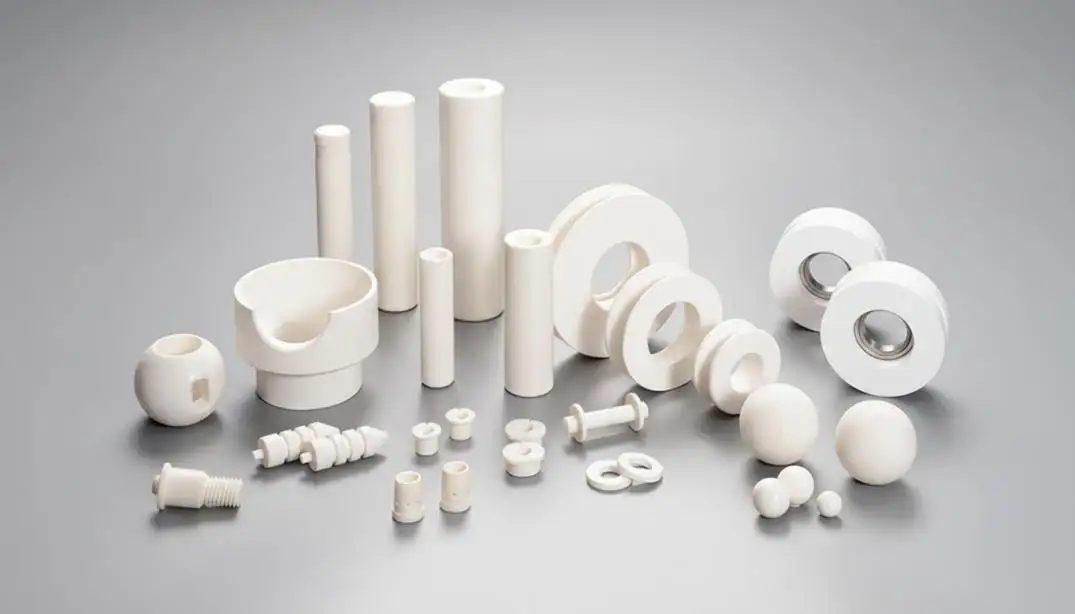
Advanced ceramics are critical materials in high-end precision manufacturing. They include alumina, zirconia, silicon carbide, silicon nitride, and ceramic matrix composites (CMCs). Their high hardness, high strength, low density, high-temperature resistance, acid and alkali corrosion resistance, and excellent electrical insulation make them widely used in demanding applications such as aerospace hot-section components, precision bearings, medical implant components, and core parts for semiconductor equipment.
However, advanced ceramics are typical hard and brittle materials with significant machining limitations. Their low fracture toughness and lack of plastic deformation make them highly susceptible to stress concentration during machining, which can cause edge chipping, cracking, and microcracks. Their strong abrasiveness also results in low machining efficiency, rapid tool wear, and unstable production yield, substantially increasing the difficulty of manufacturing precision ceramic parts.
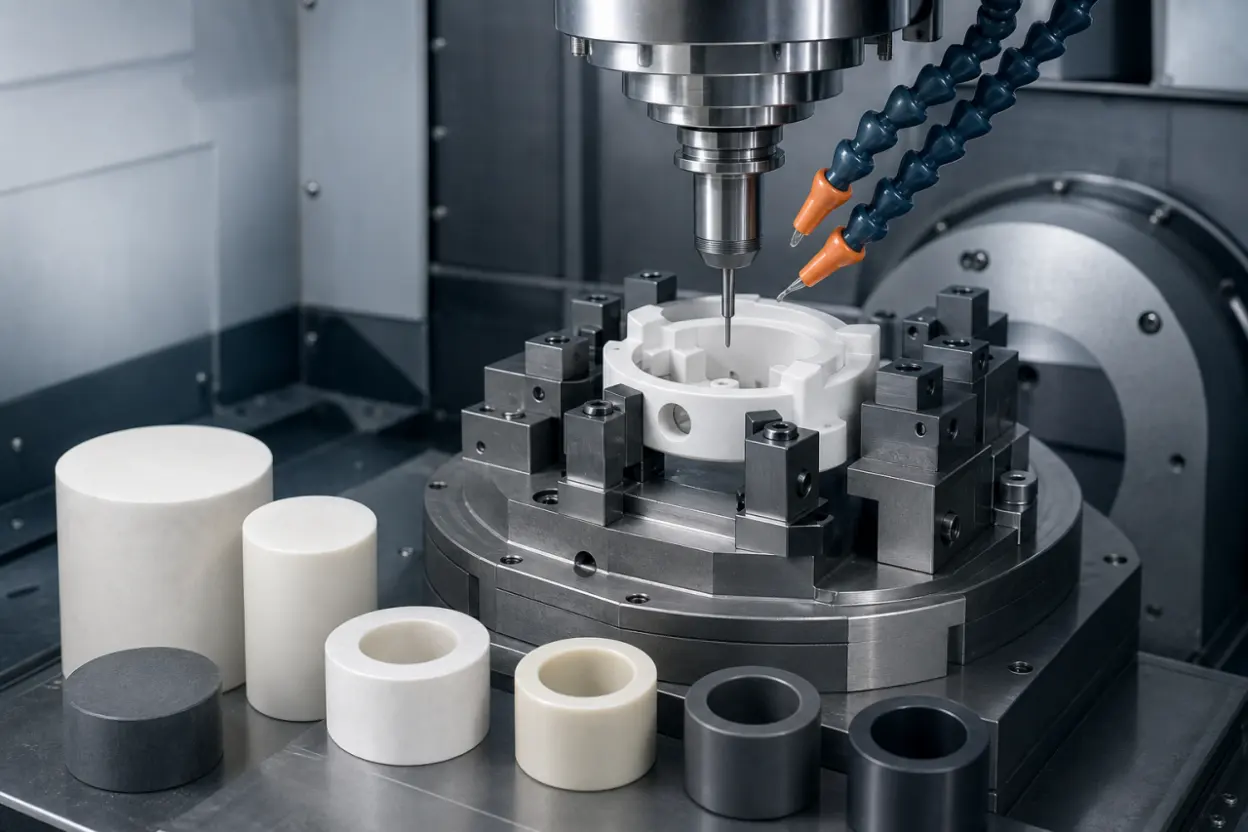
Traditional ceramic manufacturing commonly uses near-net-shape processes such as dry pressing and slip casting, followed by high-temperature sintering and final grinding or polishing. Although mature and stable, these processes depend on custom tooling and may involve high production costs, long lead times, and limited capability for complex geometries. Ceramic CNC machining addresses these limitations. Precision CNC milling and grinding can shape ceramic blanks directly without dedicated molds, greatly increasing design freedom and manufacturing flexibility for multiple product types, small batches, and complex ceramic components.
A key point is that ceramic CNC machining cannot simply adopt metal-cutting methods. Metal machining mainly removes material through plastic deformation, whereas ceramics provide no plastic buffer under load, so even a small stress concentration may initiate brittle fracture. The essential objective of ceramic CNC machining is therefore brittleness control. The entire process system is designed to suppress brittle fracture and reduce machining damage while maintaining productivity, keeping edge chipping, subsurface damage, and microcracks within the limits permitted for precision manufacturing.
1. Fundamental Effects of Ceramic Brittleness on Machinability
Ceramic machinability is jointly determined by microstructure and mechanical properties, and materials with different structures can behave very differently during machining. Mica glass ceramics and similar materials contain lamellar weak-interface structures that promote crack deflection and distribute cutting energy, reducing concentrated fracture. Their machinability is therefore much better than that of dense, single-phase engineering ceramics.
Most industrial advanced ceramics have a dense, single-phase structure, high hardness, and relatively low fracture toughness. Material removal is dominated by brittle fracture and can generally be divided into two modes:
Brittle removal mode: When the depth of cut exceeds the critical depth, ceramic material is removed by brittle fracture. The machined surface is prone to pits, cracks, and edge chipping, resulting in poor surface quality and lower part accuracy.
Ductile removal mode: When the depth of cut is reduced to the submicron scale, ceramics can be removed by a plastic-shear mechanism similar to that of metals. This avoids extensive brittle fracture and can produce mirror-quality, high-precision surfaces, making it the preferred mode for precision ceramic machining.
Process studies report that, in brittle removal mode, LaPO₄/Al₂O₃ machinable ceramics may develop a damage layer up to 15 μm thick. These concealed internal defects can directly reduce service life and operating stability.
2. Core Challenges in Ceramic CNC Machining and Targeted Solutions
(1) Edge Chipping: The Primary Quality Issue Affecting Production Yield
Edge chipping is the most common ceramic CNC machining defect and one of the most frequent causes of part rejection. Because of low fracture toughness, ceramics are especially vulnerable to progressive chipping at cutting exits, corners, edges, and thin-wall features. Minor chipping can damage appearance and reduce assembly accuracy, while severe chipping may scrap the workpiece and substantially increase production cost.
Targeted solution: Strictly limit the depth of cut per pass, use trochoidal toolpaths, prioritize climb milling where appropriate, and provide auxiliary support with dedicated fixtures. These measures distribute cutting stress, suppress corner and edge fracture at the source, and improve edge integrity.
(2) Surface Integrity and Hidden Subsurface Damage
Ceramic machining quality cannot be evaluated solely by surface roughness values such as Ra and Rz. Median cracks, radial cracks, lateral cracks, and residual-stress layers generated during milling and grinding may remain hidden below an apparently smooth surface, forming subsurface damage (SSD). These defects cannot be identified visually, yet they are major causes of cracking and failure during long-term service.
Grinding parameters have a decisive effect on subsurface damage depth. Based on Hertzian elastic-contact theory and the JH-2 constitutive model, the industry has developed predictive models for ceramic subsurface damage under high strain rates. These models clarify crack-propagation behavior and provide a theoretical basis for process-parameter optimization.
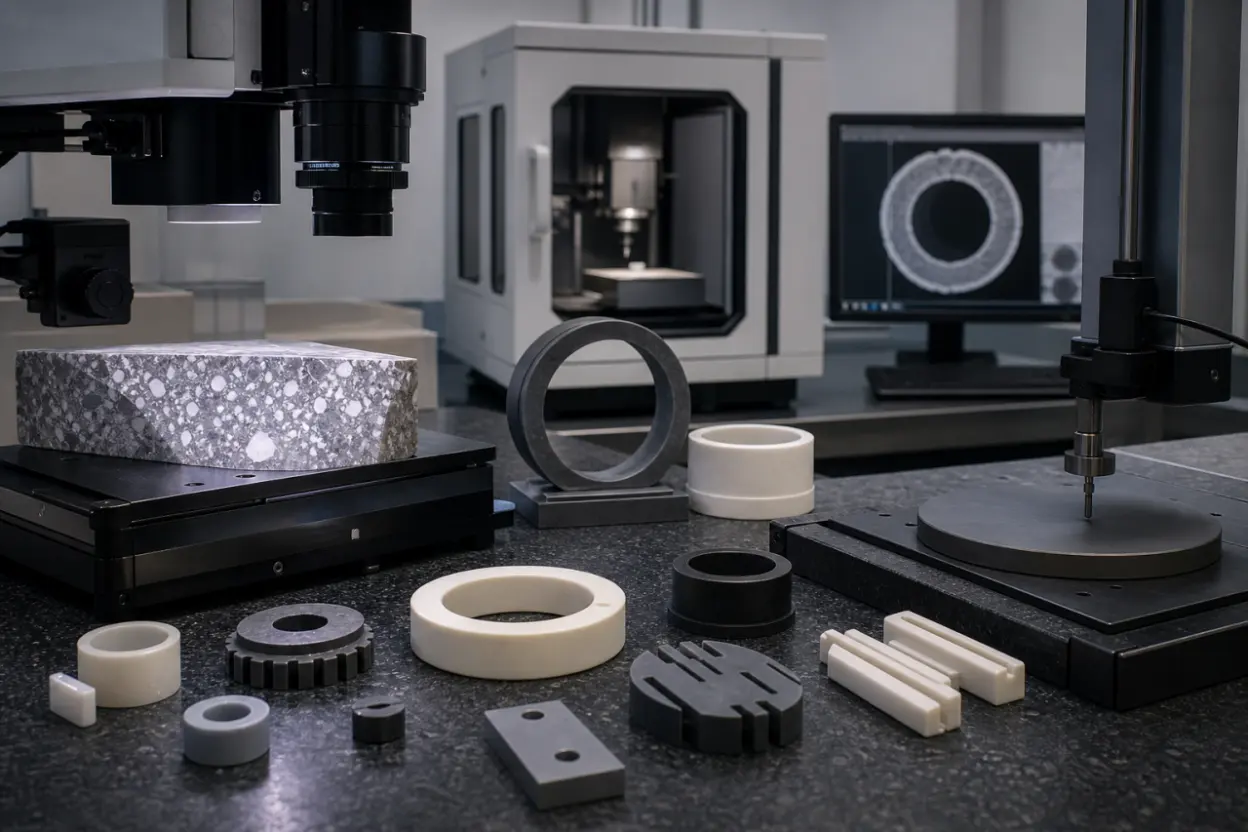
Current damage-inspection methods fall into two categories. Cross-section polishing and observation is destructive but provides high inspection accuracy. X-ray computed tomography and ultrasonic microscopy are nondestructive and are suitable for batch inspection of finished parts. The core strategy for reducing subsurface damage is to achieve ductile-regime machining through process optimization, converting the removal mechanism from brittle fracture to plastic shearing and minimizing hidden internal damage.
(3) Tool-Wear Control and Tool-Life Prediction
Advanced ceramics are highly abrasive and cause severe tool wear. Tool selection must therefore match the sintering condition of the ceramic and the intended machining scenario:
Machining sintered hard ceramics: Diamond tools are the practical choice for stable production. Diamond hardness can reach 8,000-10,000 HV, far exceeding alumina at approximately 2,000 HV and zirconia at approximately 1,200-1,400 HV. This reduces cutting wear and supports machining accuracy and process stability.
Soft machining of presintered green bodies: Ceramic blanks in this state have relatively low hardness, so conventional carbide or coated tools can meet machining requirements while controlling production cost.
Even with diamond tools, continuous ceramic machining eventually causes flank wear and abrasive-grain loss, increasing cutting force, degrading surface roughness, and aggravating edge chipping. Established control measures include periodic tool inspection and replacement, online cutting-force monitoring, and predictive tool-life management based on grey-system models. In addition, cryogenic cooling can significantly extend the service life of PCD tools when machining ceramic matrix composites.
3. Machining Characteristics and Suitable Applications of Advanced Ceramic Materials
| Material Type | Main Characteristics | Suitable Applications | Machining Considerations |
| Alumina Al₂O₃ | High hardness, good insulation, high-temperature resistance, and relatively low cost | Industrial insulators, standard wear-resistant components, ceramic substrates, and general industrial ceramic parts | Relatively low toughness; large depths of cut and high feed rates can cause chipping. Use ductile-regime grinding and tightly control machining parameters. |
| Zirconia ZrO₂ | Excellent toughness, high strength, good crack resistance, wear resistance, and corrosion resistance | Precision miniature components, medical ceramic parts, optical-communication components, and complex wear-resistant parts | High density and cutting resistance; tool wear may be faster than with alumina. Optimize cooling and toolpaths. |
| Silicon Carbide SiC | Extremely hard and wear-resistant, high-temperature resistant, lightweight, and chemically stable | Aerospace high-temperature components, premium semiconductor wear parts, and corrosion-resistant structural parts | Extremely brittle with a narrow processing window. Avoid large depths of cut and prioritize ultrasonic-assisted machining. |
| Silicon Nitride Si₃N₄ | High hot strength, impact resistance, self-lubricating behavior, and good thermal-shock resistance | High-temperature ceramic bearings, turbine components, and premium wear-resistant tribological parts | Highly sensitive to machining parameters. Deviations in feed or speed can initiate deep microcracks, requiring precise parameter control. |
| Ceramic Matrix Composite (CMC) | Lightweight, high-temperature resistant, fatigue resistant, and multilayer composite structure | Core hot-section parts for aero engines and premium lightweight high-temperature structures | Internal fibers accelerate tool wear and may cause delamination and fiber pull-out. Cryogenic cooling and ultrasonic vibration assistance are recommended. |
4. Summary of Key Ceramic CNC Machining Practices
First, ceramic machinability depends on the compatibility between microstructure and mechanical properties. Lamellar weak-interface structures can improve machining behavior, while dense single-phase ceramics have no natural path for stress relief and therefore require carefully optimized process parameters to ensure quality.
Second, edge chipping and subsurface damage are the two main limitations on ceramic machining quality. Optimized toolpaths, depths of cut, and fixture support can control edge defects. Replacing brittle-fracture removal with ductile-regime plastic cutting is essential for reducing hidden internal damage and improving surface integrity.
Third, ultrasonic-assisted machining is a leading technology for high-precision processing of hard and brittle ceramics. Combined longitudinal-torsional ultrasonic vibration can reduce cutting resistance, decrease edge-chipping size, and slow tool wear, making it particularly suitable for aerospace-grade ceramics and composite materials.
Fourth, standardized tool management is essential for controlling cost and improving quality. Sintered hard ceramics require diamond tooling together with a complete management system covering inspection, online monitoring, and tool-life prediction to maintain machining consistency.
Fifth, integrated manufacturing processes are an important future direction. Hybrid manufacturing that combines additive forming with CNC finishing can support complex geometries, high accuracy, and lower production cost while overcoming the limitations of traditional processes.
5. Applicable Industries and Typical Product Categories
Precision ceramic CNC machining can meet cross-industry requirements for high wear resistance, corrosion resistance, high-temperature performance, electrical insulation, and dimensional accuracy. Typical applications include:
Aerospace: ceramic engine hot-section components, high-temperature wear-resistant bushings, and lightweight complex ceramic structures;
Semiconductor equipment: ceramic vacuum components, precision insulating locators, ceramic carriers, and sealing components;
Medical applications: zirconia dental components and wear- and corrosion-resistant ceramic implant structures;
Precision machinery: ceramic bearings, guide bushings, tribological components, and miniature precision wear-resistant parts;
New energy and high-end industry: high-temperature insulating ceramics, corrosion-resistant ceramic seals, and precision ceramic transmission components.
6. Information Recommended Before Requesting a Quotation
To accurately evaluate CNC-machining feasibility, define an optimized process, calculate tooling and production costs, estimate lead time, and reduce defect risk, customers are advised to provide the following information in advance:
A complete 2D drawing, 3D model, or full set of structural dimensions;
Material requirements, such as alumina, zirconia, silicon carbide, silicon nitride, or ceramic matrix composites;
Critical dimensional tolerances, surface roughness, edge and corner accuracy, internal-cavity geometry, appearance criteria, and functional-surface requirements;
Defect-acceptance criteria, including whether minor edge chipping or microcracks are permitted and how cosmetic, functional assembly, and noncritical surfaces are classified;
Actual service conditions, including temperature, corrosive media, load or pressure, friction conditions, insulation requirements, and fatigue-resistance requirements;
Prototype quantity, batch-production volume, and target delivery schedule.
Frequently Asked Questions (FAQ)
Q: Are diamond tools mandatory for CNC machining sintered hard ceramics?
A: Yes. Densified advanced ceramics have extremely high hardness, and conventional carbide or coated tools wear too quickly to meet precision and volume-production requirements. PCD diamond tools are suitable for stable, long-term machining of hard ceramics. Unfired ceramic green bodies have lower hardness and can be machined with conventional tools to reduce production cost.
Q: Can ceramic CNC machining completely eliminate subsurface microcracks?
A: No. They cannot be eliminated completely, but they can be suppressed and minimized. Submicron ductile-regime cutting, ultrasonic-assisted vibration, cryogenic cooling, and optimized spindle speed, feed rate, and depth of cut can reduce the subsurface damage layer to a very small range that meets the requirements of most high-end precision components.
Q: How can edge chipping be controlled when machining thin-wall or complex ceramic parts?
A: Use a combination of dedicated fixtures with full auxiliary support, reduced cutting load per pass, trochoidal milling with climb milling, and ultrasonic-assisted cutting. These measures distribute cutting stress, avoid local stress concentration, and greatly reduce edge fracture and material loss.
Q: How do the machining challenges of ceramic matrix composites differ from those of conventional single-phase ceramics?
A: The differences are significant. The main challenges in single-phase ceramics are brittle fracture and microcracking. Ceramic matrix composites also suffer from fiber wear, delamination, and fiber pull-out, along with faster tool wear and a narrower process window. Cryogenic cooling and ultrasonic-vibration-assisted processes are required to maintain machining quality.
Q: Which ceramic parts are not well suited to CNC precision machining?
A: Simple, large, thick-wall ceramic parts produced in high volumes and standard sizes are generally better suited to traditional dry pressing or isostatic pressing, which offers lower cost and higher efficiency. CNC machining is more advantageous for thin-wall, irregular, multi-surface, miniature precision, and small-batch custom parts.
Process Evaluation and Custom Manufacturing Support
If your alumina, zirconia, silicon carbide, silicon nitride, ceramic matrix composite, or other advanced ceramic components require thin walls, complex curved surfaces, miniature internal cavities, or high-precision tolerances, or if you need to address edge chipping, subsurface damage, or unstable accuracy, we can evaluate CNC-machining feasibility based on your drawings, material specifications, batch requirements, and service conditions. We provide customized brittleness-control process planning and one-stop precision manufacturing support covering process optimization, tool selection, accuracy control, and cost estimation.


In This Article
- 1 1. Fundamental Effects of Ceramic Brittleness on Machinability
- 2 2. Core Challenges in Ceramic CNC Machining and Targeted Solutions
- 3 3. Machining Characteristics and Suitable Applications of Advanced Ceramic Materials
- 4 4. Summary of Key Ceramic CNC Machining Practices
- 5 5. Applicable Industries and Typical Product Categories
- 6 6. Information Recommended Before Requesting a Quotation
- 7 Frequently Asked Questions (FAQ)
- 8 Process Evaluation and Custom Manufacturing Support
