 English
 中文
中文







Precision Ceramic Machining in 2026: Trends Shaping Advanced Components
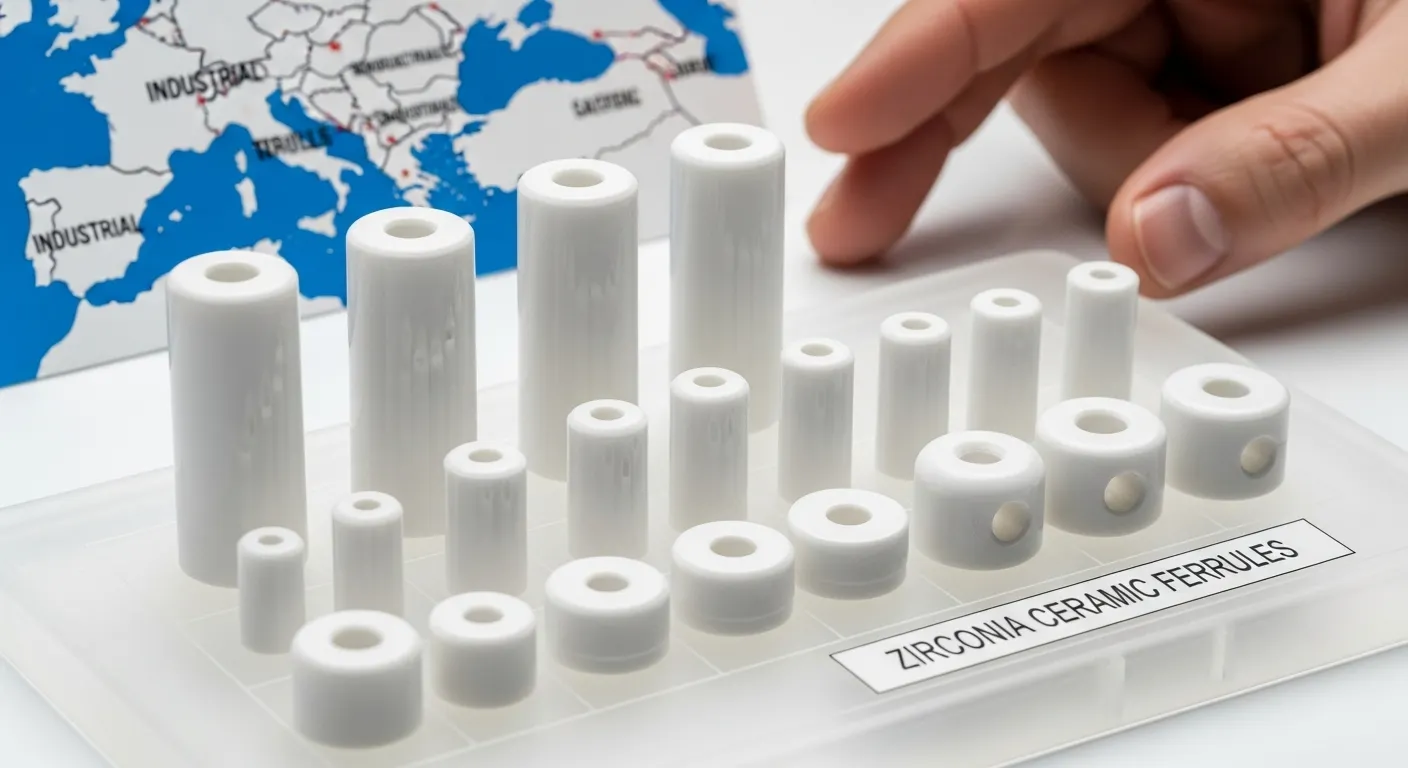


Precision Ceramic Machining is playing a more significant role in 2026 as advanced industries continue to raise expectations for dimensional accuracy, environmental resistance, and overall component performance. In sectors ranging from optical communication and semiconductors to healthcare and new energy, manufacturers are increasingly choosing ceramic components for their ability to deliver stability, consistency, and long-term service value. At UPCERA, we see this evolution clearly in customer demand. Buyers now expect more than a standalone ceramic part. They want solutions that fit the technical demands of the application, the realities of manufacturing, and the long-term direction of the product.
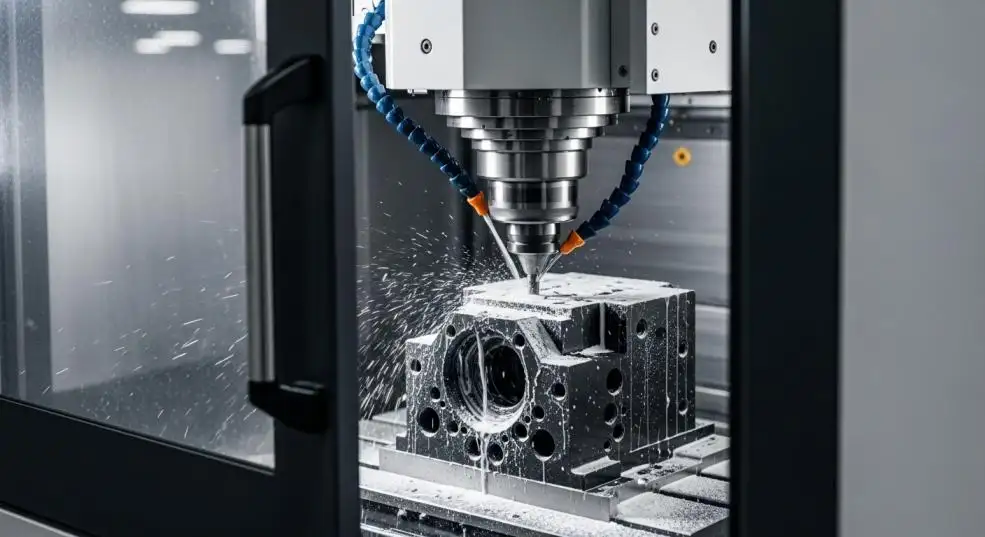
Why Precision Ceramic Machining Matters More in 2026
As industrial products become smaller, more integrated, and more demanding in performance, both material selection and machining accuracy are taking on greater importance. Metals and plastics still play an important role, but advanced ceramics are becoming more attractive where hardness, wear resistance, insulation, corrosion resistance, or thermal stability are required.
Precision Ceramic Machining helps bridge the gap between material potential and real-world application. A strong ceramic material alone is not enough. It must also be shaped, finished, and controlled in a way that supports stable product performance.
In 2026, several market directions are strengthening this demand:
• More optical modules and data infrastructure require stable and accurate ceramic parts
• Semiconductor equipment needs components that can handle strict process environments
• Healthcare and wearable technology need cleaner, smaller, and more reliable structures
• Aerospace and new energy projects require materials with strong performance under stress
These trends show why ceramic processing is no longer a niche topic. It is becoming part of mainstream high-end manufacturing strategy.
From Optical Communication to Advanced Components
UPCERA was founded in 2003 and was the first company in China to independently develop zirconia ceramic sleeves for optical communication. That early focus on quality and process control built a strong foundation for later expansion. With over 20 years of experience in zirconia sleeves and ferrules, UPCERA has developed strong expertise in high-precision small-size ceramic components, especially where tight tolerances and consistency are critical.
Our zirconia ceramic sleeves and ferrules have been widely used in optical communication connectors, optical modules, computing power centers, and data centers. This experience matters because optical applications require strict dimensional accuracy and dependable performance over time. The lessons learned from large-scale ceramic sleeve and ferrule production did not stay limited to one sector. They shaped how we approach custom ceramic manufacturing today.
Since 2017, UPCERA has expanded into a broader range of technical ceramic components. This includes custom parts in:
• Zirconia
• Alumina
• Single-Crystal Alumina Gemstones
• Silicon Nitride
• Silicon Carbide
For customers, this broader material portfolio means a more practical path from concept to production. Instead of adapting a design to one limited material option, they can work toward a better match between application requirements and ceramic properties.
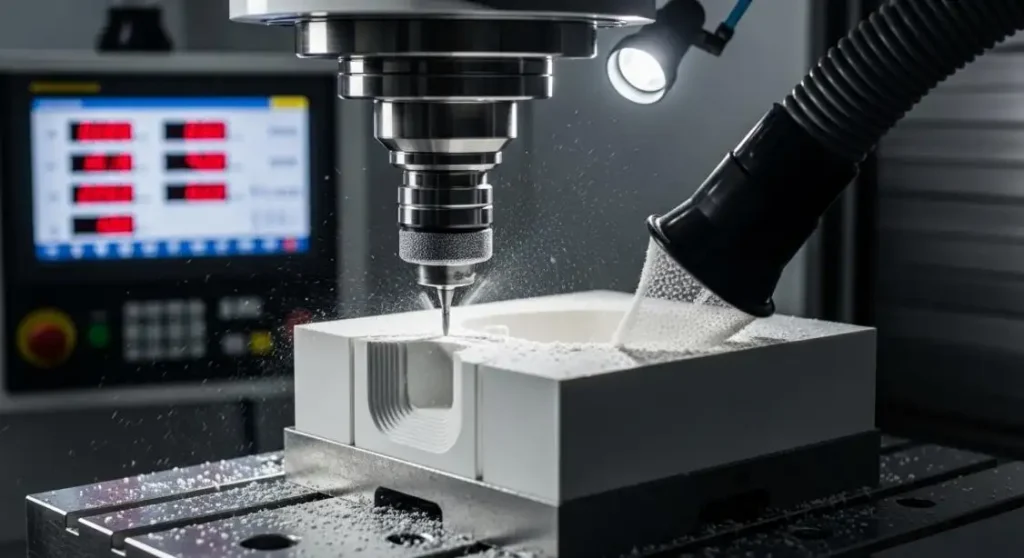
What Customers Need From Precision Ceramic Machining
In many projects, buyers are not only comparing materials. They are also comparing development efficiency, production stability, and supplier coordination. This is where Precision Ceramic Machining creates practical value.
Customers usually need support in several connected areas. First, they need help understanding which ceramic material best fits the application. Second, they need machining and finishing that preserve the intended function of the design. Third, they need a manufacturing partner that can respond to custom requirements without creating unnecessary delay or cost risk.
At UPCERA, we convert these needs into integrated support from product design and material selection to manufacturing. For customers, that creates several useful outcomes:
• Fewer material selection errors in early development
• Better alignment between design intent and final part performance
• More efficient communication during custom project development
• Higher confidence in consistency when moving toward larger demand
This is especially important for advanced components. A ceramic part may be small, but its role in the final system can be critical. A dimensional issue, a surface defect, or poor material fit can affect the value of the whole assembly.
UPCERA's Strength in Materials, R&D, And Manufacturing
One of the most important trends in 2026 is that customers want fewer disconnected suppliers. They prefer manufacturing partners that can offer stronger control across the full process. UPCERA strengthened this ability in May 2018, when it became a wholly-owned subsidiary of Sinocera, establishing a fuller industry chain from powder and blanks to precision processing and sales service.
For customers, this structure is useful because it supports better coordination across development and production. It also strengthens quality control at the source.
Our R&D foundation is another key advantage. Originating from Tsinghua University's ceramics expertise, UPCERA has built deep experience in ceramic material technology. We have independently developed more than ten categories of ceramic materials, covering hundreds of types and tens of thousands of products. This gives customers access to a stronger technical base when their applications involve unusual structures, demanding tolerances, or specialized working environments.
We also provide technical support during the design and development stages of customer products. That means our role is not limited to machining alone. We help customers evaluate more cost-effective ceramic solutions before production problems become expensive.
For many buyers, the real benefit is simple: stronger R&D and a more complete production system reduce uncertainty.
How Precision Ceramic Machining Supports Global Industries
Precision Ceramic Machining now serves a much wider industrial base than in the past. At UPCERA, our products are applied in semiconductors, aerospace, healthcare, new energy, mechanical engineering, chemicals, consumer electronics, and wearable technology. This diversification reflects a broader market reality. Advanced ceramics are no longer restricted to a few highly specialized fields.
At the same time, customers in different sectors often share the same core priorities:
• Reliable dimensional control
• Stable material performance
• Flexibility for custom structures
• Cost-effective manufacturing logic
• Long-term supply confidence
UPCERA's products are now sold in over 100 countries and regions worldwide. This global reach is not only a business milestone. It also shows that advanced ceramic solutions are being adopted across many regional manufacturing ecosystems.
In practical terms, a global customer may need a ceramic component for a semiconductor tool, a medical device, an aerospace assembly, or a data infrastructure product. The application changes, but the expectation remains consistent: the ceramic part must perform reliably, and the supplier must understand both technical detail and production reality.
To understand the wider direction of the sector, readers can also explore updates from The American Ceramic Society and SEMI, both of which continue to show how advanced materials are contributing to high-value manufacturing progress.
What to Look for in a Ceramic Manufacturing Partner in 2026
In 2026, supplier selection should not stop at reviewing a ceramic product catalog.
When comparing ceramic manufacturing partners, buyers should look closely at factors such as:
• Material expertise for different performance requirements
• Precision machining capability for complex shapes and tight tolerances
• Responsive support during product design and development
• Stable quality control across the manufacturing process
• Flexibility for custom projects and changing application needs
• Better coordination between development, production, and delivery
These points are important because they can directly affect development speed, product reliability, and long-term production stability. A capable supplier adds value by reducing risk, improving application fit, and supporting a smoother project path.
Customers should also consider the broader value a manufacturer can provide, such as:
• Lower risk of material mismatch in early-stage development
• Smoother communication during custom component design
• More dependable consistency from sample to volume production
• Stronger support for long-term supply planning
• Greater confidence in the final component's performance
UPCERA brings more than 20 years of experience to this work, supported by production bases, product patents, and a growing international footprint. More importantly, we continue to invest in precision structural ceramics with a long-term approach to innovation and close alignment with customer application needs.
Final Words
If you are assessing custom ceramic components for optical communication, semiconductors, healthcare, energy, or other advanced applications, contact UPCERA to discuss your product goals, material options, and manufacturing requirements. We are ready to help you build a ceramic solution with stronger reliability and better cost efficiency.


In This Article
- 1 Why Precision Ceramic Machining Matters More in 2026
- 2 From Optical Communication to Advanced Components
- 3 What Customers Need From Precision Ceramic Machining
- 4 UPCERA's Strength in Materials, R&D, And Manufacturing
- 5 How Precision Ceramic Machining Supports Global Industries
- 6 What to Look for in a Ceramic Manufacturing Partner in 2026
