 English
 中文
中文







Say Goodbye To Metal Limits: Engineered Ceramic Products Guide (2026)
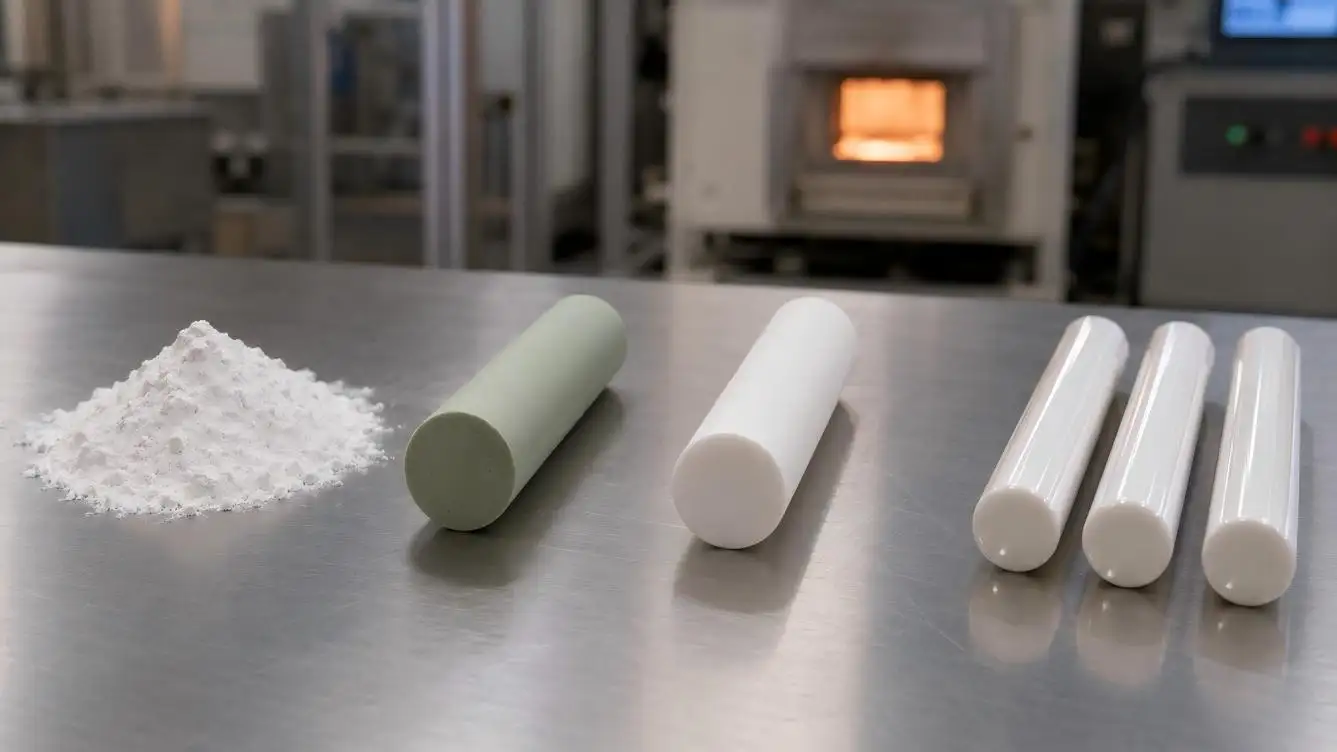
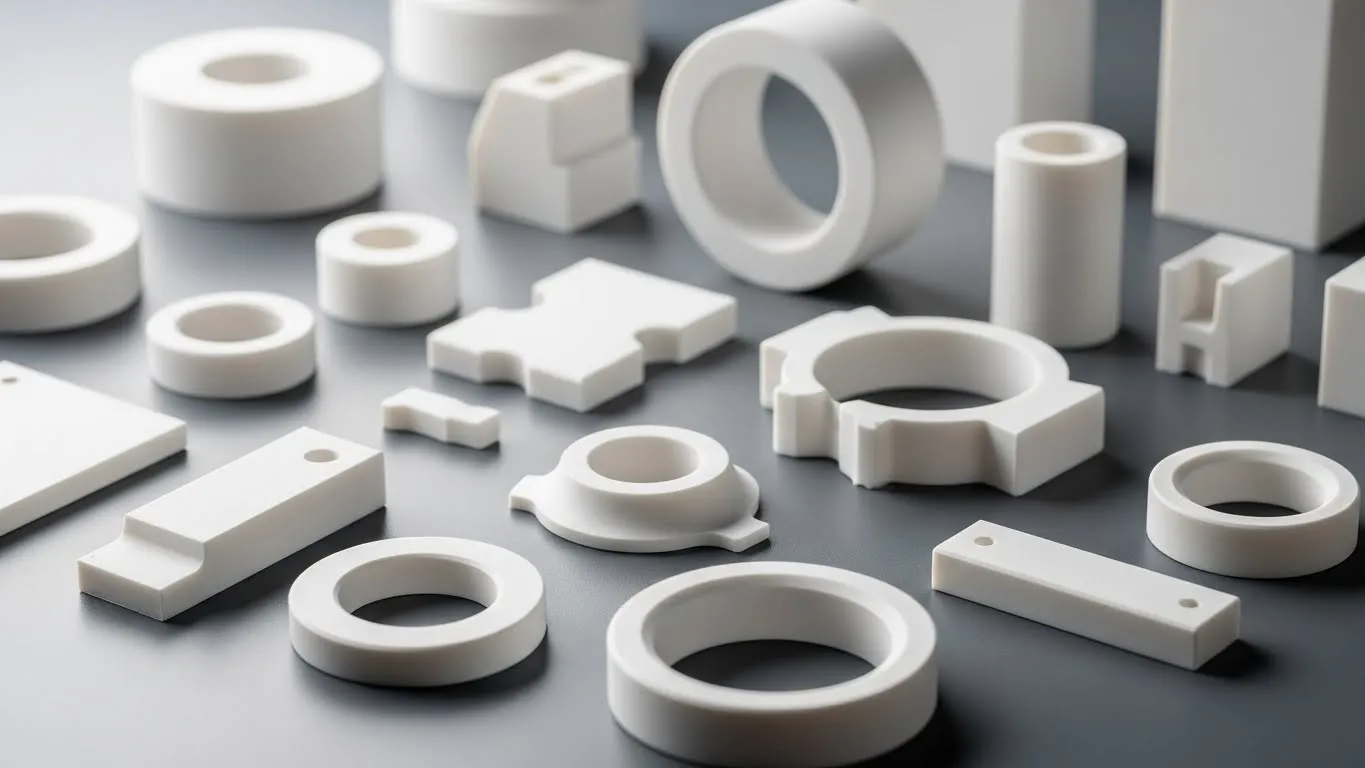
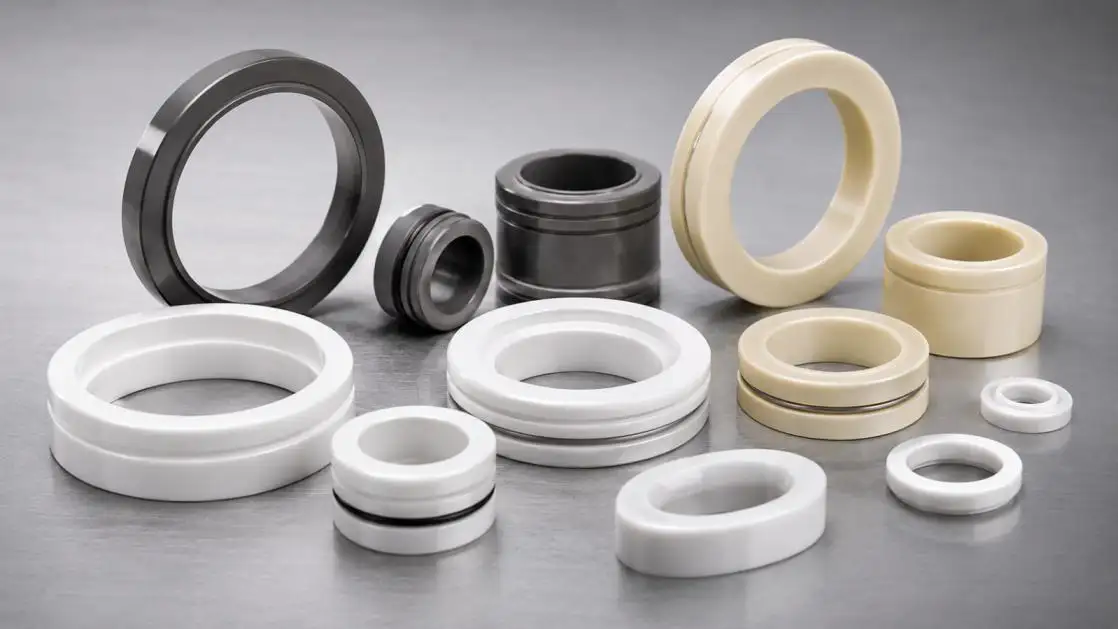
Engineered Ceramic Products are helping engineers say goodbye to metal limits in 2026, especially when wear, heat, corrosion, or electrical isolation becomes the true bottleneck.
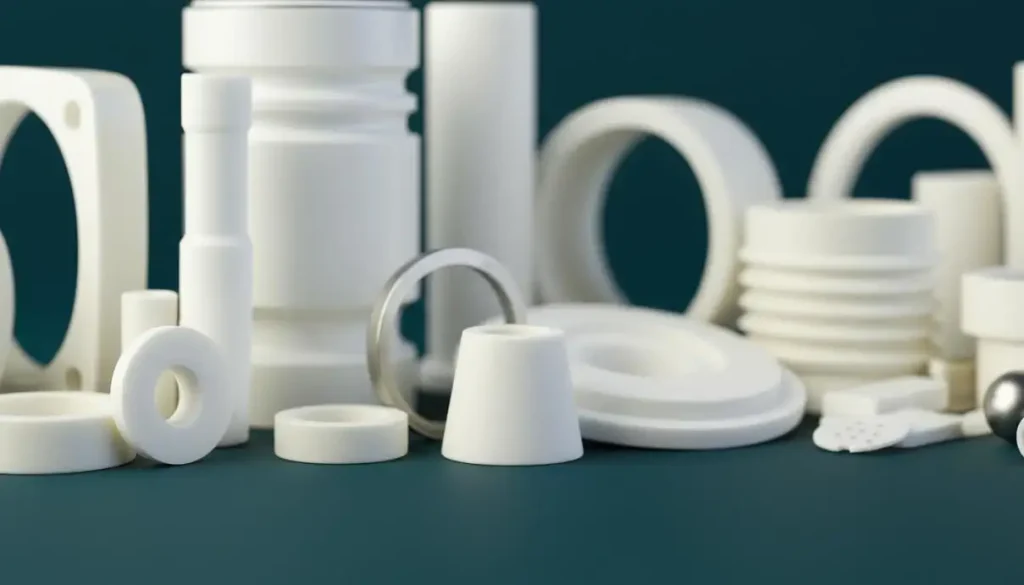
Advanced ceramics are not “fragile substitutes.” They are engineered materials designed to hold stable performance where metals and plastics start to drift. At UPCERA, we customize and process precision ceramic components in zirconia, alumina, sapphire, ruby, aluminum nitride, silicon nitride, and silicon carbide. Our goal is practical: help customers match the right material, geometry, and process to real application demands—then deliver it at a cost that supports scale.
1) Why Metal Limits Show Up Earlier Than You Think (2026 Reality)
Metal parts usually fail in predictable ways. They wear down under friction. They also corrode in chemicals. Furthermore, they expand when heated, causing displacement. And they become conductive, introducing unwanted leakage or signal noise. In 2026, these issues show up faster because systems are smaller, faster, and more sensitive.
Engineered Ceramic Products address these pain points with properties that are hard to “coat onto” metal reliably over long cycles. Many ceramics offer strong wear resistance, chemical stability, low thermal expansion, and electrical insulation. Some grades also bring high-temperature tolerance and biocompatibility, which makes them relevant in semiconductor tooling, medical devices, and specialty industrial assemblies.
For new buyers, the key mindset is simple: do not start from the material name. Start from the failure mode you must eliminate.
•Sliding wear that ruins precision
•Corrosion that changes dimensions over time
•Heat that causes drift, warping, or clearance loss
•Electrical conduction that creates risk or noise
2) Engineered Ceramic Products: A Beginner-Friendly Material Map
Different ceramics behave differently. This is why “ceramic” as a label is not enough. At UPCERA, we focus on practical material selection and processing for engineered parts, including zirconia, alumina, aluminum nitride, silicon nitride, silicon carbide, and gemstone single crystals such as sapphire and ruby.
Here is a simple way to remember the landscape:
•Zirconia is often chosen when you need strong toughness and stable performance in compact parts.
•Alumina is a widely used option for wear resistance and electrical insulation, with broad industrial acceptance.
•Silicon Nitride is valued in demanding mechanical environments where strength and thermal stability matter.
•Silicon Carbide is suitable when wear and harsh environments are dominant constraints.
•Aluminum Nitride is commonly selected when thermal management and electrical insulation must coexist.
•Sapphire / Ruby (Single-Crystal Alumina) stand out when optical transmission and extreme wear resistance are required.
Engineered Ceramic Products selection becomes easier when you translate your need into a “property target.” For example, “avoid signal loss,” “control thermal growth,” or “reduce particle generation.” That language leads to better material decisions and fewer redesign loops.
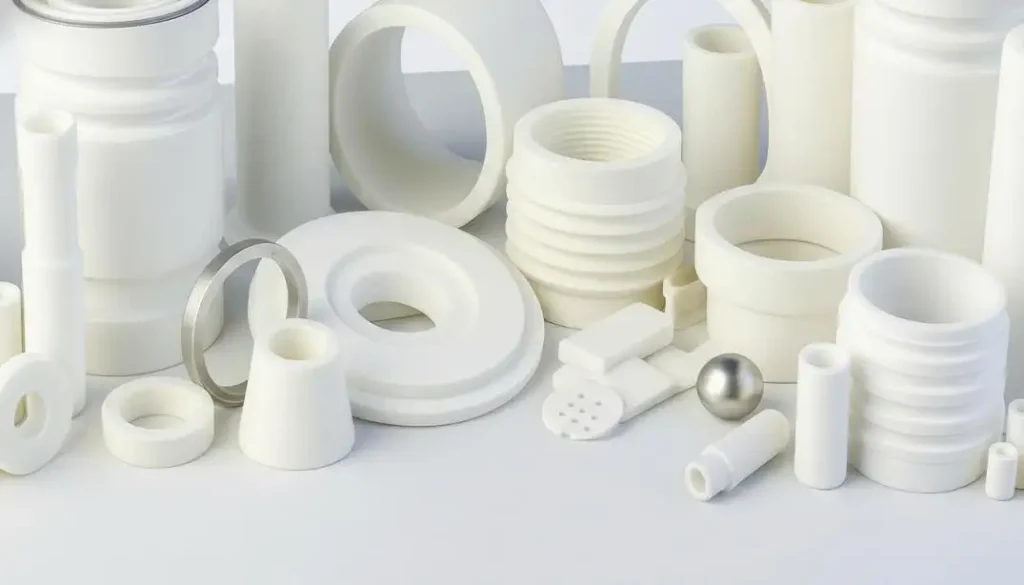
3) What UPCERA Builds: From Fiber Optics to Complex Structural Parts
From a manufacturer’s view, product categories matter because they represent proven geometries, tooling maturity, and stable quality control. UPCERA provides both standardized items and custom structural components.
Ceramic Sleeves and Ceramic Ferrules for Fiber Connectivity
In fiber optic connectors, sleeves and ferrules are the parts that keep alignment “locked in.” UPCERA supplies SC/LC ceramic sleeves and supports custom designs for diverse connector structures. From 5G links to data center networks and fiber lasers, these parts are selected for precision and stability. Our sleeve manufacturing draws on 20 years of experience, helping customers control assembly variation and maintain consistent results in high-volume production. For ferrules, we offer SC-type, LC-type, and custom large-bore designs to support special fiber structures and applications that require larger inner diameters.
✅Stable geometry for repeatable alignment
✅Wear resistance to keep fit after repeated mating
✅Custom bores that support special connector requirements
Sapphire Ruby Components for Optical and Precision Systems
Our sapphire and ruby components use single-crystal alumina, delivering wear resistance, corrosion resistance, and high light transmission for precision instruments, optical sensors, and high-end industrial equipment.
Ceramic Rods and Structural Components for Demanding Industries
We provide high-precision ceramic rods in zirconia, alumina, silicon carbide, and other materials. These rods can be customized for machinery, medical, and semiconductor applications, where dimensional stability and surface performance strongly influence yield.
For more complex needs, we also customize structural parts with complex shapes, tight tolerances, and special materials for aerospace, semiconductor, and medical industries. This is where Engineered Ceramic Products become a design tool, not just a replacement material.
4) Manufacturing Capability That Turns Ceramics Into Reliable Parts
Ceramics are only “high performance” when the process is controlled. Material preparation, molding, sintering, and precision machining each influences final properties and tolerances. UPCERA was founded in 2003 and has developed large-scale modern R&D and production bases in Shenzhen and Benxi, with a registered capital of 60 million RMB.
We also integrate research resources through collaboration with the State Key Ceramics Laboratory at Tsinghua University and interdisciplinary development across optical communication, medical, chemical, electronics, and lighting fields. For customers, this matters because it increases the chance that “new geometry + new material” projects can move forward with fewer unknowns.
On the production side, we operate a professional factory of over 26,000 square meters, and our lines support a monthly output of over 100 million units. That scale supports two outcomes buyers care about in 2026:
- Predictable supply for long programs
- Unit economics that improve when designs stabilize
•High processing precision supports tighter assemblies and fewer rejects
•Large capacity supports stable lead times for scaled projects
•Full-chain integration (design → powder → manufacturing → service) reduces handoff risk
5) How to Start a Ceramic Project Without Costly Redesigns
If you are new to Engineered Ceramic Products, the fastest path is to treat the first discussion as a “failure-mode mapping” exercise. The goal is not to pick a ceramic grade immediately. The goal is to lock the performance target and boundary conditions.
A practical checklist looks like this:
•What failed in the metal part (wear, corrosion, heat drift, electrical issues)?
•What is the working environment (temperature, chemicals, friction, voltage)?
•What interfaces must stay stable (fit, alignment, optical path, sealing)?
•What is the acceptable tradeoff (cost, lead time, surface finish, tolerance)?
Then you can move into geometry and process choices. Many ceramic projects become expensive when teams copy a metal design directly. Ceramics can do more, but they require smarter radii, contact design, and machining planning.
At UPCERA, we support customers not only with custom ceramic processing, but also with technical input during product design and development stages. This reduces iteration cycles and helps teams reach a manufacturable design earlier.
6) CTA: Get a Practical 2026 Ceramic Recommendation From UPCERA
In 2026, “metal limits” are rarely theoretical. They show up as maintenance cost, yield loss, overheating, signal instability, or field failures that damage trust. Engineered Ceramic Products are a practical way to regain stability—when the material and process are matched to the real job.
Call-to-Action (CTA):
If you are evaluating Engineered Ceramic Products to replace a metal component or launch a new precision part, contact UPCERA with your drawing (or key dimensions), application environment, and performance target. Send us your drawing and application details—our team will respond within 24 hours to assess feasibility, recommend a suitable ceramic material (zirconia, alumina, silicon nitride, silicon carbide, aluminum nitride, sapphire, or ruby), and deliver a clear, manufacturable plan for a cost-effective component.
When you are ready to stop fighting metal failure modes, we are ready to help you build a ceramic solution that scales.


In This Article
- 1 1) Why Metal Limits Show Up Earlier Than You Think (2026 Reality)
- 2 2) Engineered Ceramic Products: A Beginner-Friendly Material Map
- 3 3) What UPCERA Builds: From Fiber Optics to Complex Structural Parts
- 4 4) Manufacturing Capability That Turns Ceramics Into Reliable Parts
- 5 5) How to Start a Ceramic Project Without Costly Redesigns
- 6 6) CTA: Get a Practical 2026 Ceramic Recommendation From UPCERA
