 English
 中文
中文







Surface Integrity Engineering: The Hidden Factor in Zirconia Ceramic Tube Longevity
What separates a Zirconia Ceramic Tube that lasts ten years from one that fails in ten months? The answer is rarely visible to the naked eye.
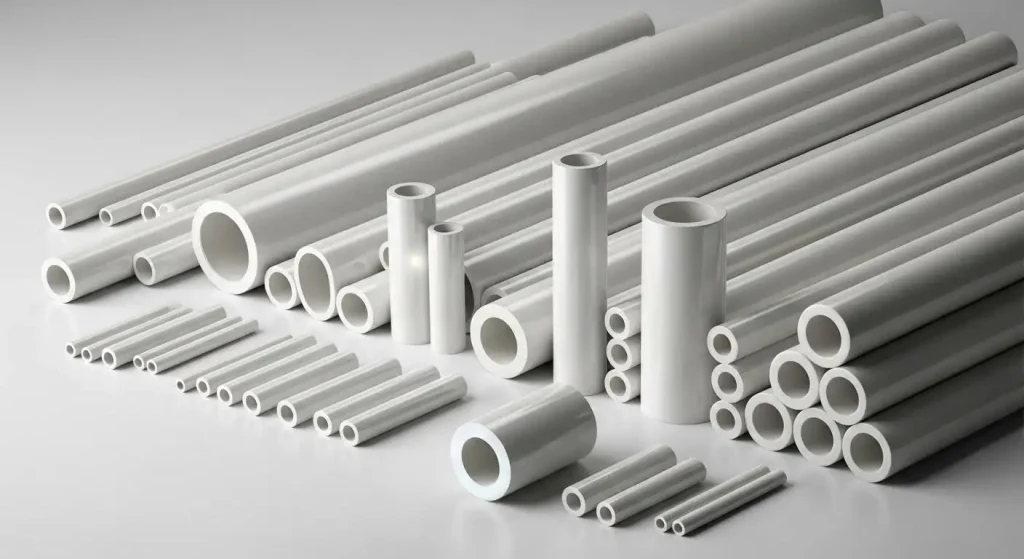
Surface integrity—the physical and chemical condition of a component’s surface and near-subsurface layer—determines how a zirconia ceramic tube behaves under load, thermal cycling, and corrosive attack. Yet in many procurement specifications, surface integrity receives little more than a roughness number. That oversight has quietly cost industrial buyers millions in unplanned downtime, premature replacement, and field failures.
Why Surface Integrity Matters More Than You Think
Zirconia ceramics boast high strength and fracture toughness ideal for extremes of high-wear and high-temperature applications. However, the grinding-induced damage like subsurface cracks and micro-flaws can considerably reduce strength of precision ceramic part. It has been shown that microcracks, and surface and subsurface damage, are easily produced while grinding the engineering ceramics. These hidden defects greatly influence mechanical strength and life of service parts.
This is what grinding-induced damage look like practically:
•Subsurface cracks shorten wear life: even when part passes visual inspectionrock, micro cracks below the surface can grow under cyclic loading and cause sudden brittle fracture.
•Residual stresses weaken sealing performance: the compressive or tensile stresses, which are due to aggressive grinding, may cause to distort geometry of the tube or induce rapid failure.
•Edge chipping compromises assembly reliability: thin-walled zirconia ceramic tubes are especially susceptible to edge damage during finishing.
These defects are the challenge because they are hidden. A component can meet all dimensional tolerances and surface roughness requirements yet still contain a damaged layer that undermines its intended service life. That is why surface integrity engineering is not a luxury—it is a necessity.
What Surface Integrity Engineering Actually Controls
True surface integrity engineering goes far beyond specifying an Ra value. Everything in the grinding and finishing sequence allows for friction and wear management and control, from choice of wheel, delivery of coolant, and from wheel to the criteria for the inspection of the end product. UPCERA engineering considers surface integrity in the same light as an entire system and not a checklist item.
The following are the most important factors UPCERA controls to be sure the design of each zirconia ceramic tube is met:
•Grinding process control: Specified wheel selection is assigned to a linear and rotational spindle travel speeds, and the depth of rotary sphered cut, that are optimized to reduce the surface subs that are damaged while achieving strict tolerances in design that are even to the micro levels of surfaces (diameters and dimensions).
•Coolant and lubrication management: Research shows that when subsurface damage depth are reduced and the quantity of ductile removal is increased, better control of the coolant and lube system is then optimized to be one.
•Advancement Finishing Order: In a contrary and aggressive single-step surface grinding process, and even in the case of achieving an ideal geometry and a good quality of micro-surface of the product, an engineered approach that consists of many stages (step).
Match Material and Processing to Your Application
Ceramic materials are not always one to one in certain applications. For these cases, UPCERA have a full line of advanced ceramics: tough and wear resistant Zirconia (ZrO₂); Insulating and economics of Alumina (Al₂O₃); wear and thermal resistance extreme environments materials of Silicon Nitride (Si₃N₄) and Silicon Carbide (SiC); and high thermal management of Aluminum Nitride (AlN).
Choosing the correct material is not even half the job. The same zirconia ceramic tube can deliver dramatically different service life depending on how it is processed. That is because material properties—flexural strength, fracture toughness, hardness—are not fixed values; they are outcomes of both composition and manufacturing discipline.
UPCERA operates a vertically integrated production chain spanning raw powder processing, blank formation, sintering, grinding, finishing, and quality inspection under one roof. This full-chain control eliminates the hidden inconsistencies that arise when blank suppliers and finishing workshops operate independently.
How UPCERA Builds Surface Integrity Into Every Tube
For more than two decades, UPCERA has refined its precision machining methodology around one core belief: surface integrity cannot be inspected into a part—it must be engineered into the process from the start.
Here is how UPCERA delivers surface integrity at scale:
•Full-chain traceability: Every zirconia ceramic tube can be traced back to its raw material batch, sintering parameters, and finishing sequence, enabling root-cause analysis when application conditions push components to their limits.
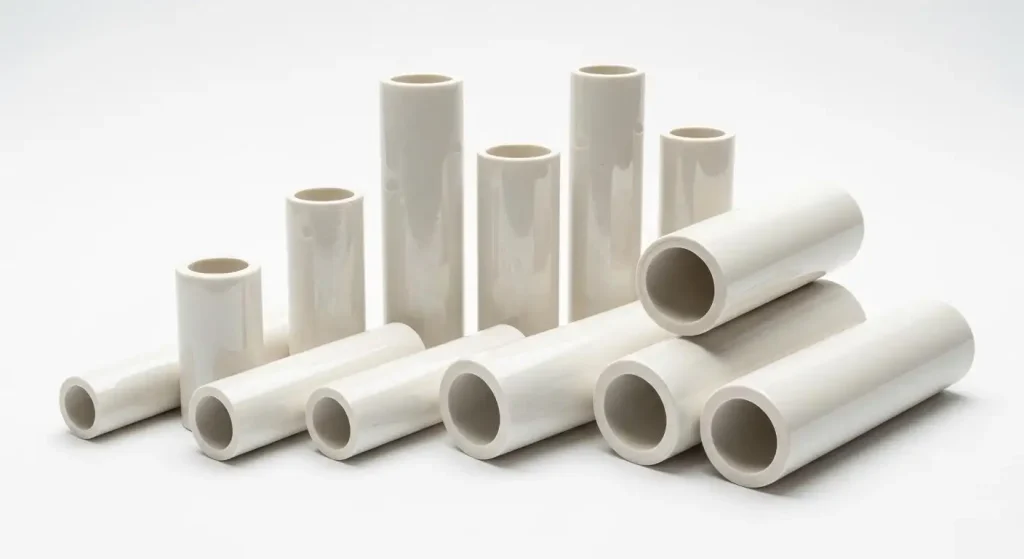
•Tight dimensional control: UPCERA achieves outer diameter precision as tight as ±0.002mm on 1–25mm tubes, with inner diameter and wall thickness tolerances scaled to match application requirements.
•Proven manufacturing capacity: With a professional standard factory of over 26,000 square meters and a monthly output of over 100 million units, UPCERA manufacturing is capable of large volume industrial programs without compromising surface integrity.
•Global engineering support: UPCERA, being a fully owned subsidiary of Sinocera (stock code 300285), offers engineering support of all levels from first prototypes to full production for customers in over 110 countries and regions.
2026 and Beyond: Surface Integrity As a Procurement Priority
Global procurement in 2026 is shifting toward total cost of ownership and supply chain resilience. Buyers are no longer evaluating suppliers solely on unit price. They are asking harder questions: How consistent is your quality across batches? How do you verify that grinding does not compromise durability? What traceability do you provide if a component fails in the field?
The ASTM C1495 standard specifies the effects of surface grinding on the flexural strength of advanced ceramics. The standard assesses what machining conditions either negatively or positively affect strength by comparing ground samples to their unground (as-fired) counterparts. Procurement departments applying this standard as part of their supplier qualification criteria gain considerable reliability and risk mitigation.
Closing Remarks
Surface integrity at UPCERA is not a reactive discipline. We control the entire manufacturing chain from the first cut to the last and emphasize predictable removal instead of aggressive feeds. This means we are able to provide zirconia ceramic tubes that offer consistent and reliable performance in the most challenging industrial applications.
When component failure is not an option, surface integrity is not a detail. It is the difference between a part that works and a part that lasts.
FREQUENTLY ASKED QUESTIONS
Question: What causes Zicronia Ceramic Tubes to have a short lifespan?
Answer: It is grinding damages below the surface and not the pureness of the material. Even a zirconia with the highest grades will fail if surface maintenance was not done during the finishing process.
Question: Is it possible to use the same Zirconia Ceramic Tube for both high temperatures and high-wear applications?
Answer: Yes, however, this is only possible if the tube has been processed with careful parameters during grinding. UPCERA is able to optimize the tube for your specified operating conditions for each individual order.
Question: What is UPCERA’s method of proving surface integrity before the positive dispatch of products?
Answer: Through control of the process and not just routine checks. Each and every tube has been processed through closely monitored sequences of grinding and is, therefore, able to undergo checkups of dimensions with the ability to trace it back to the raw powder.
Question: Apart from Zirconia, which other ceramic materials does UPCERA provide?
Answer: Other than Zirconia, we offer Alumina, Silicon Nitride, Silicon Carbide, and Aluminum Nitride ceramics. Each of these is made available depending on the individual specifications of your application, the thermal types, the mechanical types, and the cost.
Question: Are custom made dimensions of tube offered by UPCERA?
Answer: Yes. Custom tube dimensions are within the purview of UPCERA. For tube dimensions, there is a precision of ±0.002mm. Custom engineering is, therefore, available from prototype to full-scale production.


In This Article
- 1 Why Surface Integrity Matters More Than You Think
- 2 What Surface Integrity Engineering Actually Controls
- 3 Match Material and Processing to Your Application
- 4 How UPCERA Builds Surface Integrity Into Every Tube
- 5 2026 and Beyond: Surface Integrity As a Procurement Priority
- 6 FREQUENTLY ASKED QUESTIONS
