 English
 中文
中文







Beyond Round Rods: A Custom Ceramic Rod With Holes, Steps, Or Tapers
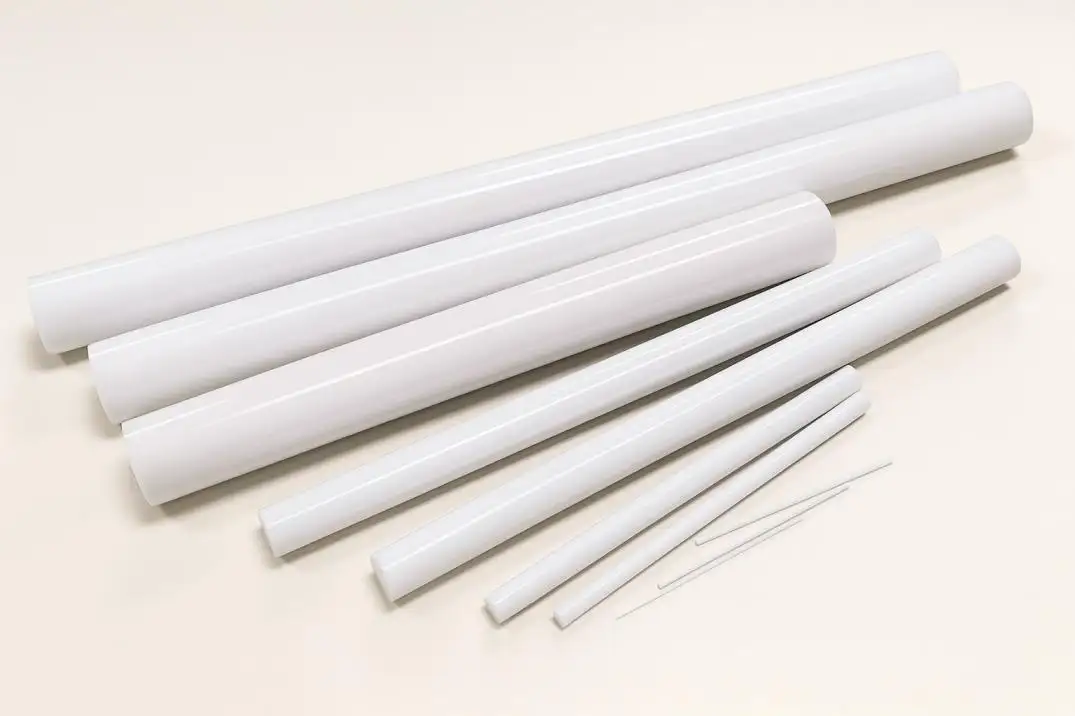
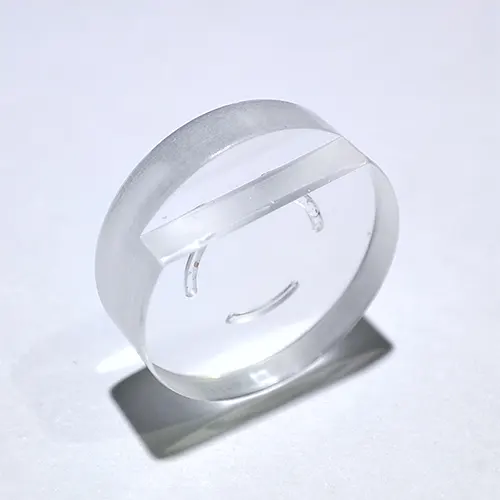
A Custom Ceramic Rod is no longer a simple cylinder. As we near 2026, manufacturing is prioritizing even greater fabrication focusing on tighter tolerances, enhanced reliability, and more integrated smart technology. The ability to shape bespoke precision ceramic rods with intricate designs, including drilled holes, step diameters, tapered profiles, and other complex geometries, is becoming a defining differentiator for customers with no compromise.
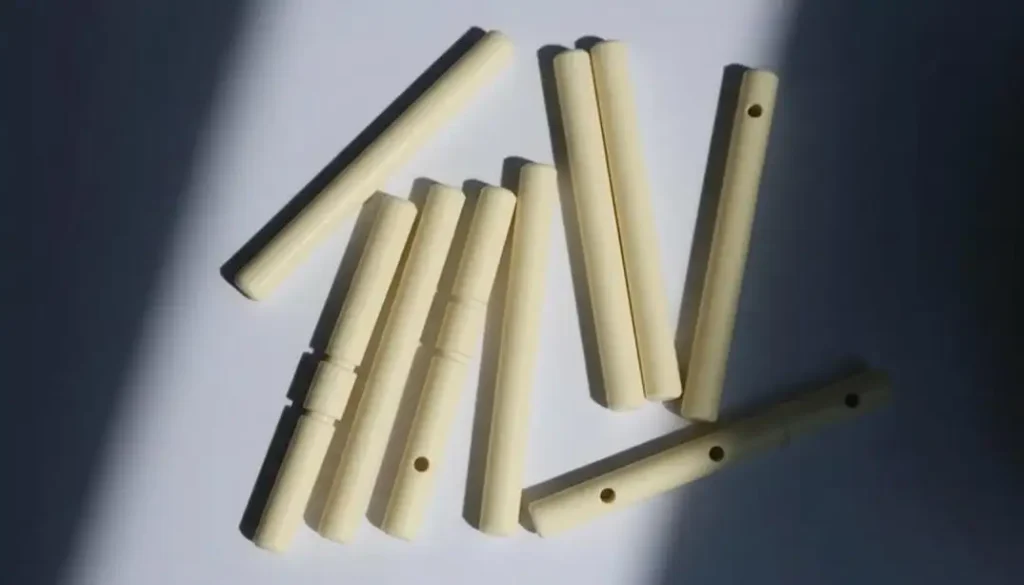
Custom Ceramic Rods vs. Standard Rods
Standard ceramic rods are adequate for fairly straightforward designs. However, when your design has tapered ends, multi-diameter transitions, or requires locating shoulders, a standard ceramic rod creates the need for supplemental components, joints, and failure points. Custom Ceramic Rods, designed to your exact specifications, allow for the following functional geometries for improved performance:
•Drilled Holes: Designed and executed with the utmost precision, drilled holes allow for more complex fluid channels, fiber optic runs, sensor access ports, and fasteners to the extent that secondary drilling and assembly mistakes are eliminated. UPCERA can precision machine internal diameters as small as φ0.4mm and can achieve inner diameter tolerances to ±0.001mm, ensuring the utmost predictability of fluid dynamics and sensor accuracy for the service life of the part.
•Stepped Diameters: Integrated locating shoulders or multi-diameter transitions provide assembly simplification by way of natural hard stops or as alignment surfaces. A Custom Ceramic Rod able to accomplish this can eliminate the need for additional spacers and components by mechanistically placing assembly parts right where they need to be. When stepped features are designed to be coaxial, characteristics such as roundness and concentricity will be consistently held within 0.002mm even following intense cyclic thermal driving.
•Tapered Profiles: Tapered shapes such as cones or wedges are ideal for valve seats, sealing surfaces, interference fits, or self-centering applications. Tapers enhance contact consistency, load distribution, and ease of access for maintenance tasks.
•Slots, Grooves, and Threads: These secondary features convert a simple rod into a highly functional component that can replace multiple metal parts. These include external grooves for retaining rings, internal threads for fasteners, and keyways for torque transmission.
How UPCERA Provides Complex Designs Without Compromise
The design challenge that ceramic machining entails is very different from machining metal. A single bad feed rate, vibration, or tool engagement can lead to an undesired chip or crack. UPCERA has set forth processes that center on this design challenge, employing ultra-rigid CNC, diamond grinding, and extreme sequencing that allow for gradual, iterative engagement without excess to avoid frustration and maximize working within the ceramic. The result is a Custom Ceramic Rod matching your drawing exactly without redesign, fit, or failure issues.
Why Choose UPCERA for Your Next Custom Ceramic Rod?
•Manufacturing process: Beginning with the powder during starting stage and ending with the final inspection, UPCERA manages manufacturing process of Custom Ceramic Rod from the start, to adjust the design with every minor detail that goes into the geometry and precision. Your stepped rod, drilled rod, or tapered rod will come to print every single time.
•Controlled Ceramic Selection: Ceramics are not universally machinable. Zirconia has high fracture toughness and is ideal for thin, sharp wall and corner productions. Alumina has advantage for wear applications with sliding surfaces. Silicon carbide and silicon nitride handle extreme temperatures and heavy loads. UPCERA helps you select the right material for your feature set.
•Tolerances that preserve function: Complex geometries demand tight controls. UPCERA holds OD precision at ±0.002 mm (1–25 mm range), length/thickness precision at ±0.005 mm, and surface roughness from Ra 0.02 to 0.2, so holes stay round, steps stay square, and tapers stay true.
One Rod, Fewer Parts, Less Risk
Every joint between components is a potential failure point. Every extra part adds procurement cost, assembly labor, and inventory complexity. A custom ceramic rod with built-in holes, steps, or tapers combines several functions into a single, reliable component. For buyers focused on total cost of ownership and supply chain simplification, that is a compelling advantage.
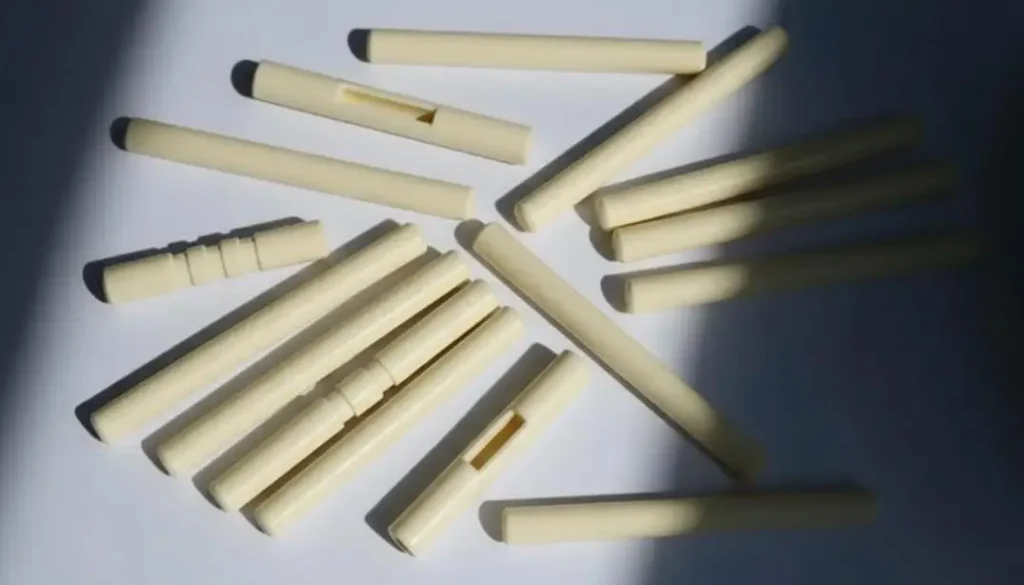
Common applications that benefit from functional geometries:
•Guide pins with fluid ports: A stepped Custom Ceramic Rod that positions a sliding carriage while delivering cooling air or lubricant through a central bore.
•Valve stems with tapered seats: A conical profile that creates a positive seal in high-temperature chemical dosing systems.
•Sensor housings with internal threads: A hollow Custom Ceramic Rod that protects a thermocouple or fiber optic probe while threading into a fixed mounting block.
•Finding spindles with retaining grooves: A stepped rod with a groove for a snap ring, to be used at automated assembly stations, where positive retention is required.
Conclusion: Custom Ceramic Rods for 2026 Procurement Teams
Buyers are swiftly migrating to custom-engineered ceramic solutions from manufacturers across various global industry sectors for 2026. Reliability and lifecycle cost are driving factors. Procurement is seeing demand for better-than-average standard components; clients are equipped with precise, custom parts that integrate seamlessly into their assembly, environment, and duty cycle.
The supply chain is simplified for procurement, and custom ceramic rods with engineered geometries become a solution. Adjacent assembly costs are minimized, maintenance is prolonged and the custom ceramic rod is now positioned in the market as a required solution, versus a premium option.
Don’t settle for anything less than UPCERA for your next Custom Ceramic Rod. We can be as precise as your drawing and expectations for a rod with fluid transfer holes, alignment steps, and sealing tapers. Contact UPCERA for prompt feedback and a quote from your drawing.
Frequently Asked Questions
Q: What is the smallest diameter hole UPCERA can machine in a Custom Ceramic Rod?
A: Yes, UPCERA can precision machine internally located holes with a diameter of φ0.4 mm as well as an inner diameter accuracy of ±0.001 mm within a range of 0.5–3 mm.
Q: Can multiple holes, steps, and tapers be designed into a single Custom Ceramic Rod?
A: Yes, it is correct to say that a stepped rod with a taper at one end and a centrally located through hole can be made from a single piece of ceramic.
Q: What ceramic materials are appropriate for applications with thin walls and/or sharp corners?
A: For thin wall or sharp corner applications, Zirconia (Y-TZP) is preferred for its higher fracture toughness. For lesser applications, Alumina is also applicable.
Q: What is the lead time for a Custom Ceramic Rod with holes or steps?
A: Lead time is quite variable based on design, complexity, and quantity. Prototype lead time is usually 2 to 4 weeks. For a more accurate estimate, please send a drawing to UPCERA.
Q: Do you provide inspection reports for ceramic rods with complex geometries?
A: Yes. Along with Custom Ceramic Rods, Fine detail dimensions on roundness, concentricity, hole position, and surface roughness (Ra 0.02-0.2) Custom inspection reports can be shipped.


