 English
 中文
中文







Zirconia Ferrule for 800G: Powering AI Data Center Bandwidth

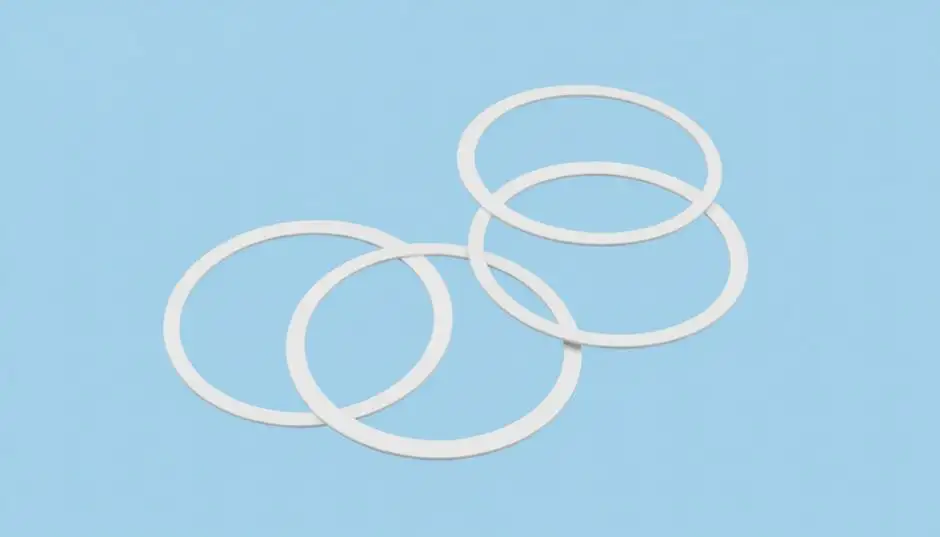
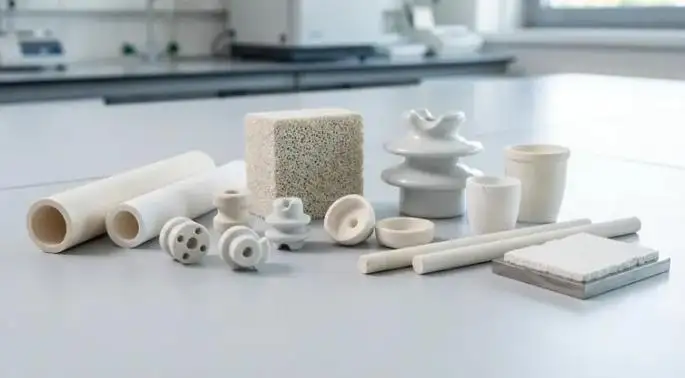
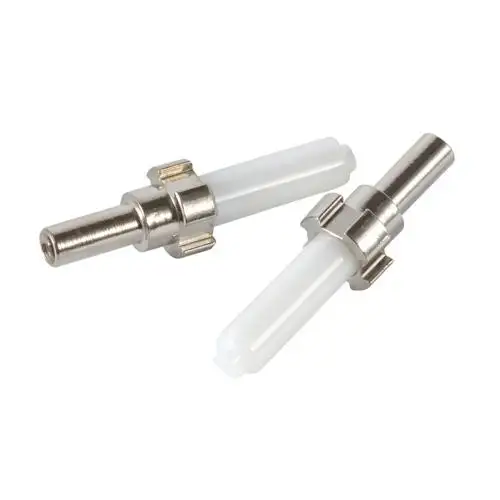
The zirconia ferrule is no longer just a connector component—it is the mechanical anchor that determines whether an 800G link delivers its promised bandwidth or becomes a hidden bottleneck. As AI data centers push optical infrastructure into uncharted territory, one question separates reliable networks from costly ones: Is your zirconia ferrule designed for 800G, or still operating at yesterday’s tolerances?
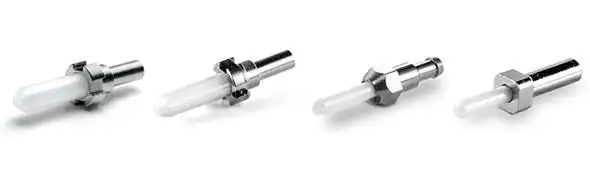
800G: The Bandwidth Explosion Has Arrived
AI training clusters do not just consume bandwidth—they consume it at scale. Traditional leaf-spine architectures have given way to fat-tree topologies, where the number of switches and optical modules multiplies exponentially. The result is a structural surge in high-speed transceiver demand.
Market data confirms the trajectory:
•Lightcounting projects 800G shipments to more than double in 2026, while 1.6T shipments will grow from a small 2025 base to tens of millions of ports.
•800G and above transceiver share is forecast to climb from 19.5% in 2024 to over 60% by 2026, making high-speed modules the new standard across AI-focused data centers.
•Combined 800G and 1.6T market value is expected to reach $146 billion in 2026, accounting for roughly 64% of the entire datacom transceiver market.
•Between 2026 and 2028, shipments of 800G and above optical transceivers are projected to grow at a ~34% CAGR, reaching 94 million units by 2028.
Every single one of these modules depends on a zirconia ferrule to maintain fiber alignment. When the network scales to hundreds of thousands of connections, ferrule performance is no longer a detail—it is a multiplier of network reliability.
High Concentricity: The Ferrule Metric That Defines 800G Performance
In an 800G and above world, optical budgets are tight. Any misalignment of fiber, down to the micron, translates to insertion loss, and every decibel lost translates to fewer spans, more repeaters, or compromised signal integrity.
Zirconia ferrule solves the problem of concentricity, or the alignment of the fiber bore to the outer diameter of the ferrule:
•Sub-micron (≤1 μm) offsets of the fiber core ensures the best optical coupling and minimal insertion loss across the entire optical link.
•An insertion loss of less than 0.2 dB per single connection low sufficient means signal budgets are preserved over thousands of mating cycles.
•100% concentricity compliance on every production batch ensures the consistency that is lost with lower tier ferrule suppliers.
For hyperscale operators, the conclusion is straightforward: superior concentricity means fewer signal boosters and lower power, with significantly less troubleshooting in the field.
High-Density Connectors With Zirconia Ferrule Solutions
The industry’s shift toward Very Small Form Factor (VSFF) connectors—MDC, MMC, and other high-density interfaces—places unprecedented demands on the zirconia ferrule. Traditional MPO cabling is being phased out in favor of platforms that offer up to 3× the cabling density within the same rack footprint.
The zirconia ferrule must adapt to:
•φ1.25mm outer diameter LC-type ferrules that pack more ports into every panel
•Multi-fiber configurations supporting 12-fiber and 16-fiber variants for parallel optics
•Tighter mechanical tolerances that maintain alignment in high-vibration AI cluster environments
A zirconia ferrule that cannot hold its tolerances in a high-density, high-mating-cycle environment becomes a maintenance liability. One that can becomes an enabler of density-driven network architecture.
Material Science: Thermal Stability That Matches Zirconia Fiber
The Zirconia Ferrule is positioned above its competition thanks to its composition, yttria-stabilized zirconia, a ceramic designed with optics in mind. Compared to metal or plastic, zirconia presents 3 main benefits for 800G networks:
•A thermal expansion coefficient (~10.3–10.5×10⁻⁶/°C) that is closely matched to silica glass fiber to help avoid the problem of misalignment during temperature changes.
•Excellent wear resistance that facilitates thousands of insertions with no wear. This ultimately saves the end-user’s total cost of ownership.
•Performance that is stabled in temperature from -40° to +85°C, even in the presence of moisture, dry chemicals, and cleaning solvents.
A zirconia ferrule is in alignment during thermal cycling and repeated connections, and protects the whole optical link – from transceiver to transceiver – for years.
UPCERA: Precision Manufacturing for the 800G Era
With two decades of experience in ceramics, UPCERA offers ferrule solutions in zirconia to the AI-scale infrastructure demand. UPCERA conducts 100% concentricity checks on every ferrule to ensure they meet the stringent tolerances required by 800G.
As an ISO 9001 certified factory-direct supplier, this means they can provide ferrules with 100% concentricity.
UPCERA can manufacture:
•Standard SC, LC, FC, and ST zirconia ferrules for telecom and network mainstream applications.
•Also, for specialty fibers, fiber lasers, and medical use, bore diameters can be customized from 80μm to 1500μm, and outer diameters can be customized from φ0.8mm to φ3.5mm.
•End face polishing, and laser marking for traceability.
Conclusion
By 2026, the infrastructure of the AI data centers will rely heavily on the 800G technology. Every connection in that network depends on a zirconia ferrule to hold the fiber true. When procurement teams evaluate ferrule suppliers, the question is not whether a ferrule can work—but whether it can maintain its precision across millions of connections, under thermal stress, in high-density configurations.
UPCERA’s zirconia ferrule is designed for exactly that.
Explore UPCERA’s zirconia ferrule portfolio →
Request a quote for custom ferrule designs →
FAQ
Q: What makes the zirconia ferrule used in 800G networks so special compared to its use in lower speed networks?
A: 800G networks have a tighter optical power budget. A noticable reduction in ferrule concentricity resulting in 0.1 dB of insertion loss can result in a link not meeting the error-free performance criteria.
Q: What one specification cannot be compromised on when sourcing zirconia ferrules for AI data centers?
A: Concentricity is key (bore to outer diameter offset). Particularly for 800G, we recommend ≤1 μm offset with 100% inspection per batch.
Q: UPCERA zirconia ferrules can be so versatile. Can they also make custom dimensions for non-standard applications?
A: Yes, UPCERA makes custom designs for both the bore diameter (80μm–1500μm) and outer diameter (0.8mm–3.5mm) for fiber lasers, medical instruments, and custom specialty connectors.
Q: In regards to thermal stability, what effects can be anticipated for zirconia ferrules in the field?
A: Mismatched CTE of the ferrule to the fiber may cause micro-misalignment resulting in increased loss. UPCERA’s zirconia is thermally matched to silica fiber to eliminate this.
Q: Does UPCERA sell to OEMs and system integrators?
A: Yes, we have factory-direct supply with full traceability, ISO 9001 certified, and ship to over 100 countries.


