 English
 中文
中文







Alumina Ceramic Selection and Machining: Purity, Design and Processing Considerations
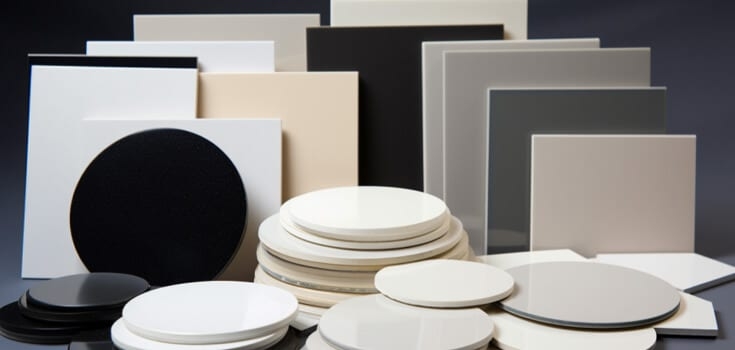
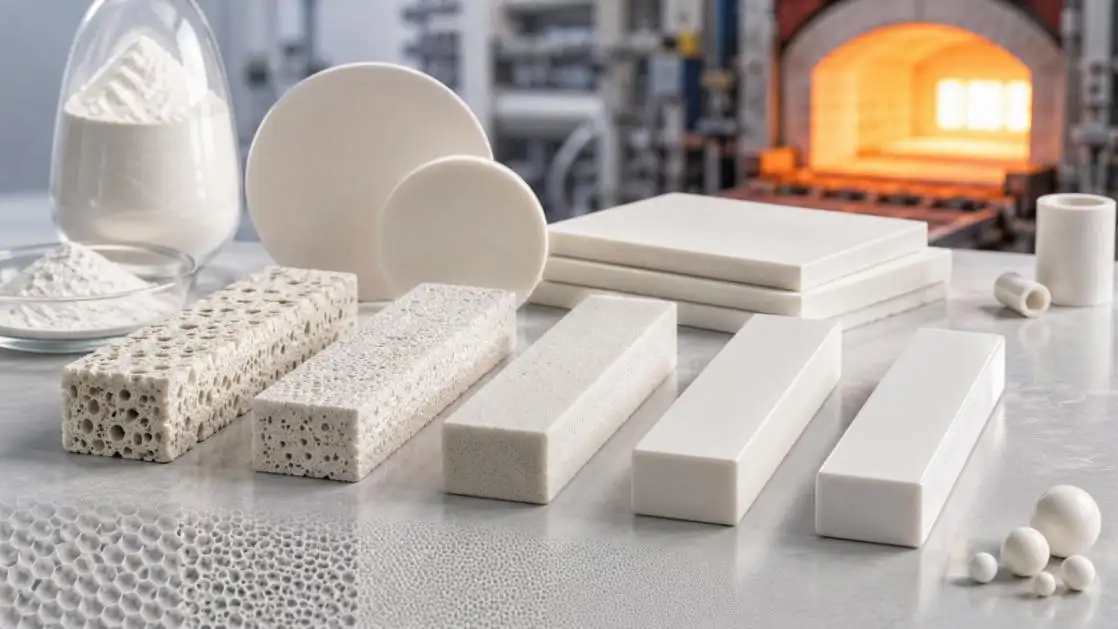
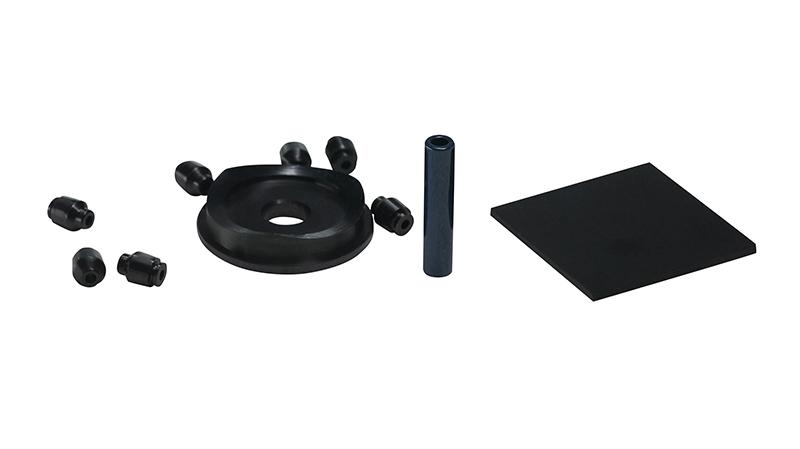
Alumina ceramic is one of the most widely used engineering ceramics. It is commonly applied in electrical insulation, high-temperature wear resistance, semiconductor tooling, industrial furnace components and precision structural parts. In many applications, alumina components provide structural support, insulation, protection, wear resistance and corrosion resistance.
Compared with metals and plastics, alumina ceramic offers high temperature resistance, strong electrical insulation, high hardness and good chemical stability. In real projects, however, material purity, operating temperature, dimensional accuracy, structural design and assembly requirements all have a direct impact on cost, yield and lead time.
| Item | Recommendation |
| General insulation and wear applications | Start with 95% alumina for better cost-performance. |
| Precision parts and higher-temperature applications | Consider 99% alumina for improved overall performance. |
| Corrosive, vacuum or high-end semiconductor applications | Evaluate 99.9% or higher-purity alumina based on the operating environment. |
| Information needed for quotation | Drawing, material grade, quantity, operating conditions, critical dimensions, tolerances and inspection requirements. |
1. Where Is Alumina Ceramic Commonly Used?
The key value of alumina ceramic lies in its high hardness, strong insulation, high-temperature capability and chemical stability. It is often used as an alternative to metal, plastic or ordinary glass where insulation, wear resistance, corrosion resistance or high-temperature stability is required.
- Electrical and electronic equipment: insulating tubes, washers, supports and structural components.
- Mechanical equipment: wear-resistant bushings, guides, sliding parts, sealing components and wear parts.
- High-temperature equipment: furnace components, heat-resistant supports, temperature-related parts and insulation structures.
- Semiconductor and precision equipment: tooling, fixtures, positioning parts, insulating wear components and vacuum-compatible structures.
Although alumina ceramic has excellent hardness and temperature resistance, its toughness is lower than that of zirconia ceramic. For parts exposed to impact, drop risk or high assembly stress, the design should be evaluated carefully at an early stage.
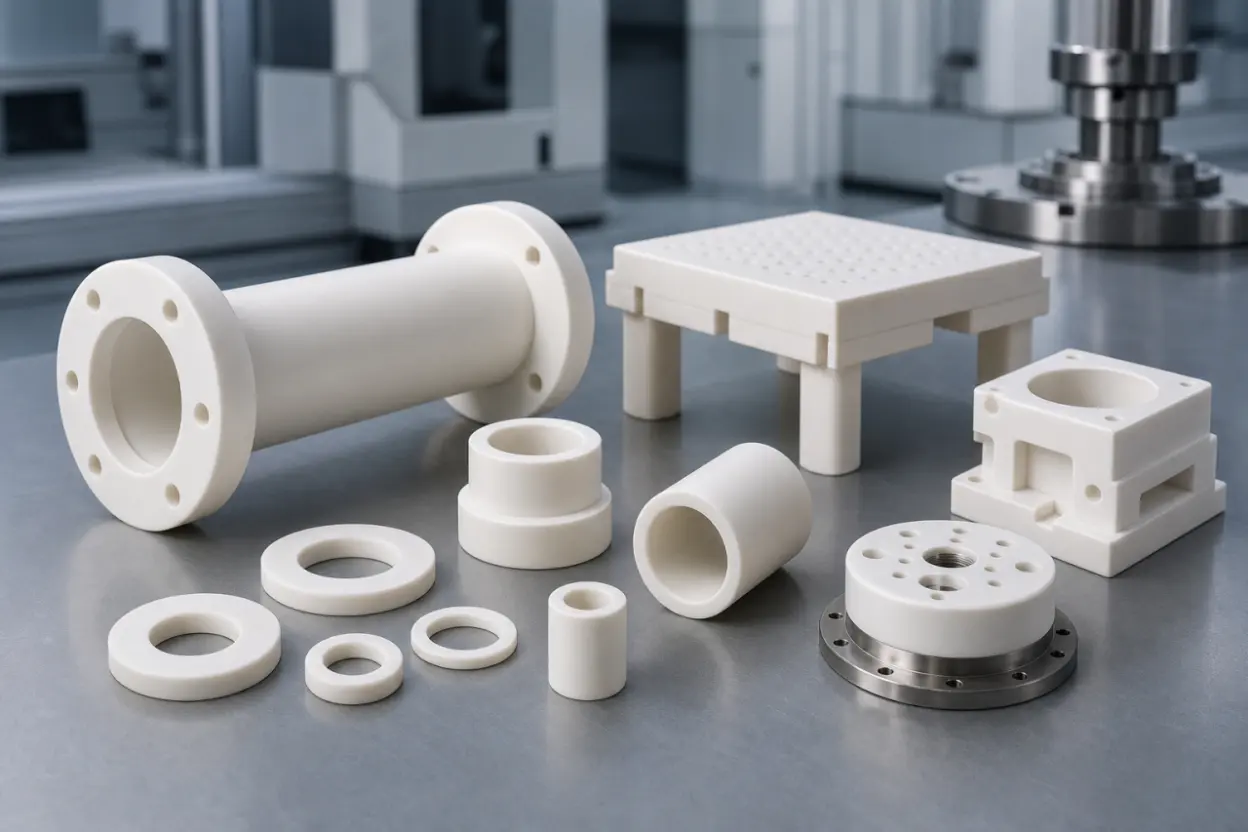
2. How to Choose 95%, 99% and High-Purity Alumina
Alumina ceramic is not a single material grade. Different purity levels have different cost, machinability, temperature resistance, insulation performance and application suitability. Common options include 95% alumina, 99% alumina and 99.9% high-purity alumina.
| Material Grade | Main Features | Typical Applications | Selection Notes |
| 95% Alumina Ceramic | Good cost-performance for general insulation and wear resistance. | Insulators, wear parts, structural supports and general industrial ceramic components. | Recommended as the first option when no special high-temperature, vacuum or semiconductor requirements are specified. |
| 99% Alumina Ceramic | Higher purity with better high-temperature and overall performance. | Precision parts, high-temperature components and electrical insulation parts. | Higher cost than 95% alumina; should be selected based on temperature, accuracy and operating conditions. |
| 99.9% High-Purity Alumina | Higher chemical stability and purity for demanding environments. | Corrosive environments, vacuum applications, semiconductor tooling and high-end equipment components. | Usually requires higher machining cost and longer lead time; detailed working conditions should be provided. |
If there are no specific high-temperature, vacuum, strong corrosion or semiconductor cleanliness requirements, 95% alumina is often the most practical starting point. It meets many general insulation and wear requirements while keeping cost and lead time more manageable.
3. Critical Dimensions in Alumina Ceramic Machining
Alumina ceramic components usually involve forming, sintering and precision machining. Outer diameter, inner diameter, overall length, concentricity, surface roughness and chamfer requirements can all affect assembly performance and processing difficulty.
| Critical Item | Why It Matters | Design Recommendation |
| OD / ID | Determines fit, clearance and assembly stability. | Define tolerances for key fitting dimensions; relax non-critical dimensions where possible. |
| Length / Thickness | Affects sintering deformation, grinding allowance and assembly height. | Avoid unnecessarily tight tolerances and use smooth transitions where thickness changes. |
| Concentricity / Roundness | Important for rotation, guiding, sealing and precision positioning. | Apply strict requirements only to functional areas. |
| Surface Roughness | Affects friction, sealing, wear and contact conditions. | Specify roughness according to the actual contact or sealing surface, not every surface. |
| Chamfers / Radii | Reduce edge chipping and improve assembly safety. | Add reasonable chamfers or radii at hole edges, corners and sharp transitions. |
4. Designs That May Increase Cost, Difficulty or Lead Time
Because alumina ceramic is hard and relatively brittle, its manufacturability is highly sensitive to design details. The following features are not always impossible, but they usually increase machining difficulty, reduce yield or extend lead time.
- Very thin walls: higher risk of deformation, edge chipping or cracking during sintering and machining.
- High length-to-diameter ratio: more difficult to control straightness, concentricity and processing stability.
- Deep-hole structures: hole diameter, depth, surface roughness and positional accuracy must be evaluated together.
- Overly tight tolerances: precision beyond actual functional needs can significantly increase cost and lead time.
- Sharp corners or excessive right angles: ceramic parts are sensitive to stress concentration, so chamfers or radii are recommended.
At the design stage, high precision should be assigned only to dimensions that truly affect function or assembly. Relaxing tolerances on non-critical surfaces, appearance areas or general positioning features can often reduce cost and shorten production time.
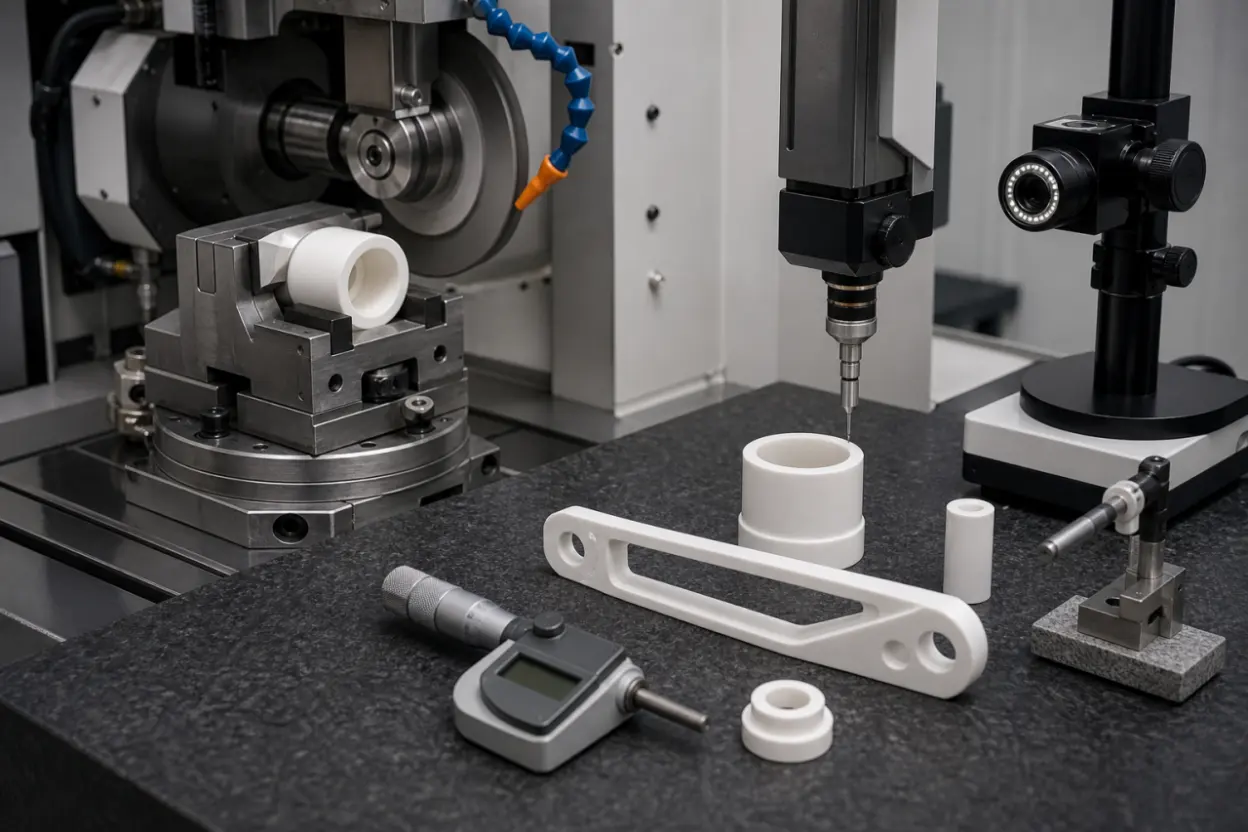
5. How Are Alumina Ceramic Components Inspected?
Alumina ceramic components are typically inspected for dimensional accuracy, geometric accuracy, surface condition and appearance quality. Common inspection tools include optical measuring equipment, surface roughness testers, laser measuring instruments and micrometers, together with visual or microscopic appearance inspection.
| Inspection Item | Common Methods | Main Focus |
| Dimensional Inspection | Optical measuring equipment, micrometers, laser instruments. | OD, ID, length, thickness, hole spacing and other dimensions. |
| Geometric Inspection | Optical measurement, dedicated gauges or other measuring equipment. | Concentricity, flatness, perpendicularity and parallelism. |
| Surface Inspection | Surface roughness tester, visual or microscopic inspection. | Roughness, chipping, cracks, scratches and edge defects. |
| Appearance Inspection | Visual inspection under light, microscope or customer-specified method. | Appearance grade, edge condition and acceptable defect limits. |
Appearance acceptance standards vary widely by application. A small chip or slight scratch may be acceptable for a general industrial wear part, but unacceptable for semiconductor, medical or appearance-sensitive components. For this reason, inspection standards or reference photos are helpful during quotation.
6. What Information Is Needed for Quotation?
To evaluate manufacturability, select the proper material and provide an accurate quotation, customers are encouraged to provide the following information:
- Complete drawing: 2D drawing, 3D model or clear sketch with critical dimensions and tolerances.
- Material requirement: 95% alumina, 99% alumina, 99.9% high-purity alumina, or operating conditions for material recommendation.
- Quantity: sample quantity, first batch quantity and estimated annual volume.
- Operating conditions: temperature, medium, insulation requirement, wear condition, vacuum or corrosive environment.
- Acceptance standards: dimensional inspection method, appearance standard, roughness requirement and packaging requirement.
The more complete the information is, the easier it is to determine material grade, machining route, inspection method and lead time. For thin-walled, deep-hole, long, irregular or precision assembly parts, sample validation is recommended before tooling or mass production.
7. Design Suggestions and Summary
Alumina ceramic is suitable for precision structural components that require high temperature resistance, high electrical insulation, wear resistance and corrosion resistance. During material selection, key factors include material purity, operating temperature, assembly accuracy, wall thickness, hole structure and surface requirements.
From a cost and lead-time perspective, proper design is often more important than simply specifying higher precision. Non-critical dimensions should be relaxed where possible; chamfers or radii should be added around holes, edges and thin-wall areas; and long or deep-hole structures should be reviewed with the supplier in advance.
When complete drawings, material requirements, quantity, operating conditions and inspection standards are provided at the quotation stage, the supplier can evaluate feasibility more quickly and provide more accurate material recommendations, processing suggestions and pricing.
Frequently Asked Questions
1. How should I choose between 95% and 99% alumina?
For general insulation, wear resistance or structural support, 95% alumina is usually a practical first choice. For higher temperature, higher precision or more demanding environments, 99% alumina or higher-purity material can be evaluated.
2. Can alumina ceramic replace metal components?
In applications requiring insulation, wear resistance, high temperature resistance or corrosion resistance, alumina ceramic can replace certain metal parts. However, it does not have the ductility of metal, so impact and assembly stress should be considered in the design.
3. Is alumina ceramic suitable for thin-wall or long slender parts?
It can be evaluated, but thin-wall and slender structures increase the risk of deformation, chipping and cracking. Drawings are needed to confirm wall thickness, length-to-diameter ratio, tolerances and inspection methods.
4. Is a sample photo enough for quotation?
Photos are useful for initial review, but accurate quotation usually requires drawings, dimensions, tolerances, material requirements, quantity and operating conditions. For precision assembly parts, photos alone are not enough to evaluate difficulty.
5. Is lower surface roughness always better?
Not necessarily. Roughness should be specified according to contact, sealing, friction or appearance requirements. Applying very low roughness to non-functional surfaces will increase cost and lead time.
Application Evaluation and Custom Machining Support
If your component requires high insulation, wear resistance, high-temperature stability or corrosion resistance, please provide drawings, material requirements, quantity and operating conditions. Our team can help evaluate suitable alumina ceramic materials and machining solutions based on the part structure, tolerance requirements and application environment.


In This Article
- 1 1. Where Is Alumina Ceramic Commonly Used?
- 2 2. How to Choose 95%, 99% and High-Purity Alumina
- 3 3. Critical Dimensions in Alumina Ceramic Machining
- 4 4. Designs That May Increase Cost, Difficulty or Lead Time
- 5 5. How Are Alumina Ceramic Components Inspected?
- 6 6. What Information Is Needed for Quotation?
- 7 7. Design Suggestions and Summary
- 8 Frequently Asked Questions
- 9 Application Evaluation and Custom Machining Support
